


JohnMo
-
Posts
13308 -
Joined
-
Last visited
-
Days Won
200
Everything posted by JohnMo
-

Which heating and hot water solution(s) in 2024?
JohnMo replied to Jane W's topic in Other Heating Systems
How long is a piece of string, maybe late September or early October to start or end of April, depends on the weather really and how your house is affected by it. -
Modern building methods are no better, could be worse than old ones. The normal builder not giving a bit of care or understanding of airtightness. If you have no airtightness strategy you will have a leaky house. Window installation is a good example, mine were installed and all gaps filled with airtight foam, most installers will fit a trim over the gaps, leave the gaps unfilled to leak air and a cold bridge for mould for form. All holes through the building were drilled a duct installed and sealed in place. Once cables etc were in the foam filled and sealed at both ends. A normal builder would make walk away never to return.
-
Which heating and hot water solution(s) in 2024?
JohnMo replied to Jane W's topic in Other Heating Systems
Just think you are not really understanding what PV does or doesn't do. This time yesterday I was generating 3kW, today because its cloudy 600W. Relying on PV to do anything predicable is rose tinted glasses and headphones on mode. It does what it does when the weather allows. Your heating is generally running max load when the sun isn't out, when the sun is out you get solar gain in the house etc. During the winter this year lots of rain and many days with next to no generating from PV. But boxing day was sunny and we did the whole lunch powered by solar. Averaged over a whole it will generate xkW, next week is anyone's guess -
Overall I would say there seems to way to much (over) thinking goes in to shed on this site. As above Our last (house) shed was sat on 6 old slabs on soil. It was still there 10 years later a good as new. A shed existed on site when we bought that house, it had been there about 20 years, was still there being used 10 years later - On slabs on soil. You don't need a concrete or mot base. Anyone saying you do is after your money. It's a shed. My latest shed is on a load of concrete blocks I had left over from the build.
-
Vaillant Unistor cylinder - or not
JohnMo replied to mk1_man's topic in Air Source Heat Pumps (ASHP)
I noticed my cylinder heating occurs about 10 to 20 mins after say a shower. So suspect cylinder is all stratified, prior to opening hot tap, cold water comes in at bottom and mixes with water at bottom of cylinder all the time you use water, thermocline rises etc. then it needs time to stratify again and then thermostat says time to heat. -
I've always looked at it this way. Uninsulated pipes lead to heat losses mostly where you don't want them, heating and area unnecessarily. A buffer or volumiser in your case is a little like filling a kettle, put a cups worth of water in it, heats in about a minute, you have a an empty kettle after your cup of tea - no energy left. You fill the kettle it takes 4 mins to heat up. You take your cup out and there is still a lot of hot water left, the wife comes in she makes a tea etc. So for a boiler, the single cup situation occurs when the system doesn't have enough volume. Boiler starts heats, stops quickly as up to temperature really quickly, the water volume is low so heat is lost quickly, boiler tries to start (may have 10 mins lock out), starts, stops soon after, lock out etc. The full kettle situation, boiler starts heats the full volume of water. The contents of the buffer/volumiser get distributed around the heat system by the boiler pump, until the return temperature is low enough to enable the boiler to start. So now it's heating starts, runs for a longer period (more water to heat), stops, has a break (uses the energy in the volumiser to heat the house), starts runs stops, takes a break. Having the correct minimum volume keeps things running in a controlled manner. Same is true for all heat sources.
-
Vaillant Unistor cylinder - or not
JohnMo replied to mk1_man's topic in Air Source Heat Pumps (ASHP)
Doesn't mixergy plan heating cycles around your normal life style, monitoring what you when and circling with hot water? -
Strap bands here also no issues 2 years in. Seems to be more of this happening, seems like money down the drain now and forever more to me. All the normal ventilation plus a load more by the MVHR, the additional 24/7 running cost plus an additional (small) heating cost due to the unrecovered heat loss. Going this way, get a humidity sensor or two, Shelly H&T are good. Then set the flow rates (keep them balanced) so the house sits at 45 to 50% humidity. Set to auto boost at 60% humidity.
-
Heat pump cylinder without the heat pump...
JohnMo replied to Antonb182's topic in Air Source Heat Pumps (ASHP)
Basically nothing wrong with that. Have heated mine a few times just via the immersion. -
Vaillant Unistor cylinder - or not
JohnMo replied to mk1_man's topic in Air Source Heat Pumps (ASHP)
Heat geek - love or hate them, have done a couple recent videos on cylinder heating may be worth checking it out. Of note is Telford do a cylinder designed by heat geek and mixergy have changed their heat exchanger (bigger) and control logic in line with what is discussed on the video. For me bigger is better (m2). -
Does that work? I suspect it's not a very good thing to do for the refrigerant side of the heat pump. Are you possibly better to set a higher target flow temp and increase the compressor restart delta. So it's off slightly longer and runs longer but means temp stays the same.
-
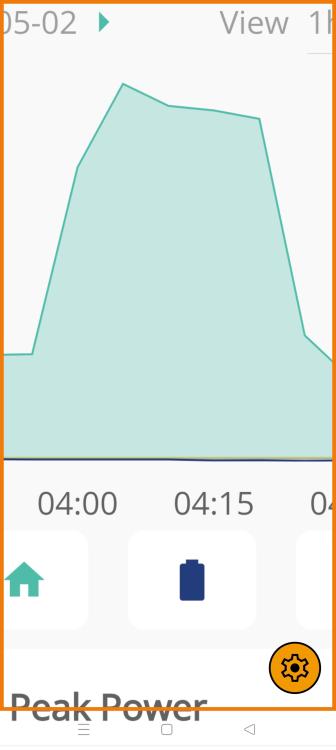
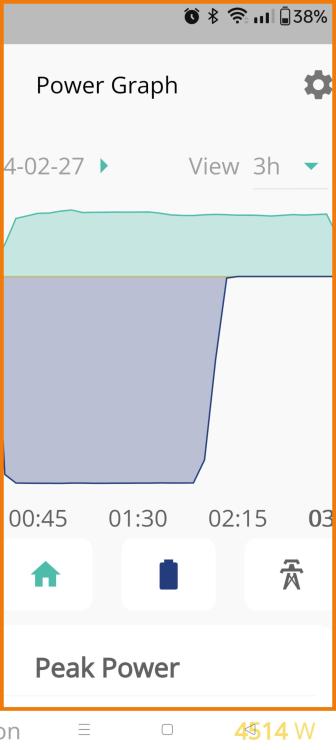
You may find there is very little in it, a lot of heat pumps are badge engineering and some software tweaks. So the 7 and 5kW could be fundamentally nearly the same unit. One overlooked feature most heat pumps have, is a setting to limit hertz the unit runs at or how much noise it makes (depending on the setting is labeled), so you increase or decrease the rated capacity. Below is a snap shot of a cycle from my heat pump, its done in 5min data change cycle, so pretty well averaged. What you see is a higher electricity demand at startup, it reduces quite quickly for a about the first 5 mins. Basically it is playing catch-up to get water temperature back where it should be. The next 15 mins it's slowly modulates down down until it has no where left to go. In this case it hit a thermostat in the garden room. Of note are the heat pump is set to min hertz setting, at peak load the heat pump is drawing around 1kW. A much longer run and slightly different settings - this time the heat pump had been off for 12 hours or more, doing batch charging the floor, the heat pump ran at full load for 7 hours, the dip at the end you see is a defrost. The first 30 mins increase is the water temp slowly getting hotter. Min hertz in not set, target temp is 35, the heat pump only achieves around 33 Deg. Generally the heat pump is drawing around 1.5kW (50% more than above). Similar flow temperature, colder oat, not being allowed to modulate.
-
You be surprised how little difference that makes to energy consumption. While you are set back you are using less energy, but once set back has finished the heat pump plays catch up trying to reheat the house for quite a few, using more energy that it otherwise would running steady state. You also have to run higher temps so CoP takes a hit compounding the issue. "Proton for breakfast" website has a spreadsheet, I tried it consumption was the same setback or not, if the setback was about 4 degrees the setback results in greater consumption, not less. That's so when you sell the house the next owner can walk about how they like. Take the grant play by their rules, or DIY it. Most heat pumps modulate to below 50% of the max load. They then quite happily cycle 20 mins on 40mins off when needed to run well below min modulation. All normal stuff, if it runs less than about 10 mins, you don't have enough water volume engaged (to many zones or you need a volumiser)
-
Solar is a fickle thing.
-
That's good, we have had so much rain in April the solar has been pretty rubbish. Plus the heating stayed on a lot longer this year.
-
Which heating and hot water solution(s) in 2024?
JohnMo replied to Jane W's topic in Other Heating Systems
Makes you wonder, they would install single glazed given half a chance, and still leave a big gap and make it look pretty with a big dollop of silicone or a bit of trim. -
Which heating and hot water solution(s) in 2024?
JohnMo replied to Jane W's topic in Other Heating Systems
You have to be careful anything more than 10W/m2 at passivhaus airflow rates as the air starts to smell of burning apparently. Assume 200m2 house that's about 2kW. A better way is decent amount of screed and you can easily dump at a rate of 6kW in to the same floor area. Adding control to manage the air flow heating is just another layer of complexity. Thick screed, heat source, 3 port valve, UFH manifold with no actuators. Thermostat to start heat source. If you need over temp protection a pipe stat to remove heat source permissive or close a two port valve (or both ideally) -
Critique my MVHR plans - round 2
JohnMo replied to Sparrowhawk's topic in Mechanical Ventilation with Heat Recovery (MVHR)
Max drop of the worst duct run from MVHR outlet to and including the outlet nozzle / terminal. As this run will also determine your fan running speed the nozzle should be in the fully open position, so its lowest pressure drop. -
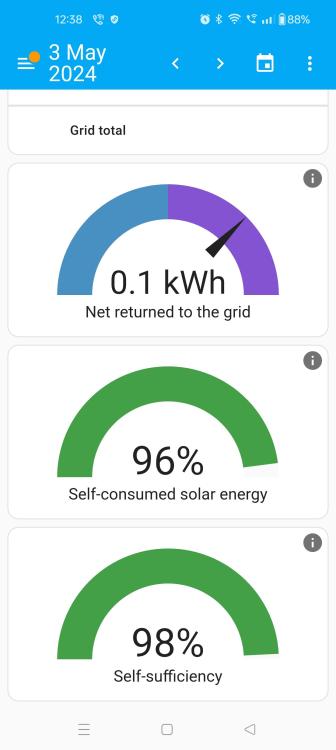
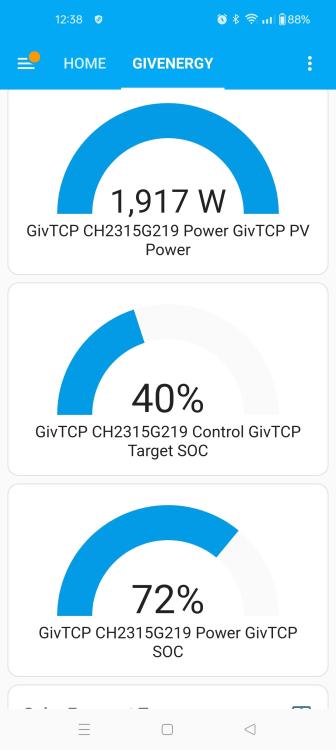
First day with no imported energy. Good solar day yesterday and battery starting to earn it space in the home. So no battery charging required overnight, the battery ran down to 54% before PV started to charge this morning. Snap shot from home assistant Energy page, showing current status A further shot from the GivEnergy page in home assistant, shows current generation (cloudy), target charge point (overnight on E7) and current battery charge status.
-
We have a shallow chamber with pipes from borehole pump. With 25mm blue water pipe. Almost exactly what I did. But I had an off cut of 25mm PIR, so used that. Just made a circle to slip in the chamber. Been ok down to -7 for a week or more.
-
Be aware of quotes that look too good to be true. They normally are too good to be true. Also ask the architect who they like to work with, they are normally the ones that get on with job are zero hassle - that's what you want. 5m bi-folds, cheap will leak air like a sieve, so get specifics on what is being quoted and look at the item. Get whole window U value (Uw) if double glazed you want 1.4 U value or better. If they give you Ug value that is just the glass and not what you are looking for. One of our quotes for windows, came with recommendations, we went to the showroom and half the opening mechanisms didn't function correctly (broken) and frames really bulky - we went elsewhere .
-
Hi and welcome Just incase you aren't aware, you still have to go through the warrant process, before you start any real work.
-
Loxone installation on new build
JohnMo replied to 7dayworker's topic in General Self Build & DIY Discussion
High cost build? Hope that lots of insulation and airtightness, and not added unneeded complexity and just a scrape through building regs or not just being ripped off? Lots of users on here, look in relevant sections, and can see the miles of cable they install, to add to your costs. Personal opinion, waste of time and money. Your high cost build got more expensive. -
What?
-
Dulux trade every time, water down for first primer coat on new walls, then straight out of tin after. Covering power is great. Buying from Screwfix or B&Q is cheaper than trade account with Dulux.





