


Olf
-
Posts
315 -
Joined
-
Last visited
Everything posted by Olf
-
Well we all know toilets sometimes are noisy I'm planning to build a small one downstairs, with a wall dividing from the living room. Originally it was supposed to be a load bearing wall, so full block - with sound deadening as added bonus. It appears the beam will be supported in a different way, so now I have a choice and with that comes problem... What will be better from sound insulation perspective : 100mm block wall, or equivalent stud wall filed with acoustic wool? Or is there any better fill to reduce sound transmission? Is there any calculator that one can tinker with different materials to see their effect on noise, something like U value calculator for thermals?
-
'The 50*50SHS 2.5mm thick S275 steel should be fixed to the existing concrete sub wall below with a 6mm S275 steel base plate and 2 no. M10 bolts.' says structural engineer report. Surely that will make a cold bridge - should I be concerned at all, considering relatively small cross section of the post? Is there any way (non-compressible pad?) used to avoid such thermal bridging?
-
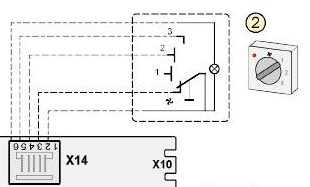
My cunning plan is to hack the speed controller socket (X14): it's a bunch of volt-free contacts wired to RJ12 plug. Added benefit is that the humidity sensor can be made smart: response to spike of the level above average, rather than fixed level - which if set low, on some damp days can trigger MVHR to boost all the time.
-
I can't comment on hive, however I bought eufyCam 2C and I'm disappointed. The camera seems to be using a separate sensor (PIR?) to detect motion to save energy for the main video chip. The result is that each video of passing person begins half way throught the field of view (5 seconds late) and with another 3 seconds of adjusting brightness and white balance. On rainy days though that trigger sensor seems to go blind, making the system useless. Also I seem to be getting more alerts when it is dark, than during the day, which makes me suspicious that the stronger the ambient light, the weaker the capability of the supporting sensor - and this camera is located on the northern wall, I don't want to think what would happen with the Sun shining directly. I test it twice a day when doing school run and based on the results one would think my children absence rate is 50%. So in essence it gives false sense of security. So whatever the make, definitely keep it wired!
-
Good idea - as long as you can insulate the stretch running through the cold space, then a pipe is a pipe - if it's watertight, it will be airtight too and of course you can treat any connection inside and outside just to be 300% sure.
-
In a similar thread Purenit and Marmox were mentioned
-
Is Zehnder worth it?
Olf replied to BartW's topic in Mechanical Ventilation with Heat Recovery (MVHR)
It's similar story to Fiesta vs Merc taking you from A to B, but one costing twice as much. What Zehnder offers: - better heat exhange efficiency: each manufacturer gives you percentage, but Zehnder uses PHI methodology and is certified to it - better specific power, which reduces total cost of ownership (I did some figures here) - quiter operation - advanced off the shelf controls/demand control options - Zehnder specifically also offers nice ducting system (Comfowell) saving some space - if that is at premium (eg London), it may pay back for itself For me Zehnder is really all singing all dancing solution, but I found last 2 not important and first 3 satisfied by another solution -
@Conor, @Levo thanks for your input - at 2/3 of the price for the lack of warranty, it still seems to be a fair deal to me. Wifi control being free perk I donwnloaded the app and it can be set to English as well, so no issue here. The only problem I can see is using it for new builds, as it doesn't have SAP numbers and if someone sniffs at using Flair325 figures instead, that may end up as some non-compliance - but correct me if I'm wrong. In case of refurb, that doesn't matter. I'm actually about to go ahead with it, once I finally finish my battle with BPC and have some pipes to connect.
-
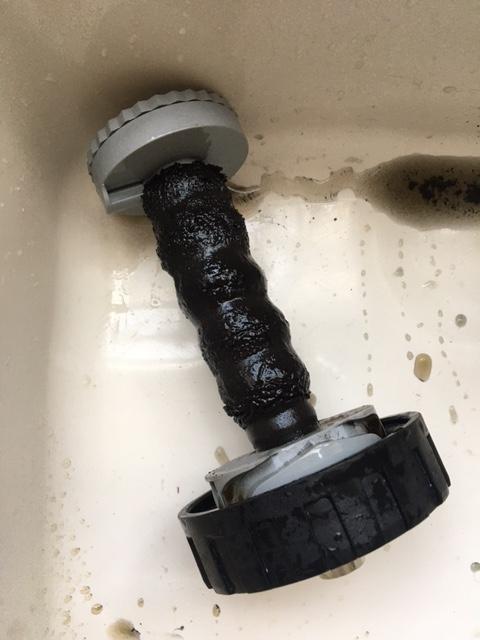
Because I'm thinking of having UFH in place of leaky rads, I decided to go quick and dirty route of Fernox. Actually having to drain the system probably saved me sorting another issue soon - fluid coming off was black, thick and smelly like oil, filter also loaded with gunk
-
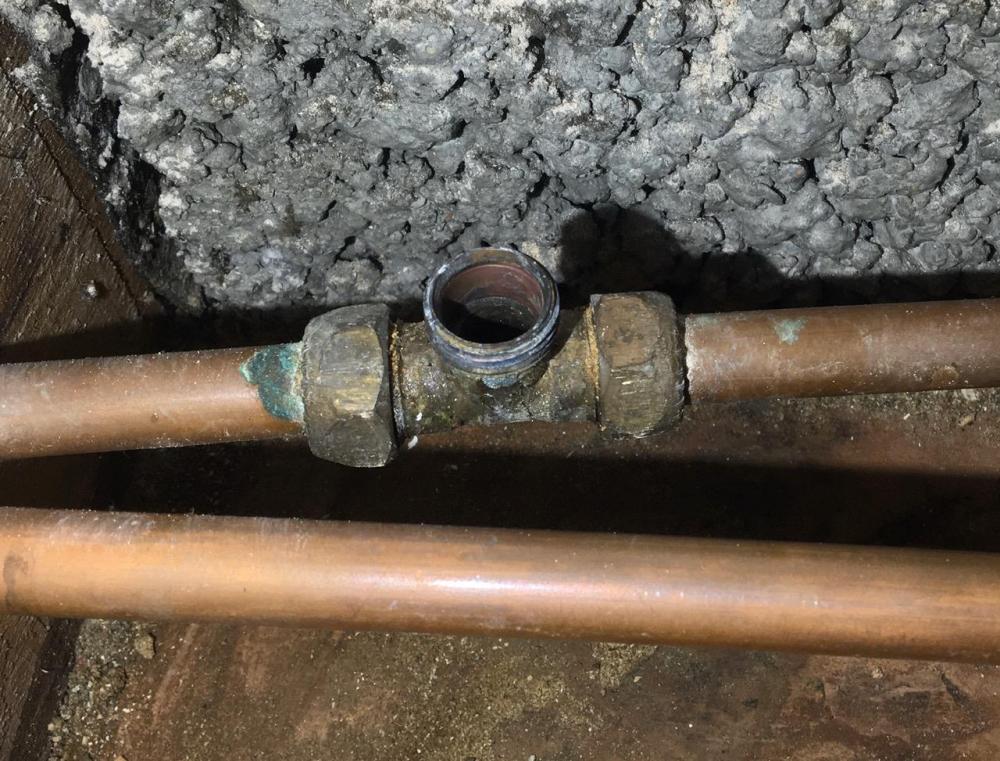
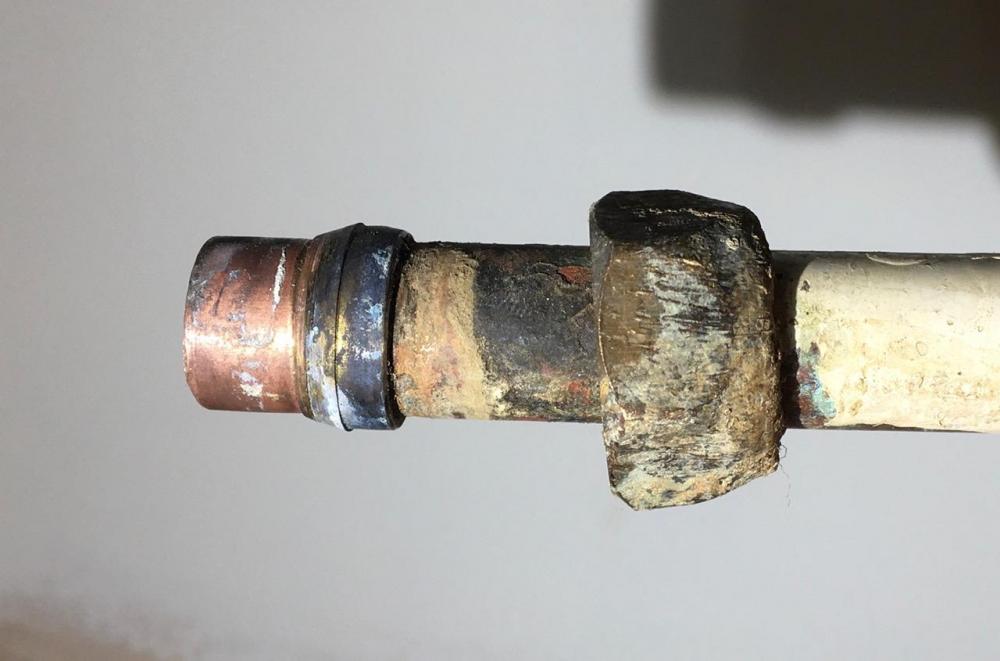
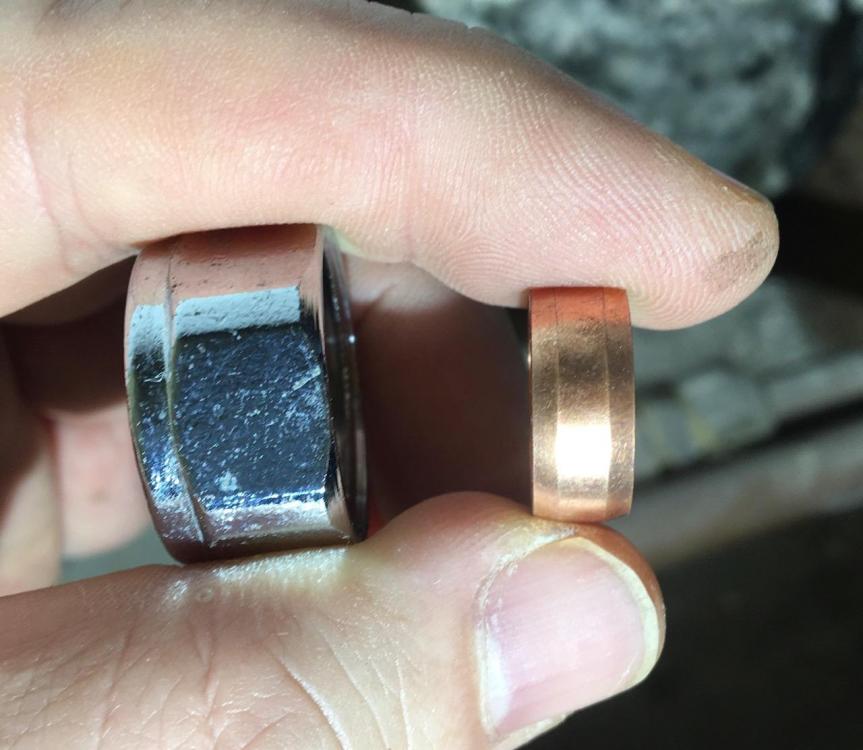
Today I woke up in a cold house with wet wall. It looks like one branch of a tee (coming from a radiator) stopped being water tight. Again actually, as I had a little issue when hanging the radiator back after painting behind, but it was 2 weeks ago and all seemed ok since. I'm not experienced with plumbing, so my questions: - can I just replace the olive and nut, or is it better to fit a new piece of pipe. The existing olives are of different shape to what I have - does it matter? - or should I replace the whole tee, althought the other joints seem ok. They're on the main curcuit and cutting the old olives would be pita because of access, so I'd rather avoid it - or simply flood it with Fernox LS-X and pray it will hold
-
MVHR air handling unit
Olf replied to Balraj Appadu's topic in Mechanical Ventilation with Heat Recovery (MVHR)
Have you read through that thread https://forum.buildhub.org.uk/topic/248-mvhr-with-active-cooling/ first ? -
Choosing MVHR - energy consumption angle
Olf replied to Olf's topic in Mechanical Ventilation with Heat Recovery (MVHR)
It will never be free - but what figure you choose depends on your accountancy (purchase+installation price, assumed payback period etc). Exactly as electric car is not 'zero emission' ... Correct, it is an oversimplification. But that means, that the heat recovery efficiency is of even less of importance from financial standpoint. Of course! Coming form a house with rubbish air tightness and rubbish MVHR it was still in a different league to what I'm in at the moment - so the reason for these calcs is to have some objective reasoning behind my choice, as I'm allergic to marketing blurb. And hey - heat recovery efficiency is the first thing any MVHR manufacturer quotes, probably as psychologically anything closer to 100% oozes perfection, whereas W/m3 is some esoteric and not cool technicality. I actually had a chat with PIV saleswoman, but when doing simple maths of all the bits to make such solution really work (central unit as advised + fans with partial heat recovery in bathrooms) it didn't make sense in my case. -
I'm slowly settling the unit I'm going to install, but recently found something cheaper - though (as expected) of worse spec. I struggled to meaningfully compare the numbers, but @Levo gave me inspiration. So let me walk you through comparing MVHR units based on energy consumption Assumptions: Home temperature : 21 °C Average annual outside temperature: 9.4 °C (https://www.statista.com/statistics/610134/mean-air-temperature-uk/) House area 140 m2 > 350 m3 of volume Air exhange @0.4 ACH > 140 m3/h Total heat lost (needed to calculate how much MVHR unit saves) with a bit of units juggling: 11.96 KJ/kg (https://www.engineeringtoolbox.com/heating-humid-air-d_693.html) with air density 1.204 kg/m3 https://en.wikipedia.org/wiki/Density_of_air 9.93 kJ/m3 = 0.028 kWh/m3 So for my model house: 0.38 kWh Now things get easier (as everyone is good at counting money) Gas heating: 3.06p/kWh (my effective rate, taking both fuel and standing charge) @0.38 kWh sent away > 1.18 p/h Over whole year: 103.56 £ Very good unit with η=84% will allow to lose only 16% of that heat, worth £16.57 So-so unit with η=70% will waste £31.07 (efficiency in this case is defined as per Passiv House standard) But there is another factor - electricity used to move the air At 15.7 p/kWh good unit with specific electric power of 0.29 W*h/m3 will cost over year £55.84 Not so good unit with 0.5 W*h/m3 will cost £127.34 Let's say there is £1000 difference in price between them, in 12 years the cheaper unit's total cost of ownership (not including filters though, but I assume identical price) will exceed that of the good one. The main takeaway is that specific power seems to have more importance (money wise) than heat recovery efficiency. That is independent of house size: in bigger house you'll have more air volume to exchange (and lose in the process), but proportionally more electricity to spin the fans. I was a bit surprised, but this very good unit with 0.29 W*h/m3 @ 140 m3/h still ends up with with 40W per hour, or nearly 1 kWh daily use! On top of that the better unit will (usually) reward with quieter operation, maybe better controls. But you need to pay more £££ upfront.
-
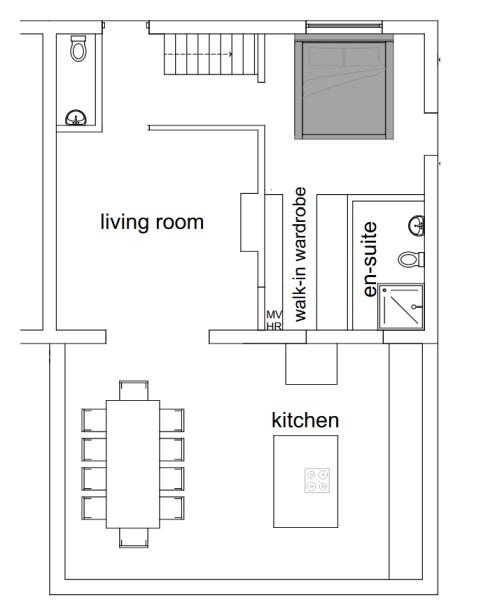
Context: - supplied by combi boiler - extension properly insulated, slab on insulation - existing ground floor will be taken out, 150mm PIR placed and slab on it - bamboo flooring throughout Layout: Considering that the floor won't like to be too hot, and hopefully my effort with isulation and drought proofing will be good enough, I'm targeting max floor temperature of 25 °C So here is the plan, help me please and correct if I'm wrong with any of these: 1. Buffer tank needed - but how big? 2. Mixer capable of running at 25 °C - Ivar name seems popular, any other alternatives? 3. Salus autobalancing valves 4. 3 zones: kitchen/diner (extension), living room+WC, bedroom with ensuite & walk-in wardrobe. 5. 16mm pipes tied to the mesh in the middle of 100mm thick concrete slab (all the quotes take slab-insulation-screed as default and try to sell me hundreds of clips), laid in serpentine pattern 6. pipes centres? On the forum I've seen numerous references to 100mm ( @Nickfromwales ), but did not manage to track down the whole reasoning of that. Quotes so far suggest 150 or 200 mm. 7. How thick can be perimeter of the slab? I might have plenty of XPS to use somewhere and that looks to me like a good place. 8. Anything special for the run to the extension? One supplier claims it is impossible not to rip the pipes because of differential movement and offered surface retrofit solution only.
-
Loft hatch and ladders for timber frame passive house
Olf replied to kaye's topic in Lofts, Dormers & Loft Conversions
I'll join - I'm choosing between Dolle ClickFix 76 with U=0.49 and and Minka Polar Extrem (through PHS) with U=0.59, both with claimed airtightness class 4, both around £270. Has anybody installed either of those and can share experience? -
I'd try to remove the piece of skirting first. If it is attached by some glue, prying with moderate force is all that is needed. When the layout changes in the future (or you don't like the idea or figure something different) you stick the same piece back again. If it doesn't give up, than decnet nails or screws were used and it won't work so easily I had a similar situation (new build, all held together with snots) although with the piece removed betweeen inner corners, so no sharp edges of the remiaining skirting boards sticking out. I pried away (with a screwdriver, but a table knife would do the job if no better tools) from the wall to break the glue, then 'walked' up prying from the bottom at the corners to free from the remaining profiles and done. Frankly cutting the bed leg, being made of proper wood might be more tedious job (even if the access is easier) than removing/cutting the skirting board and also reduces value of the piece of furniture (to zero?) in case of reselling.
-
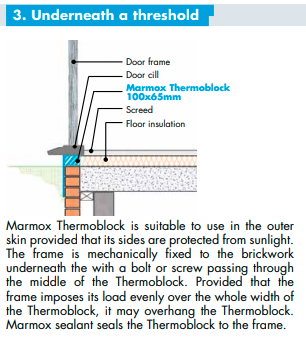
Thanks for mentioning Purenit, interesting material, though search does not find any place to buy it in the UK. XPS might be cheaper, but it looks like no supplier will sell single board, manufacturer packs only, so not rosy here neither My plan at the moment is to use Marmox Thermoblock, in their brochure it even states use under the threshold : If my calculations are right, its declared compressive strength of 9N/mm2 equals to 9000 kPa, so beats XPS by far. I'll pour some concrete to provide a bed for the Thermoblock, that will save me on trying to level the existing compacted layer.
-
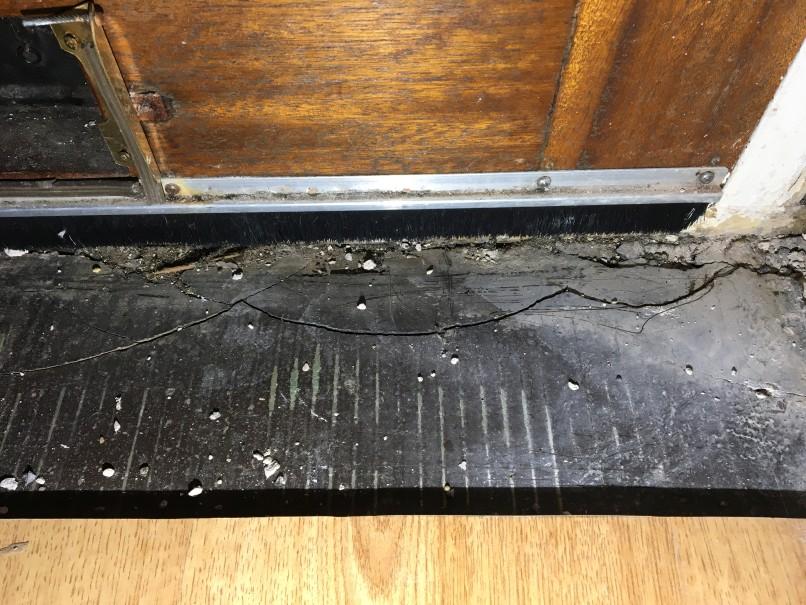
Yesterday I performed 'intrusive survey' of the existing floor and as it appeared to be easy to take up, with no floor height buildup due to extra insulation, replacement of the front door can go ahead. Under the existing floor panels cracked bitumen showed, and when removed it became obvious why it cracked - it was on a layer of compacted stone/sand mix! I removed as deep as could fit my hand through the gap and so here is a cross section of the situation: Here is a view from the outside: What puzzles me is that there seems to be a gap in the outer skin of the wall, the door frame sits on the step/slab in front, and that is poured over this compacted stone/sand mix that I could remove by hand. As the plan is to finish the renovation with EWI the step/slab would have to go anyway. My idea is to remove the slab now, as it will make the access to dig up the rubble easier, and then fill the whole gap between the outer face and the inner skin with something like Compacfoam. Later on the EWI (under DPC part) will go along that section. My questions: - is XPS viable alternative to Compacfoam in this case? It's like 1/6th of the price... Or something else? - I'm assuming that under the compacted rubble I'll find bare ground - do I need to make any foundation for the foam?
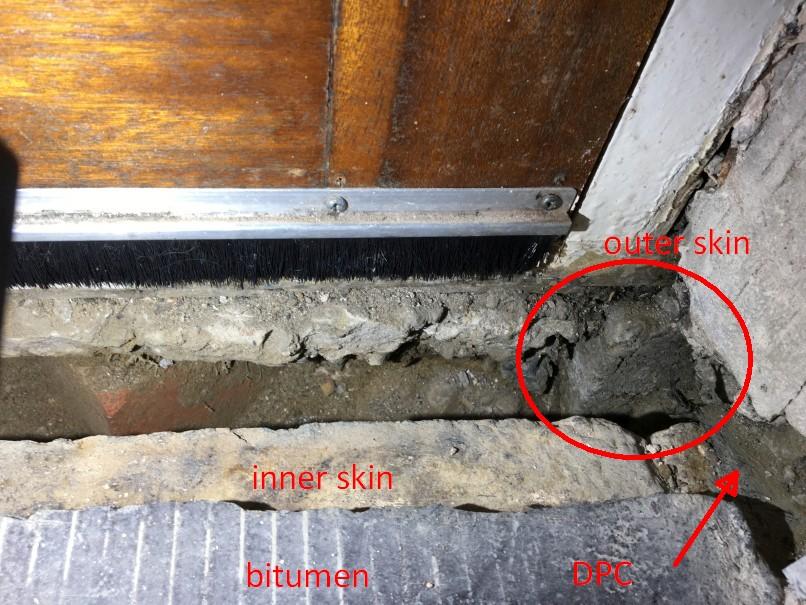
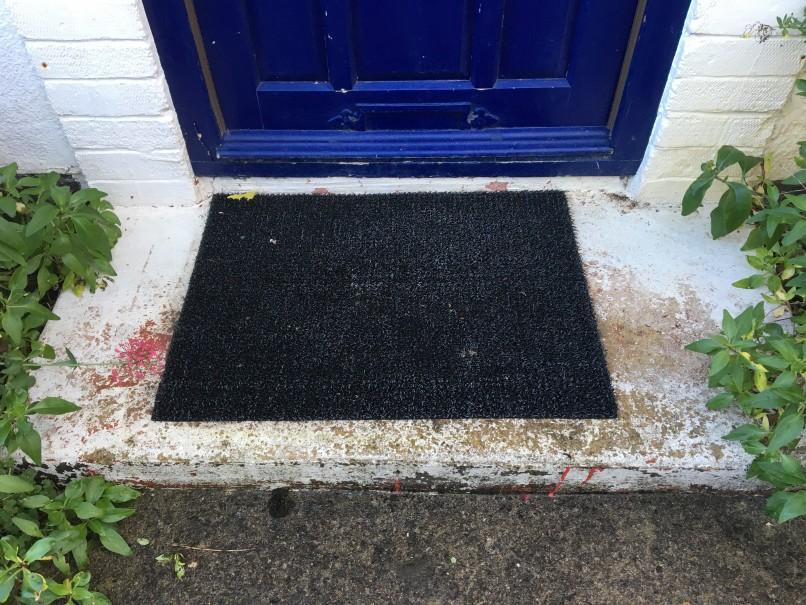
-
Apologies, failed to mention - it is upstairs, so heat going down not (less of) an issue. And saves work at the same time Great idea!
-
Ducting - are they all the same?
Olf replied to gc100's topic in Mechanical Ventilation with Heat Recovery (MVHR)
There seems to be over 30% premium for - well, 'Premium' - ducting https://www.bpcventilation.com/quietvent-radial-pipe-75mm-x-50m over standard https://www.bpcventilation.com/basic-radial-duct Probably for the piece of mind I'll go with antibacterial etc for supply, but do all the perks matetr for extract ducts, if I'll never breathe the air carried by those. Or is it actually the opposite, because they suck out all the bad stuff from a house, they're more likely to be at risk of fungal/bacterial/dust growth inside them, with risk of making its way back to the rooms? -
As a part of renovation we're planning to add UFH and MVHR. I removed the existing door frame and floor to lintel opening is 2015 mm. 1981 mm (height of standard 78" door) + 25 mm (extra floor thickness to accomodate heating) + 10 mm (gap for the airflow) = 2016 mm I can trim the door a bit, but it seems that 6mm is generally the maximum recommended, regardless of the manufacturer. So the questions is: how important is the frame head in this case? With the wall made of conrete blocks with concrete lintel (which I really don't want to move) I shouldn't worry about any flexing - is the idea of replacing proper head with a stripe of 6mm plywood (just to have something to stick the upper part of the door stop to) sensible?
-
CVC stocks only Flair 325 but going through PHI database I found Flair 300 - actually quieter and of slightly better performance. On top of that it can be sourced for £1600 (incl. delivery), so 1/3 cheaper than 325. Judging by the fact that all the manuals are in Dutch only, I think it is version for Brink's domestic market, but comparing side by side with manual for 325 I could not find any massive differences. Has anybody got experience with this model?
-
Yes! That was actually also the plan on the previous renovation - I invested in £5 hand pumped Aldi sprayer and once it started spitting like a drunken llama I threw it away and grabbed the roller... So I'm a bit discouraged, also missus is a wallpaper aficionado, so by democratic vote each room has only 2 walls (and ceiling) available for painting (those with window/door, where wallpaper cutting would make her sweat) - so less of benefit here. But looking at the linked post (thanks!) the clue seem to be to have the right equipment. And having EWI on mind to paint later, I shall better start a research, in case the hardware and skills could be useful throughout the project.
-
Unless I lifted the level of tiles, there would not be more room for insulation (at least at the junction with the wall)? I need to open the soffit to see exactly what is happening there, but in principle I'd put EWI all the way up, to meet (get as close as possible) with the above skeiling layer discussed here. I think part of my problem is timing: missus wants to start painting/decorating asap (especially now that Multifinish is finally stocked and ready to go), I'm already in her way with need to access this part of the room and the only thing that keeps me alive is the fact that lights need moving and that ties with roof insulation (with timing bad again, heatwave stopping me from occupying the loft). EWI is way further down on to-do list... But I've seen idea like this, and I'm not saying that it may not happen down the line Speaking of decorating- I think I'll have to go with airtight membrane over to the loft, but I thought as a backup I could use one of paint-on membranes on the ceiling (and all the junctions around). The ceilings need painting anyway, so 2 jobs at once (although at a price). But the question is: how white are the 'white' solutions, like https://www.intelligentmembranes.co.uk/product/airtight-white/ or https://www.blowerproof.co.uk/product/blowerproof-liquid-brush-white/ Would it be good enough to act as a ceiling paint ?
-
100% agree and I think we are lucky (the original post was made 2 days after we moved in, no relationship at that time except for annoying by keeping relocation Luton van on the street fighting for parking space). But to some extent it was a 'thought experiment' as I'm sure there are some folks that for one reason or another would be limited. Yes please! Building an extension, not a hole house, my requests seem to be ignored by all the major solution providers - I'd be more than happy to have local chippy to erect the frame in situ




