


SuperJohnG
-
Posts
1260 -
Joined
-
Last visited
-
Days Won
5
Everything posted by SuperJohnG
-
Where is the kWh price heading in 2022?
SuperJohnG replied to epsilonGreedy's topic in General Self Build & DIY Discussion
Just got this from octopus.
-
Where is the kWh price heading in 2022?
SuperJohnG replied to epsilonGreedy's topic in General Self Build & DIY Discussion

-
As abovejust go direct to suppliers ti get designs. Save yourself 6k. I'd recommend wunda for UFH, many others would too. I'd also recommend BPC for MVHR supply seem to be helpful. For PV again straight to supplier like midsummer solar who will do you a free design and supply a kit. SAPeasy I'd recommend too. Then you can use local competent main contractor or individual trades to install to drgs.
-
Arguably wont do anything. The heat will pass directly around the section. The only thing that insulation will stop is radiating heat travelling from one face to the together which I presume would be negligible compared with the thermal flow in the steel. Best to insulate it externally if you can.
-
They are easy to obtain and chealer however will not provide a latent defect cover and will also require to prove negligence to claim on the architects professional indemnity policy which will be costly and very very difficult. If you need a tick box for remortgage maybe OK, but mot if you wanted better cover.
-
Interested to hear how you get on with the post build pricing. I am very expensive woth two stages that can be viewed. Self build being cheapest at 4400 and next closestnos 7.5k. Compared to 2.3k before starting. I've searched for separate indemnity policies but cannot find these despite reports on here of them.
-
Thats pennies. Get it done.... I'm currently staring £4-7k in the face as I'm well on with the build. Ay 1500 buy it and do not hesitate.
-
Interesting to see how the have incentivised senior management to deliver better quality standards which is a positive step.
-
The PVGIS ones? Thats good, so reasonably I can assume that say 75% would be generated and then its just a utilisation question.
-
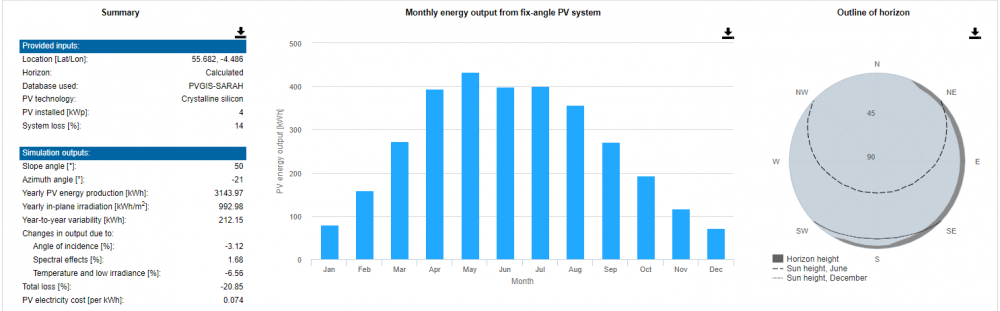
edit- just did it: seems like 3143 kWH per year just need a realistic utilisation figure now, doing some sums on 50% utilisation and 3% interest starting at 30p/kWh now payback is around 10 years (assumed total install costs £5k for a fully installed system with me managing subcontractors).
-
Absolutely makes sense to do. Interested in how you can get a realistic PV generation value- just use PVGIS? I'd like to do the sums on that just now.
-
Who told you this? Is it a radon membrane? They are not really massively more expensive than a 1200 gauge visqueen.
-
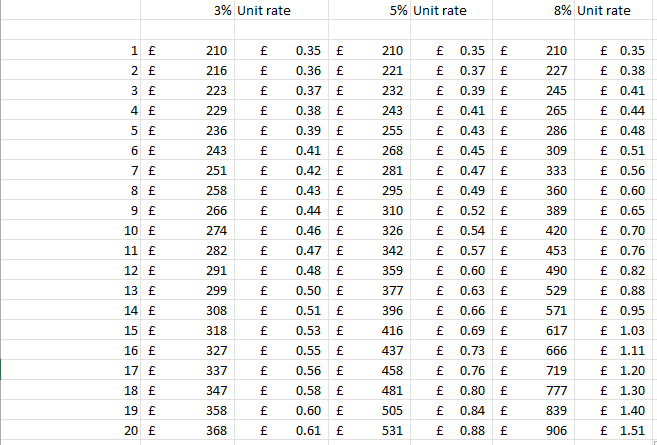
Ah I see. Wasn't something I had considered about decrement delay or cooling in my thoughts here.I'll bet it's toasty in there this summer! The price is compounded per yer, so starts at 35p now, and ends up at 61p (jesus (expletive deleted) can you imagine!) in 20 years, even worse at 8% that will be £1.51 per kWh
-
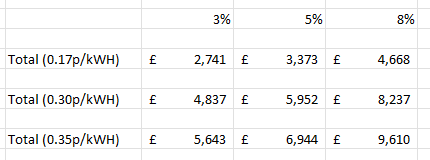
I redone these calcs (I'd actually made a mess of them before) for 17p/kWh and then redone for 30 and 35p too.. Results for over 20 years assuming a COP of 3 on the ASHP and usuing my 900m2 of wall and ceiling area. I've attached the excel for anyone who would like to figure this out in the future. Both your comments I hadn't really thought about - sounds daft but why wouldn't; you achieve the stated U values? also just why would you need to add insulation to get stated values from Kingspan? I can't fathom it. I had some pricing back for 25mm and 50mm PIR, this was for 100 sheets of each just for comparison, which would be around the area of my internal roof (300 sqm), so vs the figures above it would be 3 times the costs (as above is based on ceilings and walls at 900m2) so for 50mm to do above it would be £6300. At 3% starting at 35p/kWh over 20 years, the cost won't theoretically have been recovered. That is just on the basis of pure heat loss, doesn't factor in thermal bridging or airtightness which are seperate issues. I still may do it but helps make an informed decision. Now reading seems insulation is law of diminishing returns which I haven't quite figured out yet where the optimal balance of my existing insulation and adding extra becomes not value for money. Airtightness - I have covered and will focus of doing a comprehensive job. Thermal bridging - isn't quite covered. The walls have SIPS splines, but are areas of studs that are solid wood. On the roof panels the splines are timber for the strength and hence this means lots of thermal bridges, which I would like to get rid of but is there a simpler more cost effective way to do this locally rather than blanket adding PIR throughout the roof? would it be reasonable to add 50mm of PIR at each timber spline over the top of the panel, say 100mm wider than the timber spline then it would do the same as doing the whole ceiling in terms of thermal bridging the only downside is I haven't added and extra 50mm PIR throughout all the panel, but it might not be adding value there as per above the law of diminishing returns? It seems silly but from a cost point of view makes sense, drawback being maybe a little harder than putting full sheets up but not that much more difficult. Compund heat costs.xlsx

-
I contacted Thomas Latzel, they hadnt actually issued the refund by accident. But done it today straight away. Thanks @MikeSharp01 for asking the question otherwise I would t have realised! @cwr you might want to check also.
-
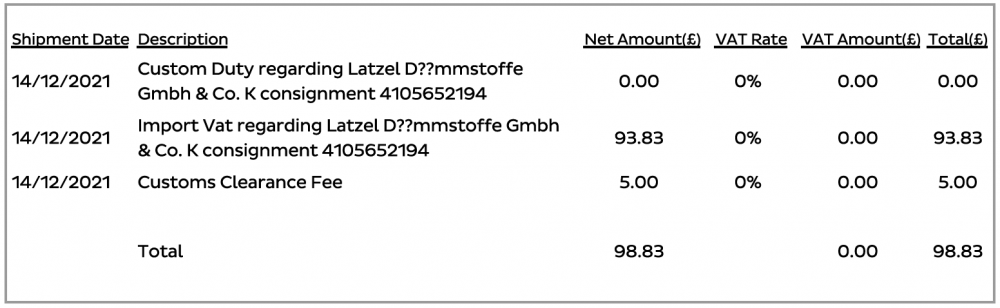
I hadn't really checked but doesn't seem like they did: here is my order: EUR 2017 / the paypal receipt/ which is for the same amount I paid through paypal. The on top of that I paid import VAT see bottom pic (there was 3 of these payments in total). So seems like I might need to check if I got a paypal refund or whether the German VAT didn't go away.

-
Seems reasonable at 6k installed including pipework. I have done my ufh already...I just need the rest and that seems attractive. Whereabouts are you?
-
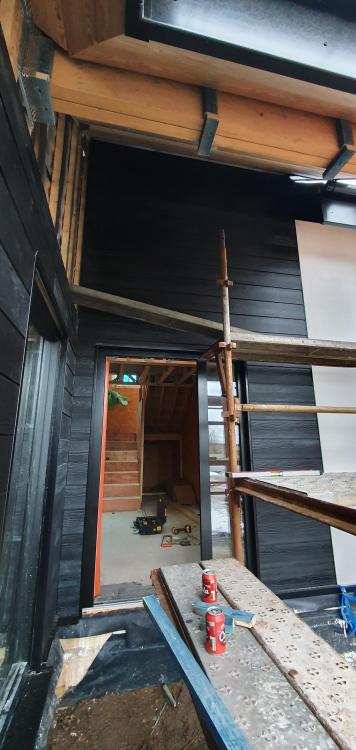
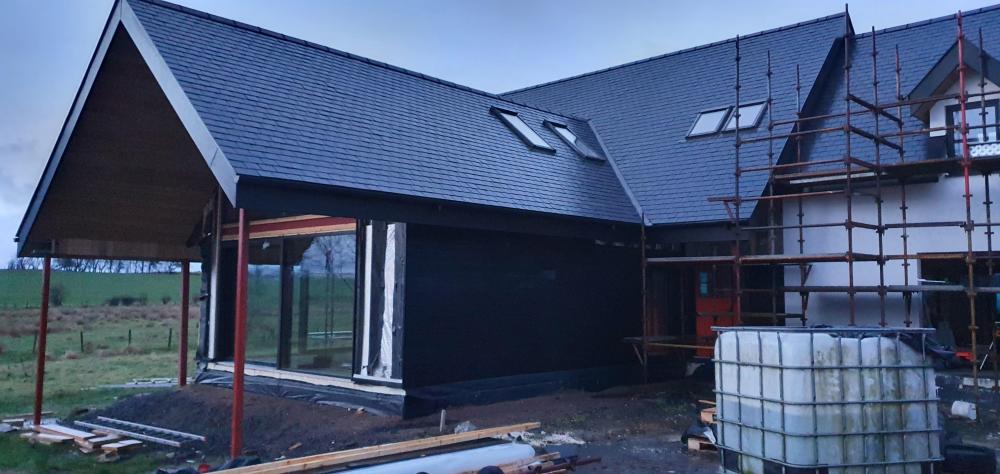
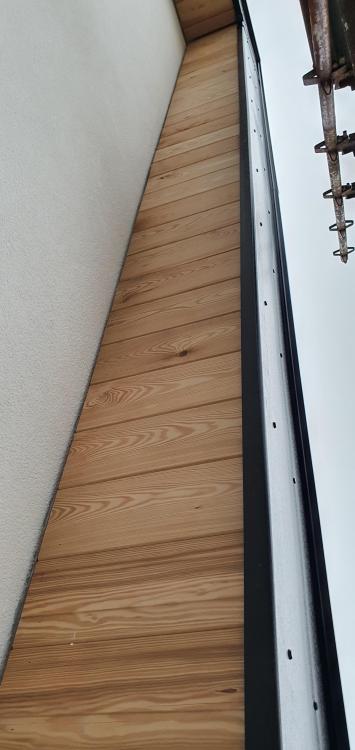
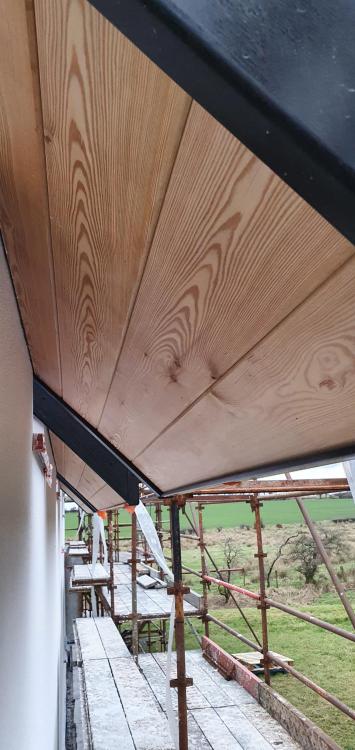
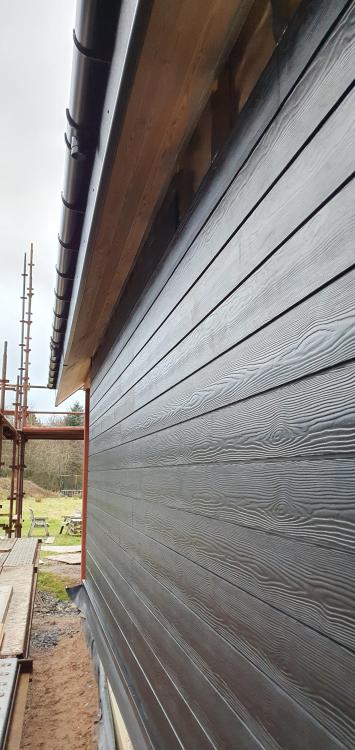
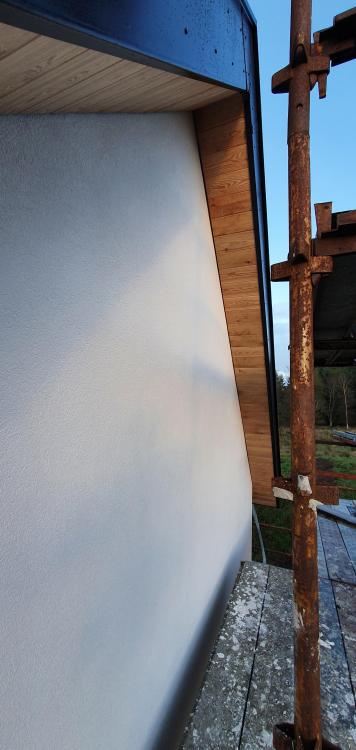
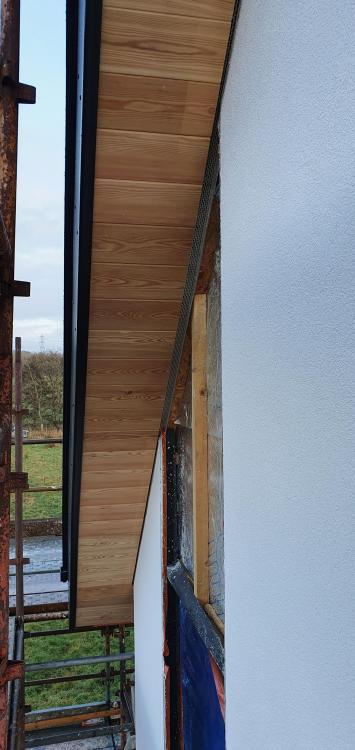
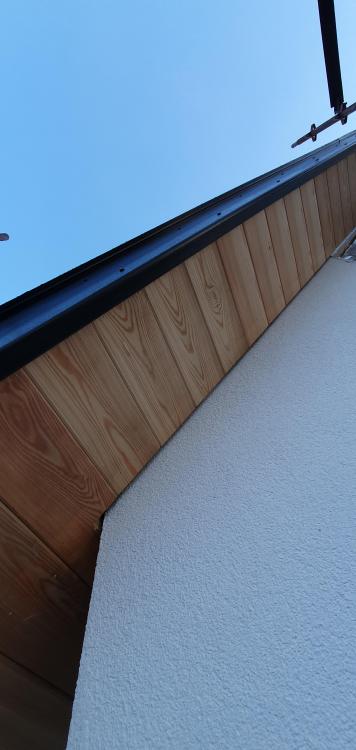
I have siberian larch soffits and very expensive silicone render system...but opted fir cheap black ash fascias in plastic...they actually look really good. I was limited by the fascia depth at 300mm odd deep. Other option for no maintenance is fibre cement . I have black fibre cement cladding too.
-
Got the Orcan F already - did you do it on the first floor too or just tape down onto the tony tray but stil on the wall? The silicone I wasn't planning - thinking that that VCL covers these anyway? Thanks for all the good ideas on home made blowers - was going to do a proper test prior to close up but that will make it much easier.
-
Ask for a refund with Vlad immediately. Also ask Vlad if he paid any money to Boris if he subcontracted it? Worst case you chase Boris to complete order of Vlad goes bust. I'd call citizens advice too and get a standard letter to keep you right on the process. It's a very substantial amount of money.
-
Ah yes - I have one. After VCL exactly that next step, I was actually considering the electrical first fix then battens but the joiners want battens then just say to cut out the cable ways for the safe zones but does concern me as the VCL might get damaged at thats point. I see you have yours cut out there Dave during battening ? Also that you have 25mm battens I thiughtbthese would be too small for a service void for cables...isn't fitting cables in a 25mm deep box a nightmare for ring main?
-
There is another thread like this...butnit deals mainly with a brick and block home. Link here: However I wanted to capture basic logical steps for success and glean some wisdom of things that became hard before I start with the airtightness inside. I'm just finishing up outside of our SIPS house fitting the cladding and plan to move inside to start in around 4 weeks. It's a SIPS kit so naturally less junctions that are difficult to deal E.g where you would have trusses meeting blocks walls etc. I have SIPS panel screwed to sip panel, whilst not airtight hies a long way to close uo gaps. I fitted a tony tray during the kit erection, basic plastic sheet but all I could get on a Sunday but will hopefully simplify that step around joists. I have 900m2 of Intello VCL and 40 rolls of tescon vana on hand but before I start that I was thinking along the steps which seem basic but worth checking. Starting bare house internally OSB: 1) go round and fill all holes (there are some despite it being SIPS) with airtightness foam. 2) fit PIR internally over any ridge beams that are exposed and causing big thermal bridges. 3) Fit extra layer of PIR internally (still debating this) in ceilings 4) Fit VCL. Start from the bottom, staple to wall above laps. Should I tape the top of that layer to wall? Or should I just get the layer above on and then tape the lap? Penetrations - I havent put anything through the walls yet. I really should've done them prior to putting on renderboard and cladding but just hasn't happened. There are some big penetations for MVHR and stove direct air feed and ASHP pipes. The rest are small cables and all drainage goes out through the slab with no roof penetrations. How best to do these? Ideally I'd have done them earlier and I'm aware it'll damage the VCL doing after but I haven't decided absolutely where the final locations are and I dont have the MVHR unit, stove or ASHP yet. I know where they go roughly but would struggle to place these just now. I assume I can just put them through later and then just seal around with airtightness tape easily enough. What other tips and bits and I missing. What can I do before I crack on to ensure success and take the best approach.
-
Sledgehammer reaction. Needless spending of money. Simples pick up the phone have a direct chat.
-
Scottish regs attached.. Overkill why?
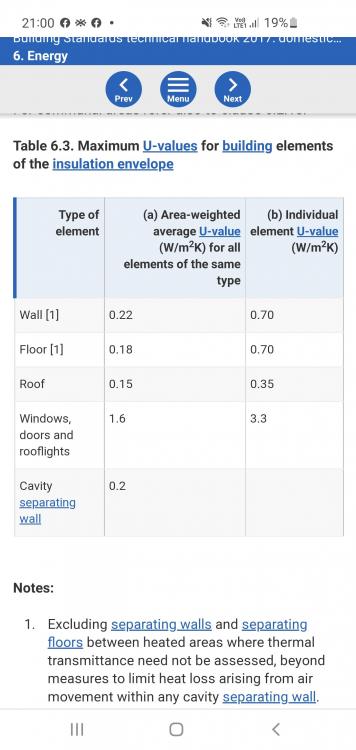
-
Whats is it you need yo be liveable? Just kitchen unit fronts? Go and see them and have a meeting and then understand what the issues are with the business. Its likely in disarray but doesn't mean you won't get what you asked for (eventually) or otherwise you are perfectly entitled to ask for a full refund currently.





