


ToughButterCup
-
Posts
11830 -
Joined
-
Last visited
-
Days Won
101
Everything posted by ToughButterCup
-

How to estimate self-build costs before starting
ToughButterCup replied to selfbuilder91's topic in Costing & Estimating
Here's how our architect answers that question ..... https://rocketarchitects.co.uk/pricing -
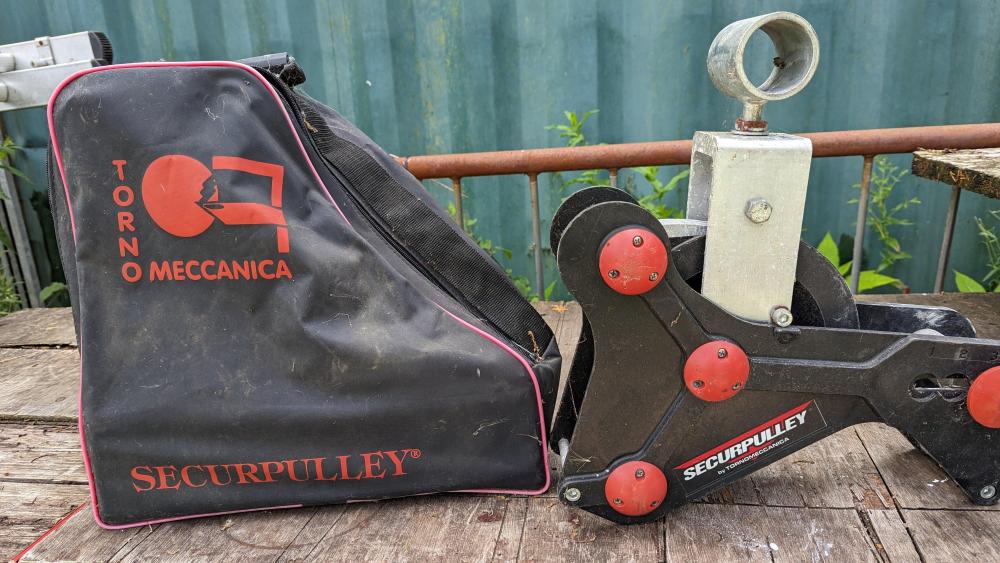
This is what we used and hemp rope, a gin wheel , plus a bit of muscle. And a lot of pre-lift planning. We learned the hard way to keep the rope dry, because the auto-brake doesn't work very well when the rope is wet. I nearly killed Debbie lifting 25kg of concrete up to level 3 of the scaff - let go of the rope expecting the brake to do it's job, it didn't - whoosh, down it went : took about a year to regain the Brownie Points lost .....
-
Is it normal for roof membrane to leak like a sieve?
ToughButterCup replied to Tom's topic in Roofing, Tiling & Slating
And similalrly, the sag shouldn't be so much as to touch the insulation below..... because that means that vapour droplet forming under the membrane could drip onto the insulation and make its way back into the roof. Ask me how I know. 😔 -
How to estimate self-build costs before starting
ToughButterCup replied to selfbuilder91's topic in Costing & Estimating
No, there isn't. The availability of money is only one factor in the total cost of any build. But there are 'givens'. The cost of land in your chosen area The cost of money Your nett income(s) Your risk appetite Your life experience Your network of relevant contacts Your determination - resilience Your support networks Your dream Look hard at all of those. Read all the OhShitStories on this site. You WILL have at least two. And then review the above list. -
No ........... Yes, an A Frame is likely to be a more stable platform on which to work. But it isn't if , standing on the A frame, you work to the side of the ladder - in other words push across the line of the ladder. Your weight , leaning in line with the ladder, makes the set up much more stable. And thus safer. Try it. Stand on the first step of the ladder, in line with the ladder. And push against the wall. Next make the ladder into a A frame, set it alongside the wall. And push against the wall at the same height as before...
-
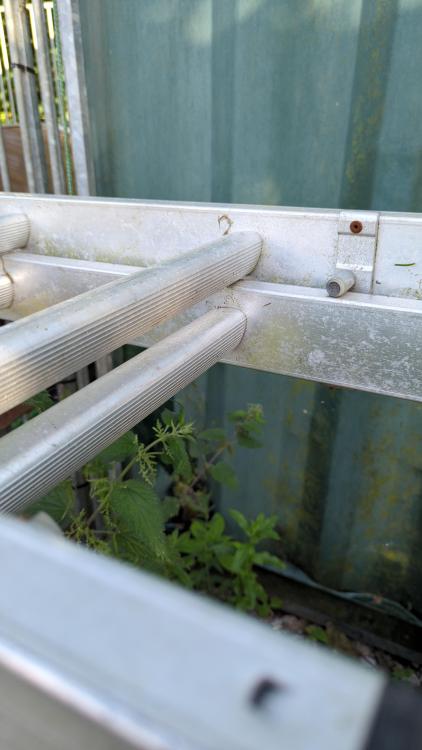
Buy a set where the treads are set so your feet are comfortable. In other words where the tread has a bit of grip, but most of all where the treads are flat when the ladder is in use. Makes a huge difference....
-
Thanks. Might as well fess up ............ look at this complete mess...... Error list: Getting out of bed that morning Mixing render in hot sun Mix transferred to the barrow far too dry initially Didn't pre-wet the wall enough Allowed the already dryish render to dry further before trying to put the mesh on Not laying the render on thick enough (not fit enough) Applying mixture in harsh sunlight Not going to the pub early enough
.thumb.jpg.6fbee7ad69ca91270108f9f89abed343.jpg)
-
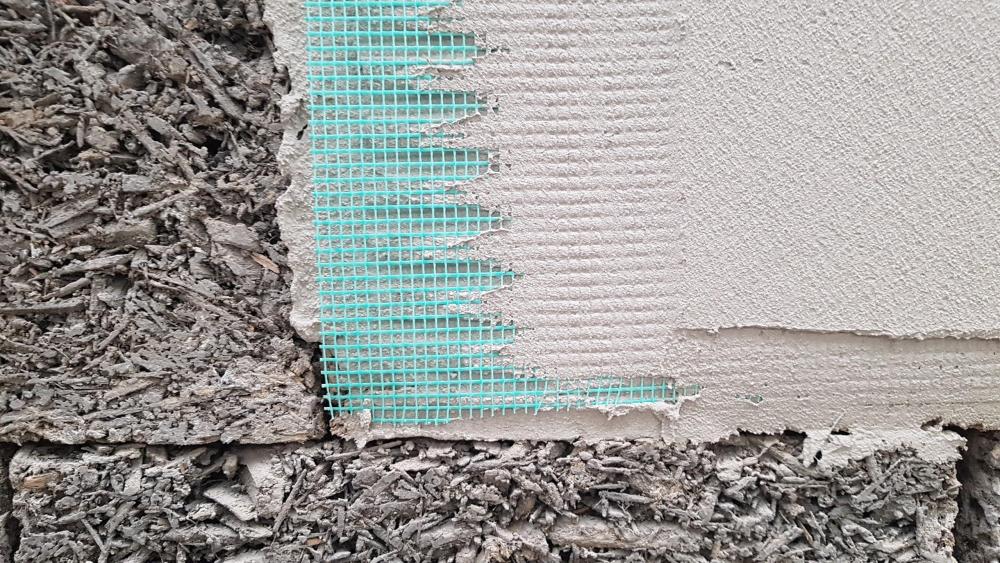
"Oh, we'll just render it" I said - four years ago. Then I tried to get someone to do the job : our excellent plasterer looked at the job, winced and said - honestly - No. DIY then innit. How hard can it be? We have a short bit of wall that I can use as a training ground. Here: look - This shows all three states of that wall Raw at the bottom, parged on the left, and rendered and two coats of exterior silicone paint on the top. Tickety Boo ....... until you look more closely. ChristOnAbike I tried hard. I made errors that I haven't even got the courage to show you here. ( @nod has seen them - too polite to say anything) My shoulders have only just stopped aching. Now I know why many renders are textured like this ( the right hand side of the image) The images shows an ideal build-up - rendered by someone who knows what they are doing. In another ten years I might just about have got it right. Right then, next wall, where is it ......😠


-
Dunning Kruger Effect Stage 1 (I think) .... Unconcious Incompetence. Or perhaps, simple laziness and mendacity: as in I'll tell him he hasn't sent that document to us (when I know he has) just to piddle him off
-
Primrose Electric awning repair - anyone done it?
ToughButterCup replied to Radian's topic in Electrics - Other
I suffer the same generic problem: uncomfortable jobs - once easy - need much more preparation now - I used to be fit enough to work at awkward angles. Not any more. Make yourself a safe working platform. It'll take longer, but be safer and there'll be less swearing. -
Badly let down by Haldane Fisher :(
ToughButterCup replied to CalvinHobbes's topic in General Self Build & DIY Discussion
Where - roughly - are you @CalvinHobbes? Asking because it might be worth asking our contact..... Apolgies, I've just checked online - the company I dealt with is in Administration ...... -
Knowing what I now know, I'd contest that 9% - if the claim for that 'bit' is valid. They are consistently inconsistent, work sloppily and some of their staff are poorly informed.
-
Architect vs Builder - How clean should your DPC be?
ToughButterCup replied to Jimbo37's topic in Brick & Block
Not sure that the idea of 'one discipline versus another is helpful . The architect probably hasn't ever lifted a trowel or dried out a wet wall, or the builder had to create a scale drawing or buy a decent pair of trousers to go to work. Trades and professions often 'dis' one another - especially when they are on your payroll. I got really fed up with that. If you want them cleaned, get them cleaned . If they won't, then DIY. If you don't, you'll be watching the bottom of your walls for water marks for ever and a day. -
Cleaning cement mixer for 2nd batch of mortar
ToughButterCup replied to smart70's topic in Bricklaying, Blockwork & Mortar
Who's doing the cleaning? You? Somone else? The simplest rule is - Don't think: clean. Just bloody do it. -
Is it normal for roof membrane to leak like a sieve?
ToughButterCup replied to Tom's topic in Roofing, Tiling & Slating
@Tom, decent weather forecast for today.... May I suggest a hose pipe and a lawn sprinkler spraying such that small sections of the roof are sprayed - and the others not. And a look-see underneath while its running ...... Looking at your images - how about 'creeping up' on your valley? By that I mean trying to find out if one side of the valley leaks, but the other doesn't? -
Is it normal for roof membrane to leak like a sieve?
ToughButterCup replied to Tom's topic in Roofing, Tiling & Slating
Spelling mistake there..... should have written '... credibly...' -
Is it normal for roof membrane to leak like a sieve?
ToughButterCup replied to Tom's topic in Roofing, Tiling & Slating
My sympathy. Loads of us here are wincing with you. There is a positive angle on this ..... It doesn't matter what the issue is,... there will be many more. The process of dealing with them is important. They train you (us, all of us) to supress the emotion - anger often - and become analytical. And to realise that there is an answer to this problem. You will solve the problem. And after you do that a few times, you can start to draw on the confidence engendered by the experience of getting it right. Especially when you've rescued a sh!tty situation. All the panels? Every panel? Everywhere? Doubt it. Focus on the section that is leaking. The drip will be lower than the water entry point. Focus on the upstream area above the drip. Wait until the rain has stopped (important) Up on the roof strip back that section of felt - carefully, slowly Look for drip marks on the top of the composite panels The leak(s) will be above (higher up the slope) than that spot Hold the felt up to the light - your looking for a small tear or set of tears My suspicion is less than careful handling of the felt...... Forget it until tomorrow's sunshine : go down the pub and forget it til then. Good luck -
Is it normal for roof membrane to leak like a sieve?
ToughButterCup replied to Tom's topic in Roofing, Tiling & Slating
No. We need to know the source - one small tear is enough to let in loads of water. Photos from under the felt will help greatly. The felt itself (if its a common branded felt ) is highly unlikely to leak. -
A fit teenager and a bow saw. 'S what they're for innit. When they can do that properly, teach them how to use a splitter wedge and a sledge hammer. When they can mend the sledge hammers they have broken, teach them how to earn enough money to put themselves on a chainsaw course and a first aid course. When she's got that far, you'll never want for firewood again.
-
SUDS driveway with porcelain tiles?
ToughButterCup replied to BartW's topic in Rainwater, Guttering & SuDS
Wrong brand of Babycham ,....... -
And midge resistant eh @Grian....?
-
A bit perplexed about our generation.
ToughButterCup replied to SteamyTea's topic in Boffin's Corner
You tryin' to put us down @SteamyTea? Just because we get around? [...] This is our generation baby ...... An' I'm NOT sorry. -
SUDS driveway with porcelain tiles?
ToughButterCup replied to BartW's topic in Rainwater, Guttering & SuDS
Well @BartW, yer tryin' , tryin' 'ard. I'll give ya that. Next stop: the BCO's office with a bottle of Babycham - see if that works ..... -
SUDS driveway with porcelain tiles?
ToughButterCup replied to BartW's topic in Rainwater, Guttering & SuDS
So does SWMBO. She now really HATES our BCO because ...... she now knows what the regs are .... How about - get it signed off as as cheaply as possible and as compliant - and then change it to what you want? Who's gonna know? Ceramic tiles outside + rain+ oil spots + dust = broken hips -
Help - scary security situation
ToughButterCup replied to Adsibob's topic in Networks, AV, Security & Automation
Long shot ...... Geese?





.jpg.70d8ebc75139f2c9aa09845354fdc207.jpg)


