


Russdl
-
Posts
1783 -
Joined
-
Last visited
-
Days Won
6
Everything posted by Russdl
-
@SuperJohnG It really is worth giving your flooring and threshold heights significant thought before committing. We knew all along that we would have tiles by the kitchen sliding door, back and front doors and carpet by the living room sliding door. What I’d failed to spot on the final drawings was that all the thresholds were shown as 30mm above the slab. We were after exactly what you’re after, a level transition from inside to out and 30mm is too much to achieve that with tiles. To achieve what we wanted has cost a fair few £££ in self leveling compound, way more than if the thresholds had been, say, 20mm above the slab. (We have a raft foundation and the levels are pretty accurate throughout)
-
@joe90 thanks for that clarification on what constitutes First and Second fix, I think it is that grey area between the two that has been my problem. I’ve assumed stuff was done that in fact was not done. Every day is still a school day.
-
@Dave carpenter I’ve never heard of any restrictions for ambulances, just fire appliances. The catch for us was how far they would have to reverse down the track after they’d put us out.
-
@joe90 First and Second fix...
-
@joe90 Yep. The kitchen is all finished so naturally I’m fretting a bit over that and I have now stopped work on the living room. Which is inconvenient.
-
Likewise, sadly we already have one shower tray (over the kitchen) where the waste hasn’t been connected. I wrongly assumed it had before boarding the kitchen ceiling. I knew this waste above the lounge wasn’t connected to the shower tray but I was slightly stunned to to discover it wasn’t connected to the waste pipe either.
-
Would you consider that ‘first fix’ or is that a mix of first and second fix? I would certainly be happier if it were all proved to be water tight before we boarded.
-
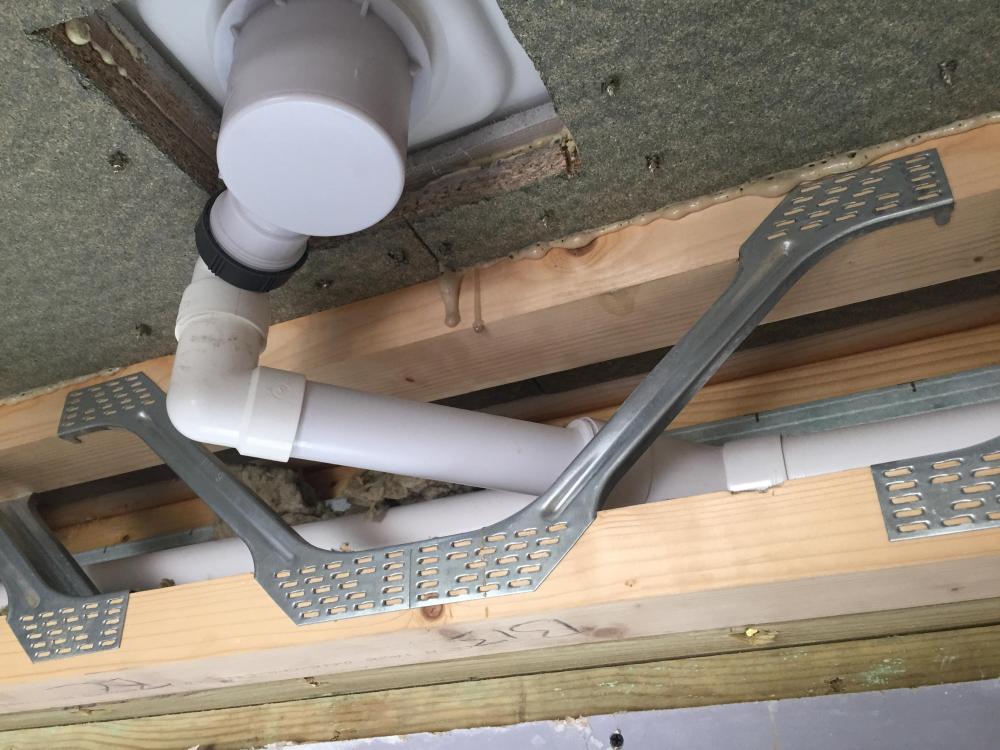
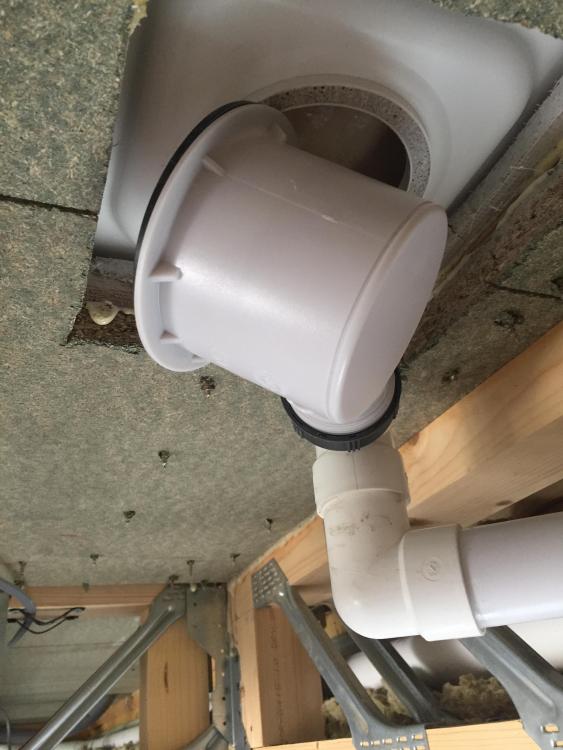
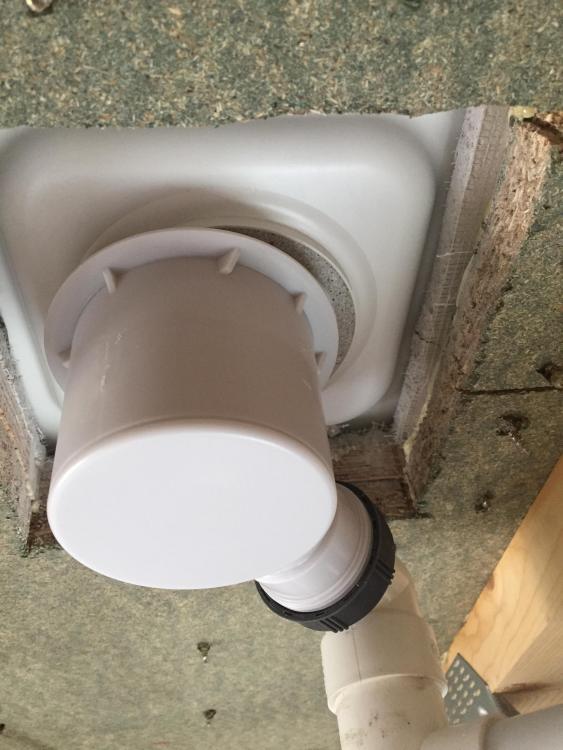
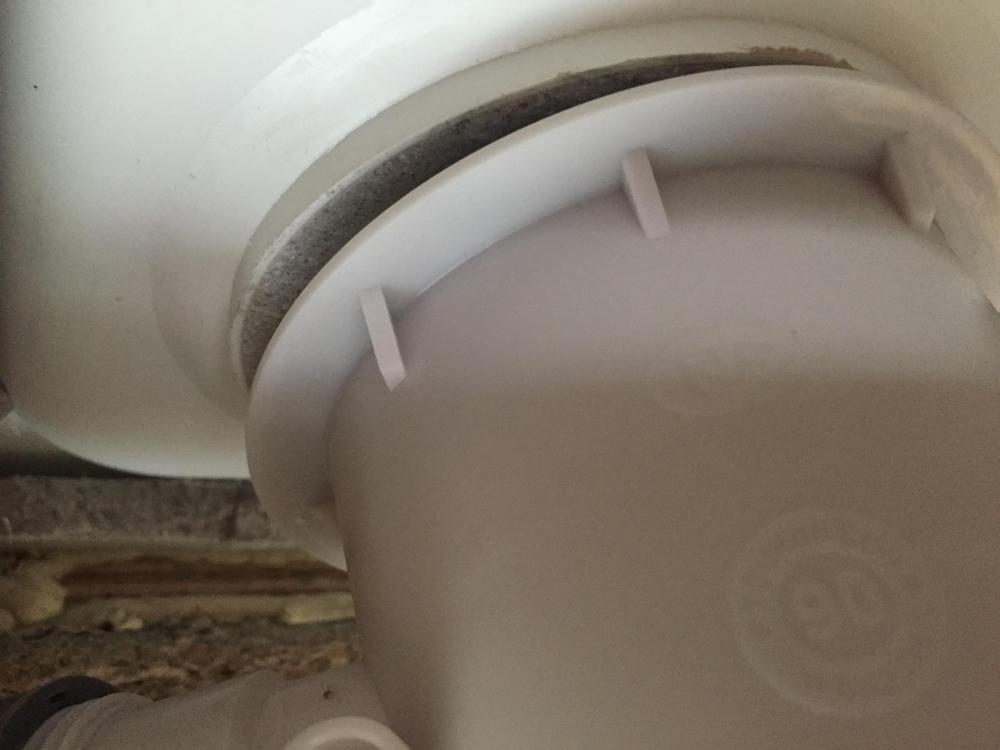
I'm boarding the ceiling of our living room which is the underside of the main bathroom. First fix plumbing has been completed in the bathroom but when I look at the shower waste (pic 1) Firstly it's not connected to the drain pipe. (pic 2) Secondly it's not connected to the shower tray. (pic 3) Thirdly the 'natural' position of the waste is not parallel to the base of the tray, it diverges around 10-15°. (pic 4) So the questions are: How do I fit the shower waste to the drain pipe and ensure it NEVER leaks? I'm told I can board the ceiling and leave the waste disconnected from the shower tray so it can be fitted from above at a later date. Is that a good plan? When it comes to fixing the waste to the shower tray there will be a fair bit of force on the waste pipe because it is not naturally aligned with the shower tray. Will that present problems later down the line?
-
@Nick1c yep, it's a new build. MBC timber frame. The studs are theoretically 600 centres but we haven't found many that are and as the batts are 600mm wide they've pretty much all needed cutting. Apart from the time element it's been no big deal cutting them. I've been surrounding the MVHR ducts with the Rockwool. There have been lots of little bits left over, perfect for stuffing in to all the little nooks and crannies.
-
Not really answering your question @Tom but we’ve done pretty much the exact opposite to your proposal. I’ve never been a massive fan of en-suites, too much happening too close to a bedroom for my liking. We have an en-suit to the main bedroom, sort of. To to get to the master bedroom you open a door from the landing to a walk through/past wardrobe. A door on the right accesses the bedroom and a door straight ahead accesses the en-suite. In effect, anyone can use the en-suite without entering the main bedroom so we will treat it like an overspill ‘family’ bathroom if required. That plus the main family bathroom is all we have. I suspect we we would have issues were we to try and sell a 4 bed house with 1 family bathroom and 1 en-suite but I plan on pushing up the daisies before it goes on the market so the kids will have to deal with that.
-
I’m using RWA45 (50mm). I can’t comment on how well it works because the house isn’t finished and when it is finished I’ll never know what it would have been like without. We’re using resilient bars in lots of areas as well. Currently, in a door-less house it’s really difficult to get the attention of someone upstairs, they can’t hear you. Not one of the Rockwool batts have fitted the space available without cutting but they are very easy to cut with an old saw. I cut them 5-10mm oversize and they squeeze in a treat and stay there.
-
It is. There’s an image on page 1 of this thread. Tiny. That sounds like a very wise solution. Thanks Peter, I think I’ll do that.
-
Returning to my water main. As a temporary supply I connected some 20mm MDPE pipe to my 3/8” Alkathene water main using a Plasson connector and adapter. I’d now like to run 25mm MDPE from the 3/8” main to the house, the only adapter I can find to do that is this one: https://www.plumbnation.co.uk/site/talbot-grippa-universal-adaptors/?gclid=EAIaIQobChMI4tTch_D36AIVpoBQBh1IFwn3EAQYAyABEgK1K_D_BwE I’ve never heard of them before. Are they any good? Are there better options? Ta in advance.
-
MVHR fire rated terminals
Russdl replied to Russdl's topic in Mechanical Ventilation with Heat Recovery (MVHR)
I think I found that particular thread but it didn't think it answered my specific question. We are two storey, however, our loft is fully open to below on one side and will be accessed by a permanent staircase though it will only be used for storage, that may well put us in a grey area. -
How do I find out if I need fire rated terminals for my MVHR ducts. Is there some guidance written in stone or is it down to the whims of Building Control (who aren't answering my questions at the moment). Do you have to have them in the kitchen for example but not bathrooms? Any guidance would be much appreciated.
-
Well done @Visti. You obviously were successful with your FST. You make me feel inadequate!!
-
That looked relatively challenging!
-
Oh yeah. And the dust.
-
Against all the wise advice on this forum I’ve had a go with it, with limited help and varying levels of success. Started with a cupboard area and progressed to larger and larger rooms. It got more and more difficult. We are now using plasterboard to finish off. Weak and feeble and as fragile as eggshells in comparison but what a pleasure!!! Perhaps with your helper who has prior knowledge it’ll be ok. But I’d definitely go along with what @Mr Punter said, get a trial batch to start with. It does kill power tools, and it is bitchin’ heavy.
-
Can't build house so making shepherd's hut / site hut
Russdl replied to MortarThePoint's topic in Garages & Workshops
Looks impressive and should definitely keep you busy! I think you ought to get some windows in there at the planning stage though, this does not look like a temporary structure and it'll make it so much more useable in the both the short and long term imho. -
@PeterW that’s really useful Peter having that ball park figure to knock doors with. Much appreciated.
-
@Temp thanks for that. I’ve just been looking at some YouTube farmer stuff re the planings and how they fix their tracks. I reckon it could be a goer. Not too sure about pouring diesel over it as many seem to recommend. @PeterW I’ve had a quick Google of the roller (because I had absolutely no idea what you were talking about!) and that shouldn’t be too much of a challenge either, as a rental. Thanks. I reckon the only hurdle left to leap is persuading the other 3 that use the lane to chip in. I’ll knock some doors.
-
Along similar lines, we have a shared pothole strewn track that 4 properties use, we’re the 4th, 60m from the road. A friend of mine says it can be fixed with road planings which as I understand is the tarmac scraped off existing roads prior to them being restored with a new layer of tarmac. Does anyone have any knowledge of fixing tracks with planings? A cheap option by all accounts.
-
I think that is ultimately where I am regarding Fermacell. I found myself putting noggins in today, never considered that when I was using the Fermacell.
- 78 replies
-
- 1
-

-
- dry lining
- fermacell
- (and 1 more)
-
You did indeed and with 20/20 hindsight I should have listened (but I’ve always been a bit pig headed). The marketing does seem to gloss over some of the nitty gritty but I’m sure a well trained team would ace it, but probably best in an office block or something like that. I’m very grateful to @PeterW for his help to allow us to get this far but as a one and a half man band I’ve admitted defeat. Started with some plasterboard today - all ready broken 3 sheets, that never happened with the Fermacell ? @Dreadnaught it’ll be interesting to hear your feedback after your course.



