
Conor
-
Posts
4165 -
Joined
-
Last visited
-
Days Won
12
Everything posted by Conor
-
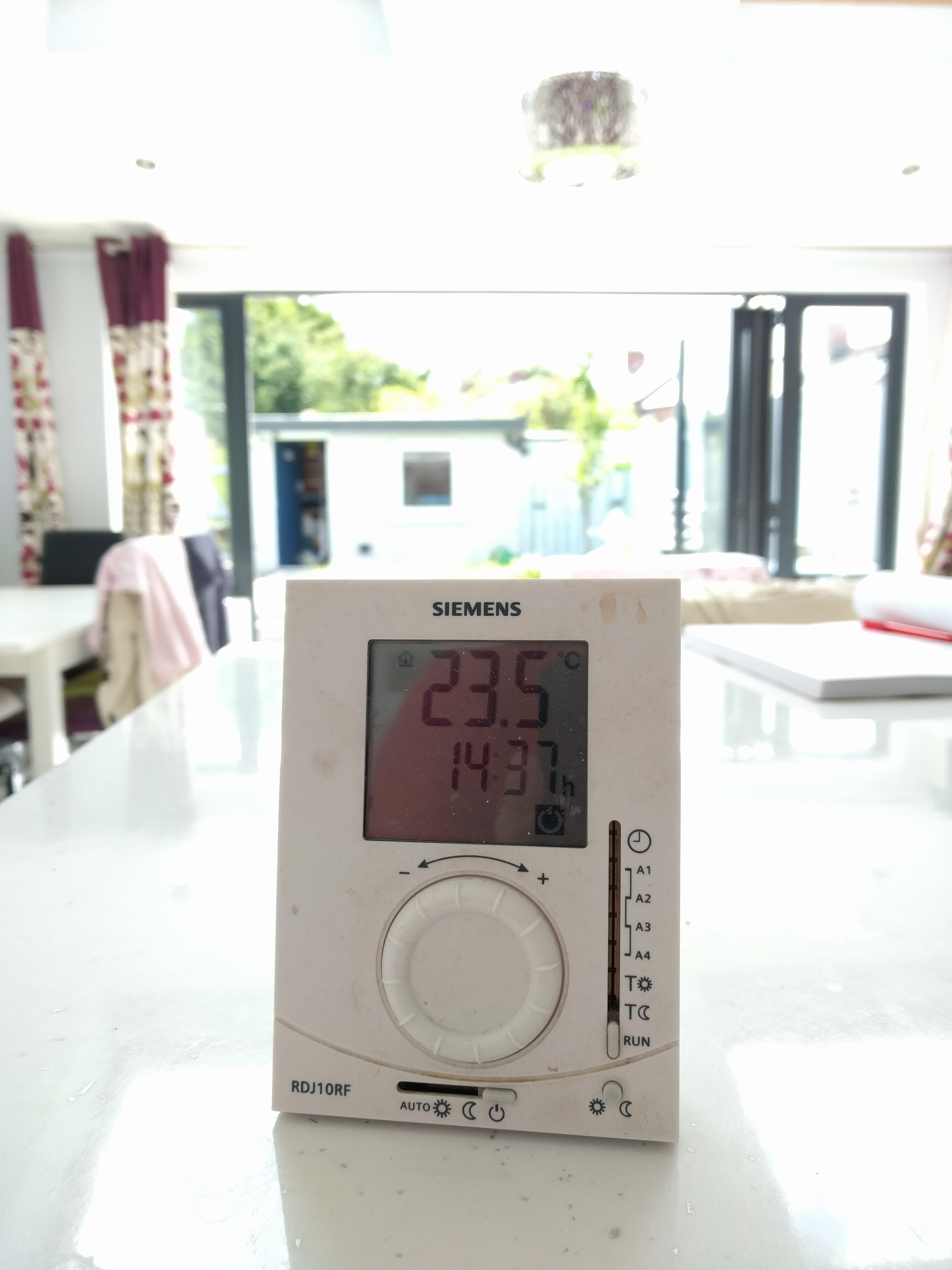
I'm working from home, got the bi-folds open. 23.5c which is same as outside temp. Would be pushing 28c if they were closed.
-
Two of the windows are high level letter box windows in open plan areas, other ones are in 1st floor bedrooms that have either Juliet balconies or skylights. I hadn't fully considered the water drainage and plastering upto the window... Sounds like more problem than it's worth. Might just go back to the idea of standard pvc frames with reveals packed out to his most of it.
-
People talk about future mass migrations of populations due to climate change.... assumed to be people from already hot countries that then become unlivable... but I can see the north of England, Scotland, and northern Ireland being invaded by sweaty southerners after today!
-
Thanks guys. I'll look in to it in more detail. In regards to removal of units in future, I could fit the external EPS slips first, install glazing units from the inside, and fix in position using internal timber slips (+ air tight tape)
-

Small ASHPs / Units primarily for DHW
Conor replied to Conor's topic in Air Source Heat Pumps (ASHP)
HW demand will be low... Just two of us, I work away from home 3 days a week, partner often showers at the gym. That's the kind of thing I'm thinking of... All in one, simple. Think the simplified install will make it cost effective compared to gas. -
We've a lot of fixed pane windows in our design, and in a lot of cases the frames will be barely visible as they are high level with deep reveals. Can I use glazing units fitted directly to the ICF reveals? Thinking of fitting against exernal side of the concrete core and securing with strips of EPS300. Are there regs/standard details for this kind of thing?
-
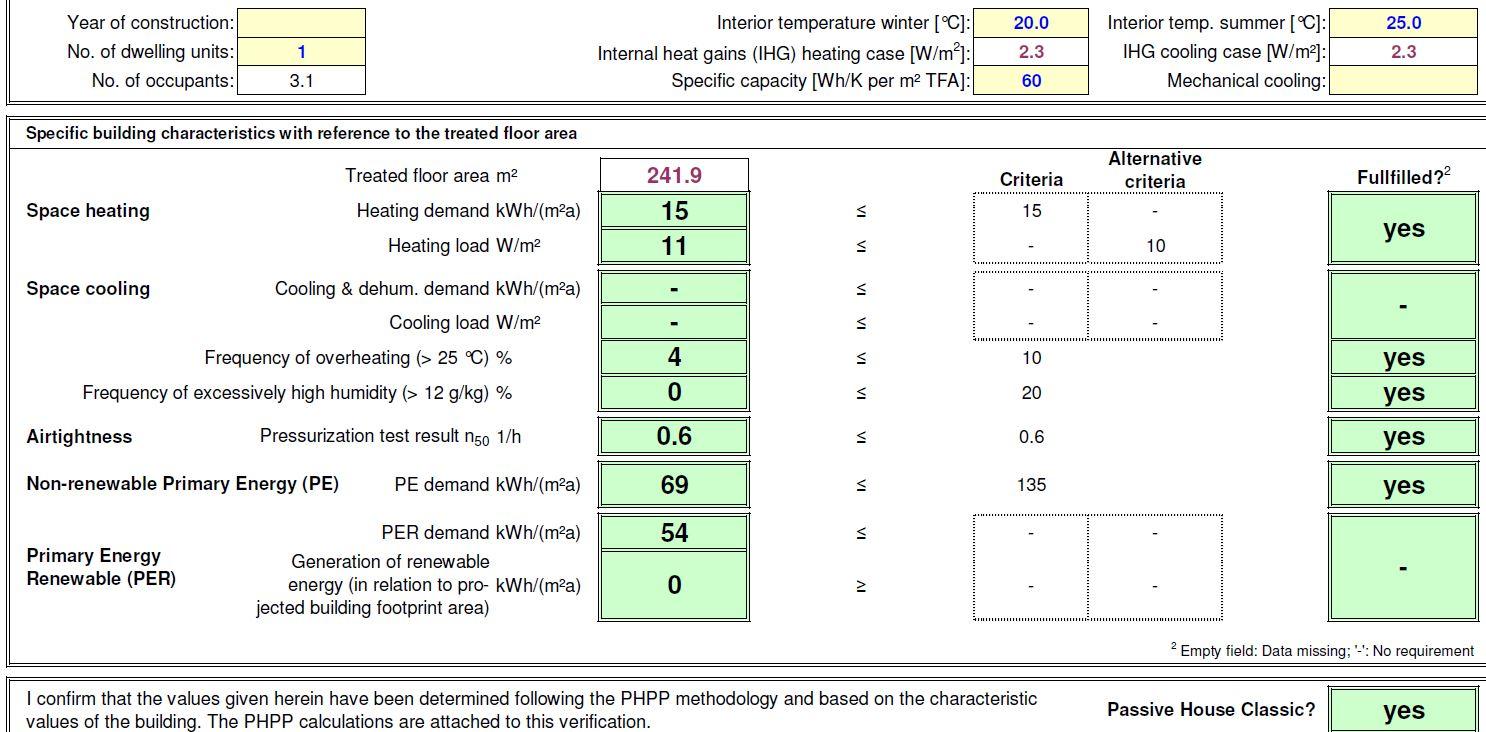
Had previously convinced myself on the mains gas boiler route, but the inescapable truth is that it is a 100% fossile fueled combustion device... As we're building passive, head demand is quite small (PHPP attached) and I'm only putting three UFH loops - just wet rooms on the three floors. So our primary demand will be DHW. I've read briefly about ASHPs with COPs tailored to hot water production. Any suggestions and thought prices for supply? Only quote I've got was a Nilan compact P close to £10k. I've previously been dismissive and a little ignorant of the tech... Please educate me!
-
Speak to Kore. Quote came out competative and quote for engineering calcs was £600 for 115m² slab.
-
We're doing similar with Baskil - seems to be about 40% cheaper than Alu or alu clad. The smaller north facing and gable widows will be fixed pane, so plan on these being pvc with minimal frame visible. The rear is a 6m slider with full height windows directly above.... These will be aluminium. Means total cost should be in the low £20k rather than low £30k
-
Pre cast concrete... We use it on reservoirs, pumping stations etc as it can be faster and use less concrete than in-situ, however, I don't think it works on a small, one off scale: Higher transportation costs as normally slabs have to travel further Need for heavy lifting equipment on site for longer (cost) Significant H&S risk of handling large, heavy slabs, esp on small sites with small crews. Slabs can be difficult to align. Movement and expansion needs to be managed - on a small house this would be a nightmare unless using "whole wall" slabs. Joints need to be caulked /strapped/ jointed etc, not an issue when working with 12x2m slabs, but could be time consuming with smaller, complex pieces. Minimal scope for tweaking on site, making changes etc.
-
Strange Cemex claim about their flow screed.
Conor replied to epsilonGreedy's topic in Underfloor Heating
They should strictly be saying "thermal conductivity" The term efficiency is thrown about in such circles incorrectly all the time, e.g. Dyson and their "super efficient" heaters and cooling fans. You could argue that with a more thermally conductive slab, you achieve room temp faster than traditional screed, and therefore the heating switches off sooner, so energy losses by the system running would be reduced. -
I'm guessing this isn't cheap?!
-
Used one recently on a trip to Portugal. Despite the incomprehensible controls, and the largely warped and poor quality pans... I loved it. 100% converted. I'm also all for eye level ovens. In my opinion it's much safer and easier to lift a heavy, hot pan out of an oven and worktop level than it is to reach down to floor level. We have a double but next time I'll have 2x single ovens at a slightly lower level... Partner can't see What's going on in the grill!
-
Couple sheets of cheap DPM and a few concrete blocks and your sorted.
-
MVHR is primarily an air quality device... Reducing humidity, removing pollutants etc. Heat recovery is a bonus feature. Don't read too much in to the efficiency numbers bandied about... They are done in ideal lab conditions and real world are a lot less. MVHR system is totally doable DIY. Basic concepts and then laying ducting through the house. You can easily save £2-£4k.
-
Anybody with first hand experience lately in regards to mortgage application process with Ecology BS? Roughly how long did it take from starting application to getting an offer? We're trying to time things right in regards to our planning coming through (est early August) and current residential mortgage expiring in October. Also, what did you provide in terms of cost estimates? They have said to us either signed quotations from builders or "professional" cost estimates. We have a QS estimate but it's quite rough as it's based on planning drawings. Can I get my architect to sign off on our cost estimate? I've gotten part quotes and rough estimates from various suppliers, along with my own estimates using industry rates, and some of the QS figures, in a spreadsheet. We don't have the time to wait for the tendering process to get prices... We need to apply sooner. Any other tips with them? Thanks.
-
I've always used watered down PVA for chipboard and MDF... No issues.
-
Accept the discount! It won't make a noticeable difference. They may have messed up but in reality the pressure losses in your internal house plumbing will be much, much higher than this short section of 25mm pipe.
-
You'll need to use an approved sublevel tanking membrane - e.g. self adhesive bituminous membrane. Once you are underground, you are dealing with water that has positive hydrostatic pressure, not "damp". Make sure you install a field drain and backfill with granular material. Or is the gabion directly against the structure? If so, what's on the other side of the gabion? Is there a chance water could pool behind? What depth are you talking?
-
Search for movable acoustic walls... We have a similar layout and will be using them to Seperate the kitchen from living area. Need to design them in from the start.
-
Raising the floor will make your rooms feel smaller. Even 90mm is noticeable.
-
My neighbour designs and installs ventilation systems. He's installed various types and currently recommends maico. They have fully automated functioning, VOC, CO2, humidity, temperature sensors that control flow rate. You can programme your own modes through the app, e.g. when humidity hits a certain point, it can trigger a change in flow rate. Also have the semi permeable heat exchanger that help with humidity. I've not looked in to MVHR systems at all yet, so not been able to do a comparison. His reason for liking them is the range of control and high level of automation. Fit and forget. Apart from filters.... https://www.eibmarkt.com/gb/products/Maico-Central-air-supply-and-exhaust-device-WS-320-K.html Edit. Link to manufacture's pages https://www.maico-ventilatoren.com/en/products/p/ws-470-g51104/ws-470-bet-p113724/ The units with "E" in the name are the enthalpic. Ones with "K" have anti frost pre heaters.
-
Not really a finish, but there is concrete. In our basement level, I'm going to make the supporting walls shuttered concrete. Mostly for speed (external walls ICF) but also because it means I can have walls that will have an acceptable finish. I'm really not into the whole industrial look... But will give it a go for the basement. I will be using different textured forms, dyes etc to get different effects. And it it looks dung, can always cover or skim.
-
Network cable and safe zones
Conor replied to bissoejosh's topic in Networks, AV, Security & Automation
Or in my case, fitting a TV mount on a wall.... Directly above the double socket the TV is normally plugged in to ? -
Window positioning in the solid wall with external insulation
Conor replied to romario's topic in Windows & Glazing
Interested, as that's what I'm planning with my ICF build - window frame sitting on the external EPS and secured to the concrete core with straps. Same as you, concerned that windows would sag if not having at least a partial edge on the concrete.