joth
-
Posts
2918 -
Joined
-
Last visited
-
Days Won
5
Everything posted by joth
-
This makes you ineligible for BUS https://www.ofgem.gov.uk/sites/default/files/2023-09/BUS PO guidance V2.3.pdf (my emphsis) "4.25. The heat pump or biomass boiler must provide both space and hot water heating and be capable of meeting the full space heating and hot water heating demands of the property." What is DHW currently supplied by? (aside - it appears upgrading Willis to ASHP is covered by BUS, so you can claim it on this basis regardless of being a self build vs any other new build. "4.23. The new low carbon heating system will need to completely replace an existing fossil fuel heating system or electric heating system which does not include a heat pump.")
-
As you want this done asap, the possibility of using BUS comes down to whether you can find an installer ready to move at a speed acceptable to you. There's no doubt you could get it done entirely within the BUS grant if time wasn't a pressure, as yours should be a very simple install, no emitter or UVC changes needed whatsoever. So you could chose to put the excess money a DIY install would cost towards covering your excessive Willis bill this winter and hold tight until an installer gets to you. Depending where you are there maybe small installers available or have to rely on octopus and even BG now... One other thought, are you eligible for BUS? There's no boiler being upgraded, and your self build is complete (?). Check the wording
-
Personally I'd rather the noisy stuff be outside my house than in it I think the planners either don't care , or care about the visual aesthetic as much as the noise It's neighbours that care most about the noise, and as most are installed under PD the planners don't actually get a look in on it.
-

Phantom electricity usage - 3 to 4am
joth replied to Andeh's topic in General Self Build & DIY Discussion
ASHP used for DHW and for heating? DHW will be a fairly consistent load and could well be this. Space heating will obviously vary according to the weather. Also do you have an immersion heater on the ASHP? Maybe try isolating it. At very least I'd power the entire ashp off one night and check -
This is incorrect. I can point you at the smart meter spec that makes vector summing clear, if it helps.
-
interesting point. I've always been put off playing with this on the basis the schedule is entirely driven from the cloud so an outage will leave it in an odd state. (And, it's in competition with the FTC6 built in schedule function and the schedule in my HA). you're right though this is the easiest way to set variable flow temp. (The other would be to abuse the zone 1 vs zone 2 settings, have them both plumbed to a single set of emitters but switch between which one calls for heat based on time of day. No good for me though as I need the dual zones for its intended purpose, as i have different zones for UFH vs FCU)
-
@jack got it that all makes sense. Sorry you've ended up explaining each point 5 times lol. Our UFH is in just 75mm screed which is pretty good to freewheel a constant temperature through the day, but also fairly fast responding when we do heat it so boosting the room setpoint does work ok for cheap rate. It's a fairly simple regression analysis to work out the daily kWh input needed for a given outdoor temperature, so sooner or later ASHP will have learning thermostats that solve this in a nicer way.
-
Just to riff on this a bit more, what I've effectively done now is create a WC curve that allows my heatpump to put in a day's worth of energy requirement in about 4 or so hours runtime. I have octopus go so having Loxone boost the room target temp between midnight to 4am pretty much ensures the ASHP just runs during cheap rate, and again a bit sometime during the day if solar gains are low. This works well enough I'm not so motivated to mess with direct control of the UFH flow temperature
-
Search this forum for "polyphase" it's been covered many times. So long as you have a SMETS v2 smart meter vector sum metering is guaranteed by the standard. If you have an old installation with separate import and export meters, good luck: the suppliers often don't know how it should be setup, and the installation contractors often fail to set it up properly even if told. https://forum.buildhub.org.uk/search/?&q=polyphase&search_and_or=and
-
Ah got it makes sense, yes my brain wasn't fully engaged. I managed to do what you're after with my ecodan, using the Home Assistant MELcloud integration to set the flow temperature. Problem is that goes via cloud and WiFi and only updates once per 30mins (assuming the server is online..) so I have up with it. Direct connection is possible by wiring an ESP32 into the WiFi adapter port but I've not ventured there yet, and will lose the use of the cloud portal for performance monitoring. (which is pretty poor tbh but I have 3 years data there now so feel bound to it) The Panasonic has an optional modbus gateway, depending on the model number you have, which would very cleanly allow Loxone to directly control the flow temperature. PAW-AW-MBS-H supports H generation onwards, via the CN-CNT port.
-
Are you using input 12 (HEAT) to send a call-for-heat signal from Loxone to the heatpump? So the setpoint is managed in loxone, in which case it's easy to change the setpoint based on a schedule. (Or, use the Excess Heating input on a Climate Controller loxone block, which is what I do but actually a lot more complicated way to do the same thing) What am I missing?
-
Ones according to IEC 60664, the other following UL 486C. Presumably following different testing protocols, ambient temperature, or something Although the wago website mentions 600V / 20A Personally I'd start to feel sketchy using them for anything over 230V 16A
-
Of course, the fact it's not controlled by building regs doesn't automatically make it safe. Low voltage wiring means higher current, for the same delivered power, and high current can easily get super hot and start a fire if buried in a wall.
-
You can also buy EU->UK switch adapter plates from Gira https://ivoryegg.co.uk/shop/products/gira-2849-00-bs-adapter-support-ring?taxon_id=14
-
Who is they? https://www.wickes.co.uk/Deta-Earth- Sleeving---2mm-x-5m/p/710807 (But 100m only costs a few pounds more so could be a false economy)
-
You could charge 12 or 24V DC batteries from PV and use that to power everything you can. So long as there's no mains (240V) in the house, and all less than 50V, then it's not covered by building regs. Basically, it's same as car or caravan or narrowboat electrics. If the house has any installation 240V then it needs to comply with relevant regs for RCD protection, consumer units, wiring etc regardless of where the electrons are coming from.
-
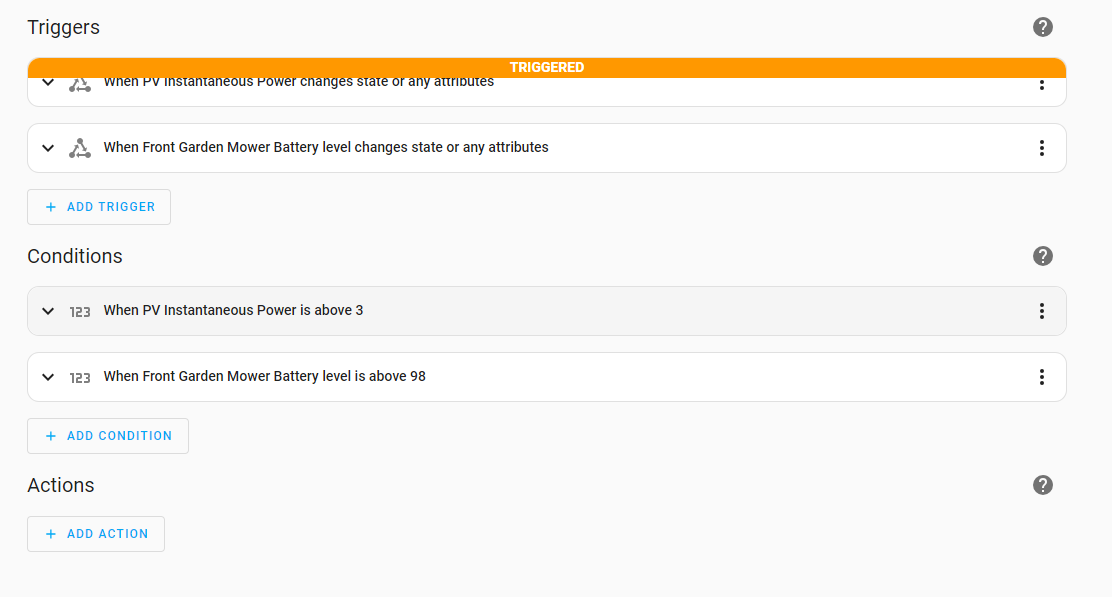
In a word, yes. Plenty of smart relays, https://shellystore.co.uk/product/shelly-1/ is perhaps easiest. Home Assistant now auto-detects Shelly devices and adds them once they're on your wifi. You can power the Shelly from 24V and then use the O/I connections to close the potential free input on the ASHP Personally I find Home Assistant UI for making automations a bit tedious and prefer the graphical flow editor in my Loxone system. With Home assistant, if you want to trigger only when both A and B are true (e.g. A = generating power, B = battery full) then you need to setup both A and B as the trigger, and also A and B as the condition. This is because triggers are always "ORed" together, but conditions are ANDed (by default). If there's a nice way to avoid this duplication I'd love to know, as it's littered around several of my config. (I think "install Node Red" maybe the answer) (I used another battery level for illustration here, as it looks like my inverter battery isn't actually connected into my Home Assistant install)
-
So I see mention here of welding, argon, nitrogen, regulator, pressure testing, vacuum pumps, test gauges. Also there's flaring and connectors of various sizes and so on, plus the R290 itself. I'm sure this is 'basic' for someone who knows the ropes, but I've never soldered a pipe of any type in my life (electronics plenty, wet plumbing never), so while I took this on as a learning challenge, I definitely underestimated how much learning there would be. I'm in herts, I think everyone here wants to service large installs for commercial and mansions.
-
The story continues. I contacted two local F-gas companies. First dropped the request moment I uttered R290, second turned up on site anyway, screamed when he saw in ran off and blocked/ghosted all further contact. Next, I paid an eye-watering deposit to Appliance Direct to have their own service team come one. 2 weeks later they final get back to me to book in a date another week on. Sit waiting here all day (no timeslot given), eventually phone them 20mins on hold they say they'll call me next day. Got the call this morning: the engineer didn't have any R290 on the truck so decided to skip my appointment without letting me know. They've now rescheduled it for another 3 week's time. To be continued.... tldr unless you comfortable to flare pipes and recharge R290 yourself, I'd avoid these self-install units as a false economy. Sure, it maybe you're more competent than me on the initial install, but if anything ever happens to it, they seem near impossible to get professionally serviced. (It's extra frustrating that being unregulated literally anyone could do it. It's just F-Gas and GasSafe don't want to go near it as it's not officially "in" their ball court)
-
Very timely, and relevant report from the NIC today https://www.building.co.uk/news/infrastructure-body-backs-massive-heat-pump-roll-out-but-spurns-hydrogen/5125834.article Tl'dr electrifying heating is the most important national infrastructure project of our time, and hydrogen boilers are BS.
-
Okay not an easy proposition to build new plants and there could be alternatives, but regarding the nuclear we already have (or import from France) it still sounds better plan than piping fossil fuels over from Russia and burning them inside my own house
-
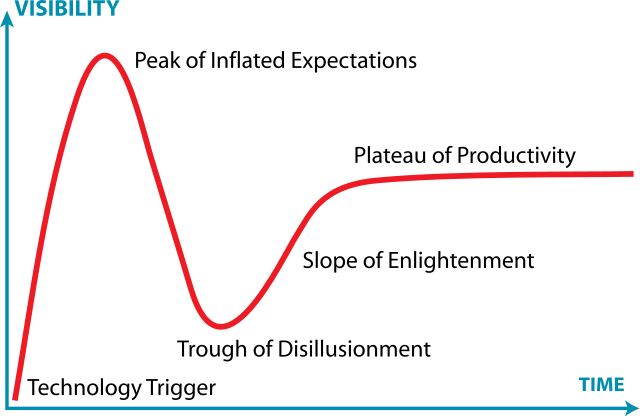
Agree with all responses above. One thing that's very true at the moment is owning/using a heat pump is indeed unfamiliar. For hot water it's much more like an old system boiler than a combi, and for heating it's perhaps reminiscent of E7 storage heaters, although not really like it in practice. On top of this, the tech is relatively new and has some odd/surprising failure modes that aren't obvious to solve or even go unnoticed for long periods, e.g. short cycling causing massive cost increases. Finally, the metering is all wrapped up in the rest of the household electricity usage rather than having it's one "gas is heating" approximation in the bill, and the manufacturer monitoring and controls is often provided in dang awful cloud services and half-baked apps which further harms the experience. Fundamentally, heat pumps are the future, we're just living through the early adopter / peak of hype / trough of disillusionment tech maturity stage. Especially us here in this forum.
-
ASHP / Octopus Cozy - any experiences?
joth replied to Paene Finitur's topic in Other Heating Systems
If you have the indoor display unit, you can look at the live power draw on it, and slowly turn all the circuits off in the consumer unit one by one noting how much the power draw drops by when each is isolated. Probably you'll find some background power hog on a ring main so repeat the process turning off each device on that ring one by one. If it's a lively house with lots of people and change expected, investing in a multi circuit monitor maybe we'll worth it. E.g. https://www.amazon.co.uk/3-Phase-Emporia-Electricity-Metering-Conserve/dp/B08CJ3VC79/ Even so, we're talking about the 150kWh summer base load, that 500kWh heating load in winter far outweighs it. -
ASHP / Octopus Cozy - any experiences?
joth replied to Paene Finitur's topic in Other Heating Systems
Just for context, I live in a 160m2 4 bed 1960s house that used 850kWh on heating over the entire last year. (20°C internal temperature, deep renovation to PH standard). About 45kWh per week in December & January ISTM swapping to a cheaper rate or using batteries really is just pissing in the wind, your issue is the house is wildly underperforming at keeping heat in. -
Ah I'd missed the subtleties of a Vs p series and see I'd linked one from each series. Thanks for the clarification. Do you know if a and p line up if intermixed, can one interconnect bar span 2+E blocks from both series?