
Radian
-
Posts
2586 -
Joined
-
Last visited
-
Days Won
15
Everything posted by Radian
-

Can a fully discharged lithium solar battery be charged
Radian replied to lakelandfolk's topic in Energy Storage
Lithium Battery Electrical Characteristics Nominal Voltage 100.8 Nominal Capacity 6.3kWh If this is a SOLAX TRIPLE POWER HV 6.3KWH BATTERY then it looks like 100V which won't be found in a benchtop PSU like the ones showing up in this thread so far. -
Full fibre? Try prunes.
-
How deep are the rafters? Looks like they may be a little bigger than 175mm.
-
It's a closer call than that though. 11p gas per kWh goes through a less than 100% conversion process when burnt in a boiler. It depends on the type of boiler and the flow temperature etc. To me it's almost as if they set the tariff accordingly.
-
Transition from sash to casement windows
Radian replied to jayc89's topic in New House & Self Build Design
That's made my day! Wonderful for you to have that. -
Assuming that you heat your hot water with a gas boiler: With export tariffs as low as they are, it pays to consume as much of the energy you generate as you can. A solar PV diverter to immersion heater squeezes every last drop of solar PV energy into heating your hot water before it ends up being exported for peanuts. It's much more cost effective to store energy in hot water than in batteries.
-
But surely you've said it all: the rain running down the window runs over the edge of the plastic cill and follows it horizontally into the inside of the wall. Fill the gap with a decent flexible PU sealant - so the water stops at the outside - and that will cure the problem.
- 23 replies
-
- 1
-

-
- upvc window
- window sill
- (and 18 more)
-
What I know about your issue is from my own experience. Your plasterboard is unfinished and mould just loves a damp paper surface. It's damp in local regions because those regions are cold bridged to the cold wall. This brings the surface temperature in those regions below the dew point. I see three work arounds for now: skim and paint the PB with a vinyl paint (washable). This will reduce the chance of mould getting a toehold. dehumidify aiming for 50% RH adjust the heating such that an IR thermometer pointed at the cold bridge area keeps the lowest temperature just above the dew-point established by feeding the ambient room temperature and RH into a dew point calculator such as this one Say your ambient room temperature is 20oC and the RH is 60%, then from that calculator you will see that the dew-point is 12oC which may be close to the outside temperature bridging directly to your dabs. At RH 50%, this drops to 9.3oC and condensation is much less likely to form but if you set the heating to 23oC the DP goes back up to 12oC and you're back in the danger zone again. It's a bit of a dance between temperature and humidity, lower temperatures mean less humidity and a lower DP but you may not be comfortable.
-
It almost looks like oxidisation washing down from the flashing above. Panels tend to darken if overheating - not go lighter.
-
Yet the two are very different when it comes to handling. I believe most people find glass wool more irritating than rock wool. I certainly react very differently. I also wonder if if the practice of leaving the underside of any water storage tanks uninsulated still holds? I guess it may depend where you live but I can't remember the last time we had ice here, and the loft still stays a bit above outdoor ambient anyway.
-
Great. Now you've got a bargaining tool. What else might you need at trade price? Seriously, you've lost out financially due to their incompetence and while you'd have an uphill battle getting any cash compensation out of them, they have some potentially cost free favours they might do for you to make amends. Do you have PV divert to your HW immersion heater?
-
IMO D&D is an abomination. There. I said it. Been meaning to get that off my chest. Now, if the boards were mounted on a continuous bed of low-expansion foam (continuous perimeter + infill) that would at least mitigate the cold bridging to an extent and would reduce the potential for infiltration from floor and ceiling but airtightness would still be compromised by the quality of blockwork jointing. Had you gone for a fully sand cement plastered wall, you would be no better off with the mold which would take-up residence over a wider area starting in the corners and working out, until your EWI is installed at least.
-
https://certificate.microgenerationcertification.org/ Tried a few username/passwords but no luck.
-
Any chance of a photo of the problem area?
-
Do you mean you can't make good the seal between the valve and the bottom of the cistern? For small imperfections coating up the surfaces with silicone grease might work or for a real bodge, try plumber's gold?
-
For everyone's reference, exactly what paperwork should people make sure they've got from an installer once the job's complete?
-
There are units on the market that are specifically designed for both. Japan seems to be one of the most prominent adopters, hence why Daikin have such an extensive selection. I can only speak from my own experience with a couple of units that reportedly produce a nominal 4kW of heat output (~14000 BTU/h) for 1kW in. To me it seems like nothing short of magic when it fires up. Admittedly I've only experienced it heating when the outdoor temperature was around 10oC.
-
I've been assuming that given the generation meter shows 8500kWh, it won't have all gone out on the one phase. Maybe the DNO accepted that but it's unlikely given that all three phases are available.
-
So you've had a total of 2833 kWh available to the house (what your generation meter reports divided by three) but of that, unless you have a diverter set up to route excess to HW, you will have been lucky to consume half of it - even if you try timing use of big appliances to when the sun is shining. Batteries work around this problem, but your big array is mostly only going to work for you with a decent export contract.
-
Cold bridging there. Assuming you're somewhere in the UK, we've got super saturated air coming up from the azores - hence the unseasonably mild weather. This is pushing RH levels way up and when the moisture laden air reaches a surface below the dew-point, it makes it wet. When it's wet, mould spores that are everywhere in the air start to grow.
-
The house? Or just the Solar PV? If the house is only on a single phase, it will limit the power available to you, to 3.84kW. Without an export contract the other 7680kW is just going to your neighbours, who probably pay the utility company 34p/kWh for the privilege.
-
If this meter sits between the Solar PV inverter and your house mains wiring, then it's showing the power you're generating - which necessarily supplies your house consumption, and any excess which goes out to the grid. Only if it were connected to the wrong (incoming) side of your utility meter could your Solar PV be not supplying you at all. This would be an unlikely mistake to have been made by the electrician, but not impossible. Can you post photos of the contents of your meter box?
-
I already peeked with a huge set of assumptions:
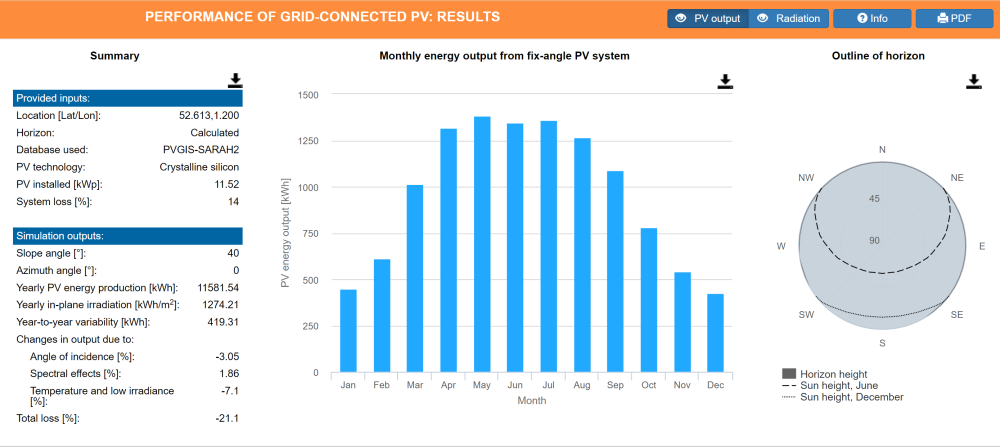
-
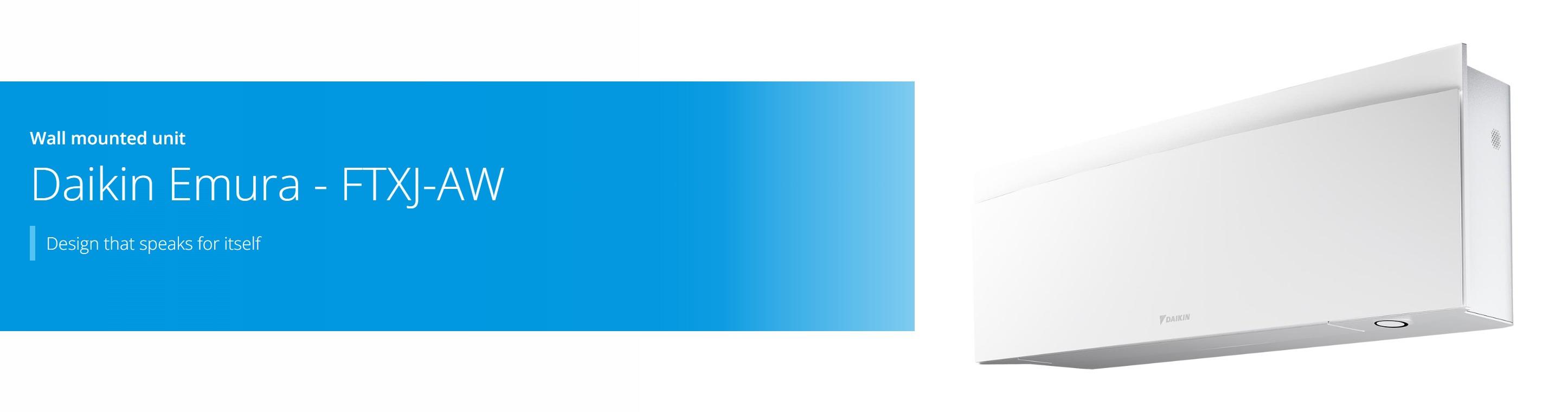
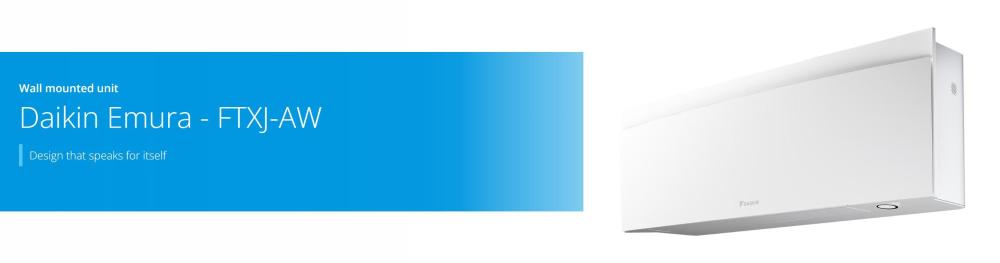
I've recently had a couple of these mini-splits (FTXJ35A2V1BW) installed and while I'm blown away by how efficient and effective they are, the UI seems a bit odd to say the least. The Operation Manual doesn't strike me as the best efforts of a professional technical author, which doesn't help. Hopefully this thread will attract other owners (I can't be the only one) and might aid a better understanding all round. Just finding a relevant manual online is a bit of a challenge. The online copy of the paper manual it came with (dated 2021.12) only seems to be available from the daikin.ch website with links elsewhere being dead or leading to earlier versions of Emura. This is the 3rd generation. Quirks Armed with the published info and the Daikin 'wireless remote control' (IR) and the Conecta app on my smartphone, I've been trying to get my head around a few quirks. For starters, the IR remote is one-way so its internal state can differ from the indoor unit if also controlled from the app. This has the potential for a bit of confusion as some functions on the remote control are disabled when it thinks it's in a particular mode, but isn't, due to changes having since been made using the app. At least the app sync's with the remote - albeit with an unpredicatble delay. Speaking of the app, regrettably, the system is entirely cloud based. Previous versions of the WiFi interfaces used by Daikin appear to have had both local and remote access to the settings but this has changed now so everything has to go through the cloud. I'm not entirely happy about this, and neither are the people trying to integrate the latest Daikin models into Home Assistant. Another thing I'm not happy about is the bizarre design decision they made to keep the built-in WiFi Access Point (Daikin originated SSID that's used by the app for onboarding to the customer's LAN) permanently active. In every other smart device I've encountered or developed myself, such AP's only persist for as long as it takes to make a connection and transfer credentials to access the customer's LAN. Time-outs in the order of minutes at most are common to prevent the SSID of AP's loitering and providing visibility to all and sundry in the vicinity. WiFi is not as secure as most people imagine and a permanent but totally unnecessary advertisement that a Daikin A/C is in the vicinity can only serve to add to the attack surface. Other operational quirks exist mostly through necessity - once you understand the inevitable limitations of an ASHP capable of both heating and cooling. The trouble is that much of what goes on has been abstracted away from the UI presumably to make it simpler to operate. An example of this would be the way that selecting comfort mode overrides the fan speed setting - forcing it to auto. On the handheld remote this puts a little cross next to the fan icon but in the app, other fan settings can be selected, only to bounce back to auto a few seconds (or minutes) later. And if the app is used to disable comfort mode, the remote may still think it's selected and bar you from adjusting the fan speed. So that's my opening post on the topic. My next question will be what the small green part of the LED status ring actually signifies. It goes on and off at seemingly random times but the manual only describes it being lit during the on-boarding process (I do hope it isn't related to the AP remaining up, because this might imply a bug rather than a feature).
-
- 2
-

-
-
Absolutely! It's got to be perfect in an application currently served by a fan heater. 4 to 5 times the heat energy for the same electricity or 1/4 to 1/5th the cost to keep the same temperatures.