
Radian
-
Posts
2586 -
Joined
-
Last visited
-
Days Won
15
Everything posted by Radian
-
I suppose if you use a profiling tool designed for caulking baths etc. you could get a neat concave bead at the junction. It would give it some decent contact area. Better than a big coving unless that fitted in with the rest of the property.
-
Did you take to it straight away or find yourself 'learning' how thin to make the paint and how far away/fast to spray it? I ask because I nearly returned a Wagner airless sprayer - but persisted and eventually got the knack. Maybe because I was used to conventional compressor spray paint kit. Anyway, once I got the hang of it then yes, a great bit of kit.
-

Downdraft extractor fan socket, plug & cable
Radian replied to WWilts's topic in Electrics - Kitchen & Bathroom
Well I guess it all depends on how desperate you become. What I'm now wondering is if the body of the plug itself would have enough clearance? If you carefully slit the heat-shrink tubing, you'll find each individual wire goes into the plastic shell where it's terminated with a crimp connector. A bit like this: The heat-shrink is adding a great deal of bulk. I won't say unnescessary bulk - its there to keep stuff getting into the back of the connector which has probably got 240VAC on it, but as you can see, the individual wires would fold flat and with some electrical tape to cover it all up you might have enough clearance.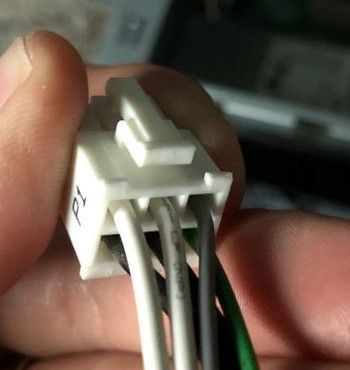
-
Just wondering if you could get at it from above and lay-in some Illbruck FM330 along the joint between ceiling and top plate?
-
Access from above?
-
Filling a crack: Cut away scrim tape or leave it?
Radian replied to Radian's topic in Plastering & Rendering
Turned out OK, let's hope it doesn't crack again.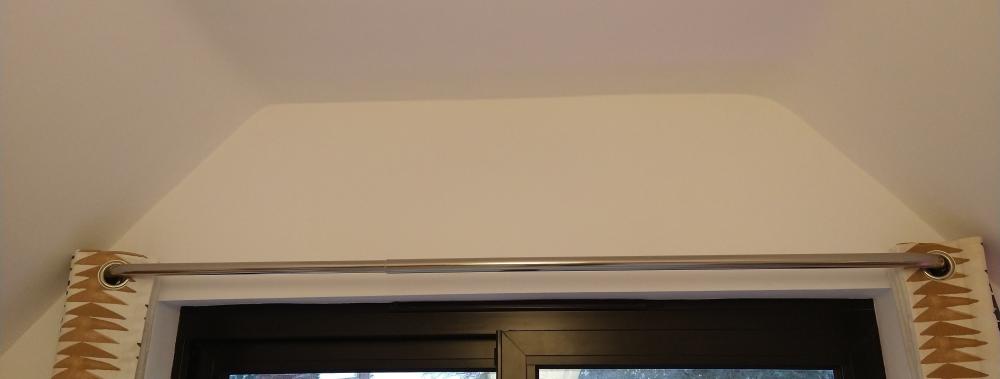
-
Central Heating Controller Recommendation
Radian replied to Ferdinand's topic in Central Heating (Radiators)
Aw, that's a shame. They were not too bad a bit of kit. How interested would you be in repairing it? -
https://nationalpolystyrene.com.au/wp-content/uploads/2020/11/PVC-Cables-in-Contact-with-Polystyrene-or-Bitumen-2.pdf I don't doubt that a pvc cable sitting on a sheet of pure white polystyrene would degrade over time. I've seen the kind of effect it creates first-hand. But I think the key to its safety when used with graphite coated beads is in the statement above: "strongly affected by the contact area". The beads make contact at the tiny tangents on the spherical beads and even then, are buffered by the graphite shell. @Onoff started a thread on this topic a while ago, but I couldn't see any reference to graphite coated EPS in it. In fact, nowhere on the internet can I find such a discussion.
-
Downdraft extractor fan socket, plug & cable
Radian replied to WWilts's topic in Electrics - Kitchen & Bathroom
You've got to show these things who's boss! Seriously, if the socket is the type I think it is, then the back of it will have a wiring loom going into crimped receptacles. There may be some slack in that loom to allow you to dismount the socket and lay it flat. Is the recessed plate holding the socket riveted or screwed to the chassis? -
Downdraft extractor fan socket, plug & cable
Radian replied to WWilts's topic in Electrics - Kitchen & Bathroom
Yes, sometimes those receptacles are chassis mounted - using plastic blades to secure them to the chassis. Worth a closer look. -
Sounds like a "me" 😄 This is where it gets a bit more hazy. I'm pretty sure the cable would actually experience greater heating in rockwool on account of it being less air permeable. But that's just a hunch. Another experiment perhaps.
-
That may indeed be sensible blanket advice to offer... But in the interests of having an open technical discussion, I'm going to exercise my right to disagree. In engineering terms, there are just a few known factors to consider. If a workable solution that ensures electrical safety and an improvement to heat insulation can be found, then why not use it? BS7671 regulation 523.7 identifies corrections to be made for a cable which, through any part of its run, passes through thermal insulation. The symbol for the correction factor for thermal insulation is Ci and approaches a limit of 0.5 as the encapsulated length becomes greater than 500mm. Hence my suggestion to halve all the breaker ratings. I would also add that blown-in EPS bead cavity fill is far from being an air-tight insulator. Both convection and conduction will be taking place so reducing the heating effects on the cables when compared to solid fill. As a sanity check, it's not exactly as if cable heating results in instant thermal runaway: R=Rinitial(1+α(tfinal-tinitial)) where α is the temperature coefficient for resistivity i.e. 3.9x10⁻³ for copper. plugging in a temperature rise of 50oC would increase the resistance of a (unrealistically high) 1 Ohm cable to 1.195 Ohms. BS7671 specifies a maximum volt drop of 3% for lighting (6.9V) or 5% for other uses (11.5V) so if that 1 Ohm cable was on a 6A lighting circuit, the volt drop would increase by 1.17V However, 1.5kW of lighting is no longer the norm so even an extreme example is looking like being far from a serious issue.
-
So much for a bespoke solution. What's their problem? Obviously I think you should find a more accommodating joiner.
-
Downdraft extractor fan socket, plug & cable
Radian replied to WWilts's topic in Electrics - Kitchen & Bathroom
How far is it away from actually fitting? The cable group going into the plug is overwrapped with heatshrink tubing. Might you be able to soften it enough to fold it over with a hairdryer or heat-gun? I'm not really understanding what space it doesn't fit into. -
IME, even with the recommended buildup tarmac without edging (curb retainers) will only last 10 years or so before cracking and moving. Have you thought about using gravel mats for retention?
-
Perhaps 'transform' is the wrong way to describe it. I'm used to the white poly beads in my 80's house which had no binder so pour out of any opening. The graphite beads were injected with a binder and form a dark grey solid mass. I must check the electrical conductivity out of curiosity. It could be that they also create a Faraday cage!
-
Does anybody remember the game SimCity2000?
Radian replied to Adsibob's topic in General Alternative Energy Issues
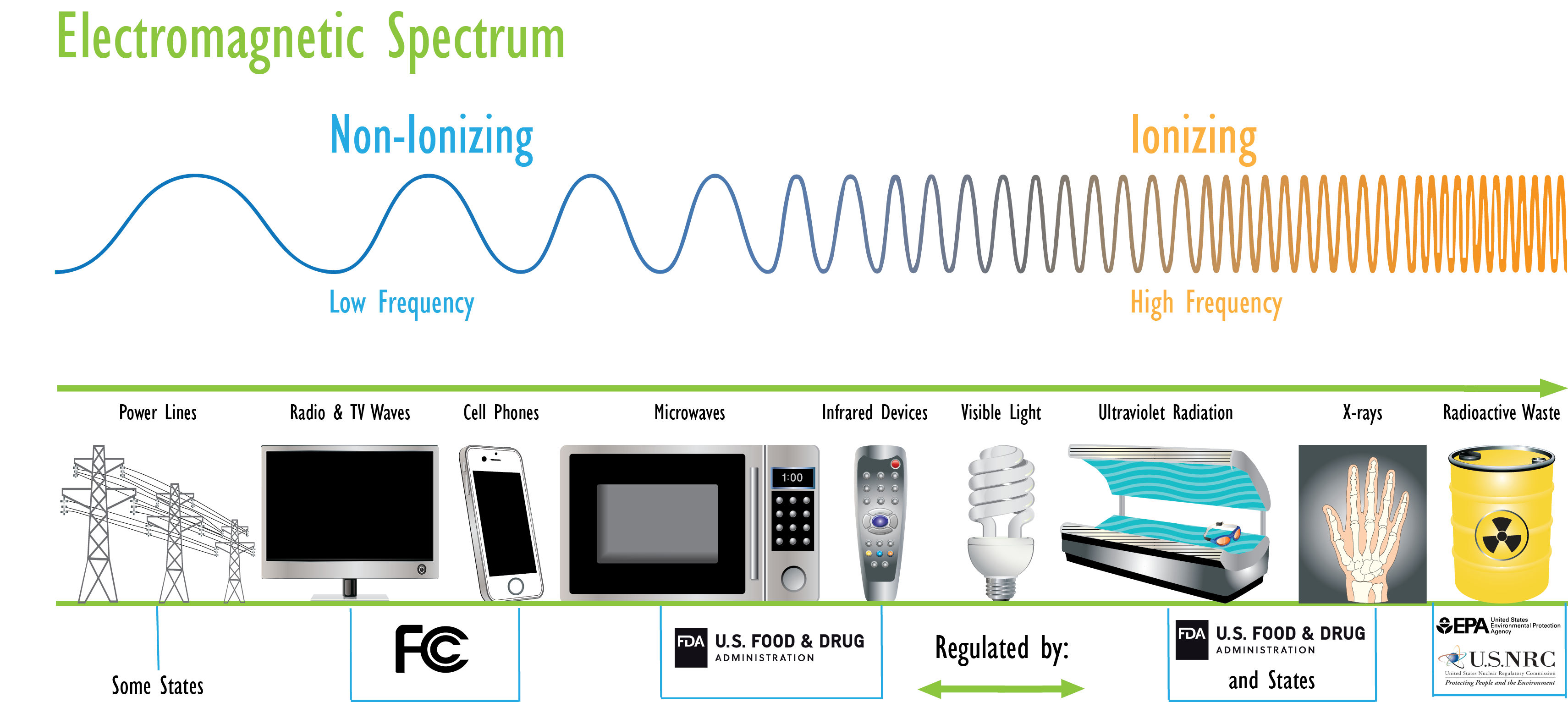
In case anyone's worried that a powerful enough 5G signal might still be ionising, this diagram shows there's a lot of other harmless sources between radio and x-rays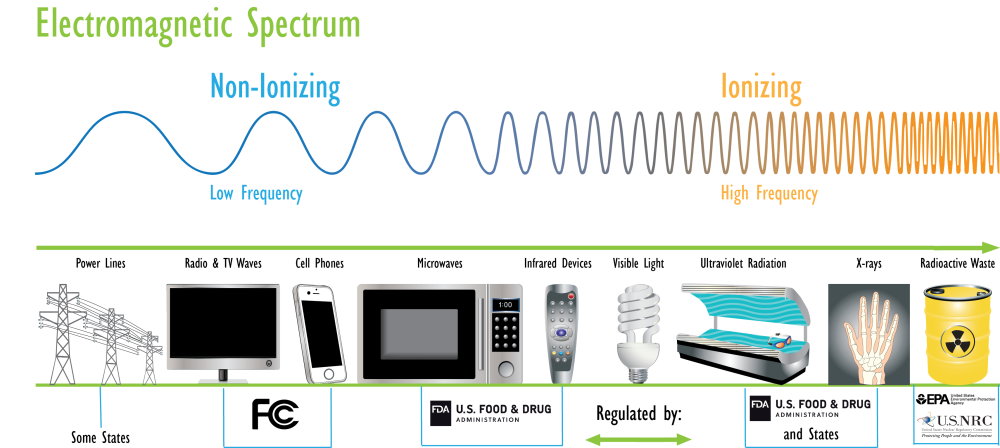
-
I can't find any technical info on the graphite coating other than that it reduces the thermal conductivity. But it totally transforms the beads. You get very messy hands (the guys that injected it looked like they'd just come up from a Welsh coal mine) and the surveyor specifically said that PVC cables were safe with graphite beads in response to my question. This was documented at the time as a "customer note" along with my concern about matching mortar colour (which admitedly could have been done better). Now it may have been BS, but I did a lot of due diligence on the company - and the guy was a proper jobsworth. Some of the checks were plain silly.
-
Yet Geocomposite drains are used for drainage in clay environments - sometimes in preference to gravel. I personally feel that the larger the surface area you can present to the silt as a barrier, the longer it will last as a drain. Without it, the silt will quickly find its way into the perforated pipe.
-
I wouldn't push it down. The insulating properties come from the air held in amongst the fibers. Squishing it means you're just creating a thermal bridge. One that is also going down to join the mess of snots and water at the bottom of the cavity. Perhaps you could vacuum it out? Would need to be a pretty powerful one though.
-
From my own research, plasticiser migration is a thing but I don't think it's a huge deal. Here's a learned document detailing the issue. OK, that's from New Zealand in 1988, but demonstrates how slightly arcane the issue is. I still own a house (that I rent out) that was built with EPS bead filled cavities back in 1986 and with extensions either side of the central "box" house, there are plenty of cables crossing the cavities. Admittedly these are mostly only exposed to the width of the cavity but all I've ever seen is a slight tackiness develop on the surface of the cable. No perceptible brittleness and it didn't penetrate to any noticeable degree. My house was recently injected with EPS beads and I quizzed the surveyor about the cables I have crossing cavities (everything from the CU goes through an internal cavity wall) and he confirmed for me that it wasn't recognised as a problem with graphite coated beads. BUT the more significant issue is the derating of the current carrying capacity of the cable. I would expect you could mitigate this by restricting the use of the circuits i.e. use 16A MCB instead of 32A and maybe re-wire any higher loading items like oven using surface conduit. If he went bonkers on electrics, might it imply that already have a degree of over-capacity? With greater efficiencies in just about every appliance these days, it may not need anything doing to address the heating issues. But I shouldn't be giving the last word on the matter. I'd be interested to read what other people think about it.
-
10mm Pea gravel is too fine and easily gets clogged with silt and mud. 20mm gravel is best for drainage. Limestone is going to end up like a subbase! Use a non-woven geotextile.
-
No, that's a 13-digit code. The MAC is 16-digit and either printed on the outside of the IHD or shown in one of its menus. The DCC system uses this to identify an endpoint for Smart Meter data. Companies like Bright and Orangepower (who run this independent scheme) are licenced as "DCC Other User" and can deal with this data on consent - where consent seems to involve fiddling with the box in your mates kitchen when he's not looking 🙄
-
National Grid will identify the usage by the 16 digit MAC so I can't see them issuing payment to multiple schemes. What I find more interesting is how easy it is to get a MAC if you're in someone's else's house. Armed with that info and the name and address of the house owner, you can see their half-hourly usage using an app like Bright, and sign-up for reward schemes like this. Not that you'll be able to control someone else's usage, but you might get lucky.
-
Does anybody remember the game SimCity2000?
Radian replied to Adsibob's topic in General Alternative Energy Issues
Oh, so far today, I've been able to divert a kWh or so to keep mouser nice and warm.