
Radian
-
Posts
2586 -
Joined
-
Last visited
-
Days Won
15
Everything posted by Radian
-
So you can get a comfortable temperature - but only after an uncomfortable delay. The cost suggests to me that you still have some way to go before you're paying the 'average' price so the heating needs to be coming on earlier and/or not allowed to cool down so much. Have you carried out a heat loss calculation to estimate what your energy demand ought to be?
-
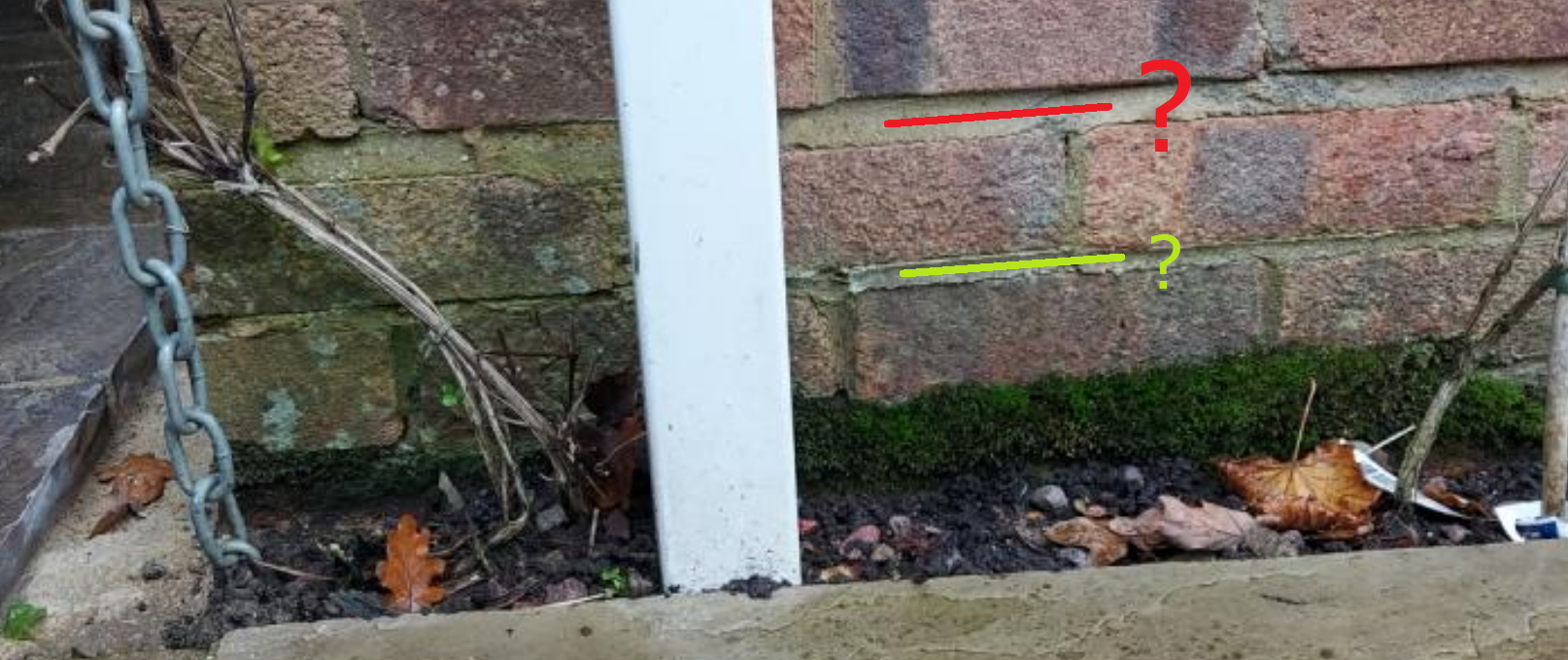
You mean you can't see the edge of the DPC anywhere? In that case it has either been covered in mortar (bad) or is absent (very bad).
-

Boiler broken, new build around the corner. What to do?
Radian replied to Goodremy's topic in Boilers & Hot Water Tanks
System boiler means unvented whereas regular (heat only) means vented which is what they have now. So does the higher price for the system boiler include the unvented cylinder that you need to have to go with it? -
Would you know what is the purpose of that pedestal?
Radian replied to JohnBishop's topic in Bricklaying, Blockwork & Mortar
Dead bodies? Almost certainly 🕸️🕷️ -
Would you know what is the purpose of that pedestal?
Radian replied to JohnBishop's topic in Bricklaying, Blockwork & Mortar
Looks like my mum's old house. All the rage in the 70's. Agreed - masonry TV stand. Edit: to be fair to dear old mum & dad, theirs was real sandstone and had a superb chunk of teak on top - about 1.5" thick...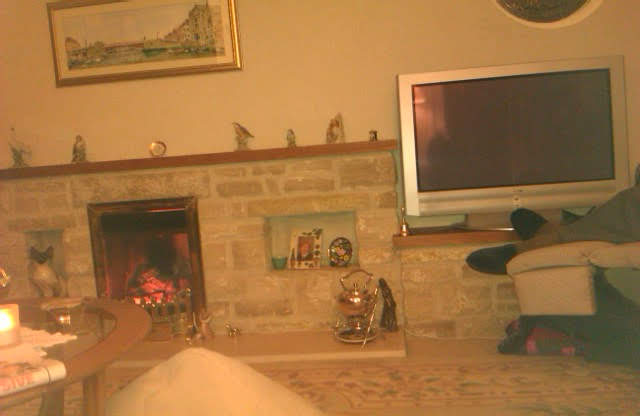
-
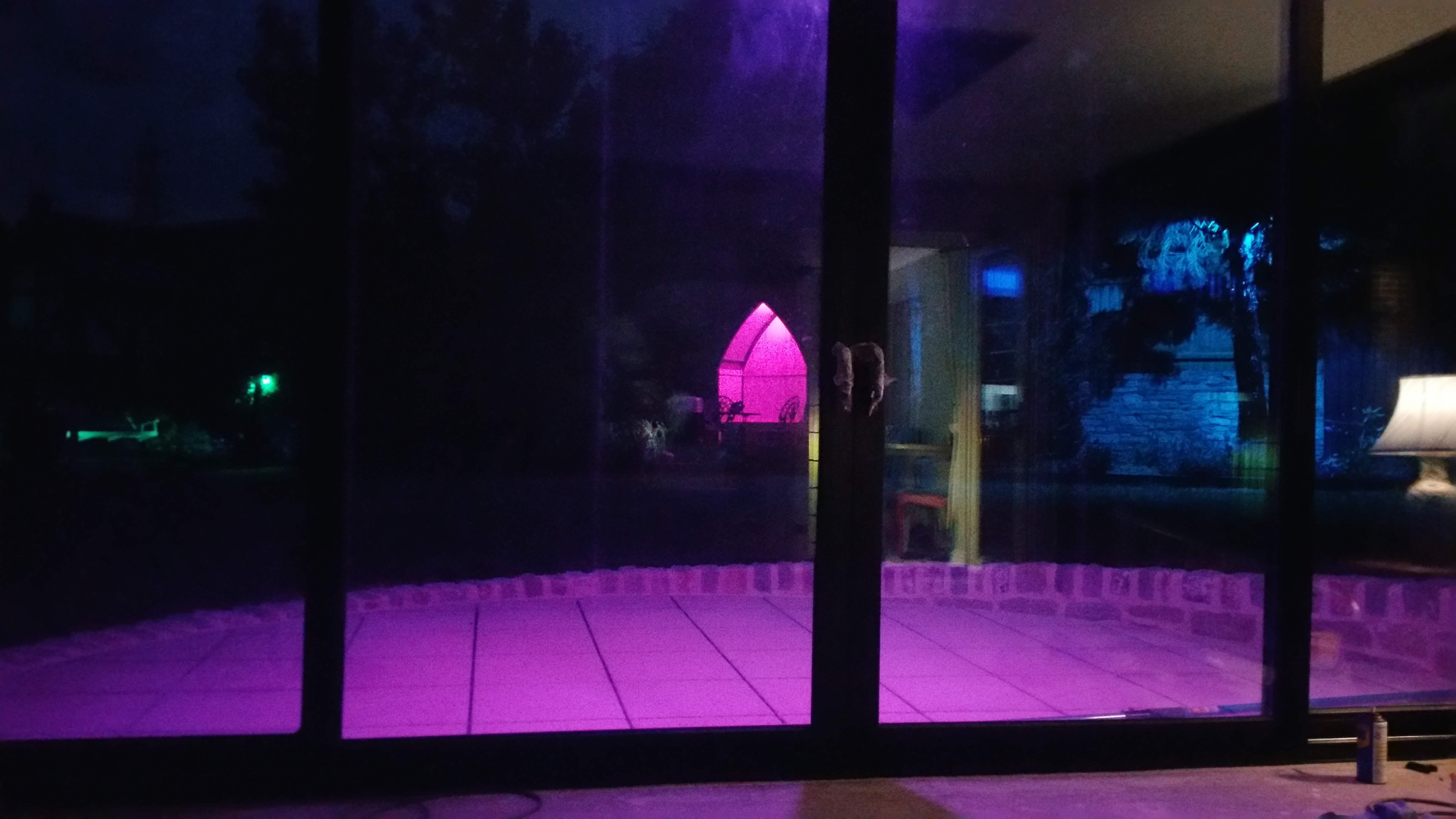
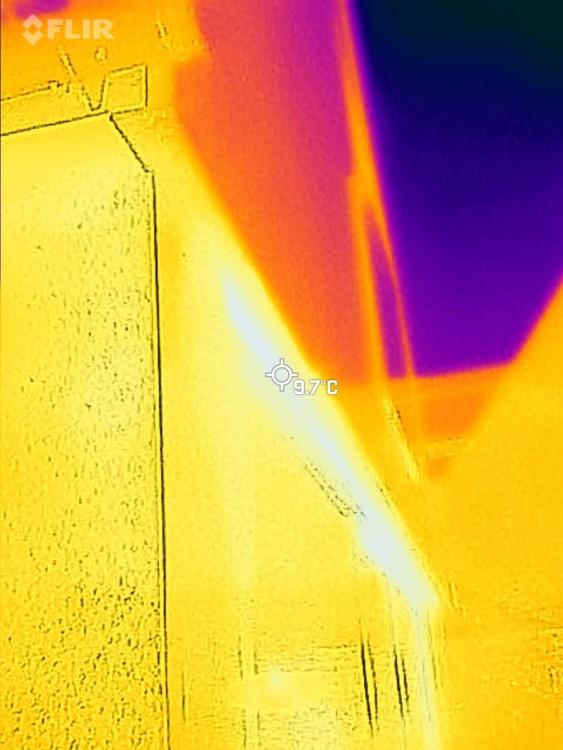
Yes. The door frames don't need a continuous contact with the steel. That would be a recipe for disaster as the flex in the steel would transfer load to the doors. So long as there's a lateral restraint provided by the fixings through insulation that would be fine. At a guess 50mm PUR between steel and frame and then insulated PB on the inside head of the opening. The aim should be to bring the steel inside the insulated envelope so you need to work out how to make space for insulation on the outside. I'll show you a horror-show photo of the 6m span 'I' beam over this elevation containing sliding doors: The 'I' beam has a 300mm welded 'foot' on the underside to carry the timber frame above. Nobody thought about how this would end up in the cold on the outside. I think this might qualify for the worst cold bridge of all time 😂 Now when I complained of a similar case of 'to be designed by others' I was met by a frosty response from a certain member of the community. But this is what happens. The SE does the calcs to make sure it won't fall down, but rarely will they be thinking about the thermal performance. The lack of sectional detail ends up being resolved by the builder who's too busy thinking about how to get the quarter tons of steel into place. Now I've got the leisure time to study what happened, I can easily see how it could be improved and have described exactly that to you.
-
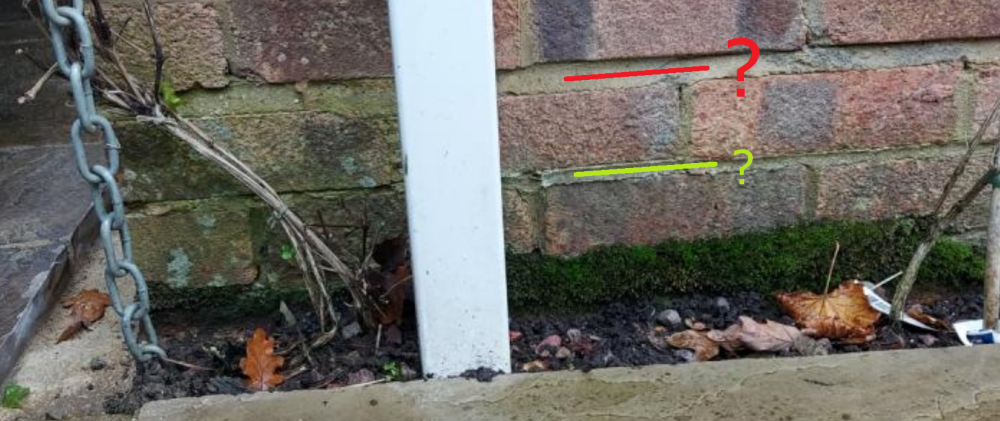
Which of these is where the DPC is? I'm guessing the red line:
-
It could be that there's debris in the cavity left over from when the house was built. Very easy to fix on a corner. Take out a full brick on the side wall that spans the cavity at DPC level and poke around inside. If you're not up to removing a brick, it's a limited job you could ask a tradesperson to do. But it should be straightforward enough for anyone to do with a hammer and masonry chisel.
-
Is that a rain-chain?
-
Do you know if your cavity walls are filled with insulation material?
-
Sounds like me - except for the spending loads bit 😄 Do your smart TRV's totally shut off the flow into the radiators? I've had mixed results with zigbee TRV's and wouldn't trust them to stay completely closed outside the heating season.
-
You're wrong. When you take out a contract for your electricity supply, the contract is a legal document and you will find that you are only entitled to import power, and may only export power with consent. This is because the networks just can't handle arbitrary amounts of power. The G98 certificate covers installations that do not create a challenge by virtue of being limited to 3680W. This is a bit like diversity in reverse. The sizing of cables and transformers can be expected to cope with this amount of power being simultaneously consumed from a substation. When more generation is proposed, the G99 application has to be submitted and assessed in order to ensure that the network infrastructure is up to it. Hence the application may be rejected for good reason.
-
Nuaire MVHR System Leaky Ceiling Vent
Radian replied to tomaus's topic in Mechanical Ventilation with Heat Recovery (MVHR)
There could be a switch somewhere. If it was a DIY installation it might not be obvious or labelled. You might have to follow the cable to find out. It's a single 5-core cable and the grey wire is the one that would be connected to 230VAC via a switch. Presumably this single cable from the unit terminates in a junction box nearby. As for why only one vent is leaking, it could be for several reasons. It could be that the insulation is innefective, or that an air leak in the vicinity is allowing water vapour to accumulate in the loft. It could be that they're all forming condensation but somehow it's going somewhere unseen. -
Ah yes, a good spread throughout the day which no doubt helps with self consumption. I'm working a single array facing SE with plans to add a second set facing SW when prices stabilise for that very reason. I have 8x410W modules so virtually the same as your total and have used all but 2kWh out of 122kWh generated.
-
Nice work. To save me a bit of searching, what size array do you have?
-
Nuaire MVHR System Leaky Ceiling Vent
Radian replied to tomaus's topic in Mechanical Ventilation with Heat Recovery (MVHR)
From the installation guide: MRXBOX95B-WALL Mechanical Ventilation Unit with Heat Recovery & Summer Bypass The bypass damper opens when a 230V signal is applied to the unit (via a manual switch, supplied). This opens the damper via an actuator. When the switch signal is de-activated the unit returns to its original state (air through the heat exchanger). The summer bypass is designed to prevent heat recovery and feed in outside air without warming it. Not what you'd want in winter! -
Anyone fitted a pre-charged aircon unit?
Radian replied to Jeremy Harris's topic in Air Source Heat Pumps (ASHP)
You can't assume that there will be no condensate when only heating, quite the opposite. As with air-to-water ASHP, there's an occasional need to de-frost the outdoor unit, so the indoor units periodically go into cooling mode (with air flaps closed). AFAIK this is common to all A/C systems. -
Nuaire MVHR System Leaky Ceiling Vent
Radian replied to tomaus's topic in Mechanical Ventilation with Heat Recovery (MVHR)
You would appear to have some serious condensation forming on the pipe. Is the heat exchanger set to summer mode? If it was set to winter and exchanging heat from the outgoing to incoming air isn't enough to keep the pipe above dew point then it's most likely due to poor insulation on that drop. But it's also testimony to the amount of water vapour in your loft. Why would that be? -
Interesting. Makes me wonder about the differences between qualified electricians and qualified electronics engineers. The electricians are certified by a formal trade body like NICEIC and pay their annual fee, electronics engineers get a degree or college education and then go on to work on stuff where 240V is barely registering on their EHT test equipment. It's a bit of a head-slap when all you want to do is put in a new circuit (or other notifiable installation work) when your day-job is handling KVA EV electronics for example.
-
By question the cost, I mean challenge the contractor to itemise everything thus revealing the margin being made. This comes up quite often. It's not unreasonable to google the price of things to get a ballpark idea of the costs involved but unfortunately it tends to miss the bigger picture of what's involved. You have plenty of transferrable skills then. Are you never tempted to do anything that interfaces with 240VAC? Most of my electronics does at some point. I sometimes even reference my logic supplies to the mains and use resistive dividers to sample the mains with an A/D ☠️
-
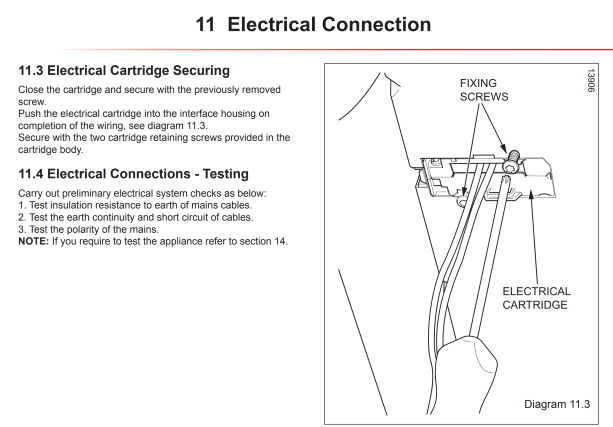
I want to add a cable to the Electrical Cartridge in my Glowworm Flexicom boiler. I think the idea is that the cartridge is removable without having to open the boiler case so sparks can do their bit without compromising room sealed units. The instructions say to push the cartridge into the housing on completion of wiring: The trouble is, I've undone the fixing screws but I can't seem to pull the cartridge out. I'm not sure how much force it should take so I thought I'd ask if anyone knows for sure that it should just pull out?
-
There is nothing to prevent anyone from changing a light fitting, other than their own willingness to take the time and risk (which depends on their knowledge and skill level). If unwilling then the alternative is to contract out the job and accept that you will not be able to question the cost. You can, of course, decline and get another quote.
-
Solis also have a modbus port that can be freely used to get at generation data. The connector is a bit unusual though. I cannibalised an old Garmin satnav cable with a similar plug on the end of it to interface to the inverter. How you handle the data depends on how deep you want to dive into the world of home automation.
-
'if you have a house you will get a mouse'
-
Building a Block Workshop - ADVICE NEEDED!
Radian replied to stunotch's topic in General Self Build & DIY Discussion
It's quite enjoyable isn't it? 😃 Looking good. You'll be extending the house next!