

TerryE
-
Posts
3806 -
Joined
-
Last visited
-
Days Won
30
Everything posted by TerryE
-
Ed, Declan, Pete: help please! Does this gap matter?
TerryE replied to ToughButterCup's topic in General Flooring
Accepting 99% right instead can often do wonders for your stress levels and have no material difference to anyone other than you. I've been really quite poorly this past year and it is taking ages for me to recover my health. OK, a series of viral assaults caught from my new grandson has been a factor here, but I am sure that the overall impact of the long-term stress of doing the build has been just as much of a factor. -
Ed, Declan, Pete: help please! Does this gap matter?
TerryE replied to ToughButterCup's topic in General Flooring
Poor old Ian. You really need to work on your karma, build up a bit of resilience and also maybe read up on the problems that people moving into a typical new-build development often face. -
I think that a leaf blower and a jet wash are two essential pieces of kit that you might only use once or twice a year, but when you do need them there's not much by way of a substitute. IMO, patios and paving get really grungy, if you don't wash them down occasionally, and using a decent jet wash at least saves the back-break. Our last jet wash lasted about 15 years -- until we lent it to our nephew who I think left the pump running with the water off -- but when we got it back it was on its last legs, hence the need for a replacement.
-
MVHR & combined ASHP for 240m2 new build
TerryE replied to UncleQ's topic in Mechanical Ventilation with Heat Recovery (MVHR)
We have a 3 floor house and over one year in and, as Jan says, our system works fantastically. We only have UFH on the ground floor slab. Nothing on the upper floors. Last year, our 1st floor was the coldest -- at around 21°C rather than the 22½°C on the ground-floor. Though this winter I've had a 1kW heater in my 1st floor study with door open to the hall (in the coldest -- around 30 -- days) on a timer kick on for 7 hrs over night to use E7 rate. This has easily been enough to lift the overall temperature in the upper floors almost a degree. Compared to an ASHP at a CoP of 3, this has cost us maybe 30×7×0.66×8.5p or just over £11 p.a. This might seem a lot, but work out the payback decade compared to say putting in skirting heating on the first and second floors. Key learning: you really don't need upper-floor heating in a true passive-class house. -
OK, I missed the previous table to the graph. The higher R-value is consistent with this. Strike this one Yes it is, but it's much more directly a function of the absolute humidity, the water vapour density. No. The dew point is occurs at the point where the RH is 100%, though the RH is a function of the AH and the temperature. You can talk in terms of RH, or AH and T, but not AH alone. Re your first statement: EH??? Sorry Ed, you've lost me on this one. (The reason for the robust response is that you are someone that I know that I can have a useful debate around this.) Can you cite any physics or engineering references that support your conviction? I've been trying to get my head around this on and insulated TFs will broadly suffer three types of water ingress: Direct leakage of water in liquid phase as a result of failures in weather sealing. The moisture gradients will typically follow some 2-D dispersion from the actual water path, but this is entirely avoidable with proper detailing in the design and construction. Transit of moist air through the TF as result of failures in the airtightness barrier, e.g. an air pathway from a hole in the inner airtighness layer out through the TF. Such systemic air flow can end up dumping lots of air into the frame if undetected -- which is why houses of this class should be properly air-tightness tested and any paths identified and remedied. This time moisture gradients will typically follow primary a 1-D deposition alone the air path depending on the moving dew point with some 3-D dispersion from this path. Transit of moist air through the TF as a result of internal convection cycles. This can be a real issue with TFs using loosely fitted slab (e.g. PUR) insulation, but this rarely an issue with blown insulation or well packed wool. Even if there is some internal convection, then you still need an external source of moisture to transport this along the convective path. Internal absorption transport. I think that we are really discussing this last mechanism, and I am trying to get my head around it. With something like an animal fibre (wool) based model with no material transit (from the fist three points), this should be treat as a largely static air, IMO, in that there are vapour paths to allow diffusion, but the extremely high internal surface area (the crenelated keratin wool hair surfaces) to volume will prevent any bulk flow. Can you think of or cite why Raoult's law, etc. would not apply here? The overall gas mix and pressure across the air-infill will be constant. I can't think off the top of my head why the AH of any water vapour in the interior would be anything other than uniform, so the RH will vary across the profile in lock with the equilibrium vapour pressure at the corresponding temperature. What causal mechanism could there be to create any gradient here, and even if we found a boundary value differential, what is the causal mechanism for the straight-line fit -- other than the "accountant's rule": pick any two fixed points and the answer is a straight line between them. We would need some physical mechanism for pumping, transporting, a gas (water vapour) in a convection free medium. One boundary is an air-tight membrane and therefore unconstrained in terms of moisture, the other is a tenting fabric between air in an airgap and some frame covering such as panel vent. What have I missed here? I am pausing due to brain-freeze
-
@A_L your figure might to a computer generated graph, but it makes no sense to me. Heat flow through a wall cross-section is approximated by a 1-D Fourier equation. In the thermal gradient is proportional to 1/Rvalue so if your three infill materials are all similar mineral wool slabbing, then the gradients of all three are the same, but they aren't on the graph with the middle layer being about 30-35% steeper. Why? Ditto the dew point temperature. This makes absolutely no sense to me. The dew point is largely a function of RH, so no way would this again have a piecewise linear profile. @JSHarris Jeremy, can you make sense of this?
-
MVHR & combined ASHP for 240m2 new build
TerryE replied to UncleQ's topic in Mechanical Ventilation with Heat Recovery (MVHR)
Like we've got no radiators or the like an any wall in our house so no buying and fitting rads or having them clutter up walls. The major advantage -- if you need it -- is the responsiveness of having 2-3 kW wall mounted heaters in every room, but why bother if your house temperature is always within ½°C of your target? Yes but that is the single most expensive bit of the CH system. Try costing out the supply and fit of rads everywhere. Another poster was talking about it costing him £17K for his DHW and CH. -
Physics trumps instinct, and I can't say that I am sorry to say it either: the sun seems like it revolves around the earth but we (or nearly all humanity) accept that it is is v.v. The dew point has to occur somewhere within the profile when the outside is below the dew point and the inside is well about it. Given that you want to live at the latitude that you do and you want the inside of your house to be a comfortable living temperature, then you don't really have any alternative. Yes That's what happens to dry any residual moisture out if the TF internals. The gas laws still apply. What you don't want is a condensation pump.
-
You've got some pretty good thermal sensors on the soles of your feet; just take your socks and shoes off, and turn the heating on, and you'll see what I mean
-
MVHR & combined ASHP for 240m2 new build
TerryE replied to UncleQ's topic in Mechanical Ventilation with Heat Recovery (MVHR)
And forget this one. Just forget it as you will never use it. Even the smallest efficient wood stove will generate at least two kilowatts. Do the math, let's say 3 kilowatts; putting this into a single room in a passive class house will get the room temperature up to about 40 degrees within a few hours. I remember one guy who had a passive house with a wood stove telling us that the only time that he used it was one Christmas when the family was round; after 2 hours they had to evacuate the living room and open all the doors to let the house cool down. My wife @JanetE originally wanted a woodstove in our house, but she soon saw the sense in my argument that we would never dream of lighting a stove in the middle of the summer, but a passive house internally has that summery feel every month of the year, so we would never use it. We have never regretted this. So UFH scores about 1 or 2 on the 1:10 complexity scale, trying to implement usable wood stove maybe 8 - 9, ditto large acres of glass like you propose. As @jack says, the main issue in a passivhaus isn't working out how to add the extra heat when you need it, it's how to dump the excess heat when you don't need it. -
@A_L, think of the heat equation: the inner skin is above the dew point, the outer skin is often below the due point, so the due point will be somewhere in the wall profile. So what? Our frame has its airtightness membrane on the inside and a breathable membrane on the outside. There is no flow of (moist) air so no moisture condensing out. Any moisture within the profile will slowly evaporate off during the summer. What you don't want to occur is having the dew point or below at any surface where there is air flow, as this will create a condensing surface.
-
MVHR & combined ASHP for 240m2 new build
TerryE replied to UncleQ's topic in Mechanical Ventilation with Heat Recovery (MVHR)
Of all of the complexities in building our house, this but was one of the most trouble-free, so I can't follow this logic, to be honest. There's about half a dozen blog examples of this done here. Why not pick a few and visit them; talk to the self-builders about what went well and works well and what doesn't. A raft with UFH is a huge storage heater and is simple to heat. Our house is smaller, about 180m², but we currently heat the house with a 3kW immersion coil in a Willis Heater through the UHF loops and this comes on at the moment for about 4 or 5 hours on overnight E7, so there is something way off with your 7kW estimate. If you build the house to spec, then your daily average should peak at maybe a quarter of this. -
energy... I stand to be corrected.
TerryE replied to Big Jimbo's topic in New House & Self Build Design
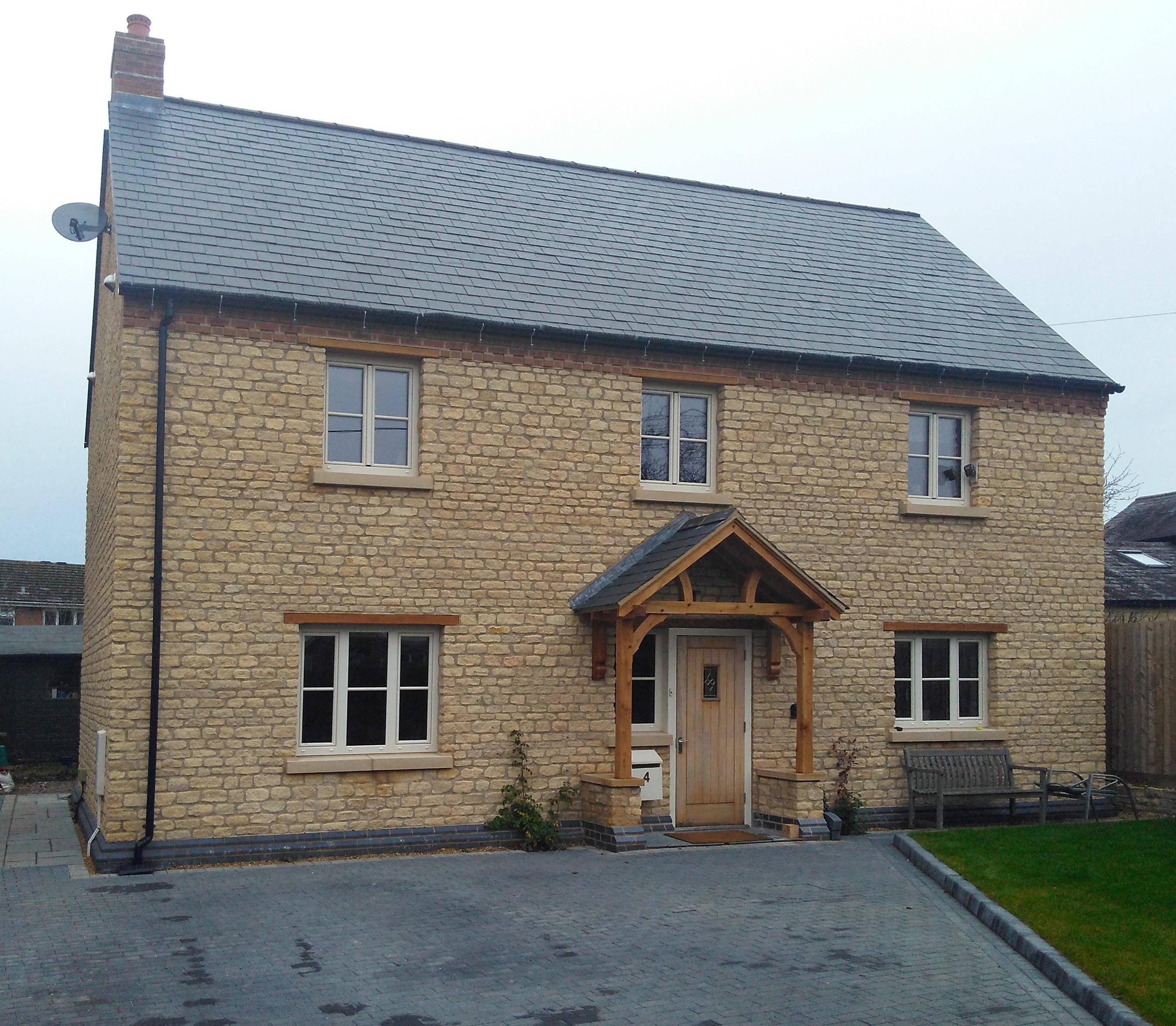
Jim, all you need to do is a bit of research. Wikipedia is a good starting point for most uses, but always be willing to look at the debate on the associated talk pages or point check quoted sources if the topic is controversial. Take costs for global movement of goods, googling "shipping costs per tonne km" gives Wikipedia:Freight rate as its first link, so for example "bulk coal long-distance rates in America are approximately 1 cent/ton-mile" and the reference is a US Energy Information Administration article so this is going to pretty accurate. Bulk and container shipping costs are almost an order of magnitude cheaper: a fraction of a cent per tonne km, thanks to automation and scale of international shipping, so take your jumper example, another link gave this 2018 Overseas Cargo & Freight Costs From The UK reference, which gives the cost of moving a standard 40ft container from Bangladesh (Chittagong) to the UK as $1,874. Divide that by the number of jumpers you can fit in a standard container: 10s of cents. If you don't believe me then the sources are there for you to come up with your own figure. That's why everything is global these days; the shipping costs are in the noise. We have a passive-class house. The timber is Finnish grown CLS and OSB3, the skin is locally quarried stone, so no inner concrete block leaf and no bricks. Yes we have a raft slab, but the total concrete @ 10 m³ isn't much more than would have been used in conventional trench footings. Our LPA prevented us using PV, so I can't claim any 7-year payback period, but what is more relevant is the point at which the gross carbon cost falls below that of an equivalent conventional build and that is already true at day 0. -
Comical EPC thingy
TerryE replied to Russell griffiths's topic in General Self Build & DIY Discussion
My point was that we did the same for a few £K (sorry, plus the £2k my TF company charged to include the UFH loops in the slab). OK, I designed the system myself and Jan and I installed it which saved a lot of money, but IMO going for some of these incentive schemes can be a false economy. Leaving aside the morality arguments, and just focusing on pure economic grounds, if you really are getting a payback of £5.5K over 7 years then you should be paying no more than £4K extra upfront. I suspect the premium charged by an RHI accredited plumber, plus the cost of over-sizing the system is working out far more than that. -
Comical EPC thingy
TerryE replied to Russell griffiths's topic in General Self Build & DIY Discussion
So you spent £17K upfront to get back £5.5K over 7 years. I don't understand this logic. I didn't bother applying for any RHI and so avoided getting ripped off by approved installers; I did the procurement and install myself and we will spend about a quarter of that in total if I include our still-to-be-bought ASHP. Our house sits at 22-23°C throughout 24×7. Must have done something wrong. -
@ProDave read up on using the deep sleep timer.
-
Yup there's nothing to stop having a plant room on an upper floor, but just remember that you'll end up carrying some heavy kit up there and the floor has to be designed to take the required load.
-
You must be using some simple serial protocol to handshake data. What not just add a "request time" command, or alternatively use HHMMSS<cr> as the ack string from the host? The Arduino can use relative reckoning to sync into near enough calendar time.
-
Need to think this one through. Hummm. I feel a conversation with Jeremy coming on ?
-
Like @joe90 we don't have a plant room per se. We have a plant cupboard off in our ground floor toilet which houses our potable water and UFH manifolds, SunAmps, Willis, etc. It's central location (keeping all runs balanced) is more important / useful than size. Our MVHR manifolds are directly above in an eaves cupboard on our second floor. Again it's central location helps balance the runs. The MVHR itself is in an adjacent storage room.
-
As the regulars will know, we are still using a Willis Heater and won't be installing the ASHP until the late summer. This seems to draw 2.88 kW. The E7 window is enough to keep our house at temperature unless the outside temp is consistently below about 5-6 °C and what I've been doing is to leave a small oil filled radiator on an E7 timer which outputs another ~kW into the upstairs airspace, and this is enough to keep the entire house cosy using E7 alone, though the heating algorithm will occasionally top up during the day if needed. So for us a 7×3 kWh target would still leave maybe 30-40 heating days where we would need a peak rate top up. 7×4 kWh would drop this peak overflow down to single digit days a year. However, when you factor in the CoP of an ASHP, the marginal annual cost of this overflow into peak rate is still extremely small compared to the upfront ASHP costs. As someone who has yet to install their ASHP, and especially when I factor in payback periods, keeping the install complexity and cost low is more of a driver than squeezing the last ££ out of the running costs. For example, as I know that my slab will happy take up 4kW over a 7+ hour heating period, I do wonder whether I even need a buffer tank, and instead go for just using a PHE to couple the ASHP and UFH circuits.
-
echo $PATH gives you the program search path. In general most binaries are under /usr/bin, but they can be under /opt/bin or /usr/local/bin or anywhere on the path. There are good YouTube intros to the Unix File System and pretty much anything else you need, for example "Intro to bash" or "Linux top commandline commands". The magic command here is find.
-
Dave, I am more than happy to go through this on a 1-1 for any Unix s**t. Why not give me a call?
-
Thanks @Christine Walker, I suspect hat @CADjockey realises that this might be a possibility. Whilst the original lender might not support this option, any lender is free to remortgage their property and given that the outstanding sum is ~12% of the total value, then it sounds like the mortgage is an old one so the early redemption penalties will be zero or pretty minimal. When we planned our new build, we had had a relationship with Nationwide of over 30 years. All of our banking and our mortgage had been with them. At that time they still had a service of deed retention if you kept a £1 amount outstanding on the mortgage, which we had. During the course of our loan with them, we had obtained a couple of principle extensions to finance building work / improvements on our farmhouse -- quick, simple and pain-free -- so we expected that remortgaging for about 25% of the value of the farmhouse (and within our joint pension income to repay) to finance the element of the new build that we couldn't fund out of our savings would be straightforward, but no: Nationwide turned us down flat. In the end we went to a broker who found us a far better deal. The Monmouthshire BS were very happy to offer us an interest on capital only for an initial 3 years and about ¼% over base rate. We were open about it's use to finance the new build and in fact the reason that they were willing to offer a capital-only repayment loan was because "build the new house and then sell the old to release equity" was our repayment strategy, and they assessed this as very low risk. So my suggestion is first approach some of these smaller lenders or specialists and to discuss options or to pay for an independent broker who has the professional expertise and can shop around for you. In our case I felt that his fees and service gave us excellent value for money: 1¼% was a lot better than the 10% bridging that some others were offering. This sort of thing all takes time. In our case because we had split the plot and so the new-build was now an adjacent separate title to the farmhouse, so luckily we could start ground-works, do the detailed design and commission the TF and slab, etc. using our saving and in parallel to the financial negotiation. In the case of a demolish and rebuild, you just can't do this without breaching you loan agreement: the new agreement has to be in place before you can start any demolition.
-
The one thing that you do need to be careful about as you have an outstanding mortgage is that the lender will be registered as having an interest in your property. This means that you can't do material changes (like knocking out down or even building an extension) without getting their permission. The reason for this is that the property itself acts as collateral for the loan. Many of the big lenders will simply not be interested in doing this. You might need to remortgage with a lender that is willing to offer more flexible packages, such as a specialist self-build lender, or one that will take the value of the plot itself as collateral.

