.jpg.c21f3ac78c9b7efd90cbdcb312744dc5.jpg)
jack
-
Posts
7352 -
Joined
-
Last visited
-
Days Won
38
Everything posted by jack
-
Welcome to Buildhub!
-
.jpg.c21f3ac78c9b7efd90cbdcb312744dc5.thumb.jpg.7adcad4c0e384f5ecd7d56b0618df6e5.jpg)
Estate Car to carry house doors inside, flat
jack replied to Ferdinand's topic in General Self Build & DIY Discussion
Problem might be that it's a small market, and 3 for sale effectively floods said market. Amazing cars though - ahead of their time in many ways. -
You definitely feel the drop in temperature when you walk into ours on a hot day. The only thing we've done for cooling is to keep the external blinds closed and to throw all the windows and doors open first thing every morning to get rid of as much heat as possible before the outside temperature gets too high. Once that's done, the windows and doors are closed to keep the heat out. I'd love to do an overnight purge, but insects are a bit of an issue. Long term, we'll definitely be doing something with insect screens on bedroom windows and possibly a security screen door on a downstairs rear door so it can be left open for stack ventilation overnight.
-
Under no circumstances should you wait until the bathroom is finished before starting this!
-
Welcome back, great to see you at Build hub. It looks like we have a new took-the-longest-to-find-us-after-ebuild nominee! Exactly the right attitude imo.
-
Welcome! We're probably not far from you (Surrey/Hampshire border). Lovely part of the world!
-
Don't be so modest. Soz, just deleted the image before reading your comment. It was there because I was going to suggest you get a tool belt before you said you had a nail bag. Deleted it in-text, but forgot to delete it as an attachment.
-
Can you tie a cherry stalk into a knot with your tongue?
-
After 9 years, I hope you have an industrial vacuum cleaner! Ours can be vacuumed, and we got about 18 months of out the filters (vacuuming every 3 months or so) before they started going fluffy and didn't seem to clean up that well. I bought a couple of replacements and will buy some filter media to cut and attach to the original frame when I remove the old filter media. I now have three pairs, so each time I can put in a new/reconditioned one, and still have a spare to tide me over until a recondition the one I've just taken out.
-
Does anybody have underfloor heating with carpets?
jack replied to ThePoplars's topic in Underfloor Heating
We have low temperature underfloor heating (typically the floor is around 21-22 deg C). The only carpeted room downstairs can feel a little cooler than the rest of the house, presumably due to the fact that the concrete elsewhere is a much better heat conductor. If your wet UFH is reasonably high temperature, the carpet will be less of an issue. -
I feel for you mate, this sounds very unpleasant. However, these things do happen in the course of a build. As you say just above, everything can be fixed. Soil pipes are often not quite in the right place, and so onsite adjustments aren't that unusual. If it's right in a corner, even being a few tens of mm out might be enough to require some sort of adjustment. That said, I'd have thought a pause to double-check would have been an appropriate action to take when this was noticed. Had they not measured the positions of soil pipe (etc) before starting the erection? That alone should have given them an idea of orientation, unless your soil pipe is dead centre of the building. Re: external membrane, as others have said, this stuff gets knocked around pretty badly during the build. I think replacing all of it is a fair bit to ask, although given how many errors they've made by this point, they really do owe you. I think you definitely want the internal boards to at least be flat, although the odd ding is no big deal. As Jeremy said, if you have pumped insulation, your inner board work is punctured all along every external wall anyway. I'm less sanguine about the glulam. It was specced, you paid for it (or at least it's part of the agreed price), and unless there's a very good reason to replace it with the proposed alternative now, they should supply what's been agreed. Is it on show?
-
Discount Offers of the Week
jack replied to Ferdinand's topic in General Self Build & DIY Discussion
Put in 50% and see how you get on? -
DIY Heat Exchanger
jack replied to Onoff's topic in Mechanical Ventilation with Heat Recovery (MVHR)
Have you met Onoff? -
DIY Heat Exchanger
jack replied to Onoff's topic in Mechanical Ventilation with Heat Recovery (MVHR)
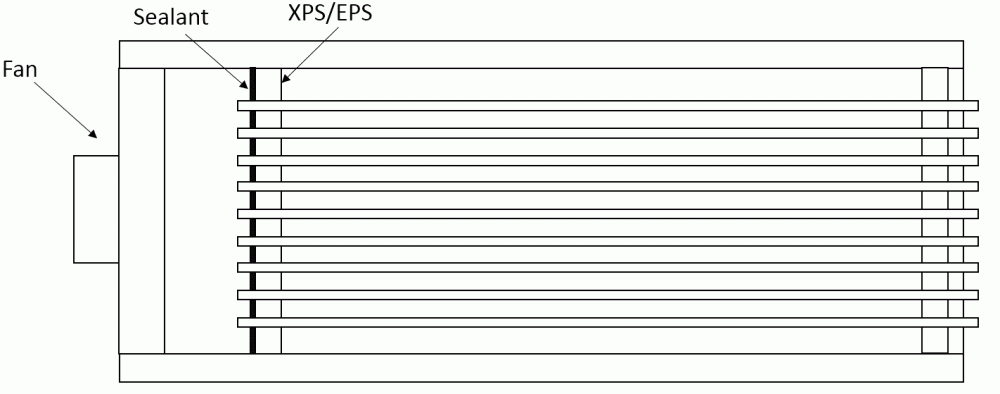
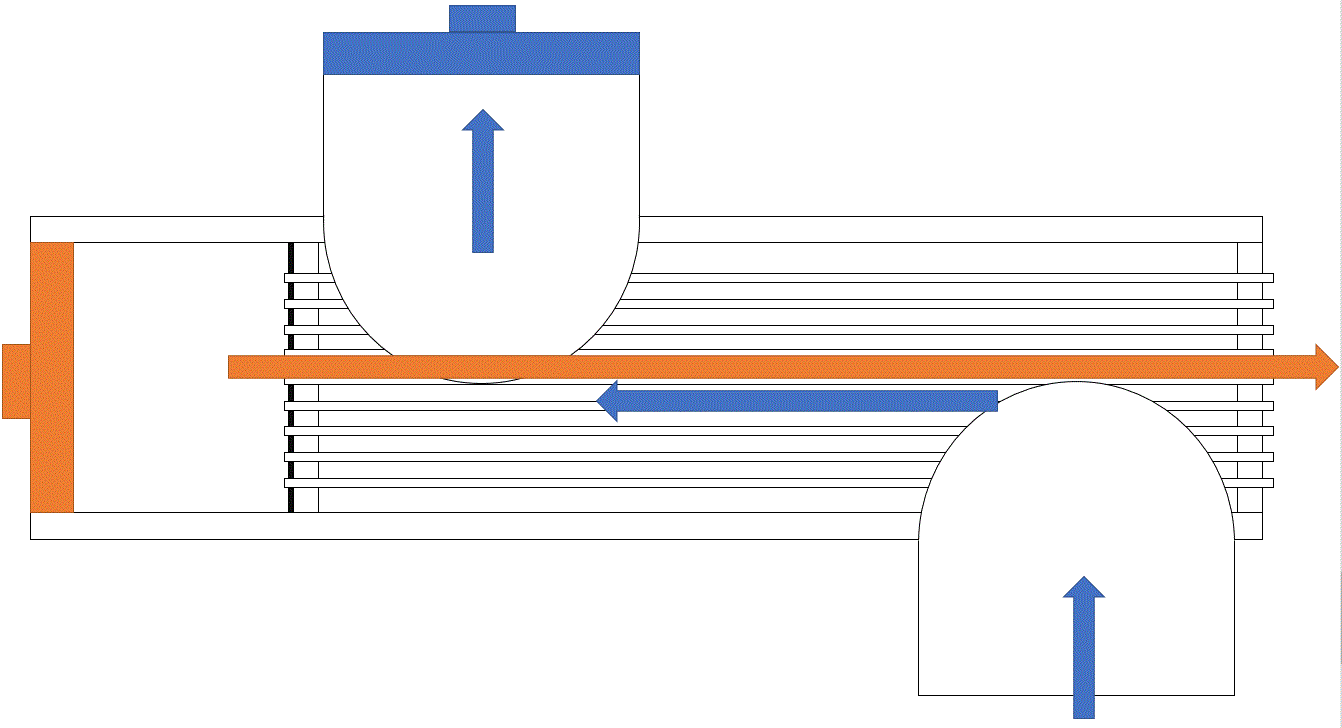
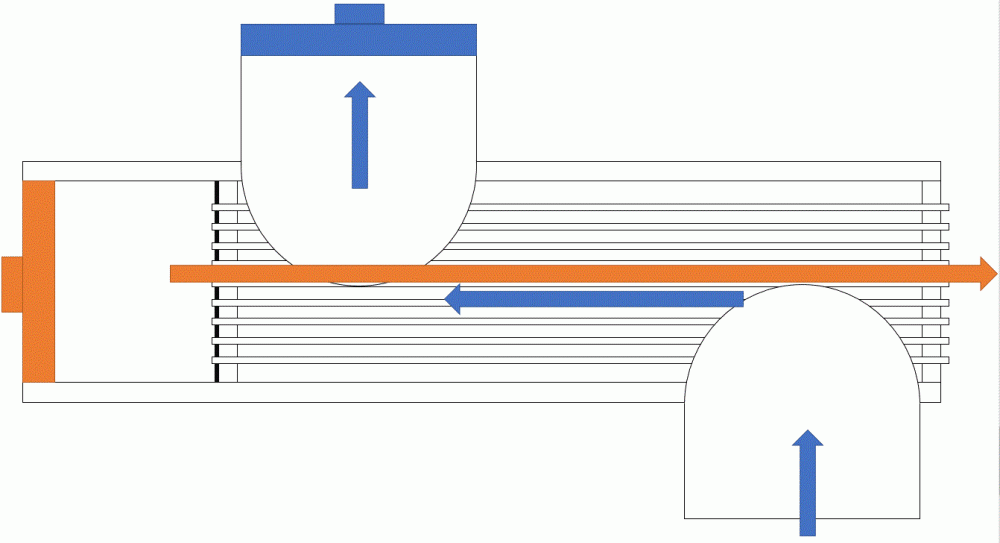
To a point, but longer also means more resistance. It'll work either way around - look at the arrows in this diagram - one end of the tube is stale air in and fresh air out (interior) and the other is stale air out and fresh air in (exterior). You do need to arrange things so that it's easy to guide any condensate to a drain. If tube inlet and outlet are as you say, then the shell inlet is fresh air from outside, and the shell outlet is fresh air to the inside of the house. One possible approach (not to any sort of scale): Orange is air from inside the house being extracted, blue is fresh air from outside. The other coloured blocks are fans. There's no reason why you couldn't have the branches both facing down - I just did it this way because I copied the layout of the unit above. If you tilt the right hand side down, condensation naturally flows out without the need for a separate condensate drain, although of course you'd need to figure out how to direct it somewhere if you don't want it just dripping on the ground. You'd also need to think about insect screens. The main thing that gives me pause about this whole project is how you're going to access the heat exchanger to clean it. I think this is an important consideration.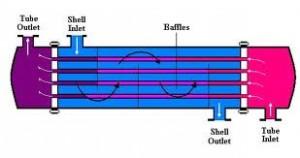
-
Congratulations! Now comes the easy part
-
The point is, if the others don't turn up, you can show the judge that it's perfectly clear what was intended. I wouldn't be starting from the point of view of it being ambiguous.
-
Generally a lot easier when the other side doesn't turn up, of course!
-
Not bacon sampling methods?
-
Welcome, Natalie! As you've probably seen, plenty of us have had problems with doors and windows, so ask away in the relevant sub-forum and someone should be along to help shortly.
-
The caveats are often used by the ignorant as evidence that scientists don't know "for sure". And then you have the flipside, where papers report about some new health threat caused by (making something up here) bacon increasing stomach cancer, until you look at the details and realise it's a 5% increased risk on an already unusual cancer.
-
I personally doubt the book has done either of those things to any significant extent, but I haven't read all of it, so you may well be right. Even if it is everything you say, some of the conclusions didn't ring true to me, and more importantly I wasn't particularly enjoying it at the time, so I stopped reading. Google straw man. Of course it is. Only the ignorant and/or mental think otherwise.
- 64 replies
-
- 1
-

-
- electricity storage
- battery
- (and 4 more)
-
Underlining the snarky bits, you actually called it:
-
DIY Heat Exchanger
jack replied to Onoff's topic in Mechanical Ventilation with Heat Recovery (MVHR)
I suppose so. Certainly has the advantage of simplicity, even if the plastic in Coroplast is perhaps a bit thick. -
DIY Heat Exchanger
jack replied to Onoff's topic in Mechanical Ventilation with Heat Recovery (MVHR)
There are commercial (domestic) MVHR extractors that do this. Some work on regeneration (single fan that changes direction periodically, with a heat absorbing labyrinth in the single path), but I believe there are others that just blow the incoming air in a direction away from the outgoing. Not ideal, but it'll work to an extent. -
DIY Heat Exchanger
jack replied to Onoff's topic in Mechanical Ventilation with Heat Recovery (MVHR)
There's not a huge pressure difference in this situation, and it's air/air, so I don't think perfect sealing is required. A small amount of leakage probably wouldn't hurt anyway, as there isn't a big temperature difference between any pair of points on the adjacent paths in a counterflow heat exchanger (for example, as I understand it, a 90% efficient exchanger when it's 0 deg C outside and 20 deg C inside will only have at most a 2 deg C temperature difference at any particular point. That's why you need so much surface area and reasonably good conduction for the tubes). You can seal the "straws" to the plates they pass through by pouring in a sealant (maybe use a temporary collar, or better yet surround it with a seal that will fit into the pipe you're using). 15mm pipe feels a little big and thick. Ideally you'd use a larger number of smaller, thinner-walled tubes. Aluminium might work (it's less conductive than copper). Plastic might work (you want it very thin, like drinking straw thin). All complete and utter speculation on my part, and again I'm definitely not saying this is something you should do!