


Mike
-
Posts
1484 -
Joined
-
Last visited
-
Days Won
8
Everything posted by Mike
-
That's waterless trap and the hump is normal. The pipe should, however, still be flowing downhill - it rather looks like it's flowing uphill; if so, that would be a fail.
-
Nuaire MVHR high energy consumption?
Mike replied to NewbieJ's topic in Mechanical Ventilation with Heat Recovery (MVHR)
There will only be one pair of fans (one for supply, the other for extract), but they can both run at 3 different speeds. Speed 1 is for when the house is empty, 2 is for normal use, and speed 3 for boost. The installer should have set the dials to move the correct amount of air for each of these speeds to suit the design, which takes into account the layout of your flat. Presumably you have a controller that can switch between all 3 speeds, as well as between summer & winter - so 6 possible settings. If you can measure how many Watts it uses in each of these 6 settings, then that may provide us with some clues. -
No, you don't need fire doors if you're converting the loft of a bungalow. Building Regs Approved Doc B1, section 2.21, requires fire doors only "where a new storey is added through conversion to create a storey above 4.5m". My guess is that they've copied and pasted from a previous job.
-
How would you recreate this when using plasterboard?
Mike replied to Beau's topic in General Construction Issues
Traditionally it would have been run in plaster using a profiled sledge. I found a video of the technique for you, though the quality is low - see below. Not sure about running it in pure casting plaster though - it may be too brittle. Normally fibres are added for mouldings, but on a wall probably just fibre-reinforced lime plaster, at a guess. It's not something I've tried, but if you were to use a double layer of plasterboard and leave the second layer short of the corners, in theory that would provide the space. Try some experiments... -
There is absolutely no problem with MVHR in a flat-roofed building, just as it can be installed within an apartment with no roof at all. The entire installation is ideally installed within the heated (or cooled) building envelope, so you just need enough height (or other space) to run the ducts. Maybe Google is showing pitched-roof houses as those are the buildings into which it's mostly installed / the owners who would most often choose to install it. In view of the dust, I'd make sure that you have some good-sized pre-filters ahead of the actual MVHR unit, so that it's not necessary to change them too frequently.
-
Geberit in wall WC frame - instal height?
Mike replied to markharro's topic in Bathrooms, Ensuites & Wetrooms
The big installer of high WCs is the NHS, whose WCs always seem uncomfortably high, though no doubt OK for those with mobility issues. If they're all to the spec on page 87 of this document, they're at 475-480mm. You could call in at your local hospital to 'test drive' one. BTW, in terms of ergonomics & health, squat (or low) WCs are said to be preferable to the standard Western model. See, for example, https://www.ahealthylife.nl/wp-content/uploads/2020/07/Straining-study.pdf -
Nuaire MVHR high energy consumption?
Mike replied to NewbieJ's topic in Mechanical Ventilation with Heat Recovery (MVHR)
And, in addition to the set point question, the User Guide also indicates that there's a manual switch to select either summer or winter mode, and that "Selecting “Summer Mode” means that the MVHR will target a lower internal temperature during the warmer months." If it's currently running in Summer Mode it would be fighting against the heating system, which may also explain the power usage. -
I am :) It's cold enough to turn on the Willis heater UFCH tonight..
-
And now in infra-red (thanks to my new toy) The value's not shown here (due to the insulation), but the water coming out of the top of the active Willis is just under 44C.
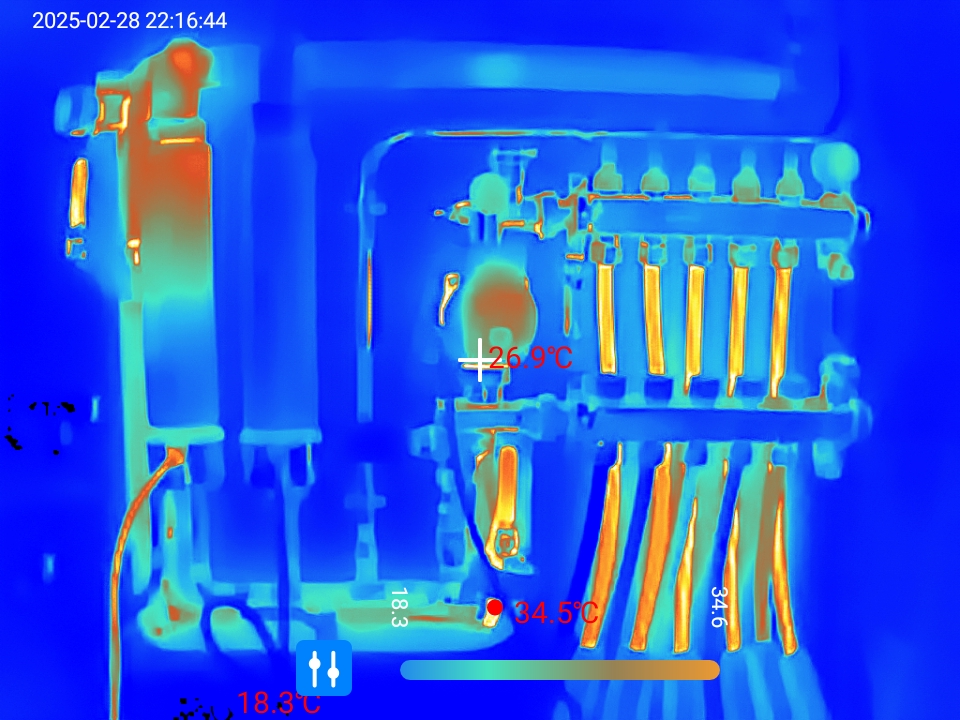
-
That's quite a lot... Yes, if wet areas are properly tanked then the wall board shouldn't be getting wet; I've done it myself without problem. Without tanking then MR board is certainly advisable where moisture is present.
-
The camera arrived today, so a few samples:
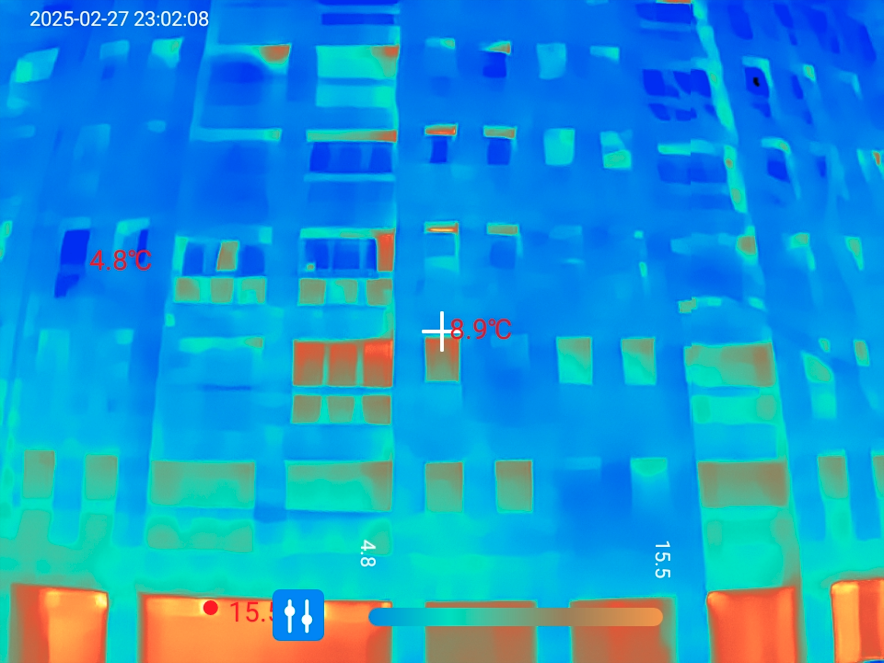
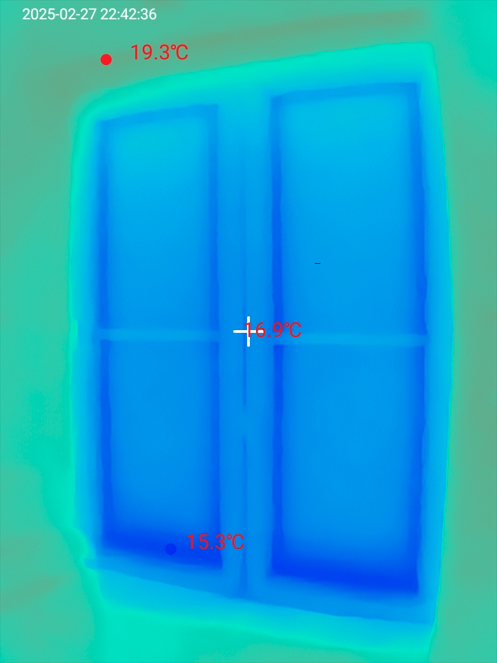
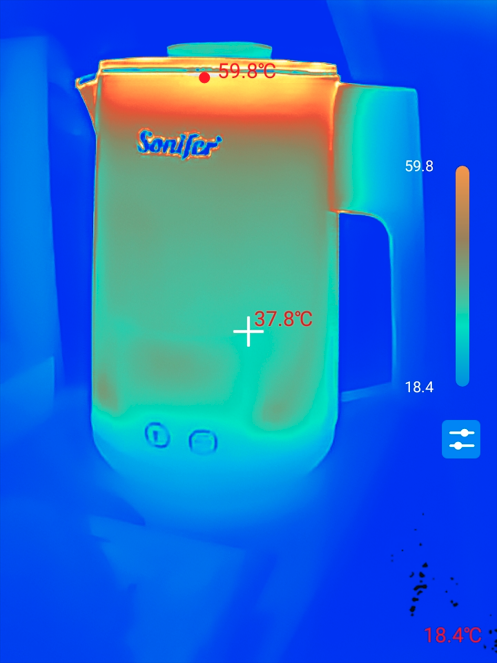
-
Keep gas boiler or install heat pump?
Mike replied to Walshie's topic in Central Heating (Radiators)
Domestically the technology is already mature, though there will no doubt be further incremental gains. Most recent advances have been on high temperature (as in very high temperature) heat pumps for industry. There must still be scope for cost reductions as the market grows, though sales in the rest of Europe are already way ahead of the UK, so it's not a niche market. My guess is that if the price comes down, then so will the subsidies, so I wouldn't expect Government incentives to make a big difference. As for running cost, the latest Climate Change Committee report (just published) calls for the removal of levies from electricity bills (and onto gas) to make electricity cheaper and therefore make the use of electricity more attractive - though whether and when that happens remains an open question. Also with a question mark are the Government plans to fully decarbonise the electricity grid by 2030; if that happens then electricity prices should become more stable compared to gas. From the opposite direction, as people quit the gas grid the standing charges for gas will rise - it's already happening in France - The CCC also say that 'without policy action, the price of running a heat pump will not reach parity with the price of running a boiler until 2035' though the difference is already fairly low, so it wouldn't take much Government action to swing the balance the other way. Personally, I choose the heat pump now; I'd have done so on my current French renovation if I had anywhere to put one. -
They don't build cavities well either, which is why I like full fill rock-wool. No mortar can get dropped down the cavity. If there is a way of pretending the insulation isn't right then I have missed it. Better still, skip the cavities and choose solid walls with external wall insulation.
-
For interest, here in France intumescent downlight hoods aren't a thing - at least I've never come across them. Instead they currently mandate this type of fire-resistant, air-tight, & acoustic hood, mostly made from compressed vermiculite, unless LED downlighters suitable for direct contact with insulation are used (which they often are):
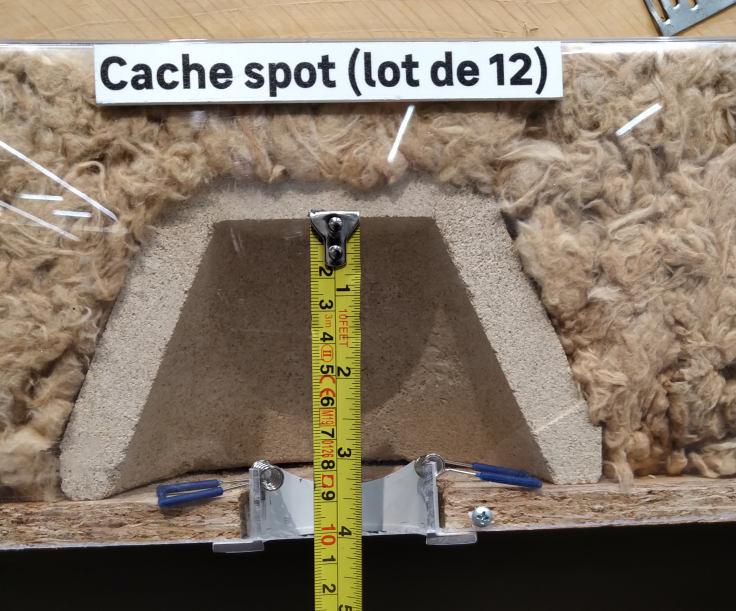
-
After playing with glazing simulators, I found that this spec provided the best performance within a standard frame: 4mm standard laminated / 16mm argon-filled cavity / 6mm acoustic laminated = Rw (C;Ctr) 39 (-2; -6) dB. See my post at https://forum.buildhub.org.uk/topic/32665-further-sound-insulation-through-bookcases/#findComment-480975 for more. BTW, the argon is for thermal performance, not sound. It does give very good sound resistance against regular traffic (provided you don't stick trickle vents in the frame), but not enough to kill the noise from boy racers / revving engines / stupidly loud exhausts. To kill that you'll need specialist secondary glazing.
- 1 reply
-
- 1
-

-
Yes, it's a necessary part of airtightness (there's more on that in that thread).
-
In the security window world, is PAS24 a con? What’s better?
Mike replied to Adsibob's topic in Windows & Glazing
Indeed, But preferably do a bit more than your neighbours to lower your relative risk! -
If it's feasible, then external wall insulation is always the preferred option. They could, but the chances are significantly lower if you have cavity wall insulation. However are you sure that you do have it? it was pretty rare in 1903. If you actually have solid walls and they are rendered + painted + in good condition, then the risk goes down, but if you have porous brick / stone / render then the risk goes up. Exposure to rain also affects the risk of wetting & ability to dry. If you're adding MVHR (mechanical ventilation with heat recovery) then the risk drops significantly, as that reduces the humidity of the air and so the condensation risk. The best option is to ask advice from the the insulation manufacturer / vapour control layer (VCL) manufacturer, or to commission someone to undertake a WUFI analysis. Would work, though it would be a shame to miss the insulation opportunity. But add a parge coat to the brick for airtightness (and read up on the importance of airtightness in general - lots of thread here.) No! Preferable of the 3, but add a parge coat, keep the insulation fully in contact with the wall, and consider a service void. A 'smart' VCL may also be advised (especially if you ask a VCL manufacturer). Alternatively you could do similar in metal stud, which (having done both) I prefer to timber. See my comments in this thread (the rest of the thread is relevant too):
-
It comes out ahead in the reviews I read & viewed - resolution, image quality, refresh rate, temperature accuracy, etc., and has a decent app that probably wasn't knocked up by a student. That and the price - don't miss the discount!
-
It looks like the Titan-Pro Sump comes with 50mm pipe reducers, and 50mm dry traps are available - such as the MacAlpine MACVALVE-4. BS 8102:2022 still includes it and NHBC still allow it, so there's no obvious restriction. Types A+C or B+C would still be my preference.
-
A Thermal Master P2 is currently heading my way. https://thermalmaster.com/products/thermal-master-p2
-
He's talking about the design temperature (i.e. the worst case the heating should cope with), and is correct in saying that when the outside air temperature is -3%C, the temperature below the floor will be warmer than that (he suggests 8 to 11°C). With good insulation, the soil temperature may remain be in that range throughout the heating season. With poor insulation the soil temperature will rise much higher than that as the heating season progresses, because the UFCH will be - wastefully - heating it up.
-
Yes, to create the Coanda effect. At the airflows involved, that shouldn't be an issue. It's because it's easy to adjust the flow at the valve during installation (25 different positions with that particular valve), avoiding the need to manually screw the valve in or out by X number of turns / avoiding the need to go backwards & forwards & cut sections out of a restrictor at the manifold.
-
I've used various respirators over the years and found that most of the filters became unobtainable. Now it's 3M only, but if you're planning to use them only for a single project it matters less.
-
In terms of comfort, UFCH provides a different quality of heat (even temperatures, with little variation in temperature between the floor and ceiling) compared to radiators (several degrees temperature difference from floor to ceiling + circulation of the air) and, when feasible, I choose it every time. Economically, the position is more complex. All things being equal UFCH is generally reckoned to use less energy, but things are rarely equal: The floor will be hotter and can therefore loose additional heat, so you need good floor insulation to compensate for this - preferably significantly more than you would get in a standard new-build, though at least recent regs require some heat resistance. On the other hand, high temperature radiators placed on outside walls - as they often are - also cause additional heat loss to the outside. The very low variation in temperature between floor and ceiling with UFCH means that the overall temperature of the rooms can be lower, so using less energy than radiators, which tend to be turned up at least a couple of °C higher to deliver a comfortable temperature at sitting height (and more than that if the radiator controls aren't well chosen or controlled). It also depends on occupancy and when you use your heating; with radiators it's easy to heat only during hours of use as they can deliver heat quickly (at least from a gas boiler), whereas with UFCH the whole system takes several hours to respond to a change in settings. Wet UFCH is the preferable - you can then use and switch between any suitable heat source over the life of the pipes, whether that's a gas boiler, heat pump, district heating, electricity, or whatever.

