
Ed Davies
-
Posts
1674 -
Joined
-
Last visited
-
Days Won
1
Everything posted by Ed Davies
-

thickness of heat sink for ufh
Ed Davies replied to scottishjohn's topic in Energy Efficient & Sustainable Design Concepts
Yes, we know that. You were originally talking about the proportion of oxygen in the air. We're sceptical that the proportions measured by exhaust analysers are a reliable measurement and wondered about other sources of information. It's you that brought up the irrelevant experiences based on air density from temperature and altitude effects. -
thickness of heat sink for ufh
Ed Davies replied to scottishjohn's topic in Energy Efficient & Sustainable Design Concepts
Of course the absolute amount of oxygen (g/m³) will change with the air density, as the pressure or the temperature changes, but it'd be interesting to see reliable measurements that the proportion vs the amount of nitrogen or the total amount of air changes much other than as a result of changes in water vapour. The take off performances of aircraft change quite dramatically with air density (mostly temperature) for the reasons you mention wrt to engine performance plus similar effects on the propeller/turbine and the wings, both for light aeroplanes and airliners. Take off performance calculations are done quite carefully for airliners but AFAIK they don't take proportion of oxygen into account, and I've discussed it in some detail with different airline pilots at various times; I'm sure somebody would have mentioned if it was a factor. E.g., London City vs Heathrow. -
thickness of heat sink for ufh
Ed Davies replied to scottishjohn's topic in Energy Efficient & Sustainable Design Concepts
I've just been doing some web searching about variations of oxygen proportion around the planet without much success. Only one said they were significantly lower in cities but that had some other aspects which seemed doubtful so I'm not sure about this. Still, if there really was a 2 or 3% decrease then you'd expect a 1% or so increase in CO₂ which would be remarkably high. -
… particularly if the panels are mounted at a fairly flat angle as shown in @JSHarris 's picture, or for any other plausible setup on a flat roof. For gas there's not just the connection charge but also the ongoing costs (standing charge and boiler servicing) to set against the cost of electric heating which make an ASHP, as @ProDave suggests, reasonably attractive. PV on a flat roof could well help with the cost of that and the cost of DHW outside the very worst bits of the winter.
-
You've received the new controller?
-
thickness of heat sink for ufh
Ed Davies replied to scottishjohn's topic in Energy Efficient & Sustainable Design Concepts
Obviously the sun angle onto the windows is a big part of the reason for the difference in solar gain in the shoulder months vs in mid summer but I wonder if where the sun is shining into the room also matters. In mid summer it'll be shining directly on to the floor so heat will be directly absorbed in the slab without increasing the air temperature in the room that much. However, in the shoulder months it'll shine deeper into the room and hit walls and furniture more so cause more directly perceived heating as they'll have less immediately accessible heat capacity so rise in temperature quicker. Once heat is in the air and other lightweight contents of the room it'll only transfer to the slab slowly because the thermal resistance of the interface between the air and the floor is something like half as much again for heat going downwards as for heat coming upwards. -
Japanese-style one that goes over the toilet draining to fill the cistern?
-
Roof Windows - Will they drive me mad?
Ed Davies replied to Moggaman's topic in Lofts, Dormers & Loft Conversions
House I rented in Tongue had a Velux roof window in the bedroom. No problem with noise at all; you can hear rain on it but it's quite a nice sound, really. I did get a bit nervous with my head under it in a hail storm - visions of waking up slashed to bits by broken glass - but of course not a problem in reality. House under construction will have Veluxes in both the bedrooms but with the room arranged so the bed heads aren't under them. Something which isn't so obvious: in winter when the Sun is low so the Moon is high in the sky. With a full moon the light shines in through a roof window more than you might expect so you really need some sort of black-out blind in mid winter as well as in summer. -
You're thinking of skin effect which is negligible at 50 Hz for any domestic-size wiring. It could matter for small cables at higher frequencies and for things like the wiring in the grid or substations at 50 Hz. Indeed, but you can lose fingers, etc. YouTube videos of people handling off-grid or boat batteries while wearing rings or metal watch straps really make me cringe. I know of a case of somebody having a finger burned off as a result of getting their ring welded across a 5 volt power supply.
-
Glad it's not just me that finds resistor colour codes difficult to distinguish.
-
Interesting, MK reputation updated. I'll pick up one of those Scolmore ones next time I'm in Inverness for anything else. Thanks.
-
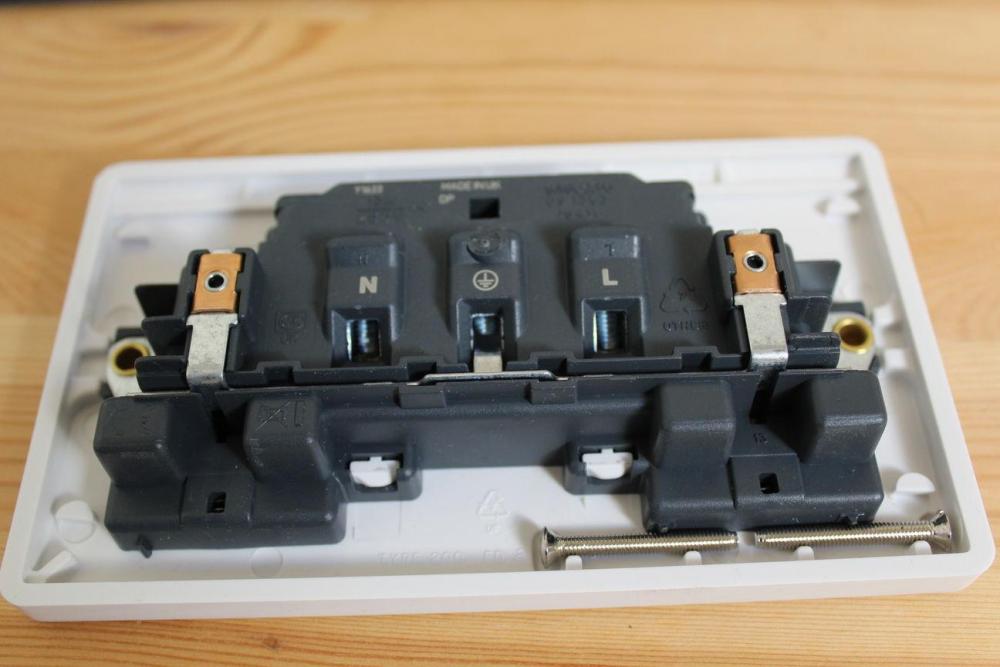
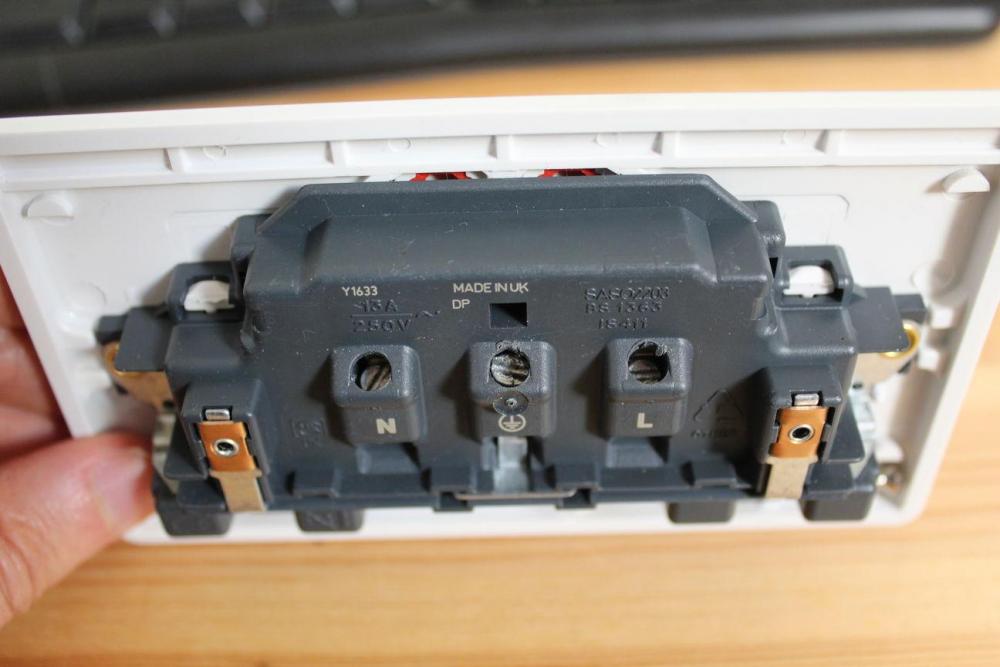
Need to replace a double gang mains socket, got a new one yesterday. Screws on the live and neutral terminals were pretty stiff winding them in the first time but are now free and work sensibly. The screw on the earth terminal, though, is stiffer still. I've only got it in about 1/3 to 1/2 way and I'm coming close to destroying the screw head in the process. Am I missing something obvious? It's an MK socket, not some Asian knockoff, so I really wasn't expecting any problems with it.
-
I think you'd need 29 boards. 3.6/2.4 = 1.5 as you say. 2.6 / 0.14 = 19 (rounding up). 1.5 * 19 = 29 (rounding up). Which is £464.
-
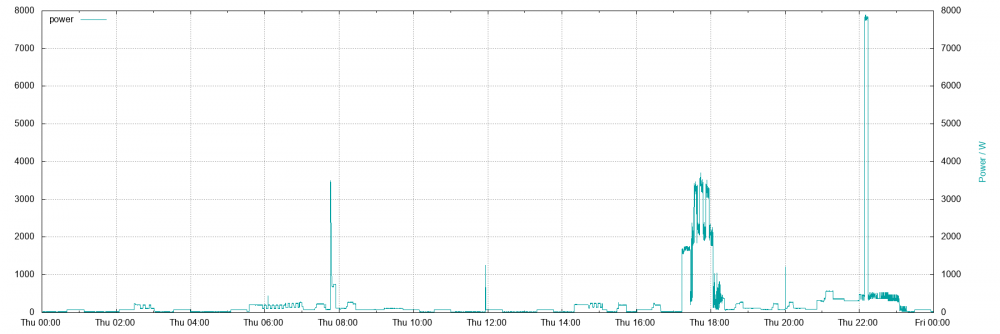
That's a pity as it sounds like you're likely to fail and regret it all which will be sad for you and reinforce those who say to just get a grid connection. My plan is 2 x Victron 3 kW inverters so a total of 6 kW available to use. I had all sorts of plans for automatically shedding loads to keep under that limit but in practice I find I don't actually use that much in the house I'm renting apart from when I use the 7 kW electric shower. Even running the washing machine while cooking dinner on Thursday evening it didn't go over 4 kW. It seems to me there's a split in the whole off-grid thing between fairly “hair-shirt” systems such as Maximus Ironthumper talks about (just watched one of his YouTube videos) vs some really expensive turn-key systems you'll get offered if you just phone people up and that, with a bit of research and understanding, you can build something in between which will be quite comfortable 10 months of the year but need some care and thought in December and January.
-
I have similar thoughts. My usage is about the same (about 4 to 5 kWh/day). Still, to have much hope of coming close to meeting that demand I'm thinking of more than double the amount of PV (6 kW) and four time the battery capacity (10 kWh). Even then, around December it's not looking too great. As @JSHarris has cross posted as I'm typing this, PVGIS is a good tool to use. On another forum I collated people's reported outputs against PVGIS predictions on a monthly basis. Generally speaking PVGIS came out at the bottom quartile; i.e., 1/4 of the time the actual output was less than PVGIS, 3/4 of the time it was a bit better so it seemed, then, that PVGIS was realistic but a bit conservative. There's a new version of PVGIS now with a number of different solar-radiation databases which vary a bit but seem to be a bit more optimistic than the old database so I image it's pretty reliable now. For my site in NE Scotland with my proposed 6 kW facing just east of south at 60° elevation PVGIS predicts an output of 109 kWh for December (i.e., 3.5 kWh/day, 146 watts average). 2000 kWh per year (5.48 kWh/day, 228 watts) is obviously a bit more. Something to beware of, though, with PVGIS is letting it optimize the slope. It'll pick the optimum slope to maximize year-round generation whereas off-grid you tend to want to optimize for winter generation. Theoretically to maximize December generation this far north you want the panels pretty much vertical but realistically the more even generation with a bit of exposure to the overhead sky of a slightly shallower angle is probably worthwhile. If instead of setting 60° elevation for my site I leave PVGIS to optimize the slope it picks 41° which knocks December generation down from 109 to 91.2 kWh. Even shallower angles can really nail you. E.g., 10° (as I'm visualizing for a car-port roof) will only give 40.5 kWh in December. In a hilly place like Wales you need to run PVGIS for your exact site to see that effect shading by hills has. My plan is to see how it goes but with the assumption that it's most likely I'll finish up getting a small wind turbine to make up the difference. I too have no option for a hydro scheme but something my site is not short of is wind. (Packed up this afternoon when a chisel blew away - I exaggerate only slightly.) I too plan to use LiFePO₄ batteries. I'm not yet convinced by packaged solutions, though. The first search result for BYD B-Plus gives €1,183.00 for a single module which works out as €0.47/Wh whereas just buying individual cells can get prices around €0.35/Wh. Obviously that's without the battery management but I'm not convinced that the complex balancing systems people have are necessary or even a good idea. (You need to monitor the individual cells and some balancing at sometime is probably needed but I think it's not needed continuously and that doing it continuously might even be harmful.)
-
There's an interestingly obscure word. It's not the same as oscillating, it means kissing. Apparently it was, at some time in the past, used jokingly in its direct meaning but the only time I've come across it is in orbital mechanics where an asteroid, satellite or whatever's orbit is perturbed by forces other than the gravitational pull of the body it's in orbit around so is not a simple ellipse. The ideal elliptical orbit that best matches its actual path at a particular moment in time is called an osculating orbit. Less off point, a multitool is a good thing to have but the metal-cutting blades I've tried haven't lasted long. Might be because I've used them on galvanized ring nails or might be because I've bought cheap ones. OTOH, I went to the local agricultural supplies place today to get various things. On my list was a couple of metal blades for my Makita multitool. as I have a few more ring nails to dig through. They only had genuine Makita ones which would be nice to try but at £22 each I thought I'd skip that experiment.
-
My building warrant says fitting round the I-beam rafters but I've had second thoughts on the matter. I'm now thinking to put 25mm EPS in the I-beam to get a flattish surface to stuff the mineral wool up against.
-
Isn't stuff like Frametherm flexible enough to get a snug fit anyway?
-
Do people really not realise this?
Ed Davies replied to Jeremy Harris's topic in Networks, AV, Security & Automation
Even Orwell didn't think people would voluntarily pay for the telescreens themselves. -
Mine wouldn't have been, at least easily. Water table == ground level or higher on my site most of the year so some care to get the bottom of the EPS out of the ground would have been needed. This was one of the things which made me concerned about a passive slab so @ADLIan's comments are relevant in some cases.
-
How Often Does Your Building Inspector Visit?
Ed Davies replied to Triassic's topic in Building Regulations
Council inspector who was very helpful during the warrant process. He's been to site three times: called him in the afternoon while the holes for the foundation bases were being dug, came as arranged at 11 o'clock the next morning before the concrete was poured in. A bit later I was concerned about a change I'd made to the founds so asked him to come and have a look. That took a week or two to set up, he was on holiday then busy catching up from that IIRC and as it wasn't an “official” stage he had to give it lower priority. Third time he just dropped by after doing a nearby inspection for a friendly chat, said he'd been by a couple of times but I hadn't been there. Next formal inspection will be on the structure before I put any insulation in. -
Single Room MVHR
Ed Davies replied to Onoff's topic in Mechanical Ventilation with Heat Recovery (MVHR)
I doubt that the Correx is the limiting factor. Slightly surprisingly, with any reasonable heat exchanger design it's the boundary layer resistances between the air and the exchanger material which dominates; the thermal resistance of the material itself makes very little difference. Some numbers. -
Single Room MVHR
Ed Davies replied to Onoff's topic in Mechanical Ventilation with Heat Recovery (MVHR)
Wouldn't it be less of a challenge to just put it in the ceiling, above the Post-It or maybe a bit further away from the shower head? -
ICF's soaking up the plasticizer
Ed Davies replied to magnethead's topic in Insulated Concrete Formwork (ICF)
Specifically, PVC with plasticizer in it. uPVC (u = un-plasticized) should be OK so rigid PVC pipe shouldn't have a problem with polystyrene. Interesting about rigid PVC being affected by plasticized PVC, though, which would presumably mean the rigid PVC would suck the plasticizer out of the cable insulation making it brittle. -
Unvented cylinder Immersion heater thermostat
Ed Davies replied to ProDave's topic in Boilers & Hot Water Tanks
Speculating wildly, I wonder if they originally made the thermostat for a wider range then limited it to 55 °C because of rules about TMVs or whatever. So maybe it is, sort of, the recommended way of solving the problem.