
Ed Davies
-
Posts
1674 -
Joined
-
Last visited
-
Days Won
1
Everything posted by Ed Davies
-
Fairly sure it's not that simple, either. I have used my modem and login credentials to connect to PlusNet from another PlusNet subscriber's premises on the same exchange. On the other hand, when I tried to connect to Andrews & Arnold from the previous tenant in this house's left over broadband connection (long story) it didn't work. It wasn't A&A that rejected the connection; one of their engineers was watching their systems as I tried to connect as they were curious if it'd work, too, and they didn't see anything.
-
Right, so the availability of manual vents is not a surprise. It's Fakro's perverse notion that avoiding ventilation should be awkward on high-spec windows which is irritating.
-

The Walter Segal Method Of House Construction
Ed Davies replied to RichC's topic in New House & Self Build Design
Difficult one. I certainly had a reasonably clear idea of the design of the house before I fixed on the plot so maybe the house design overly restricted the plots I took seriously. The final design would have fitted, give or take mirroring about the north-south axis, on three of the four plots I went as far as significant discussions with the vendor about. But then my intention from the start was to have a lot of solar [¹] so it was a basic requirement to have pretty unobstructed sky in a generally southerly direction so my east-west axis, south-facing design was likely to fit. The one which was a bit awkward was on an east facing slope. Even if you leave picking the exact house layout until you have a particular plot in mind there's a lot you can usefully think about regarding construction methods, heating systems and general house requirements in the mean time. Having a few “contingency” sketches of possible room layouts might help in making the plans a bit more concrete without getting overly committed to particular ones. I'd suggest that Segal-like construction fits this approach quite well but not uniquely so. [¹] including solar thermal which is a bit more awkward than PV to ground mount any distance from the house. -
I thought the problem with Fakro was that all the “higher-spec” windows (3G, etc) had the automatic vent. The cheaper 2G, high-U, ones could have the manual vent. So what sort were the ones in that house?
-
From what I've read elsewhere PIR tends to shrink anyway given enough time so it might actually be better for long-term lack of thermal bypass to have stuff like this if it's already done all the shrinking it's likely to do. This is a major reason I plan to have a separate airtightness layer rather than taping the PIR foil.
-
Yes, feeling excited about the house you're building is important. If you're up this way (I'm near Lybster) you're of course welcome to come have a look to get an idea of how the shape fits together though I admit even walking around inside I still find it hard to visualize how the rooms will feel once the internal walls, etc, are in.
-
I'd guess I'm not most people, then. I used 1022.83 litres of diesel in my van 2018-10-23/2019-11-04 (377 days) so 2.713 l/day (23.58 miles/day) whereas in the few years I've been in this rented house I've averaged 7.44 l/day for heating oil. Assuming 0.846 kg/l and 45 MJ/kg for both domestic heating oil (“kero”) and diesel that's 10.575 kWh/litre so: van: 28.69 kWh/day, 10'472 kWh/year, 1195 W. heating: 78.68 kWh/day, 28'717 kWh/year, 3278 W electricity: 4.58 kWh/day, 1673 kWh/year, 190 W (As mentioned above, showers come out of the electricity, all other DHW from heating.)
-
No, and it would not be plausible English to parse my sentence that way. My neighbour at my house site runs one of his vans on the road on red diesel. Before anybody squawks, yes, it's legal. I think it doesn't have an MoT either and that's legal, too, but I'm really not sure if I've remembered that right.
-
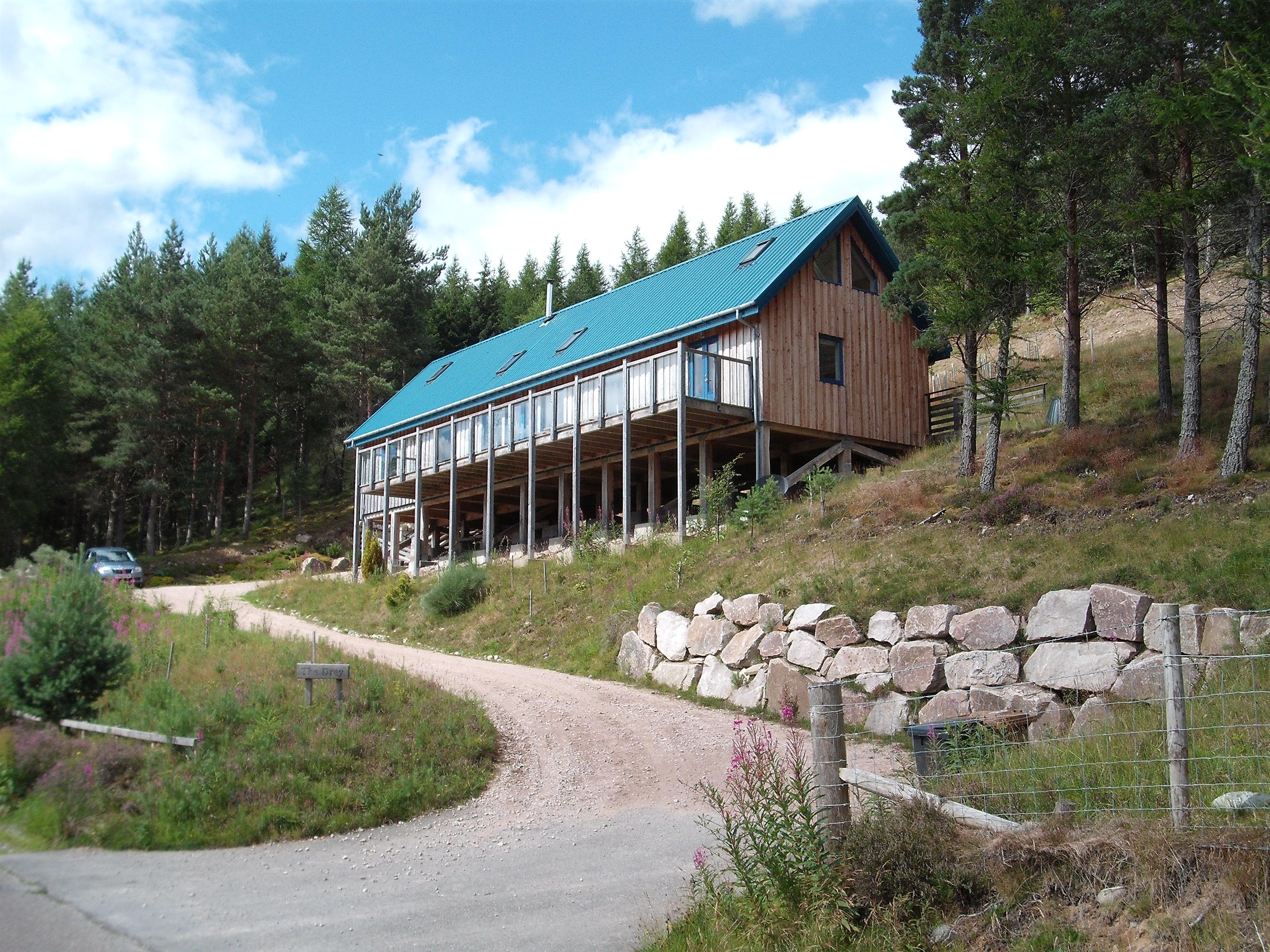
Hi Tara, your PM didn't say anything particularly confidential other than narrowing down your location a bit so I'll answer here. First question I'd ask is why you want an A-frame? My reason was to get a large, suitably sloped, surface for lots of solar panels. The usual negative considered with an A-frame is that there's a lot of volume in the bottom corners which goes to waste. In my case I plan to fill that, at least on the north side of the house, with a big water thermal store so that wasn't such a problem for me. In another thread I recently wrote “I'd have done so much so differently in retrospect but the other side of the grass is always greener, etc”. One thing I was thinking of was the choice of an A-frame. I knew to the mm how high the house was going to finish up but hadn't really appreciated how actually high it is, if you see what I mean. With the relatively steep roof I wanted for winter solar collection it has to be quite high to have any usable space on the second storey (and that's still quite small and only really suitable as a loft space though it could be bedrooms with suitable escape). The planners were quite positive about the overall design. They liked the fact that it was designed for low energy use even though it was unusual for the area. On the other hand, most of the other houses built in the area in the last 20 years are fairly tedious retirement-type bungalows so any variation is likely to be received positively. I suspect that whether this applies further south will depend very much on the immediate surroundings - it might be OK in one area but not in another 10km away. As I say, why an A-frame?
-
More than 2/3rds of my annual electricity consumption. (OK, I drive a diesel van and heat with oil including DHW but the shower is electric ? ) Meter reading 2019-01-30: 40352, 2020-01-30: 42025 = 1673 kWh.
-
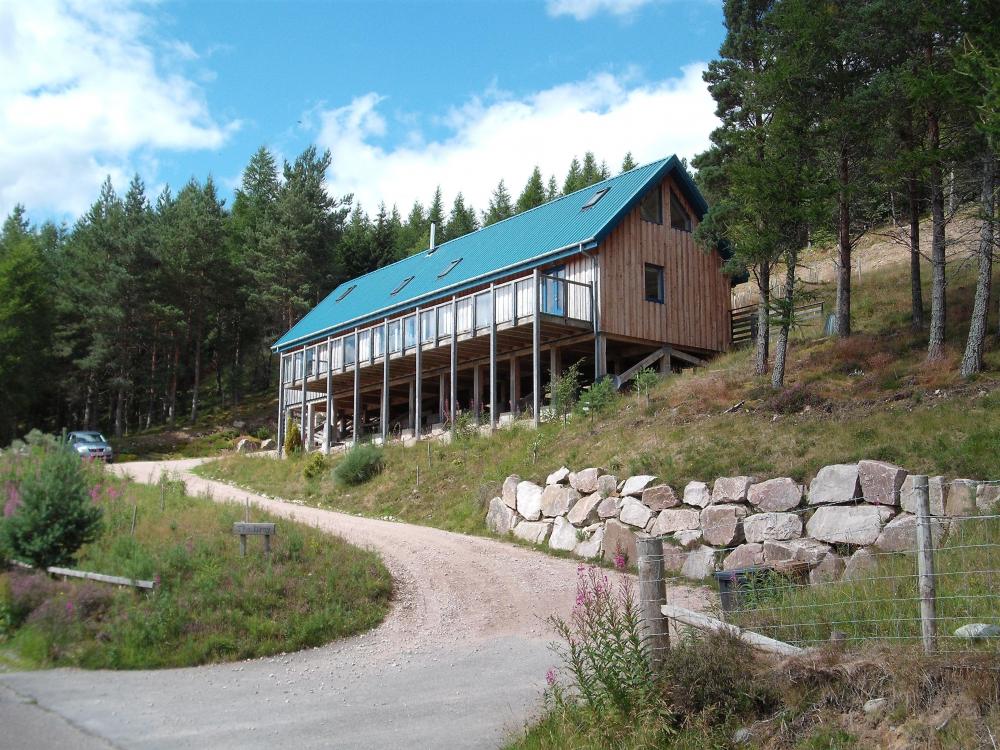
Like this? It's somewhere between Oban and the Perth area, I think, but it's been a while.
-
In Scotland you only need: Dunno if that means that you actually need an MCS install or if a suitable DIY install would be sufficient. I.e., pick an approved heat pump and follow the MIs. Anything else?
-
… or too wet. I was interested in Segal for the other reasons you mentioned but when I zeroed in on the north of Scotland for the build it became even more attractive and finding a site which just doesn't drain (solid rock about 500 mm down) was conclusive.
-
self build house-Disillusioned but still going.
Ed Davies replied to farm boy's topic in Introduce Yourself
Good summary. I'd have done so much so differently in retrospect but the other side of the grass is always greener, etc. -
Are you sure? Americans tend to give the thermal properties of materials as R value/inch so I suspect this is that. Give us a reference to the source and we can work through the conversion from firkins per fortnight or whatever it is. R value is the resistance so 1/U value (which is the conductance). R value/distance is the resistivity so inverse of the conductivity which often written as k or λ value. Actually, the Americans are more sensible in giving the resistivity of materials as usually you want to find the resistances of all the layers in the wall, roof or whatever (by multiplying the resistivities of the layer materials by the layer thicknesses) then adding those up and taking the inverse to get the U value of the whole build up.
-
68.4.1, I presume. Just update your plugins, there's a new Enigmail which is compatible. It broke for me recently for this reason but 2.1.5 fixes it.
-
MVHR in large volume New Build
Ed Davies replied to Triassic's topic in Mechanical Ventilation with Heat Recovery (MVHR)
Dunno about plastic ducting but in other applications (aircraft tyres) rubber is made antistatic by embedding carbon black in it to make it slightly conductive. I expect they do something similar. -
condensation in extract manifold?
Ed Davies replied to woodman's topic in Mechanical Ventilation with Heat Recovery (MVHR)
In principle, yes, if you mix two quantities of 100% RH air at different temperatures than the resultant mixture will have an RH greater than 100% so condensation is likely. But it'd be really weird, and a bit concerning, for the RH in the rest of the house to be anywhere near 100% so in practice I can't see why this sort of mixing is likely to result in much condensation. It's not that there are lot of actual water droplets being extracted from the bathroom, is it? E.g., is the extract directly over the shower? -
I thought UVCs legally required an annual service/safety check. Am I confused (again)?
-
Have a word with the warden? Maybe a relative of another occupant is having similar worries or whatever.
-
It's more polite to call it passive. Passive's a good thing, right?
-
I don't know about this case but there are some “PD” sections which require a CLPD. E.g., wind turbines in Scotland, because a condition is that it doesn't interfere with airports and so on and the LA will check that. The difference from a planning application is that they simply determine if it meets the PD conditions or not. If it does then they have to permit it, irrespective of any planning policies or whatnot. Had that conversation with a planning lady on Orkney. I was discussing my plans trying with just PV and adding a turbine later under PD if it seemed useful/necessary. She was saying to put it in the initial planning application so they could check with the airport, etc. “Oh, that won't be a problem”, “You know about such things?”, “I wrote the software the CAA uses to check”. “Ah”. It was a bit of a stretch - the software I wrote is/was used by some CAA employees but isn't the official system in use.
-
Oops, just noticed the thread title - only read the text. Still worth adding location for the future.
-
There's also the consideration that warm-air heating will increase the ventilation heat losses. The perceived temperature is, roughly, the average of the actual air temperature and the radiant temperature of the surroundings. If you're heating the air directly then the air will be a little bit warmer than the walls, floor and ceiling because of the interface resistance so the air will need to be about half as much warmer than the required perceived temperature. Using radiant heating (UFH particularly where about half the heat emitted is via radiation or radiators where it's maybe a sixth [¹]) means that air can be a tad cooler than the wanted perceived temperature so ventilation heat losses will be smaller. With heat-recovery ventilation this will not be a lot, but as @Jeremy Harris shows the difference with UFH is small, too. [¹] Longer discussion: https://edavies.me.uk/2014/08/radiators/
-
Would be worth adding roughly where in the country (world?) you are to your profile. E.g., which county.