


Crofter
-
Posts
3484 -
Joined
-
Last visited
-
Days Won
11
Everything posted by Crofter
-
Don't spill it!!
-
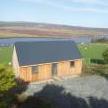
I kid you not: this is where I get my stone from
Crofter replied to ToughButterCup's topic in Building Materials
Although the UK is seen as a gold standard for H&S to which the rest of the EU looks up. -
My wee house sits up on piers, varying from about 150-900mm off the ground. I need to connect the kitchen sink to the SVP, which is at the other end of the house, about 8m or so away. This is all at the 'shallow' side of the house, where the piers are less than 300mm tall. My original plan was to run the waste pipe through the insulated 300mm deep space within the floor (I'm using JJI joists). However I'm wondering if there is actually anything at all wrong with just running it underneath the house- this would be much easier. Will there be any sort of frost risk? In some ways it isn't really different to running pipes under a normal suspended floor, after all.
-
You really don't want the plant to be sitting in a local depression- surface water will end up running into it which is not good. This can definitely be a problem on flat sites (wasn't a problem for me!) Can you move the treatment plant closer to the house?
-
Log burner stove for large open plan room but MVHR
Crofter replied to readiescards's topic in Stoves, Fires & Fireplaces
You should be maintaining a burn that is hot enough that, when the fire goes out, not only is the glass clean but also all the firebricks etc. Doing this minimises ash and flue deposits and gets the most out of your fuel. The design of the stove makes a big difference though. My old stove had its airwash taken from the front, at the top of the door. My Charnwood takes it from the back, via tubes that pass through the top of the firebox before hitting the top of the glass. This ensures that heated air is washed down the glass, which makes a huge difference. The big commercial biomass guys reckon on 2% ash residue- everything else is burnt. The higher the temperature, the more the wood breaks down by pyrolysis. You are really creating a miniature gas plant in a way, driving off volatiles which are then burned. The lower the temperature, the more of these volatiles end up lining your stove, flue, and of course escaping as unpleasant particulates. -
Log burner stove for large open plan room but MVHR
Crofter replied to readiescards's topic in Stoves, Fires & Fireplaces
I haven't seen a Clearview in the flesh, they do seem awfully expensive! I really like my Charnwood which was a fraction of the price. Prefer it to the inlaws' Morso in fact. My installation will use bog standard single wall flue from the stove right up to the vaulted ceiling, and then twin wall where it passes through the roof structure and above. -
Log burner stove for large open plan room but MVHR
Crofter replied to readiescards's topic in Stoves, Fires & Fireplaces
@reddal That's very interesting indeed. One other factor of course is log size. If using actual split logs then yes a rammed full firebox is going to struggle to burn properly. Given that I don't have ready access to trees, the vast majority of what I burn tends to be smaller stuff and scrap building wood etc. Much of it is no bigger than kindling really. Consequently the fire needs attending every 20mins or so to top it up, but the benefit is a very hot and clean fire. I realise that this is not typical of most people's usage though (and most people do not want to spend their winter evenings sat beside the fire feeding tiny bits of wood into it). -
Log burner stove for large open plan room but MVHR
Crofter replied to readiescards's topic in Stoves, Fires & Fireplaces
Apologies, I misread. By the way I'm also going for the Burley... wonder if we could save on delivery costs by buying at the same time? -
Jeremy, do you plan to treat your cladding at all? With the verge/eaves overhangs you describe I would expect uneven weathering to occur unless treated. I actually prefer the reddish look of fresh cladding and am considering using some form of treatment to keep it that way. This shouldn't be too onerous given the small size of my build, and I can easily reach everywhere with a ladder.
-
Log burner stove for large open plan room but MVHR
Crofter replied to readiescards's topic in Stoves, Fires & Fireplaces
Yes I see the difference, fair enough. But it's a damn sight easier to keep a small, compact, fire nice and hot than one that is unavoidably spread out along the bottom of the stove. -
Log burner stove for large open plan room but MVHR
Crofter replied to readiescards's topic in Stoves, Fires & Fireplaces
Respectfully disagree with some of the above. Rated output is not maximum output. e.g. a 4kW stove may actually produce 5kW flat out. Secondly, running any stove too low is a bad idea- just as it is a bad idea to run a IC engine on idle for prolonged periods. Running a stove very low means lower temperature combustion, therefore incomplete and inefficient combustion with volatiles deposited up the chimney instead of burned off. Higher risk of CO production, more ash, much more sooting up of the stove glass. One of the commonest mistakes people make is to specify too large a stove and then try to run it throttled down. -
Log burner stove for large open plan room but MVHR
Crofter replied to readiescards's topic in Stoves, Fires & Fireplaces
No boiler on that though. -
This is a really useful thread for me, thanks all. Having recently discovered that I need felt trays, I hadn't thought of shallowing up the angle at the eaves, but I guess this does make sense, to help close up what is otherwise a 3" gap between the fascia and the steel sheeting that I am using (25mm battens, 50mm counterbattens). I still need to get my head around some details here and ensure that the steel is adequately supported, though.
-
This may not be much help, but I'm sourcing my (Scottish) Larch direct from the sawmill. Considerably cheaper and they will cut to the size you want. Budget won't stretch to Siberian!
-
I feel like giving you an 'amen' to that! Out here it's even worse- I often get things delivered to friends in Inverness because it works out easier and cheaper. When we lived on Lewis it was worse again. The incident that sticks in my mind is when I bought a very small boat part, basically a little stainless fitting that any welder could knock up in 2mins. Cost £20, which I thought was bad enough, but then the supplier Fedexed it up to me and then demanded an extra £30 for the delivery. In disgust I sent it back to him in a jiffy bag for 66p and demanded a refund. He refused to even consider using Royal Mail and claimed that none of his own mail went with them, not even from his office, and nor did he or any of his staff drive past a post box at any point, ever. Some people just don't want your business!
-
Hmm. So can I not just have the breather felt go up and over the ridge? Does it need some additional ventilation up there? My roof covering is steel sheeting, with a ridge capping, so will be nicely ventilated- but that's above the breather.
-
I don't know much about ICF so find this fascinating. Seems to be going smoothly, well done. I can see the appeal of such solid construction, Orkney is even windier than Skye!
-
Could you elaborate on that bit please? (I'm about to fit my breather and don't to do it wrong!)
-
Heat loss and running cost
Crofter replied to Jeremy Harris's topic in Energy Efficient & Sustainable Design Concepts
A very useful discussion! In my own project I have chosen to go down the low-energy route because it saves me having to fit a central heating system, and by opting for controlled ventilation I hope to improve air quality and avoid damp and mould problems. One other factor that I have come to realise is the synergy between low energy and low build cost: most of the things that make a house 'high energy' actually increase the cost, e.g. lots of little windows, complex shapes, chimney breasts. -
If it's nearly flat I would go for metal, especially if you can avoid joins in the sheets.
-
Try www.secondsandco.co.uk for bargains but you might need to wait several weeks and keep checking until the stuff you want comes up. Very cheap, though! Wickes are surprisingly cheap for insulation, they might sell it as a loss leader.
-
But presumably you can't claim against BC if a defect is later found? It's all about passing the buck.
-
Usually the breather membrane goes straight onto the sarking. Check the BBA certificate allows this application (most do). Your guy might be thinking of effectively ignoring the sarking and fitted the membrane draped. I think in practise you would need much deeper battens for that to actually work, as unless it is pulled pretty tight it is going to touch the sarking anyway. Sarking is good. I've just fitted mine and the stiffness it has added to the structure is incredible.
-
I like the look of that. Of course there is still the flue cold bridge to think about- what's the best option for mitigating that?
-
I did my own planning application (and own design and drawings). I spent a lot of time looking at planning applications online on the council website. This gives you a good idea of what needs to be in the application and also what sort of things the planner may or may not allow. It's a good use of time, IMHO, as you may pick up some ideas and learn from others' mistakes.
