Iceverge
-
Posts
4384 -
Joined
-
Last visited
-
Days Won
31
Everything posted by Iceverge
-

Clean Heat Market Mechanism to incentivise heat pumps
Iceverge replied to LnP's topic in Air Source Heat Pumps (ASHP)
Daikin do it as an out of the box product. -
Just double the insulation on the runs to the cylinder. The ones to the CH manifold are surely just acting as "radiators" which is the point surely!?
-
Clean Heat Market Mechanism to incentivise heat pumps
Iceverge replied to LnP's topic in Air Source Heat Pumps (ASHP)
I guess nobody mentioned slab cooling with air to water heat pumps to them.... -
From engineering toolbox . com A 22mm pipe at 45 Deg delta T will lose 8W/m with 25mm insulation but an uninsulated one will loose 60W/m Say a HRC of 50m running 8 hrs per day. 52W*50m*8hrs is 20.8kWh per day. At 25p/kWh its about £1900/year of a difference. Obviously a 15mm pipe will be less and you need to subtract the additional heat generated from your space heating bill to get an idea. The key point for me is that an insulated line of 50m would still be £300/year. Design it out and use 10mm pipes and short runs wherever you can.
-
Do the electricians apply the same thing to wiring with SWA cable? I suspect it has more to do with plumbers charging £3.40 for a 15mm tee of Hep2O and 1 minutes labour, and 70p for a copper tee and 10 minutes labour. It's very hard to convince someone to change when their livelihood depends on it.
-
Clean Heat Market Mechanism to incentivise heat pumps
Iceverge replied to LnP's topic in Air Source Heat Pumps (ASHP)
Completely agree. Targets are the "wish it and it'll come true" equivalent for politicians. Plain A2A heat pumps were excluded. They are the cheapest form of heat pump and can readily deliver a COP of 4 or 5 for £1500 installed or £37B for the UK. You could just bolt one into the hallway or living room or every house and let them accommodate the "base load" of house heating with exiting gas to top the heating. At a grid CO2 of about 200gCO2/kWh and a gas boiler CO2 of about 300g/kWh with a COP of 4 you could would have heat in your house with an A2A HP at 50g/CO2. Even if you shifted half of your energy use to the A2A you would take your CO2/kWh from 300g/Kwh to 175g/kWh of CO2. A 42% reduction in household CO2 emissions for less than the cost of Hinkley point C. Yeah, lets exclude that. 🤪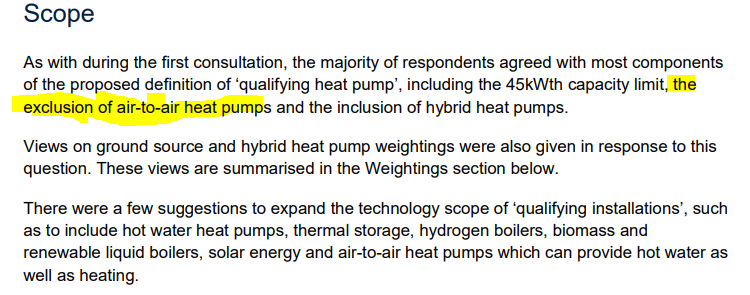
-
At a casual glance you wouldn't guess. Very good.
-
A new house might have a 1:1.25 ratio on internal volume:surface area with 200mm insulation. Running at a delta T of 15 deg maybe. A 15mm pipe will have an internal volume:surface ratio or over 1:400 and runs at a delta T of 30 with 10mm insulation. The pipe has proportionately 380 times more surface area to loose heat, twice the heat difference and 20 times less insulation. The numbers explain it all.
-
I would insulated the hot recirculation only. If you have a handle on the internal humidity the cold won't condensate. Insulating any other hot's is a bit of a waste of time. Tried to insulate my way out of an issue with 50mm pipe insulation but it still lost all it's heat in 15-20 mins.
-
The MVHR is very good at dehumidifying if that's running.
-
Is that a factor of sunshine or is it something else? Having looked at it I think in the British isles you need to burn something to be practically off grid during the winter. A small inverter generator would get you through no?
-
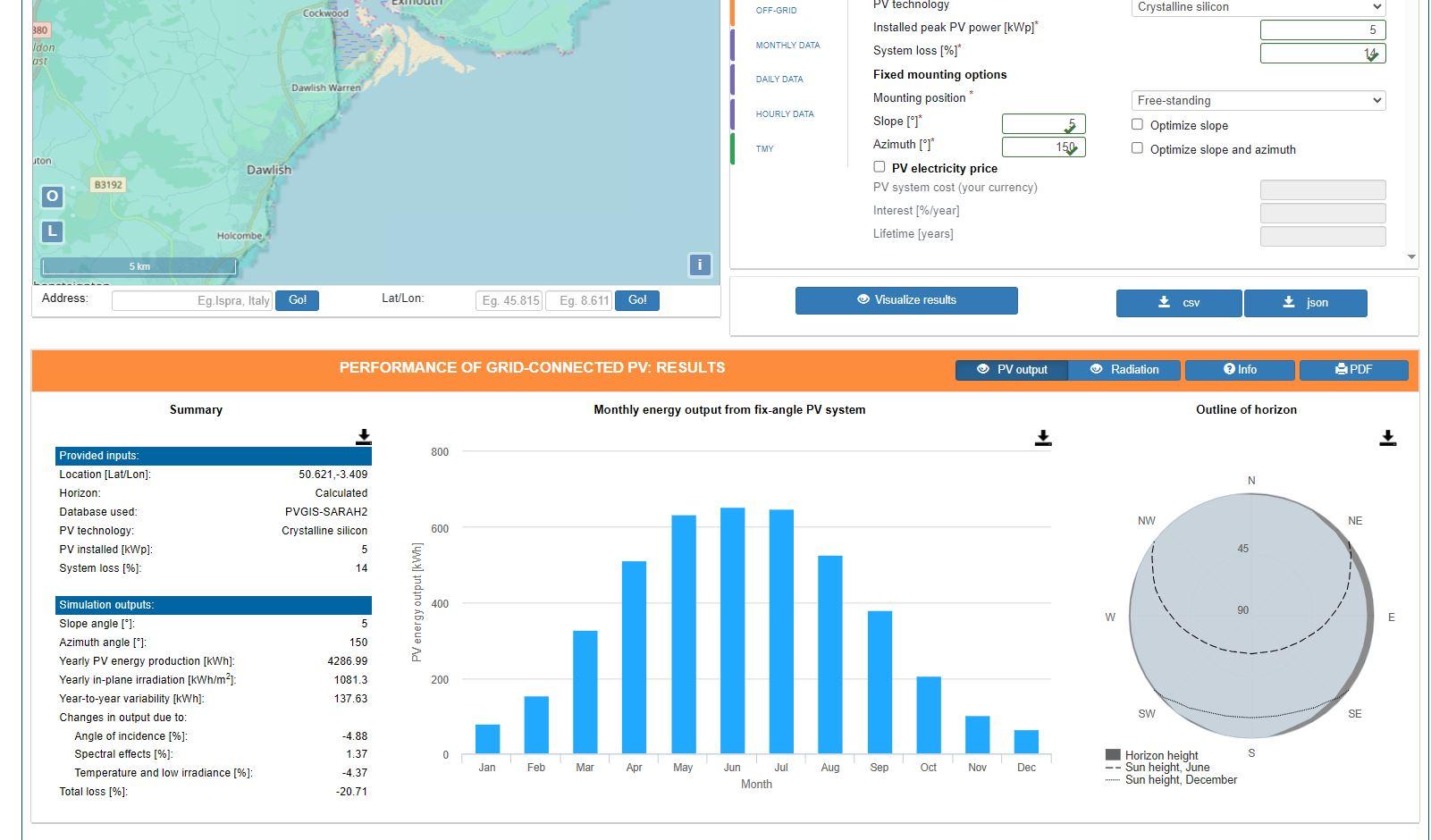
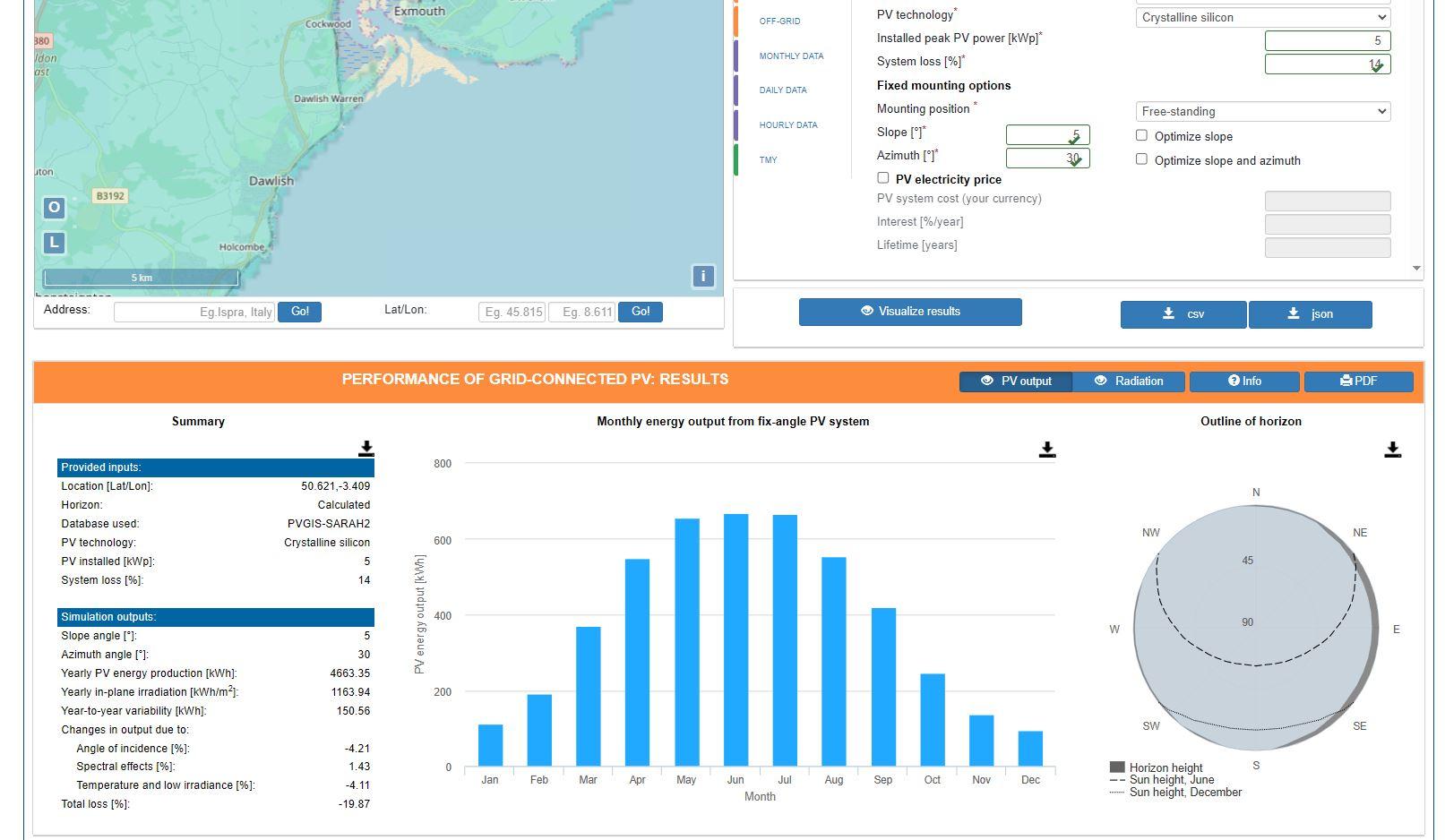
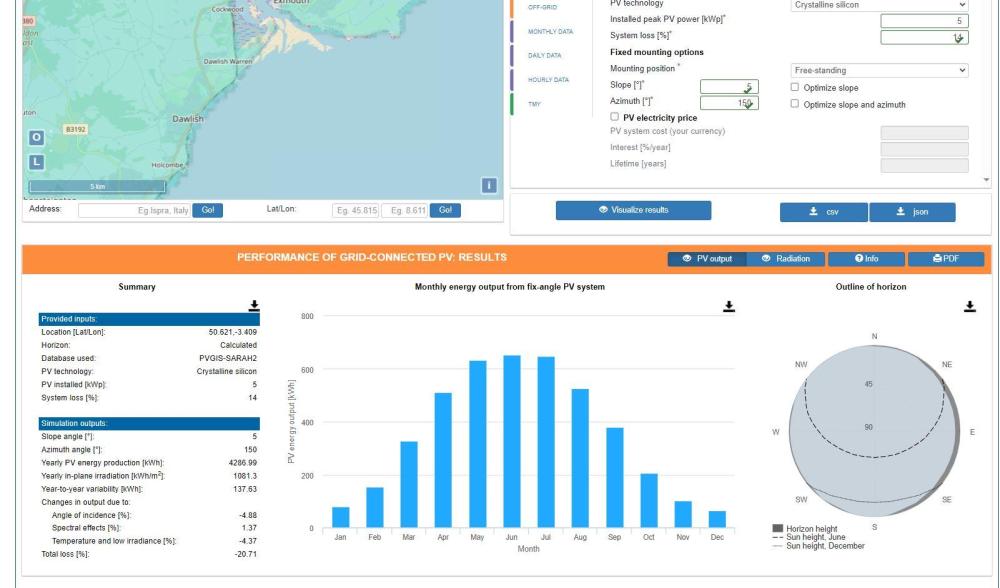
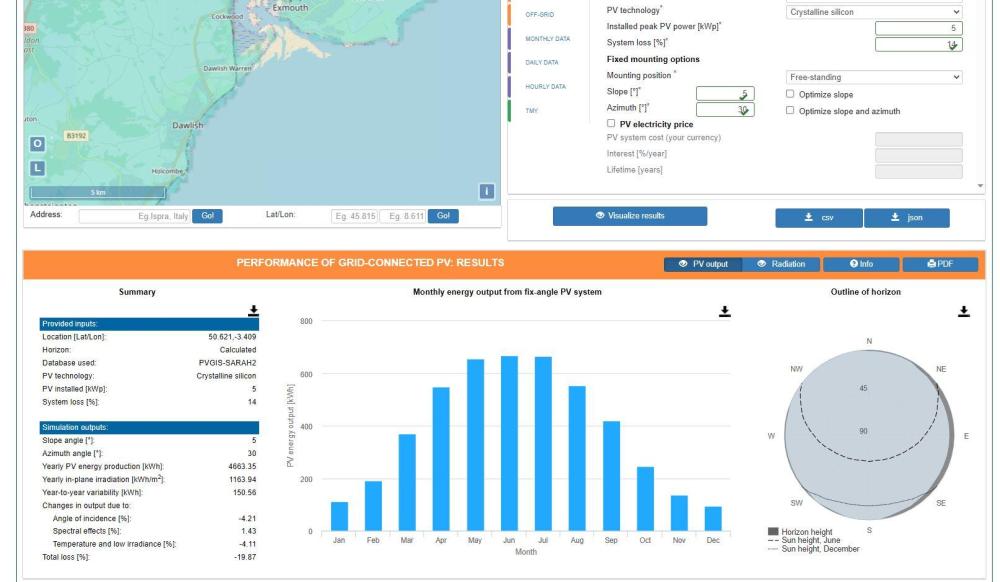
Good thinking. It makes a difference but not as much as you'd thing at very low pitch angles. Here's the north facing one from PVGIS. Here's the South . The difference is only about 300kWh/year. It'd be easily compensated for by adding a single extra solar panel. @Nic I would consider moving all the PV to the roof in one block. Less lightly to suffer differential shading which I gather it doesn't like unless you have some clever inverter gizmos. Some PV guru's could probably enlighten me.
-
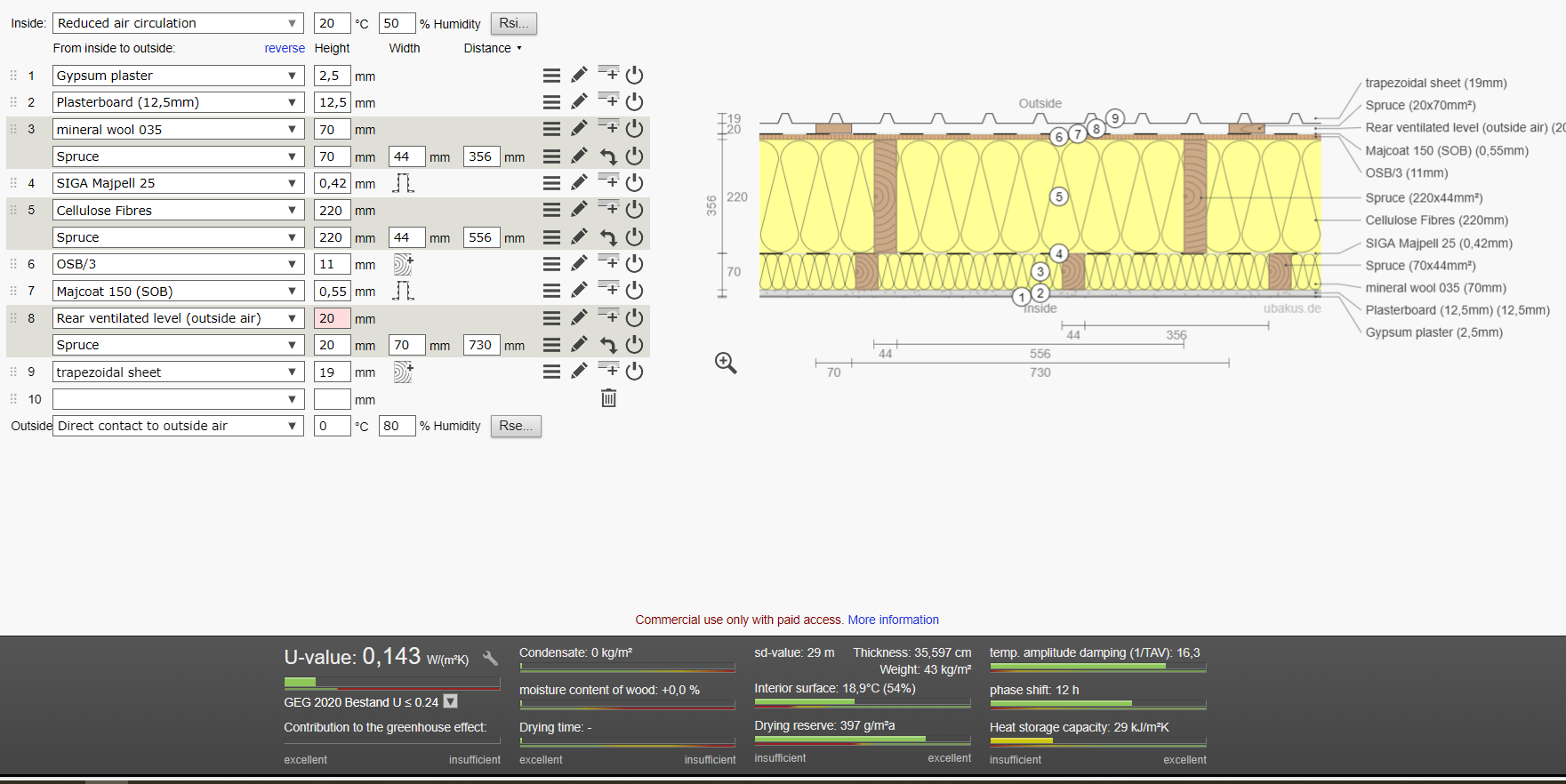
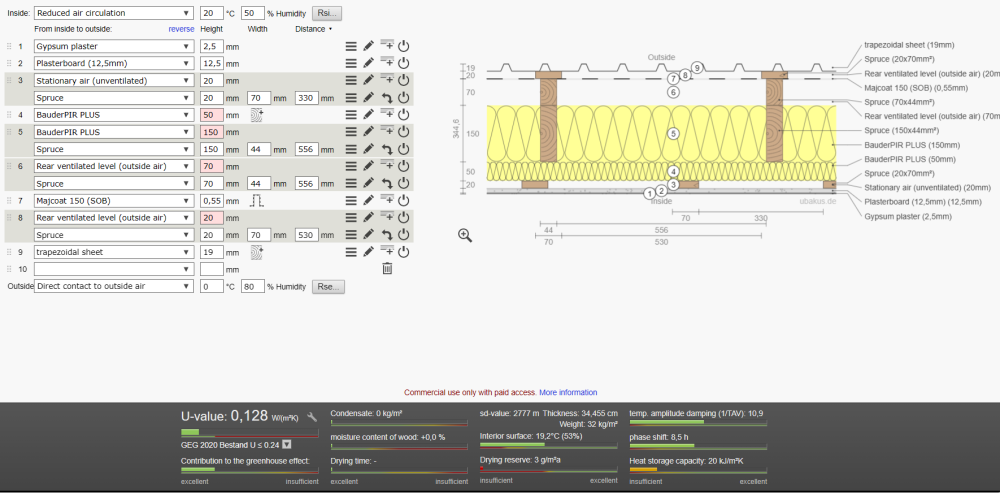
You could put cellulose in the service void too but it'd mean cutting holes in the plasterboard to blow it in and a second visit for the installer truck. The main benefits would be already had in the main 220mm depth of the rafters. Namely, decrement delay (phase shift, airtightness enhancement and the ease of install around awkward cuts of timber etc. ( Not a huge factor in this roof) Mineral wool is cheap and if you correctly space the counter battens for the service void can be very quickly fitted. As @Nic mentioned budget I am conscious that posi joists are probably 5 times the price of cut lumber and a special order item rather than an off the shelf thing from a merchants. Beware 220mm timber rafters will need intermediate support. Re the U-Value of 0.14. It's just what emerged given the space constraints. The OP is limited in their height build-up to 350mm. Trade off's need to be had between the cost of materials and performance. A 400mm I beam with cellulose and woodfiber sheathing would be ace but probably 3 times the cost. Similarly PIR between the rafters with PIR underneath would appear cheaper and have a lower U value. However it's very tricky to install the PIR accurately. Differential movement of the timbers and PIR over time will result in gaps and thermal bypass of the insulation. There'll be loads of waste from the PIR boards cuttings. It has a worse decrement delay resulting in poorer summer performance. It'll be much much worse from a noise and airtightness perspective.
-
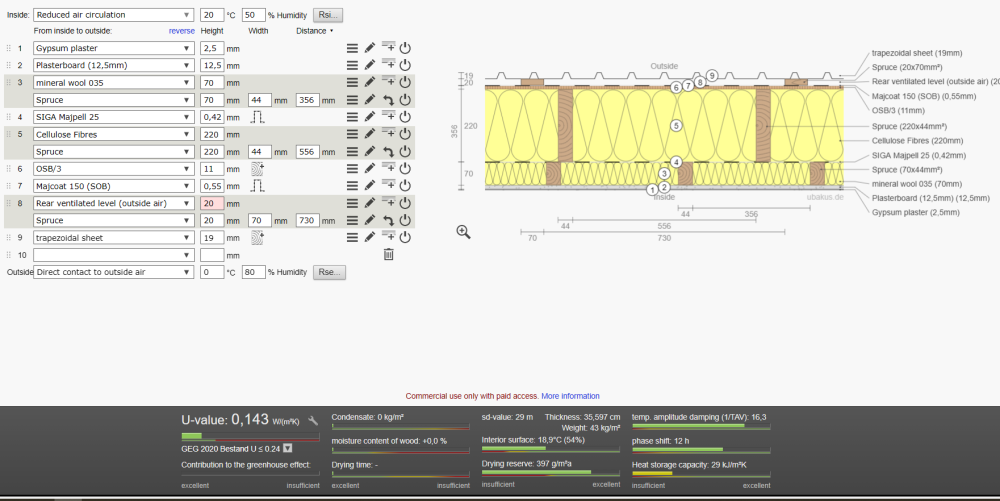
Here's a suggested roof build up I've gone for a trapizoidal profile metal roof. Far cheaper and less temperamental than standing seam etc. Also a thinner build-up. as you can effectively ventilate under the sheeting with 20*70mm strapping as fixing battens. Then a good breather membrane. Taped at all joints of course. Then 11mm OSB, for rodent protection, solidity, noise, ease of buildability. 220mm rafters ( if ok with the SE) with densepack cellulose insulation. Great for noise, airtightness, decrement delay etc. A Vapour control layer. A 44*70 mm crossbattened service cavity with mineral wool insulation. It would be enough to accommodate flat uPVC MVHR ducting if needed. If you pushed this to a 88mm or 95mm service cavity you could run semi rigid MVHR ducting no problem. If you could a second layer of standard plasterboard or a single layer of 15mm PB would help with noise. NIC roof buildup.pdf
-
Any experience with ErfurtMav Professional Insulation Panels?
Iceverge replied to rkrv's topic in Heat Insulation
Similar thread here. Have a pursue..... -
@Nic Has sent me a PM and I've replied. I'd encourage you to post publicly as people can check my workings and hit me over the head with a metaphorical mallet I'm spouting nonsense.
-
A2A Heat Pump minimum working temperature?
Iceverge replied to Ferdinand's topic in Air Source Heat Pumps (ASHP)
Very interesting. I'm currently installing a Daikin FTXM25R. It's going at a snails pace mind you. Keep us posted. -
It would involve a bit of fiddling but a seperate conrete lintel across the external leaf where it goes into the porch and then insulated it internally would be my preference. Blocks built on top then. Render boards there is only asking for cracks down the line in my opinion. Alternatively you could move the entire porch outside the heated area of the house and have a second door inside. Much easier to detail thermally and for airtightness.
-
I looked at them for our house but for some reason forgot about them. They did look very smart. Any chance of a few pics?
-
Welcome welcome. I do like small houses. You could post a few of your plans here (deidentified) and I could have a gander. I did my own PHPP and it isn't too tricky really for simple house. Jeremy's Harris's spreadsheet is probably just as useful in reality. Passivhaus isn't a perfect standard however and it favours larger buildings. Small single story houses can be tricky to meet the standards as they have lots of surface area Vs their volume. Have a look at these examples. https://passivehouse-database.org/index.php?lang=en#d_6778 https://passivehouse-database.org/index.php?lang=en#d_5132 https://passivehouse-database.org/index.php?lang=en#d_2096 https://passivehouse-database.org/index.php?lang=en#d_4466 You'll note that they often need extremely low U-Values for certification. Far below 0.1W/m2K in many cases. No problem in that itself ( I'm all for insulation) but it may not be needed for passivhaus performance. The problem is better explored here. The small passive house problem - a solution? - passivehouseplus.ie The passivhaus 10W/m2/annum was designed around forgoing a central heating system so is rather arbitrary, much like the 20deg living temperature and the assumed occupation rates. It's an excellent standard and I'm a total advocate of the methodology but don't tie yourself to certification without being informed of it's drawbacks.
-
Its a shame to see the creeping grinding incrementalism. Its like being on a train that stops at every station rather than just getting the express to the destination many of us here have realised. Build a passivhaus out if things that used to be plants and add lots of solar and an ASHP.
-
The trouble with small projects is that it's often cheaper to slightly overspec a design to save the SEs time and fee for getting everything to the last decimal point. In any case your spec doesn't sound mad. A good builder should be able to give you a feel for if the SE has designed someone sensible and maybe point you towards someone more suitable if they think yours has gone totally overboard. As an aside (without having costed it) YouTube told me recently that Spaz do impact driven screws that could save a good chunk of labour to replace the M20 bolts.
-
Lidl. Now this is a man on my wavelength. Will keep an eye in the ROI if/when the offer arrives here. In the process of doing an A2A ATM. Will review the situation once it's installed.
-
Concrete Cavity Fill Techniques For Large Houses and Volumes
Iceverge replied to jwoodhead978's topic in Brick & Block
Maybe some pics would help if the stage you are at and the access? Would it be impossible for a concrete truck with an unloading belt to back up to the site? -
Concrete Cavity Fill Techniques For Large Houses and Volumes
Iceverge replied to jwoodhead978's topic in Brick & Block
Curved ball here. How about filling the cavity with closed cell polyurethane foam. It'll be more expensive than concrete but no labour for you and make an excellent job of that wall to floor thermal bridge.