Jeremy Harris
-
Posts
26430 -
Joined
-
Last visited
-
Days Won
360
Everything posted by Jeremy Harris
-

All electrical cable and Cat cabe underfloor in insulation???
Jeremy Harris replied to gc100's topic in Power Circuits
Use proper cable duct, as it's not expensive, and can be bent to follow gentle curves very easily. However, as @ProDave says, I'd look at why you need to run cables under the floor. Most of our wiring runs in the ground floor ceiling/first floor void. Dead easy to do with posijoists. It all went in after the first floor was down, but before the ceiling was plaster boarded, with cables run up or down walls from there to outlets, switches etc. -
All electrical cable and Cat cabe underfloor in insulation???
Jeremy Harris replied to gc100's topic in Power Circuits
Put cable ducts in and then just derate the cable to allow for it being within insulation in a duct. Not hard to pull cables through reasonably sized ducts, and if a pull through rope is left in the duct it's easy enough to add new cables in the future. Make the cable ducts as large as you can reasonably fit. We have the cable that supplies our kitchen island running through a bit of duct set into the floor, under our UFH pipes. I just made sure the bends were nice and gentle at the ends, so that a bit of cable could be pulled through easily later. -
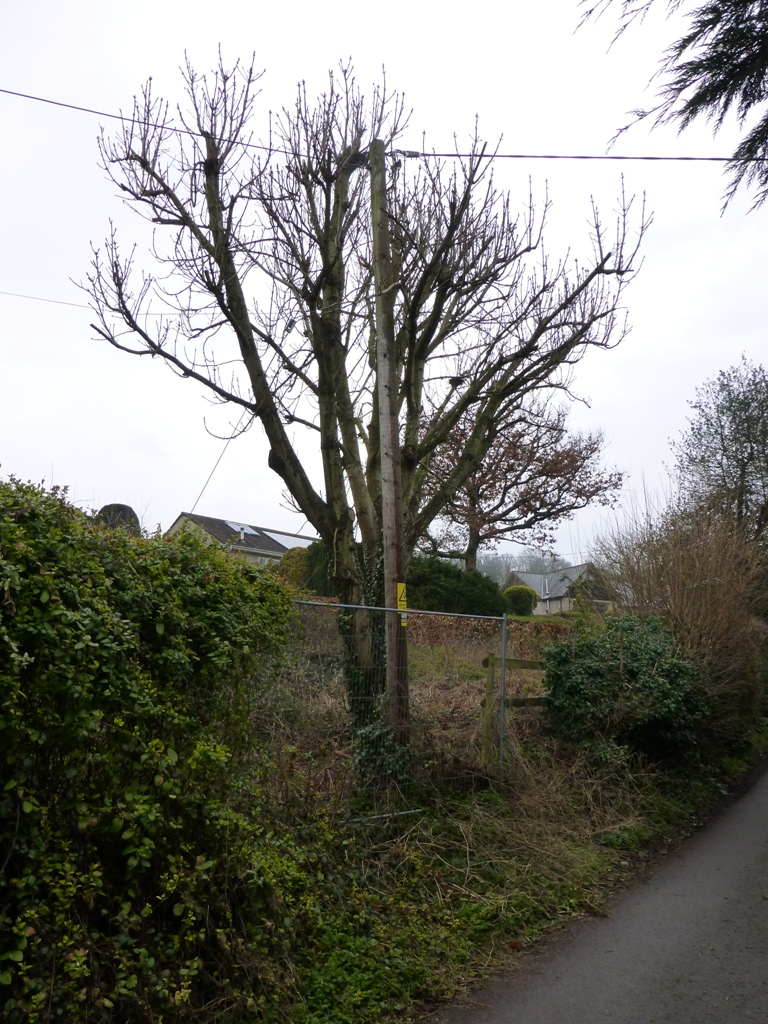
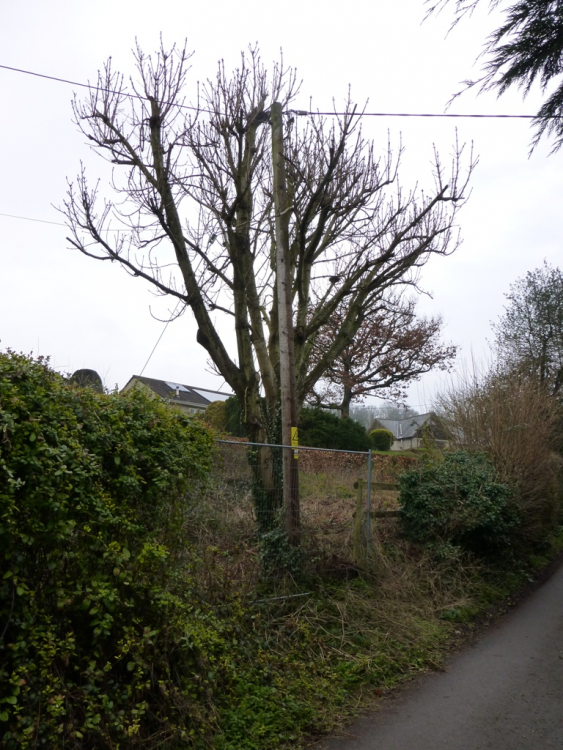
Trees can be a beautiful addition to the environment, or a complete PITA, in my view. The right tree, in the right place, is magnificent, but we shouldn't really forget that trees can be destructive weeds, just like any other plant growing in the wrong place. Our plot had two horse chestnut trees on it when we bought it, one right smack where the only possible entrance could go, the other growing inches from a pole with overhead power and telephone cables, with one branch growing around a power cable: The pole and cable needed to be relocated as well, so there was no alternative but to take this tree down, quite apart from the problem where it was growing around the cable. My approach was that it was far better to seek forgiveness than permission, so I took both trees down before we submitted our planning application. It annoyed one or two people, but was quickly forgotten, and by doing this we pre-empted anyone deciding to try and block our PP by deciding to put a TPO on either of these trees. We were also lucky in that, at the time we did this, the conservation area boundary ran along the lane, and missed where these trees were by a few feet. We've since planted several replacement trees, anyway, plus our house is a "CO2 sink" in effect, that is roughly equivalent to about 40 mature trees, in terms of the zero carbon energy we export to the grid, so I feel no guilt at all about having hacked down a couple of fairly tatty horse chestnut trees. It's just irritating that the easiest way to do this was to be a bit sneaky and cut them down before putting in a planning application, as the pain and grief we'd have probably had to go though had we done things the "proper" way might have been a bit like the problem the OP of this thread is running into.
-
Should be easy enough (but a bit tedious) to rake out and re-point with a mortar gun.
-
As long as the soil level is at least 150mm below the DPC it's fine, no problem at all with having borders right up to the house, and in many ways they help to set the house into the surrounding garden a bit better, IMHO.
-
The fire door requirement may well be because of "your upstairs neighbour", if I've read these posts correctly. The requirement will be driven by the nature of the building, rather than that of one dwelling within it, so a bit more detail about that may help decide whether what you're being told is correct.
-
"We" didn't necessarily see anything on any other forum (I didn't), or was this the Royal "We"?
-
The mist systems don't use any gas, they are just fine, high pressure, water spray systems, that use a lower volume of water than conventional sprinkler systems, and so place a lower demand on the water supply system. There is no requirement to replace mist systems after five years, only the normal inspection requirement. Gas fire suppression systems are generally far too dangerous to use in domestic buildings, and are only used in high fire risk commercial buildings, and only then with an interlock system so the system cannot be activated if there are people inside the building. One of the establishments I managed years ago had an anechoic chamber, lined with deep carbon-filled foam, and that had to have a gas fire suppression system. The safe working procedure for that building included locking off the fire suppression system before entering. The problem was that the CO2 flood system was designed to fill the building with CO2 within a few seconds, which would put out any fire, but equally would extinguish life.
-
Worth checking on sprinkler costs, as they vary a fair bit. We looked at fitting a system (2 bedroom detached house) as the fire officer advised fitting one, but the cost was around £7,000, plus the cost of providing a back up water supply system (we have a private water supply). In general, a sprinkler system normally needs to cover the whole building, not just parts of it. The best and least disruptive, in terms of installation requirements and the damage caused if the system activates, were the mist systems. These seem to be extremely fast acting and have the really big advantage that they cause minimal water damage. Thankfully the prices for sprinkler systems should start to reduce, as they are a mandatory requirement on new builds in Wales now.
-
Welcome. Whether or not you need planning consent depends on a few factors. Does your house still have Permitted Development rights? Most will, but sometimes these are either removed as a planning condition, or are restricted because of the house being somewhere like a Conservation Area, AONB, National Park, etc. Assuming that you do have PD rights, then the Planning Portal has a pretty good guide on how to determine whether or not planning consent may be needed: https://www.planningportal.co.uk/info/200125/do_you_need_permission Whether you need Building Regulations approval depends on the area of the building, and the use to which it's being put. Again, the Planning Portal has some useful guidance: https://www.planningportal.co.uk/info/200130/common_projects/43/outbuildings/2
-
There are ways and means of bringing about it's premature end. Not suggesting you do this or anything, just throwing it out there . . .
-
MBC foundation question. Do I need that much Type 1?
Jeremy Harris replied to rufusmacdoofus's topic in Foundations
Our Type 3 sub-base is crushed limestone. Not sure where it came from, but it was slightly more expensive than Type 1, and I had to hunt around to get it at a decent price. -
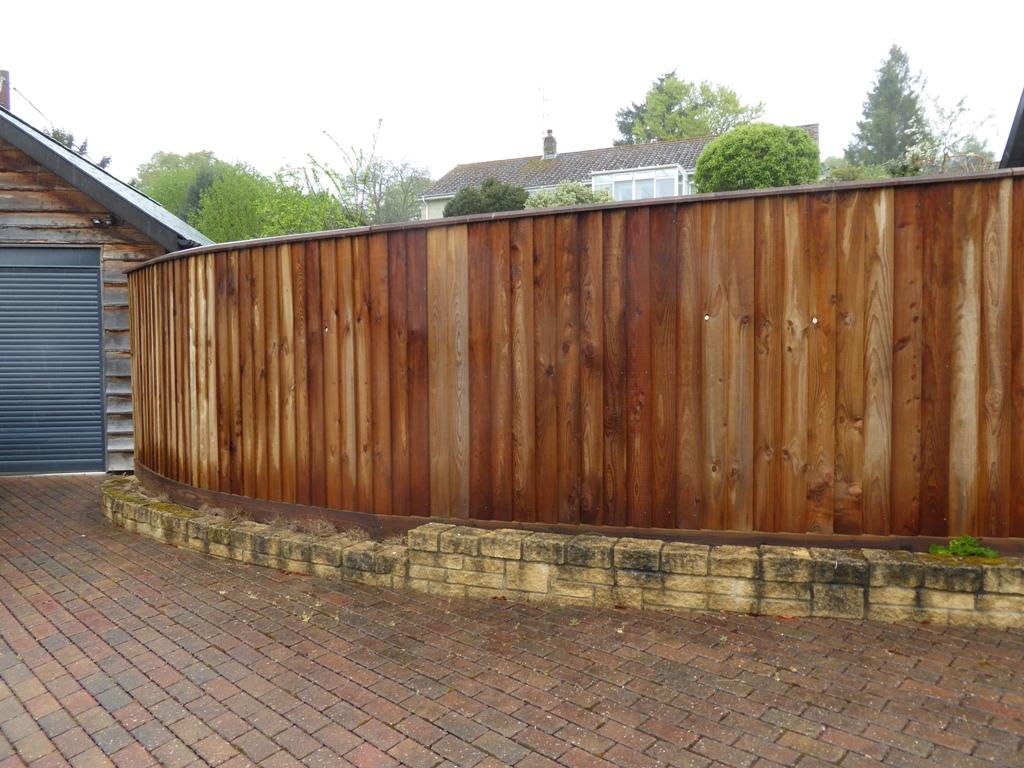
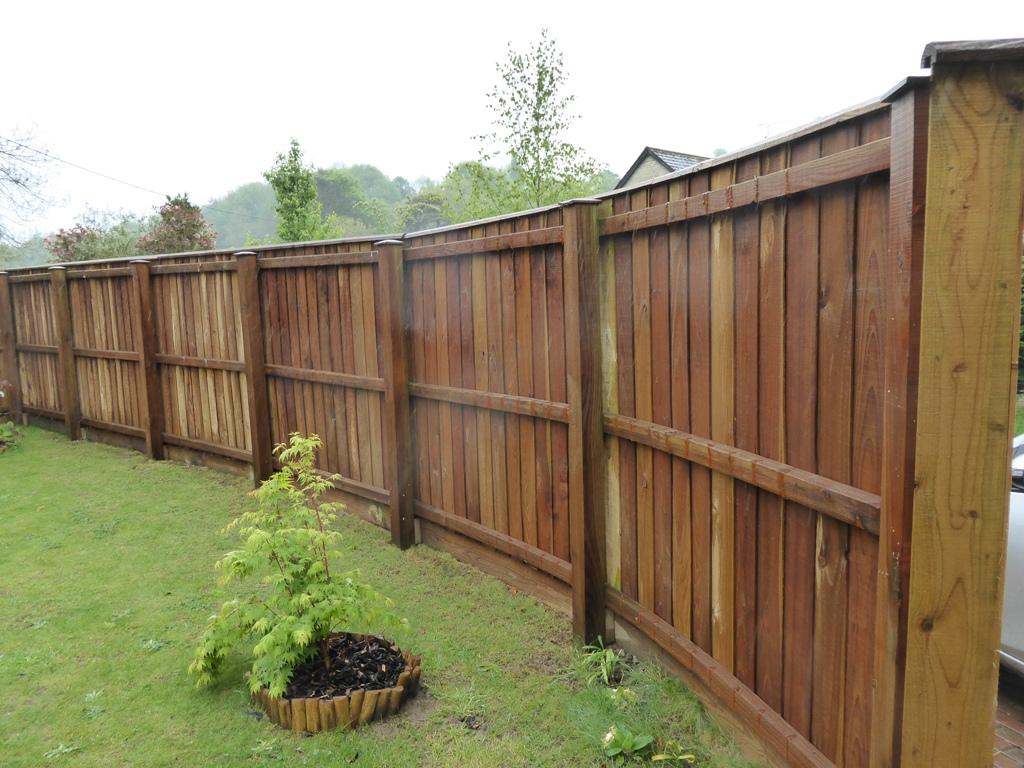
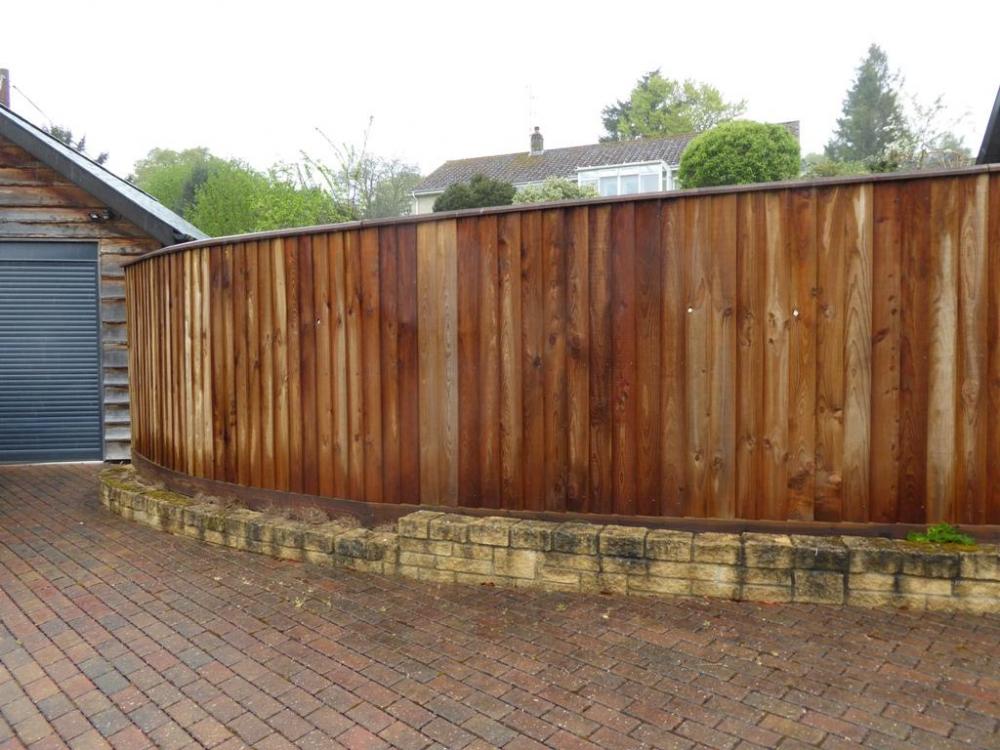
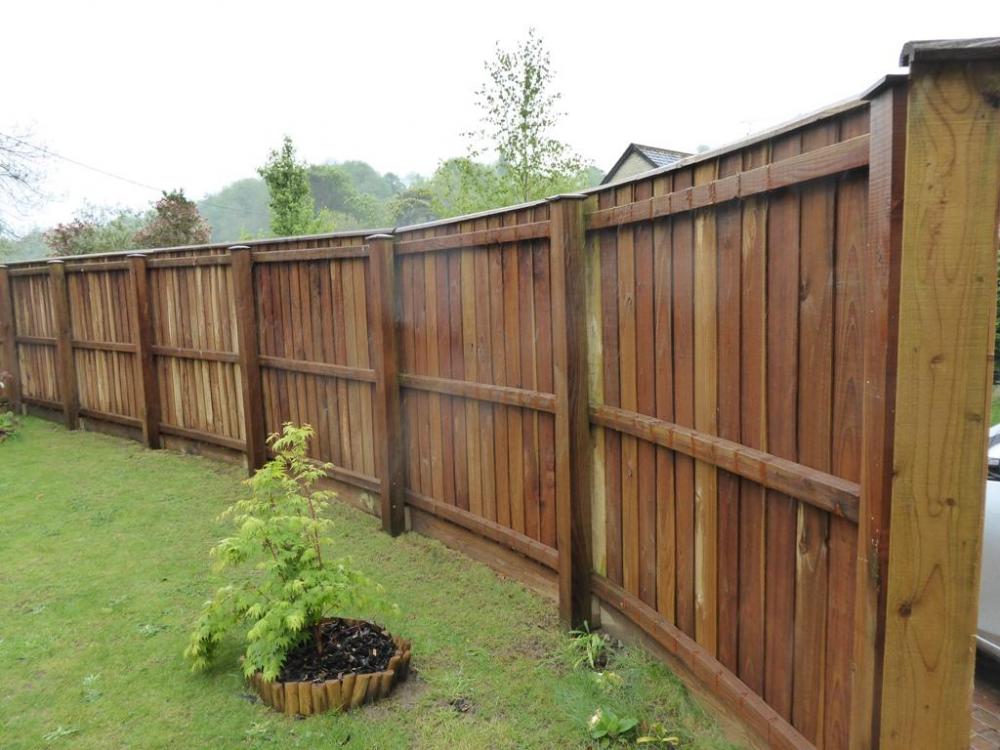
Exactly what we've used, both on top of the retaining wall and as 1.8m high fencing around the garden. The flexibility to make it fit with the space is the really big advantage, as was the fact that I found that it was possible to make a curved fence, by partly sawing through the rear of the trapezoidal (rather than triangular) arris rails, squirting glue in the saw cuts and then bending the rails to the required curve before the glue cures. The result is a fence that follows the curve of the low wall at the top of our drive.
- 44 replies
-
- 4
-

-
- fencing
- fence post
- (and 1 more)
-
I agree. We had a few noise complaints from MBC working every hour there was enough light (plus some), but at the end of the day they were only on site for a couple of weeks or so in total, so it was far less nuisance than the ~50 muck away truck loads that came off the site during the 6 weeks or so of ground works. My neighbour over the road has been removing his trout farm ponds and filling and levelling the site for well over 6 months now, and we've had to put up with diggers working all day, plus hundreds of lorry loads of topsoil being delivered. As I type this I can clearly hear the blasted reversing beeper of yet another damned truck (for some reason the reversing bleeper seems to be far and away the most irritating noise). I've not complained, mainly as I know we disturbed his peace for a few months when we built this house.
-
We ended up with our final planning consent that physically couldn't be complied with, as the planners hadn't realised that two of the conditions they had imposed were mutually incompatible. The planners imposed a highways condition about the maximum allowable drive gradient and an Environment Agency condition about the height above ordnance datum for the parking area, and we could only comply with one of them, not both. We ended up getting the highways condition rescinded, although this was only done via email, so I have wondered whether or not we still have an undischarged condition sat on a file somewhere.
-
Very true, the exact situation we were in. Delayed the purchase of our plot for a year, as the house that had planning consent could not physically be built on the plot. Planning consent confers no rights to actually be able to build the house that's been approved at all, as I found out.
-
Front garden excavation for drive
Jeremy Harris replied to Margaret dailey's topic in Landscaping, Decking & Patios
That looks like a pretty typical corbelled brick foundation, used to be common in Victorian houses, not so much in houses built later. Underpinning the house doesn't resolve the structural requirements for the retaining wall, though, it is mandatory that any retaining structure that it higher than 1.2 metres is signed off by a structural engineer, even if that is included within the design from one of the interlocking concrete block companies. If you don't do this, then you may well find that you nullify your house insurance. The issue here is that your builder clearly is not a structural engineer, if he was he wouldn't be suggesting that underpinning the house foundations will magically make the retaining wall OK, it won't, it will have zero effect on the structural integrity of the retaining wall, that still has to be able to take the considerable surcharge load from the mass of the house. The wall MUST (it is NOT optional) be properly designed and signed off, plus I suspect you may also need planning consent. I appreciate you're trying to do this on a tight budget, but there is no way to avoid getting an SE involved, as the costs to you from having planning enforcement action, or losing the ability to insure the house, let alone the costs should the house start to suffer structural damage, are massively greater than the cost of a few hours of an SEs time. This is one of the most terrifying disasters waiting to happen that I think I've ever seen. Please, please just stop now, make things safe and get an opinion from someone that knows what they are talking about. -
MBC foundation question. Do I need that much Type 1?
Jeremy Harris replied to rufusmacdoofus's topic in Foundations
We used Type 3 (very like small railway ballast) and compacted it in 100mm layers. Compacting in layers is important, as it's hard to compact anything thicker than about 150mm easily. -
I've a feeling that there may be a bit of confusion between unvented (i.e. sealed and pressurised) hot water cylinders and vented (i.e. hot water cylinders with an open vent to a cold water tank). Unvented cylinders seem to be the most popular now, I believe, probably because they give mains pressure hot water.
-
Front garden excavation for drive
Jeremy Harris replied to Margaret dailey's topic in Landscaping, Decking & Patios
I posted this earlier as a pdf file, but it might make things clearer to see just a typical vertical concrete block retaining wall cross section. This wall is similar in size to the one you are planning, but doesn't have the added surcharge load from a house on the ground that it's retaining, all it's retaining is the garden of the house behind ours. Even so, it needed pretty substantial foundations, as in the photos posted earlier, together with steel reinforcement to enable it to withstand the overturning force from the soil pushing sideways behind the wall.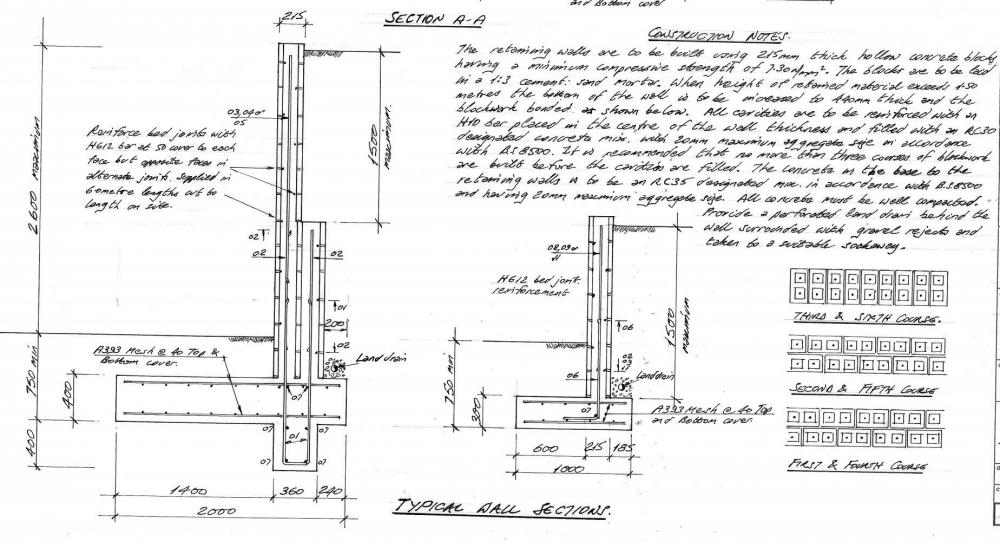
-
I'm pretty sure they just reply on reports they receive. Thie island of ours doesn't have too many truly remote places, so it's likely that someone will usually spot something out of place, plus there seem to be some that like to do nothing better than complain, just because they can. As an example, my mother's old farm, that she bought around 1973, had the farmhouse about 400m up a track from the farm buildings. A detached garage had been built at the top of this track long before she bought the place. Around 3 years after she moved there, a group from the Rambler's Association walked up the track, stopped at the garage and complained (rather rudely and loudly) that the garage had been built over a public footpath. They were right, it had, and following their formal complaint to the planners mother had to get consent to re-route the path around it, with a couple of stiles over walls and some new fencing. In the next 10 years she lived there not a soul ever walked up that path again.
-
Front garden excavation for drive
Jeremy Harris replied to Margaret dailey's topic in Landscaping, Decking & Patios
The number of blocks needed will depend on the design and the type of block. Each type of interlocking "lego" block system will probably be a different size, plus the lowest blocks may need to be deeper, depending on which manufacturer used. The design will need to factor in the surcharge load from the mass of the house, and you may also need to use some form of shoring whilst excavating, in order to ensure that the surcharge load from the mass of the house doesn't cause movement before the wall has been completed, as far more of the earth bank may need to be dug back towards the house to accommodate the thickness and batter angle of the wall (these interlocking block walls need to lean back for stability). One advantage of some interlocking block systems is that they may not need drainage, as they aren't mortared together, so can be free draining. A vertical concrete block wall, like ours (pictured earlier in this thread) will need the lower layer of backfilling behind the wall to be free draining aggregate, with a perforated land drain running through it, leading to a drain of some sort. This is essential to avoid water build up behind the wall, which could easily cause it to fail, or weaken the foundations. -
Front garden excavation for drive
Jeremy Harris replied to Margaret dailey's topic in Landscaping, Decking & Patios
There was a case near us where the council planted a lamp post smack in the middle of someone's unofficial drive entrance. The drive had been in use for a fair time, but the council argued that they had no record of it, and had planned the positioning of the new lamp posts from their plans, which didn't show the unofficial drive. No idea how it turned out in the end. -
Front garden excavation for drive
Jeremy Harris replied to Margaret dailey's topic in Landscaping, Decking & Patios
I gave you a link earlier in this thread to one supplier for three different types of them. Here it is again: https://www.andertonconcrete.co.uk/range/structural/ There are other similar blocks around, but they all tend to be broadly similar and all will take up about the same width at the base, as they are all designed to comply with similar structural standards for earth retaining structures (usually Eurocode 7, now). -
Front garden excavation for drive
Jeremy Harris replied to Margaret dailey's topic in Landscaping, Decking & Patios
You can't easily render a "lego" block type wall, as it will be stepped back at the batter angle. The blocks interlock and lean back to provide the required retaining capacity, and when ordering them you MUST inform the company of the high surcharge load imposed by the house, as that will have a great deal of bearing on the design they provide.