Jeremy Harris
-
Posts
26430 -
Joined
-
Last visited
-
Days Won
360
Everything posted by Jeremy Harris
-
SSE are our DNO, and we're out in the sticks too. When I asked about getting a G59 approval (now G99) they wrote back and gave me approval for up to 10 kWp of generation on our single phase supply. We're at the end of a fairly long length of 3 phase 95mm² cable, that only supplies our house and one further up the lane, though, so we're both on different phases. The option to have 3 phase was there, but I worked out that we'd not get close to needing it, even though we're all electric, as after accounting for diversity we weren't likely to ever need more than about 60 A from a single phase supply. The highest load is my car charger on full power, at ~ 30 A, as although the hob has a similar power rating, allowing for diversity brings this down to 20 A.
-
My main concern with 3 phase in a house would be how the phases are safely split across loads. It could be potentially iffy to have some outlets on one phase and some outlets on another, for example. Keeping the 3 phase supply for specific 3 phase loads seems the best approach, with the house domestic loads (lighting, outlets etc) all coming from the same single phase. Balancing doesn't usually matter with domestic loads, as they won't be massive and there is no means of properly balancing existing domestic supplies, anyway. The sort of loads that could run from a dedicated 3 phase supply might be three PV systems of up to 16 A each, maybe a 3 phase car charge point (probably not something that's going to be around in the longer term for AC charging, though), 3 phase garage equipment, perhaps, or maybe a 3 phase heat pump (have to be a pretty massive one to need a 3 phase supply, though). Power factor is not yet something that the DNOs seem to bother about for domestic loads, but that seems likely to change sooner or later, as the new metering standard has provision for kVA billing. Right now there has been a statement that there is no intention to roll out kVA billing to domestic customers, but that then begs the question as to why it was included as an option in new meters. Some household loads have a pretty poor power factor, as things like switched mode power supplies and inverter drives have become more popular. Sooner or later I suspect that there may be a need to consider PF correction on domestic supplies.
-

Rough costs for installing a phone line?
Jeremy Harris replied to Crofter's topic in Networks, AV, Security & Automation
Same here, we paid £50, had a pole in the corner of the plot and I'd already put in an underground cable that Openreach had provided as free issue (part of the left overs from relocating the old overhead cable). -
I think it's best to split out hot water from heating altogether, when thinking about things initially, as they have different requirements. Heating only needs low grade heat, 40°C is more than enough. Hot water needs higher grade heat, you can get away with about 50°C, but if using a Sunamp, or a water filled thermal store, this needs to be ~65°C. An ASHP is ideal for heating (and cooling) the house, as when run at modest temperatures (say, ~40°C) it will be very efficient, so will provide heating at around the same price as mains gas and a boiler. For hot water a Sunamp is probably the most efficient thermal store available, but it needs to be heated to ~65°C to charge. This means it will happily charge from a boiler, or from electricity (either from the grid or excess PV generation), but won't charge from a normal[1] ASHP, as most ASHPs really don't like working at that sort of temperature much. You can provide heat, cooling and hot water from an ASHP using a hot water cylinder (a bit larger than you'd normally fit if it was heated by a boiler), but the heat losses from the hot water cylinder will be a bit higher than from a Sunamp. The ASHP will run with a COP of around 3 to 4 when running the heating or cooling, and this will drop to maybe 2.5 to 3 when running the hot water. The COP is a measure of efficiency, the ratio of electricity in to heat out, so relates to running cost. 1 There are some ASHPs around that will deliver hotter water. Daikin make a hybrid, their Altherma, that includes a boost gas boiler that can be run from LPG or mains gas. This allows the ASHP to heat to lower temperature for heating, with the hot water being boosted to a higher temperature via the gas post-heater. There are also CO2 ASHPs in the pipeline that may be able to operate well at ~65°C, but these aren't that readily available yet.
-
Vat and Landscaping
Jeremy Harris replied to JandD's topic in Self Build VAT, Community Infrastructure Levy (CIL), S106 & Tax
If the landscaping is on the planning consent then it can be claimed back in full. If it's not on the planning consent then I believe that some of it can be claimed, things like driveways etc, but some may not. I took care to include as much of the landscaping detail as I could on our planning application, so that I could provide evidence to HMRC to support the VAT claim. Not 100% sure whether it was absolutely necessary or not, though. -
True, and the real issue is that the ASHP varies the amount of power it draws pretty much all the time, and that cannot be synchronised to times when the PV system is generating an excess. It's dead easy to get an immersion heater, or other resistance heater, to just absorb any amount of excess PV generation, up to it's maximum rating. Makes resistance heating a great deal easier to interface with a solar system.
-
The basic Sunamp is just a thermal store, like a hot water cylinder, that can be heated by either a boiler or their version of an immersion heater, depending on the model. The version we have has the internal immersion heater, so is just like a water-filled thermal store with an immersion heater, but is smaller for a given heat capacity and more efficient, as the heat losses are a lot lower. Heating water using a Sunamp with an electric heating element is very slightly cheaper than heating a water filled thermal store with an electric heating element, because of the lower losses. An ASHP is a whole different matter, as the inability of most ASHPs to produce really hot water (about 50°C is as high as most will go) means that the hot water storage capacity needs to be greater (as there will be much less cold water mixing to get to a comfortable temperature for use). This makes any comparison between the two pretty challenging. Very roughly, a 9 kWh (10 kWh max) capacity Sunamp is about the same as a 210 litre hot water cylinder that's set to work at about 65°C. Because a hot water cylinder running from an ASHP will be running a bit cooler, it needs to be larger in capacity to give the same amount of hot water, probably aroun 250 to 300 litres. An ASHP providing hot water at about 50°C may run with a COP of about 2.5, so every kWh of hot water will use about 0.4 kWh of electricity, plus a bit for tank loss, so maybe 0.5 kWh of electricity. However, you cannot run an ASHP with excess generation from solar panels, so you don't have the advantage of getting a fair bit of free hot water for a fair bit of the year.
-
The Sunamp is just a heat storage device, so it needs a heat source of some kind. An ASHP is a challenging way to heat one, as ASHPs don't normally perform well at the high charge temperature a Sunamp needs (~65°C). A Sunamp is a very efficient thermal store, though, much more so than a tank of water, and more compact for a given heat storage capacity. We use a Sunamp heated with its own internal electric heating element to provide our hot water. It works well, and can be charged up either from off-peak electricity or from excess generation from our solar panels. The running cost for getting hot water this way is pretty low, as more than two thirds of the year the Sunamp is heated for free and the rest of the time it's heated with electricity at a bit over 8p/kWh. You can heat a Sunamp from boiler (gas or oil only, I believe), too. We have a small ASHP but use that really just for heating and cooling the ground floor of the house.
-
Just been doing some rough estimates as to how much effect having a fairly powerful external extract fan has, in terms of heat loss when turned on. Air from outside has to come in to replace the air being extracted, so if it's 10°C outside (it was colder than that here this morning) and the house is at 21°C inside, then a 500m³/h extract is going to pump just over 1.8 kW of heat out of the house all the time it's running. If the outside air temperature drops down to 0°C, then that increases to a bit over 3.5 kW. Some of that will be made up by the heat from cooking, but almost certainly not all of it, as the heat from an induction hob mainly heats the pan, so it's easy to estimate the heat loss. A big pan, with an external surface area of about 0.25m² sat at 100°C in a room at 21°C will lose heat at a rate of about 265 W, so even two or three such large pans sat at 100°C aren't enough to come close to making up for the heat lost through the extract fan. The same goes for the heat from an oven. Heat will be lost at a lower rate than from a pan, as the surface temperature of an oven is a lot lower. There's also the issue that heat is being extracted from the kitchen, and unless there is a way to deliver cool air from outside directly to the kitchen, the cool air being drawn in via, say, the unbalanced MVHR, will flow into the living areas of the house, so cooling them down. Using our house as an example, the worst case heat loss rate in very cold weather (-10°C outside), is about 1.6 kW. An extract fan rated at 500m³/h, running on such a cold day, would increase the house heat loss rate to just over 6.8 kW. To keep up with this heat loss rate increase, the heating system would need to be increased in capacity by a factor of about 4.
-
The easy way out is to just use a recirculating extractor with filters, one for grease and an activated carbon one for smells. Saves having holes through the walls and seems to work well. The filters on some are designed so they can just be stuck in the dishwasher to clean them, I believe.
-
The real issue is getting enough air in to the house, as the MVHR will be so imbalanced that it probably won't be able to deal with the additional fresh air supply requirement. If a hob extract is sucking air out of the house at around 50 to 150l/s, then that additional flow has to try and over power the fans in the MVHR and try and get loads more air in through all the MVHR ducts (they are the only route for air to come in). Room supply ducts rarely flow at more than about 5 or 6 l/s normally, and so the terminals and ductwork on the supply side won't be sized to allow the big additional inrush of air. The result will probably be that the extract rate from the hob drops, due to the fan depressurising the house (it's way more powerful than a blower test fan, for example). If fitting an extractor plumbed to the outside of the house, then I think the best bet is to try and arrange for some way to supply enough air to make up for the high flow rate that's being sucked out. Depressurising the house is not great, as the chances are that the extract side of the MVHR may well end up reversing because of the pressure change. This might not be great if it pulls smells and condensation from the bathrooms, WC etc into the house (plus if it did this there would technically be a problem with building regs, as these rooms are required to be extracts, with a minimum extract rate.
-
Once a layer of air gets thicker than about 30mm, convection currents start to flow, so heat will flow across that air gap from the air circulating within it (from the warm side to the cold side). Insulation usually works by making trapped air spaces small, so restricting the ability of air to move around within it. It's the reason than the spacing between multiple pane glazing never usually exceeds about 20mm, as if the gap gets bigger than this the insulation value starts to drop off.
-
The dampers provide near-zero insulation, they just stop air flowing through the duct. The duct will therefore act as a thermal bridge, as it's effectively a hole in the insulation layer. Without filling that hole with something to provide insulation, it will always be a thermal bridge.
-
Two of those in line would help, for sure, but it really needs something to insulate the thermal bridge created by the big duct when not in use (which will be most of the time). I think that last time we debated this (may have been in a passive cat flap thread) the idea of having a removable plug of insulation that filled the gap was mooted. The other problem is that, in order to get the extract to work at around 100 to 150l/s, another intake duct is going to be needed, otherwise there won't be a route to get enough air in to replace that being extracted. This means another 150mm hole to let air in, bypassing the MVHR (which will be massively to restrictive to let this much air in).
-
And, by way of contrast, today we've generated 32.8 kWh, and we're still generating ~150 W. Just goes to show how variable PV generation can be from day to day.
-
How are you sealing up the extractor duct/terminal to both prevent cold air being drawn in when it's not running, and to prevent thermal bridging when it's not in use? We've had debates about this before, and the challenge has always been finding a solution to this problem. Something like a double valve system is needed, with completely airtight valves (at least as good as the door/windows seals).
-
To give an idea of the mismatch, a kitchen MVHR terminal is required to extract at 13l/s. A typical hob extract will run at anything between 50l/s and 150l/s. The balance problem has to do with the way MVHR fundamentally works. There are two fans in an MVHR, one drawing air in from outside, pushing it through the heat exchanger and then out to the fresh air supply ducts. The other fan draws air from the house extract ducts and pushes it through the other side of the heat exchanger, where it gives up some heat to the incoming fresh air, before being expelled via the external exhaust. To work efficiently, these two air flows need to be matched, so the flow rate coming in matches the flow rate being exhausted. If an extractor in the kitchen pulls air from that room and blows it outside, it will reduce the pressure in the house and upset the balance of the air flowing through the heat exchanger. The incoming air flow will increase, and over power the ability of the heat exchanger to work efficiently.
-
Back in 2012 the quotes I was getting were around £120 to £130/m² for a passive slab (prepared flat ground to finished slab).
-
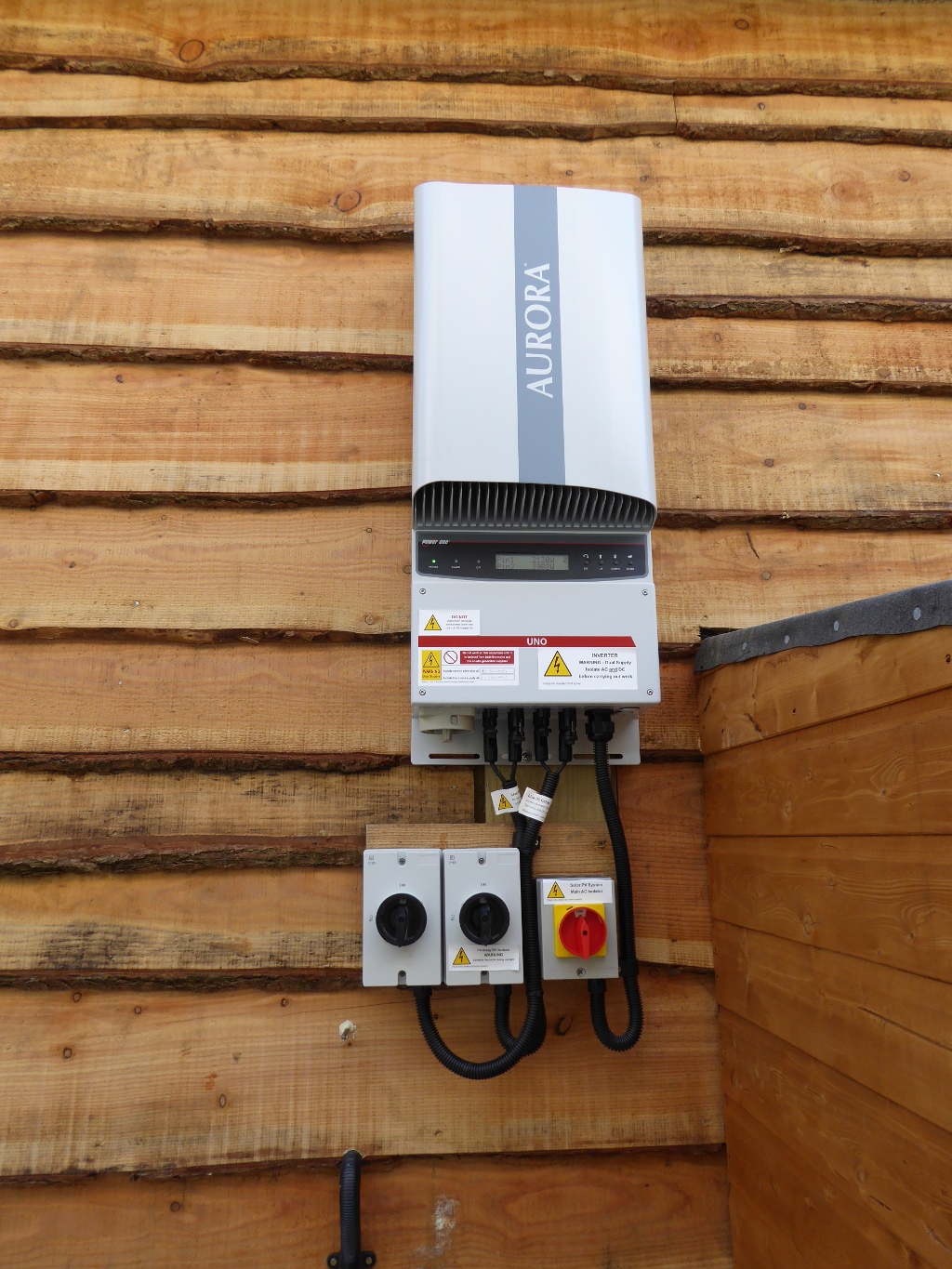
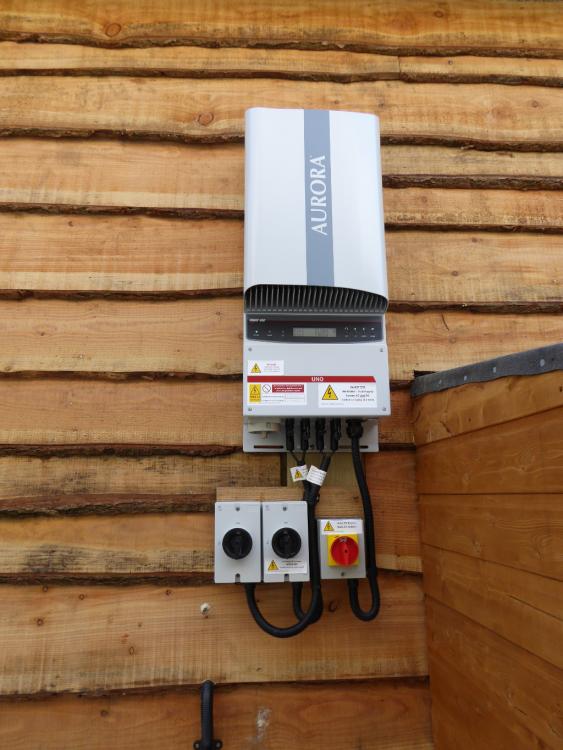
Ours is fitted outside, on the North facing wall, which is at the back of the house. It's weatherproof, but as it's mounted under the eaves overhang it never really gets wet:
-
Flooring over UFH decisions, advice please
Jeremy Harris replied to Grian's topic in Underfloor Heating
I've just cleaned the house, so thought I'd time how long it took to clean the floors. First was a whizz around with the Dyson, took 12 minutes to do the whole house (130m²), and just about completely filled the dust bin. I then wet cleaned the travertine (roughly 65m²) with a microfibre mop, a bucket of Flash in hot water and a handheld cloth for the awkward bits. Took me 16 minutes to give the floors a thorough clean, clean up the mop, bucket etc and put everything away. Sitting here with a cup of tea it looks like the floor's dry already, which is surprising as, although its a sunny day, the floor cooling has been on for a couple of hours or so. PS: As @jack mentions, walking around in bare feet on a cooled floor is very pleasant on a day like this, especially after a little bit of work. -
Sunamp UniQ HW+i experience? Charge via ASHP?
Jeremy Harris replied to oranjeboom's topic in Energy Storage
I'm not convinced that you could get the controls to work with the Willis heater in the mix. The eDual needs a boiler, or other heat source, that can deliver a fixed temperature of around 65°C in order to charge, and the heat source side control system only provides a simple call for heat relay to tell the boiler to fire up. It relies on the boiler holding the flow temperature at around 65°C, and that's not going to be easy with a Willis heater, as the flow rate will need to be modulated right down somehow. A small, variable speed pump, together with some flow and temperature sensors and a control system, rather like that used in the Sunamp PV might do it, but it would need a bit of playing about to get it to regulate properly and deliver water at the right temperature to the Sunamp. The electrically heated model (grid or PV) has a controller that manages the charge from either PV or the grid, and works fine we've found. There's real no merit in firing up the heat pump for pre-heat I've found, and if doing it again I'd leave out the buffer, flow switch, heat exchanger etc I installed, as it just over-complicates things for the sake of saving a few pounds a year on the hot water bill (saves less than a tenner a year I reckon). -
Wood burning stoves with back boiler
Jeremy Harris replied to Jilly's topic in Stoves, Fires & Fireplaces
Also worth noting that a wood burning stove has harmful emissions (mainly toxic fine particulates) that are around 1000 times higher than the exhaust from a small petrol car, or roughly 100 times higher than those from a small diesel car. In terms of the proportion of harmful pollutants emitted into the air in the UK, burning wood is slightly less than all UK road transport and the second highest contributor to air pollution (17% from wood burning, 18% from all UK road vehicles, apparently) -
Flooring over UFH decisions, advice please
Jeremy Harris replied to Grian's topic in Underfloor Heating
@jack has a polished concrete floor. Looks very nice indeed. -
Flooring over UFH decisions, advice please
Jeremy Harris replied to Grian's topic in Underfloor Heating
Here's a guide as to typical thermal conductivities of materials that might be used for flooring (the higher the number the more thermally conductive it is): Carpet - ~0.1 W/m·K Oak - 0.16 to 0.17 W/m·K Bamboo - 0.2 to 0.35 W/m·K Travertine - 1.26 to 1.33 W/m·K Porcelain floor tiles - 1.5 W/m·K Concrete (typical floor density) - 1.0 to 1.8 W/m·K Slate - 2.01 W/m·K I doubt that thin layers of any of the hard materials will make any detectable difference to performance, but it's worth bearing in mind that, as mentioned above, the higher the thermal conductivity the colder the floor may feel in bare feet when the heating isn't on. Even with the heating on in our house we find that the travertine feels cooler underfoot than the bamboo, as the heating rarely heats the floor much above 22°C to 23°C, so it's still well below body temperature. -
Not a good idea to do this, IMHO. A hob extractor moves many times the amount of air that an MVHR system moves, so the system will become massively imbalanced if it gets many tens of litres per second of additional flow pumped into the extract side. Also, no matter how good the filters are on the hob extract there will always be residual fat vapour etc in the extracted air, which will end up coating the MVHR ducting and clogging the filter (MVHR filters aren't designed to deal with "dirty" air like this). Best bet is a recirculating hob extract, with a good filtration system. That ensures that the MVHR remains balanced and that the MVHR ducts etc are less likely to get affected by cooking residues. You can opt to just have a normal extract vent, but this may pose an airtightness problem when it's not in use, and the MVHR will end up unbalanced when the extract is in use. FWIW, I fitted provision in our kitchen for a recirculating overhead hood, but we've found that we just don't need one. The MVHR does a good job of clearing away steam and cooking smells, and as we never fry anything we don't have a potential problem with airborne fat etc. One thing I did add, which seems to work well, is a fresh air supply duct from the MVHR in the ceiling just outside the kitchen door. This seems to work well to stop cooking smells escaping from the kitchen, as there's always fresh air available by the door, that flows across the kitchen towards the MVHR extract in the corner.