


Jeremy Harris
-
Posts
26430 -
Joined
-
Last visited
-
Days Won
360
Everything posted by Jeremy Harris
-
Unfortunately some are quite large. SWMBO has a set of these: Plus some like this: And they are both heavy and awkward to get to fit. The dishwasher is a built-in Zanussi, purchased because we had a Zanussi standalone one that was dead reliable. Unfortunately, we didn't notice that the racks in the built-in one are different, plus SWMBO treated herself to loads of new cookware when we moved...


-
Anyone know where plain dishwasher racks can be purchased, just the sliding grill bit, with no plate racks, supports or anything else? I can find plenty of universal glass holders, cutlery holders, etc that can just slot to a dishwasher rack, but ideally I'd like to try and make a couple of customised racks that suit our needs, and can be reconfigured by just slotting different racks, holders etc in. If push comes to show I'll just buy some stainless rod and try and make some custom racks that the various universal ancillaries will fit, but it would be easier to buy some. Ideally I just want two flat racks, with nothing poking up. The top rack will have to have the fitting for the upper rotating spray bar, but that seems to just clip on, so it's just a matter of making sure that there are some rack bars in the right place. Fitting the guide rollers looks easy enough to, as again they just seem to clip on to the wires. I reckon the option to just have a fairly large flat area in either rack would be a real advantage, as at the moment I find is a PITA trying to balance pans etc on top of the sticky-up bits intended to hold plates (some of those sticky-up bits are already bent from balancing heavy pans on them).
-

Has the UK moved for you?
Jeremy Harris replied to epsilonGreedy's topic in General Self Build & DIY Discussion
Yes, although our Local Authority Councillor repeatedly states that this is not the case (she's wrong, as it happens). Living in a rural area, with narrow single track lanes, overgrown hedgerows are a constant agenda item at Parish Council meetings, and we have a standard notice in the Parish magazine every month reminding people of their obligation to keep their hedges trimmed, where they may obstruct lanes, or visibility (this is universally ignored, though). Before we had access to the (excellent) Wiltshire Council Parish Steward scheme (a means by which Parish Councils can directly instruct a contractor employed by the council to do odd jobs) we had to use contractors for tasks like maintaining the playing field, playground and communal areas that were on an approved list, which meant, in part, that they had provided evidence to the council that they held the appropriate level of indemnity cover. In addition, anyone doing tasks that involved working on the highway, like painting the numerous bridge railings we have (for some reason our stream meanders back and forth under the lane in a few places) had to demonstrate that they held the additional cover (and, I think, level of competence, safety signage etc) necessary for working on the highway. I can get chapter and verse on this tomorrow evening, as by coincidence this is an agenda item at tomorrow's PC meeting, and one of my colleagues has been researching it in depth, to see where we stand when getting some of our footpaths repaired by some local volunteers. -
Same here! Just glad there was an option to turn the clocks off.
-
Has the UK moved for you?
Jeremy Harris replied to epsilonGreedy's topic in General Self Build & DIY Discussion
Damned good idea! It's usually OK to erect a fence up to (I think) 1.8m high, as long as it doesn't obstruct a sight line. -
Has the UK moved for you?
Jeremy Harris replied to epsilonGreedy's topic in General Self Build & DIY Discussion
The topic of ownership of land, hedges etc is one that has been vexing our Parish Council for some time, following some serious flooding caused, in part, by a riparian owner not undertaking their duty to keep their part of the stream clear from obstructions. The land in question was a strip alongside a lane, with an overgrown hedge, full of alder and willow, that had partially grown into the stream. First off, Parish Councils and villages rarely, if ever, own land, and almost always never alongside highways. They may look after land in trust (for example a gifted village hall or some such), but the land almost always belongs to either a defined owner, private or commercial, or the County Council/Unitary Authority. Almost all verges that are maintained by the council highways department are owned by the County Council/Unitary Authority, and as such are a part of the highway. Often the council highways department won't have definitive records as to what does belong to them and what doesn't. Sometimes this vagueness can arise from something as simple as a request to cut a verge. In the dim and distant past, before we owned our plot, and when it was badly overgrown, the Parish Council submitted a request to the County Council (as it was then) that the verge in front of our house should be included in the programme of verge cutting carried out by the Council's contractors. When we fenced this off at the start of our build there was a bit of an issue with the contractor telling the council that this section of verge was no longer accessible. It took several phone calls to resolve, but finally a letter was found from the Parish Council requesting that the County Council keep this verge cut, but acknowledging that the owner of the land had not responded to requests from them (not surprising, he was a virtual recluse). I then managed to get the Unitary Authority highways department to remove our bit of land from their verge cutting schedule (although they have started cutting it again now, for some reason). I suspect that the elderly neighbour may well recall some informal agreement from the past relating to keeping this area cut, and is now using that recollection to make a point. I doubt that what he says is correct, but suspect that it may well be a real struggle to determine exactly who owns what and what rights there may be over it, as often it seems these get lost in the mists of time (record keeping does not seem to be a local authority strong point when it comes to things like this, it seems). -
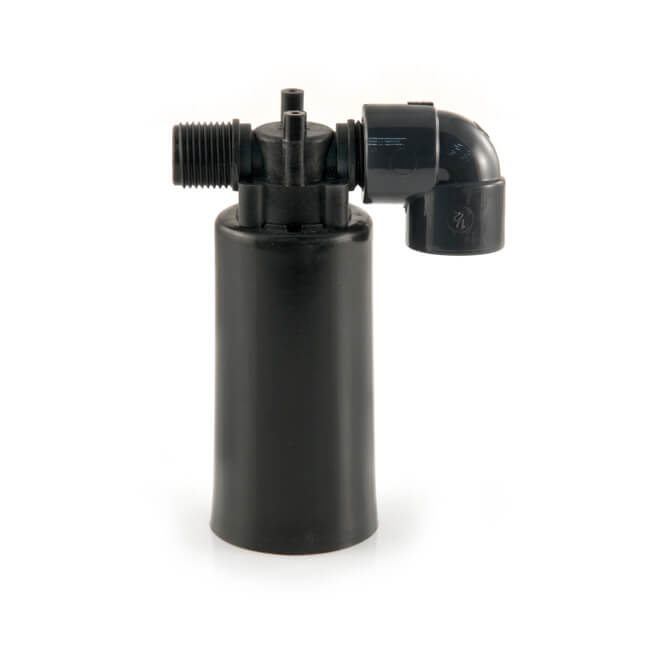
I found them by accident, years ago, when we had a really difficult to get at header tank in the loft, that made adjusting the ball cock a job for a contortionist. The Abertax valve just worked out of the box, and was dead reliable. It also has a very quick shut-off when the right level is reached, with none of the slow dribbling you sometimes get from a ball cock.
-
Wow !..........so much to learn and so little time !
Jeremy Harris replied to Canoehq's topic in Introduce Yourself
Could do. I still have the one I used to record our house going up somewhere. I'll dig it out and see if he would mind his build being recorded. -
Not sure why you feel the need to make a personality neutral debate into a personal attack on me. Yes, I am construing your comments as a "hostile personalized act" (sic) as it seems very clear that is how you intend them to be read (and not for the first time here, either,). FWIW, My views are based on my personal experience, not your personal experience and not the personal experience of anyone else here. It's a matter of record (legal record in Scotland as it happens) that we were very badly let down by the NHBC, and that as a consequence I ended up spending a lot of money to get a nearly new house, with an NHBC warranty, repaired to the proper standard. A 12 month legal battle with the NHBC has left me a little jaded with them as a body. I'm not alone, either, as it seems that barely a month goes by without there being a tale of houses, built by NHBC members, being found to have major defects, some of them structural. People can draw their own conclusions as to whether or not they feel that the NHBC are competent. I will correct you on one error, though. You have implied that I have a "cultural belief that architects and the NHBC are inherently bad". That is a lie, plain and simple. I've never once said that architects "are inherently bad" at all. I have reported my mixed experiences with architects, which were just that, mixed. We saw four practices that didn't impress us at all, have since met a few that seemed OK, plus a couple that I happen to think are very good indeed, one of whom I have recommended to several other people, as she has impressed me that much. I would say that this is reasonably balanced overall, given that architects are, just like the rest of us, people, so there are bound to be good, indifferent and bad amongst them. Of course anyone here on this forum is posting their opinion based on their experience, whether that be limited or not. It matters not one jot what profession, trade, or whatever someone has earned a crust from, posts will always reflect the views and experiences of the person writing them. My posts are coloured by experience from my profession as a scientist and then manager, working for the government until I retired in 2010, from having rebuilt several old houses, from having removed the roof, raised the walls, re-roofed, re-wired, re-plumbed and dug out the ground floor and laid a new one in a house years ago, from having built an industrial unit, a couple of garages, rewired dozens of houses, restoring a 1920's pitch pine on oak yacht from the keel up, building a couple of road cars, plus three race cars, designing, building and putting into series production a kit aeroplane, building an electric motorcycle and most recently designing and building a passive house. Sure there are gaps in my experience and knowledge, but when I am critical of something, or some organisation, it is always based on my experience, not something I've read somewhere on the internet.
-
MVHR is Mechanical Ventilation with Heat Recovery, a very good way to reduce energy consumption by recovering wasted heat from ventilation. Fresh, warmed air is fed to all "non-smelly" rooms, whilst stale, wamr and humid air is extracted from bathrooms, kitchen, utility rooms and WCs, some heat extracted from it and used to warm the incoming fresh air. If you don't have MVHR, then it's mandatory to have extractor fans in the bathrooms, kitchen, WC and utility room, to comply with building regs. In your case it seems that the extractor is going to be the one from the hob. This will waste a great deal of heat in winter, as all the air extracted by the high rate fans in the Bora will be replaced by cold air sucked in through vents in parts of the house, but it's the only option if you don't have MVHR.
-
Is the house having MVHR? If so there is no requirement in BRs to externally vent an extractor at all, a recirculating one is absolutely fine.
-
Keeping water flowing is the key to keeping pipes from freezing. Doesn't take much flow to keep the water in the pipe above freezing point, as water is pretty thermally conductive, so heat from a slightly warmer area under ground will tend to flow through the water to some degree. If a pipe's running along the ground, just heaping some earth over it will help a fair bit to keep it from freezing, as it's rare in most of the UK for the soil to freeze for more than an inch or two down from the surface.
-
Wow !..........so much to learn and so little time !
Jeremy Harris replied to Canoehq's topic in Introduce Yourself
Just had a friend around, the chap that's done a lot of work on our landscaping, drive etc. He's just got class Q consent to convert his barn, that's similar to the one in this thread. He's just at the stage of putting in foundations, so I'll see if I can find out more about how he's gone about things. He did mention that he's already had a difference of opinion with an architect over the design, though... -
Yes, just one nut either side. No, they don't provide a totally watertight seal, but they shouldn't need to, as the overflow pipe will be lower. As an aside, my preference is to use magnetic servo float valves for this job, as they are a heck of a lot more reliable, and are pretty foolproof, as there is no exposed float, lever arm, moving valve piston etc, they are essentially identical to a diaphragm operated solenoid valve but with the solenoid replaced by a magnet within a float, with that float inside a tube, so it can't get fouled up on anything. Here's an example of one: https://www.bes.co.uk/abertax-magnetic-water-inlet-valve-21341
-
Wow !..........so much to learn and so little time !
Jeremy Harris replied to Canoehq's topic in Introduce Yourself
Before @SteamyTea or @Ed Davies picks this up, I'm sure that was a typo and meant to read: -
It does indeed! Not just my experience, either. I believe that @PeterStarck made a similar saving when buying his Genvex 185 from the same Danish supplier that I used. I have no problem with a company adding a reasonable markup to cover their costs and make a profit, but in my view that level of mark up is simply obscene. Makes me wonder what the trade price for these units is, as the Danish supplier that I used will be making a comfortable profit from selling them. I've just checked and the current retail price from the same Danish supplier that we used, for the same model that we have, is 43,747 DKK, including Danish VAT at 25%, which at today's exchange rate is £5,176.65, plus delivery to the UK at £147.92. For a UK self-build, where the VAT can be reclaimed, the price works out at £4,141.32, plus shipping to the UK at £118.34. The price from the UK supplier is currently £6,809.00 exc. VAT, including delivery. So currently the UK supplier is still selling these units for about £2,549.34 more than the Danish supplier.
-
That company know diddly squat about Genvex stuff IMHO. They gave me a quote that had so many technical errors that I had to go through it correcting them before sending it back for revision. They couldn't even calculate the ventilation requirement properly. The reason I decided to buy from Sundthus DK in Denmark was mainly because I wasn't filled with confidence by the exchanges I had with that company. Sundthus were great to deal with, and the fact that they sold the same system for a great deal less money was a bonus. Most on this forum have MVHR system (there are a few thousand members here now) and I only know of one other member that has a Genvex, and he has the same unit as yourself, I believe. He bought his unit from the same supplier in Denmark that I used. I'm not sure how many GD houses have used these units TBH, but I'd still suggest that these things are generally rarer than hens teeth in the UK, as we have hundreds of self-builders here and only two of us have opted to use a Genvex unit, AFAIK. There's no way that the refrigerant could have been affected by a solar thermal system, that's just BS from a supplier who doesn't seem to understand the product they are selling. A failed/leaking Schrader valve does seem like the most probable cause of your problem, as all of the pipe joints etc within the unit are silver soldered, so unlikely to spring a leak. That supplier has no installation staff as far as I'm aware, they import units in from Denmark, put their mark up on them (including charging nearly double for delivery) and then sub-contract the installation to another company. Sadly there aren't that many competent MVHR installers, it seems, and systems that are poorly set up, or not properly balanced, seem commonplace. We have a couple of sets of airflow measurement kit that's owned by this forum so that members can borrow it to balance and set up their MVHR properly. @PeterStarck, our member that has the same unit as yourself, I think, wrote up the balancing of his Genvex 185 on his blog, here: http://eastkentpassivhaus.blogspot.com/2015/12/commissioning-mvhr-system.html
-
Welcome, Not sure that Genvex are really a popular choice, we have a Genvex MVHR with heat pump and we're definitely in the minority here (I think only one other person here has gone with Genvex). One issue may be that the markup that the UK importer/agent puts on these things is ludicrous. Our GE Premium 1L was going to cost £6,611, plus £240 delivery, plus VAT from them, whereas I bought exactly the same unit from a Danish supplier for £3,895.21, plus £140.12 delivery. Overall we saved about £2,815.67 by not dealing with the UK supplier. The same goes for the price of spares and consumables, I got prices for replacement filters from the UK supplier but they are several times the price of identical spares purchased elsewhere. Which Genvex unit do you have? We've had our GE Premium 1L for several years now, and found it works fairly well. The loss of refrigerant seems to be down to a defective Schrader valve in the fill port from your description. Frankly it shouldn't have cost £600 to replace this and re-gas the system. We live in an expensive area, and I was quoted £300 to vacuum, pressure test, leak check and re-gas a much larger heat pump recently. I opted to do the job myself, and bought a vacuum pump, gauge set, etc for less than £100. The cost of a bottle of gas is around £30. If I ever need to re-gas our Genvex I'll probably do it myself, as the only additional cost not would be ~£30 for a bottle of gas (strictly speaking this is a bit naughty, as anyone doing this is supposed to have an F gas ticket, but it's reasonably safe and easy to DIY).
-
Wow !..........so much to learn and so little time !
Jeremy Harris replied to Canoehq's topic in Introduce Yourself
Worth looking at glazing cost comparatively. With that area of glazing you are going to have to use some fairly high specification 3G glazing, most probably with laminated glass for a lot of it. Sage glass is going to roughly double the cost at a guess, and will allow solar gain to be reduced to maybe 50 W/m² in hot, sunny, weather, a big improvement, but it will still mean having maybe 7.5 kW of active cooling for worst case days. Using solar reflective glass will give about the same results as using Sage glass, for maybe half the cost, so will still need a fair bit of active cooling. The main disadvantage of using solar reflective glass is that you will also need more heating in winter, as there will be much less solar gain during the four months or so of the year when it might be useful. The cost of that additional heating may well equal the additional cost of Sage glass over solar reflective glass after a few years. Realistically, I think you'll be looking at a glazing cost, including frames, just using conventional glass, with the required laminated panes, of around £450 to £500/m² at the budget end. You can get really budget windows for around £300/m², but not with the large areas of laminated glass you are almost certainly going to need, and not with the thermal performance that you will need to try and meet the regs requirements. I think you may really struggle with meeting the regs with 150m² of the very best glazing available, TBH, hence the earlier comment that doing a SAP assessment of the design now may well make a lot of sense, before you get too committed. If that shows that there is just too much heat loss through the glazing then you are going to need to have a re-think anyway, and better to do that before you've gone too far down the road at looking at different glazing options, perhaps. -
You need it for washing stuff, including hands (HS&E requirement), mixing concrete, plaster, tile cement, diluting paint, and cleaning up after all this stuff. You may also need it if, like us, your have a condition requiring that mud isn't tracked into the lane from vehicles, meaning that tyres and tracks may need to be washed down.
-
Wow !..........so much to learn and so little time !
Jeremy Harris replied to Canoehq's topic in Introduce Yourself
Sage glass isn't that expensive when compared to things like solar control films - for us using Sage glass would have been maybe 20% more expensive that what we ended up doing, which was having solar control film applied to 3G glazing. There are alternative ways to reduce solar gain using glass, by opting for glass that is designed to reflect heat outwards. It's the stuff that's typically used in offices that have a large glazing area, where solar gain can be a real problem. The advantage of Sage glass (and it is a very big advantage) is that it's controllable. In summer you can turn the solar gain right down, in winter you can turn it up. At least one member here has it, @NSS, and finds it works extremely well. My inclination would be to massively reduce the glass area, but place the glazing so that it frames the views you have. Often framing a view can make it more attractive than just having a vast expanse of glass, especially if you have those framed views arranged so that they provide a different aspect of the view. Rather than limit the impact of the view, often framing it can enhance it and make it more interesting, as the light changes from one window to another. It needs some expertise to get right, but when it is done well the result can be stunning, and add to the "wow factor" rather than subtract from it. The key is to get an architect that understands this, as in many ways just fitting floor to ceiling glass is a cop out, as it doesn't require as much careful thought and ability to produce the view you want to be able to see. As a rough rule of thumb, the very best glazing available will be around 4 times worse than an average wall, in terms of thermal efficiency. Average glazing may well be 8 times worse than a wall. Thermal efficiency works both ways, not only does it keep the house warmer in winter, but it also keeps it cooler in summer. In terms of using PV to run an ASHP in cooling mode, then this can work very well, but it's still worth considering how much heat might need to be pumped out of the house. Good glazing, with a fairly high external reflectance, might allow in about 100 to 200W per m² of glazing area. Fairly standard glazing will be around 3 to 4 times that figure. You can work out how much heat that is in total by just multiplying the area of glass that will be exposed to the sun, as that will give you the rough cooling requirement. Using your figure of 150m² of glass, then with an optimistic solar gain of around 100 W/m² that's a 15 kW cooling requirement, which is pretty high. Worst case for normal glazing might be a cooling requirement of over 100 kW. To put this into perspective, our house is smaller than yours, at 130m² (about 1,400ft²) and has ~ 11m² of South facing glazing, that is covered with solar reflective film (we added the film as the house overheated very badly). We have 25 solar panels in the South-facing roof that reduces the solar gain a bit and generates a maximum of around 6.25 kW of power. For around 8 months of the year we have to use active cooling, using floor cooling from our 6 kW ASHP, cooling from our 1.5 kW active MVHR system and cooling in our bedroom using a 2.5 kW air conditioning unit that I installed this summer for additional cooling. Without active cooling our house that is around half the size of yours, with less than 1/10th of the South facing glazing area, would seriously overheat from around April until October. We are in a sheltered valley, though, with low wind speeds, and a mean air temperature that's a degree or two warmer than typical for this area. -
Worth looking at seeing if you can get a reduced rate for a longer period of hire. The one I hired came from our local plant hire place (not one of the big national tool hire firms) and they offered a better deal for hiring it for a month at a time. I think I had it for around 2 months in total, then reverted to using 20 litre jerry cans, filled from home each day.
-
The tanker I used was small enough to tow behind a car. The hire places have these small ones: https://www.hss.com/hire/p/250-gallon-water-bowser Our site was pretty tight, but we managed to find space to put this, although it did need moving about from time to time.
-
Wow !..........so much to learn and so little time !
Jeremy Harris replied to Canoehq's topic in Introduce Yourself
If you order directly, then you will pay VAT at 20% on materials, but be able to claim back 15% of that from HMRC on completion. There's a useful VAT thread here that goes through all the intricacies of VAT reclaim that is worth a read, as there are some potential gotchas to look out for. PV is probably of far more benefit for a house like yours, where you are likely to have a high risk of overheating and a need for active cooling for a fair part of the year. The PV offsets the cost of cooling (which may well be much greater than the cost of winter heating), so the sums look more favourable. If roof mounted, the PV panels also reduce solar gain into the roof by about 20%, as they turn that energy into electricity, so it's a bit of a win-win really. -
Wow !..........so much to learn and so little time !
Jeremy Harris replied to Canoehq's topic in Introduce Yourself
That's an advantage, as you should be able to lay a reasonably well insulated slab and then look at ways to deal with the insulation of the stanchions, if they are going to be within, or partially within, the thermal envelope. Are you looking at building what amounts to a new house inside the existing barn, in effect? Would seem a reasonably good option, as that way you're not constrained by the stanchion load bearing capacity.

