Jeremy Harris
-
Posts
26430 -
Joined
-
Last visited
-
Days Won
360
Everything posted by Jeremy Harris
-
Yes, it is. Just needs the larger boiler, plus a thermostatic mixer valve. I did look at converting our Itho Daalderop tap so that the hot water supply came from a mixer fed from the boiler and cold supply, but by the time I decided to do it, Itho Daalderop had stopped selling in the UK. I have looked at buying the bigger boiler from the Netherlands, and then just adding an ordinary thermostatic mixer, but just haven't got around to it.
-
Interesting point, as one very common observation from those living in houses fitted with MVHR is how much "fresher" the air feels. Mind you, I've never met a "PassivHaus bunny", so perhaps they have different views. Be interesting to hear from others if they feel that MVHR similarly makes the air feel "fresher" or not. I have some evidence from comparative measurements made over a two year period between the air quality (in terms of humidity and CO2 concentration) for in our old house and our new build. The old house was a 3 bedroom, 1980's bungalow, block and brick construction, with a solid concrete floor, that had been improved a bit with ~300mm of loft insulation, bonded bead CWI and pretty average uPVC doors and windows. Ventilation was a mix of trickle vents (pretty useless in terms of providing effective ventilation - the measured air flow rates were very low), extraction fans in the kitchen, bathroom and WC, and a couple of permanently open small windows. There was also a fireplace and chimney, although the fireplace was fitted with a gas coal effect fire (but did use the flue). The new house exceeds the PHI standard for a PassivHaus, but isn't certified as one. It has MVHR as the only means of ventilation. In the old house the CO2 concentration in any room would usually pretty closely track the RH. The worst room for ventilation was the main bedroom, even though the windows had trickle vents that were always open and a small window that was also left open 24/7. It was common for the CO2 concentration to reach a level of between 1500ppm and 2000ppm overnight, with very noticeable dips whenever the bedroom door was opened. There was a fair gap (~8mm) under the bedroom door, but it seemed clear from the data that this was insufficient to allow effective cross ventilation. That room was also the worst for condensation, and the corner between the North and East walls suffered from mould, until I rigged up a small computer fan and time switch to blow air around behind the chest of drawers that was in that corner. There was no external moisture ingress, it seems that the mould was just down to that corner being both a bit cold and a ventilation dead space. In the new house the CO2 concentration sits around 500ppm pretty much all the time, and is damned near the same in every room. I think the highest CO2 concentration I've ever seen was ~800ppm, when we had several visitors around, just before the MVHR started to boost because the RH had risen above the boost threshold. I'm currently running the MVHR at a background ventilation rate of about 0.4 ACH. That seems to be fine for the two of us, and keeps both the RH and CO2 concentration within acceptable limits. Because the incoming fresh air is filtered through a F7 filter the air stays pretty clean, and we seem to get much less dirt and dust around, and very little pollen (something I'm thankful for, as a hay fever sufferer). On balance I'd say that a house with MVHR, even if the airtightness isn't to PHI levels, is likely to have better air quality than one without. MVHR isn't going to fix problems caused by internal surfaces dropping below the local dew point through, especially if they happen to be located in a ventilation dead space. Something like the small fan and timer I knocked up might be a solution for such a problem, if it isn't practical to improve the insulation in that area.
-
One of the things I wish I'd done when I bought our boiling water tap was get the model with the larger reservoir and thermostatic mixer option for feeding hot water to the tap. I only discovered that this was an option when the thing arrived and the instructions included details for installing the model that would supply hot water as well as boiling water. Ours is made by the people that make the Red for Grohe, I believe, as it seems nearly identical. I did notice that as soon as Grohe started to market the Red in the UK, Itho Daalderop seemed to stop selling their stuff here.
-

Field to lawn in 3 months?!
Jeremy Harris replied to Olly P's topic in Landscaping, Decking & Patios
Looks really great! Love the cable drum tables. -
Building a log cabin to live in.
Jeremy Harris replied to michael_esler's topic in Building Regulations
We looked at a Finnish company that could supply log constructed homes that met UK building regs back around 2010 or thereabouts. The main issues to watch I found were insulation level and airtightness, as many of the simpler log construction methods used for log cabins aren't that great in terms of thermal performance. I've had a look but can't find the stuff I saved from the time we were looking at them, and I can't recall the name of the supplier, but I do remember some of the technical details that made them work well. The designs we looked at were twin wall, with one log structure inside another, using blown cellulose insulation between the two in order to get an acceptable insulation level. The manufacturer also had a clever system to control settlement, and so improve airtightness, that used large steel tension studs to pre-compress the inner log structure. One major issue is that log houses move a lot, so the detail design of openings for doors and windows needs a fair bit of care, and these tension studs were one way of allowing for this, although I can't remember the exact detail they used to maintain stability around door and window openings. IIRC, the manufacturers suggest that an allowance for vertical movement of something like 25mm or so per storey is designed in, over the first year or two post construction. I suspect that allowing for this natural movement, without reducing airtightness, may well be a bit of a challenge, although it's clearly something that some manufacturers have managed to design out. -
Having now watched that programme, I'm convinced that he just didn't get good advice on costs. It must have been blindingly obvious to anyone with an understanding of the site and the location that what he planned to build was going to cost way more than his initial budget. At one point he mentioned paying £250k in professional fees, for a build that was budgeted at £1.5M. That alone should have rung very loud alarm bells, as I would have thought that fees would have been somewhere around the 10% to 12% mark on a job like that, so £250k would indicate a budget of around £2M to £2.5M. I had to wonder if he ever really looked at, or took notice of, the professional advice he had, as I can't believe that he wasn't warned that the build cost was likely to be well over his £1.5M budget.
-
Vaillant high(er) temperature ASHP?
Jeremy Harris replied to Nick1c's topic in Air Source Heat Pumps (ASHP)
The real problem here is that the methodology for determining cylinder heat loss uses a tapping cycle that is nothing like real-world use, if the cylinder is kept hot most of the time. As an example, I bought a 260 litre thermal store that had a stated heat loss of 1.8 kWh/24 hours. In reality, when run at 65°C, the measured heat loss was over 3.5 kWh/24 hours. That was with a double thickness sprayed foam insulation layer that I'd asked the manufacturer to add, which should have reduced the spec figure of 1.8 kWh/24 hours a bit. The heat loss was so great that our services room reached temperatures of around 40°C, and the inside face of the door leading to it cracked quite badly. I added an extra layer of insulation, by making up an octagonal box of PIR foam, which was foamed to the tank, with all the joints taped, and that reduced the loss to around 2.5 kWh/24 hours, but it still didn't meet the spec. Reducing the temperature to 55°C reduced the loss to around the spec figure. I can say from experience of having both a very well insulated thermal store and a Sunamp in the same location, doing the same job, that the real world heat losses from the Sunamp are far lower than those from the thermal store. The 9 - 10 kWh Sunamp UniQ we have has a stated heat loss of 0.738 kWh/24 hours, so less than 1/3rd of the measured heat loss we had from the "super insulated" thermal store, accepting that, at 210 litres equivalent capacity, it's a bit smaller. I doubt that any 210 litre UVC has a real world heat loss much below 1.5 kWh/24 hours, though, which still makes the Sunamp twice as efficient. -
The key thing I found was the "unless it is impracticable to do so" clause, plus the fact that the Approved Documents are not actually the regulations, and the regulations allow for a fairly broad range of means of compliance, not just those in the Approved Documents. I opted to run a gently sloped, paved, ramp from the end of our drive around to the back door, with a large flat turning area immediately outside the back door. The back door opens to our utility room, and the WC leads off that. As I've a paraplegic, wheelchair using, friend, who regularly visits, I was more interested in getting his opinion than that of anyone else. One thing he mentioned was that the flat area outside a door needs to be larger than that stipulated in Part M, as even his very narrow and small titanium chariot needs more space to be able to turn and for him to be able to operate the door handle (bearing in mind that he cannot lean forward in the chair, so has to do this side on, then turn his chair around). Building control were absolutely fine with us having steps up to the front door, and the Part M compliant access ramp to the back door. Apart from anything else, the length of ramp needed to comply with the maximum allowable gradient, together with the EA stipulated finished height for the car parking area and the house finished floor height, meant that including a ramp to the front door would have meant to loss of most of the car parking space. I think there's sometimes a tendency to assume that the Approved Documents are actually the law, when the reality is that they have no legal authority, they are simply a guide as to how the regulations (which are law) may be complied with. Often they are the most common sense way to comply with the regulations, but they aren't the only way, and it's sometimes worth going back to the wording of the regulations themselves, in the Building Act 1984 (here: https://www.legislation.gov.uk/ukpga/1984/55 ) and seeing what the intention is behind any particular requirement.
-
Probably around £2/m roughly, depends on the size and type specified by the DNO though.
-
That's for 11 kV overhead, I think. 230 VAC underground will likely be around £45 to £50/m just for the cable. Duct would be needed as well.
-
Element for heated towel rail
Jeremy Harris replied to vivienz's topic in Bathrooms, Ensuites & Wetrooms
My advice is to either go for a low power element (not more than 150 W) or use a thermostatically controlled one, as I've found that the larger of our two towel rails can make that bathroom a bit too warm. We have the towel rails on a circuit switched by a time switch, so they are only on for a couple of hours in the morning and evening, and that helps. The other slight snag I've found with the wide, short, towel rail is that it doesn't heat up at the bottom properly. I have a suspicion that this may be due to the hot part of the element starting some way up from the base, so it doesn't create enough warm water low down to draw in cooler water from the very lowest rail in the thing. For standard elements, length is related to power output, starting with a relatively short (~300mm) 120 W element and going up to maybe 600mm for a 1 kW element (which would be way to big for pretty much any towel rail). This may affect choice, as sometimes there can be a length restriction imposed by the design of the rail (our long one won't accept an element over ~ 350mm long). One snag with fitting an element into a "dual fuel" towel rail is that you inevitably end up with a tee piece where the element fits, so that the element and the water connection can share the same port on the towel rail. These can look a bit clunky, but I'm not sure there's an easy way around this. Other than the above observations, I'd say that the elements themselves are all pretty much of a muchness, with the main difference being the style and finish of any control box they may include at the base, for setting temperature, on time delay, etc.- 1 reply
-
- 2
-

-

-
Cladding cavity insect/rodent barrier
Jeremy Harris replied to Jeremy Harris's topic in Timber Frame
There's standard, approved, advice on this, from the manufacturers of these live capture traps: These Rentokil live capture traps that I've been using say this in the instructions (my highlight): Years ago, when I first started using these traps I looked around for advice as to how far away a "remote location far enough away from your home, that it cannot find a way back" needed to be, and the advice given was at least 1/4 mile, with the release habitat being appropriate for the type of mouse captured. In the case of field and yellow necked mice this is typically somewhere like an overgrown field margin or hedge, where they will find food and be relatively sheltered from predators. Before deciding on a DIY live capture trap, I looked at these UK made, multi-mouse traps: https://trapman.co.uk/mouse-traps.htm The instructions for these state: I can find no evidence to support the view that "the further away you take them the greater the stress and likelihood of death you cause them". Unlike voles, neither field mice nor yellow necked mice seem to be territorial, so they are fine as long as they are in the right sort of habitat. They can and do travel long distances if they know of somewhere there's food and shelter, though, as anyone who's caught a few, marked them, taken them some distance away, and had then return very quickly to be caught again, will verify. There's no point at all in using a live capture trap, only to release the caught mice close to where they have been caught, as they will be back in there before you've cleaned the trap and prepared it for the next capture. The law seems clear, in that as long as you ensure that you check a live capture trap at least once a day, and release any non-target animals into a suitable environment (which in this case would be any native, or resident animal not classified as vermin), then you're not breaking any law.
-
Low Voltage Garden Lights/Security Camera Installation
Jeremy Harris replied to efunc's topic in Electrics - Other
The regs don't actually stipulate that fire resistant enclosures have to be made of metal, it seems that the manufacturers have decided that's the easiest (cheapest?) option. You can get fire resistant non-metallic enclosures, I believe, but they are usually intended for commercial applications and just a bit expensive. I have wondered how fire resistant a standard composite meter enclosure is. Not very, I suspect. -
Pretty much, yes. You need to keep a fall on the pipe, but that's not usually much of a problem in a field. Field drains are designed to be "leaky", so there's nothing to seal up. Depends very much on the size of the cable and the type of supply. Generally it's cheaper to go overhead than underground. Most of the cost will be digging the trench, laying the cable and making good, rather than the cost of the cable. The cable will be supplied and connected by your DNO, so they will be in control of that cost, although you should be able to get the trenching and making good done by any competent ground worker. You really need to ask your DNO for a quote, as sometimes there can be nasty surprises, like if the additional load from your connection is going to require the DNO to reinforce the local network. They will pass this reinforcement cost on to you, unfortunately.
-
Low Voltage Garden Lights/Security Camera Installation
Jeremy Harris replied to efunc's topic in Electrics - Other
I used these 16 A receivers in the end, so far they have been very reliable: https://www.tlc-direct.co.uk/Products/QUR305.html -
dealing with grey water on off grid site
Jeremy Harris replied to scottishjohn's topic in Waste & Sewerage
Same here. In general there seems to have been a move away from combined sewers, that can accept surface water as well as foul drainage, to systems where only foul drainage can discharge to a sewer. Certainly the main sewers around here are pretty much all foul-only, with surface water having to be dealt with by soakaways etc. Not easy to get a soakaway to work on our clay soil, mind, which is one reason why I had to install a pretty large attenuation tank. -
dealing with grey water on off grid site
Jeremy Harris replied to scottishjohn's topic in Waste & Sewerage
Grey water must not go directly down a soakaway, as it will often have a fairly high biological oxygen demand (BOD), especially if it contains detergent or soap residue. It's normal for grey water to be treated by the treatment plant. It helps treatment, by providing increased volume and nutrients to keep the aerobic bacteria happy. -
Low Voltage Garden Lights/Security Camera Installation
Jeremy Harris replied to efunc's topic in Electrics - Other
Just a note of caution regarding switching power supplies with remote receivers. The first set of remote switches I installed in our kitchen were switching 12 V and 24 V power supplies for the LED lighting. I used the standard light switch receivers, and both failed fairly quickly. The problem seemed to be that the small relays in the lighting receivers weren't up to handling the surge current from the power supplies, so they failed. I changed to using the high current receivers, which are a massive overkill for the power they are switching, and so far they've been reliable. -
Land drains are generally little or no bother to deal with. We hit an old one, and there was no water in it, but even if there had it wouldn't have been any hassle to deal with. Many older clay pipe land drains will probably be long since blocked, anyway. Ours had a telephone pole going right through it, a few metres further up the hill. I chucked a length of perforated land drain pipe in, just in case, and ran it down to an intact bit of clay pipe that ran under the lane to the stream. I've never seen water come out of it, so I can only assume that it's blocked somewhere further up the hill.
-
Cladding cavity insect/rodent barrier
Jeremy Harris replied to Jeremy Harris's topic in Timber Frame
In general, our legal system is such that anything is deemed to be lawful unless there is a law that states it is otherwise. Also, just because something may be unlawful doesn't make it illegal. To be illegal an act has to specifically contradict criminal law. I'm not in any way doing anything either unlawful or illegal. I could legally poison these mice, kill them using a cat or dog, or kill them with any one of dozens of different, perfectly legal, lethal traps. I could even choose to shoot them if I wished. Despite having lived on a farm, and grown up controlling vermin as an everyday job, I don't happen to like killing things unless I absolutely have no choice, hence the efforts I go to in order to live capture nuisance mice. We live out in the country, and at this time of year we get a lot of mice trying to get into buildings. These aren't urban house mice (at least I've not yet seen a house mouse in those I've caught), they are either field mice (the majority) or the occasional yellow necked mouse. Both are native species, and the recommended advice is to relocate them when caught in a live trap, rather than kill them. The recommendation is that they need to be relocated into suitable habitat at least 1/4 mile away from the point of capture. I've been following this advice for years now, and have yet to see any evidence that it's been contradicted by any reputable authority (although one or two locally that have seen me carrying mice for release seem to think I'm bonkers). If we were having problems with house mice, then I'd probably not use a live trap, although TBH I'd not feel that comfortable with killing them, it's just that house mice aren't likely to survive if let loose in open countryside, anyway, as that's just not their natural habitat. -
Cladding cavity insect/rodent barrier
Jeremy Harris replied to Jeremy Harris's topic in Timber Frame
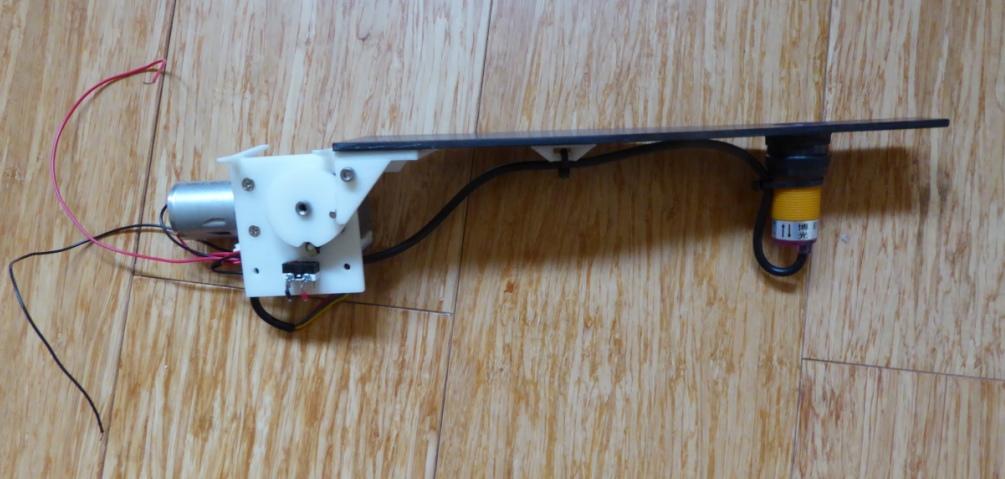
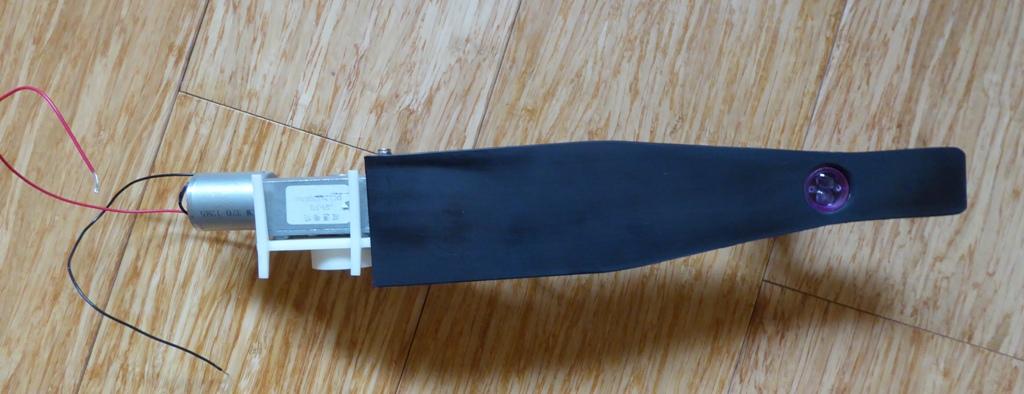
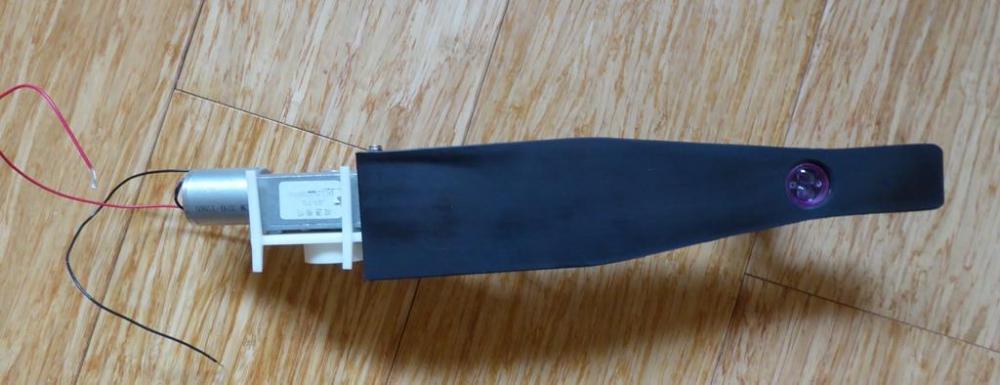
You're going to love the Mk 2 live capture mousetrap. Here's a sneak preview: The black arm can pivot downwards when the locking pin moves out of the way. This is triggered by a mouse crossing the IR proximity sensor towards the end of the arm, whilst trying to reach the peanut butter at the very end. When the arm drops, the mouse falls down into the bottom of the deep (empty) bucket and the mechanism recycles to the "cocked and ready" position, ready for the next mouse. I 3D printed the mechanism, and just need to print up a housing, plus a mount for the LCD counter module I've bought. The LCD display will be mounted remotely so that I can quickly check how many, if any, mice have been caught, so that I know when I need to empty the bucket. I might try marking the captured mice somehow, just so that I can be sure the same ones aren't coming back, although 1/2 mile seems a long trek for any mouse, especially as they also have to cross the stream.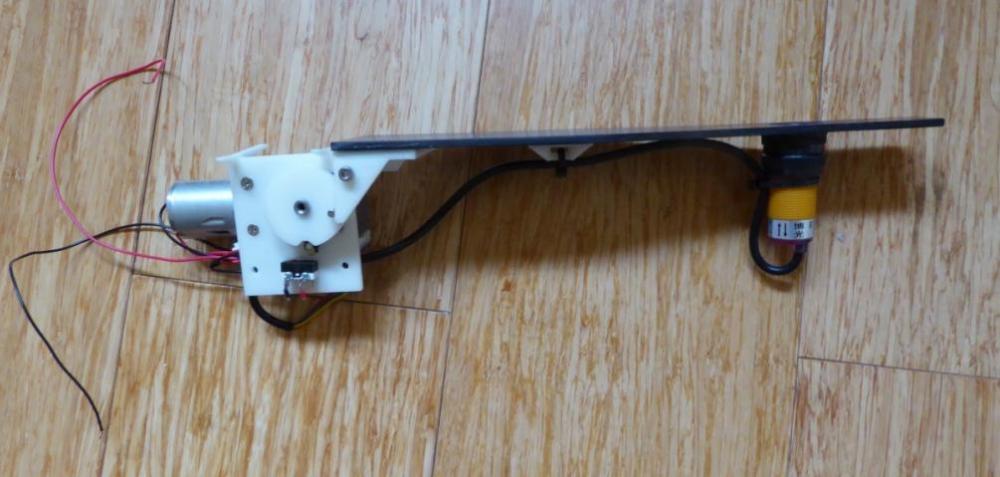
-
I can second this. I fitted a capillary stat to our buffer tank and it has pretty tight control, at a guess around 2°C I think. It's just a simple mechanical stat, with no accelerator heater.
-
Cladding cavity insect/rodent barrier
Jeremy Harris replied to Jeremy Harris's topic in Timber Frame
Thanks, but I think I'll leave it for individuals to use their own judgement. I've been clear that I only use live capture traps, and that I always release the mice caught some distance away (far enough away for them not to come back). If others want to kill them, then it's their choice as to the method they choose to use, whether their conscience is OK with it and whether it's lawful. As far as I can see drowning mice is not unlawful, and arguably it's no less humane than using a cat, poison or some other method of eradication. Like others, I've witnessed a cat playing around with a mouse. Not a quick or pleasant death, by any stretch of the imagination. Not really natural, either, given that domestic cats are an invention of man. -
I think you'll need some mortar dye to get the colour right. The render on our retaining wall is a mix of white cement, yellow sand and hydraulic lime, and is a fairly pale cream colour. It's a fair bit lighter than the honey coloured "sandstone" that we've used for garden walls. The colour is about the same as magnolia emulsion, maybe very slightly darker. The sand we used was a very deep yellow.
-
There seem to be two identical threads on this, so I've merged them into one to avoid confusion.