Jeremy Harris
-
Posts
26430 -
Joined
-
Last visited
-
Days Won
360
Everything posted by Jeremy Harris
-

Temporary heat source for UFH: Willis heaters
Jeremy Harris commented on oranjeboom's blog entry in Kentish RenoExtension
Yes, they do, but I bet heat will still be conducted up the cores to the air space (which may well be taller than 50mm anyway), and the manufacturer's instructions do state clearly that there should not be any air space within the thing. That warm air space is also going to make corrosion around the brazed joins where the element and thermostat pocket are attached to the threaded part and around the exposed parts of the element themselves more likely, I suspect.. I just cannot see any logical reason for wanting to mount these things upside down, I'm afraid. They have a long track record of working well for decades when mounted the right way up, yet now it seems some just want to mount them upside down because they think that the original manufacturer has got it wrong for all these years. It's not even as if it's any harder to mount them the right way up, the work involved is exactly the same, and they don't take up any more room when mounted correctly. -
Temporary heat source for UFH: Willis heaters
Jeremy Harris commented on oranjeboom's blog entry in Kentish RenoExtension
I don't doubt that they will work for a time mounted upside down, the issue is whether the inevitable air space that this causes will lead to longer term problems. I'm not a fan of fitting things contrary to the designer's intentions, and when Willis designed these things they were very definitely intended to be mounted as shown in that diagram, and included warnings to ensure that the case must be completely filled with water (which cannot be the case if they are mounted upside down - sooner or later there is going to be air trapped in that big space above the side pipe).- 159 comments
-
- 2
-

-
- willis heater
- ufh
- (and 1 more)
-
Temporary heat source for UFH: Willis heaters
Jeremy Harris commented on oranjeboom's blog entry in Kentish RenoExtension
Yes, and the diagram (copied again below) I posted earlier is a direct copy of the original Willis instructions (Willis sold these as "Economisers" originally, as you can get a small volume of hot water quickly, without waiting for the whole tank to heat up).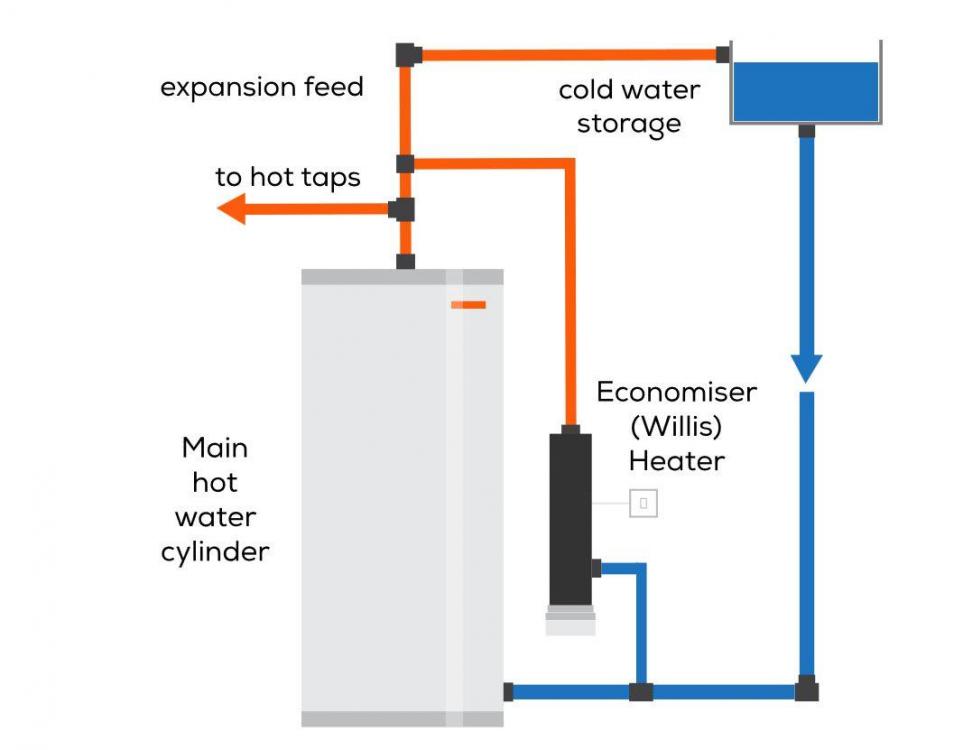
- 159 comments
-
- 1
-
-
- willis heater
- ufh
- (and 1 more)
-
Temporary heat source for UFH: Willis heaters
Jeremy Harris commented on oranjeboom's blog entry in Kentish RenoExtension
My guess is that Emerald Geyser are just one of a handful of companies that have copied the original Willis heater. These things were, to the best of my knowledge, only ever fitted in NI and the immediately surrounding area. When I first came across them around 30 years ago, I'd not seen anything like it before, but one of the NI chaps at work assured me they were really common over the water, especially around the Belfast area. Everyone there just know which way up they went, as they were in pretty common use. These things were designed to be fitted alongside an existing hot water cylinder, within the confines of a hot press/airing cupboard. The vertical mounting allowed this, as the thing can sit within the corner space pretty neatly, and just attach to the existing plumbing. It's only in the last few years that people have been looking at using them for other purposes, and I have a faint suspicion that I may be partially to blame for this, as I remember mentioning them on Ebuild as a possible way to build a cheap and cheerful water heating system for UFH. IIRC, this was around the time that @TerryE opted to fit them for just this purpose. Before that, I'd not heard of them being used for running UFH before, although that doesn't mean that someone hadn't done it.- 159 comments
-
- 1
-
-
- willis heater
- ufh
- (and 1 more)
-
IVT Ecolane ASHP - any owners out there?
Jeremy Harris replied to readiescards's topic in Air Source Heat Pumps (ASHP)
Looks quite reasonable from the data. At least they are giving the COP under standard conditions, and it looks better than a some more well-known brands: COP at kW A7W35 (Low temp) 4.37@8.4kW 4.66@13.3kW COP at kW A7W45 (Medium temp) 3.59@8.4kW 3.76@13.4kW COP at kW A7W55 (High temp) 3.08@8.4kW 3.25@13.9kW COP at kW A7W65 (Very high temp) 2.64@8.5kW 2.77@14.1kW -
Temporary heat source for UFH: Willis heaters
Jeremy Harris commented on oranjeboom's blog entry in Kentish RenoExtension
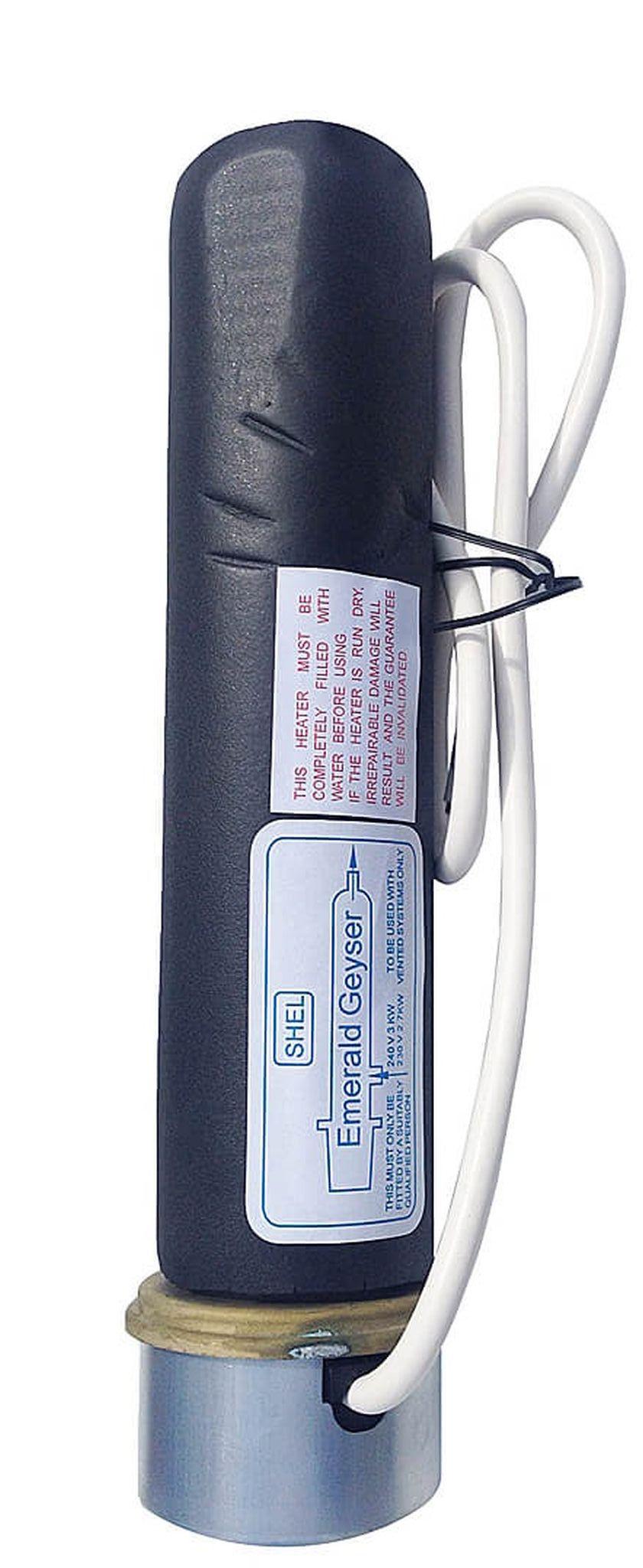
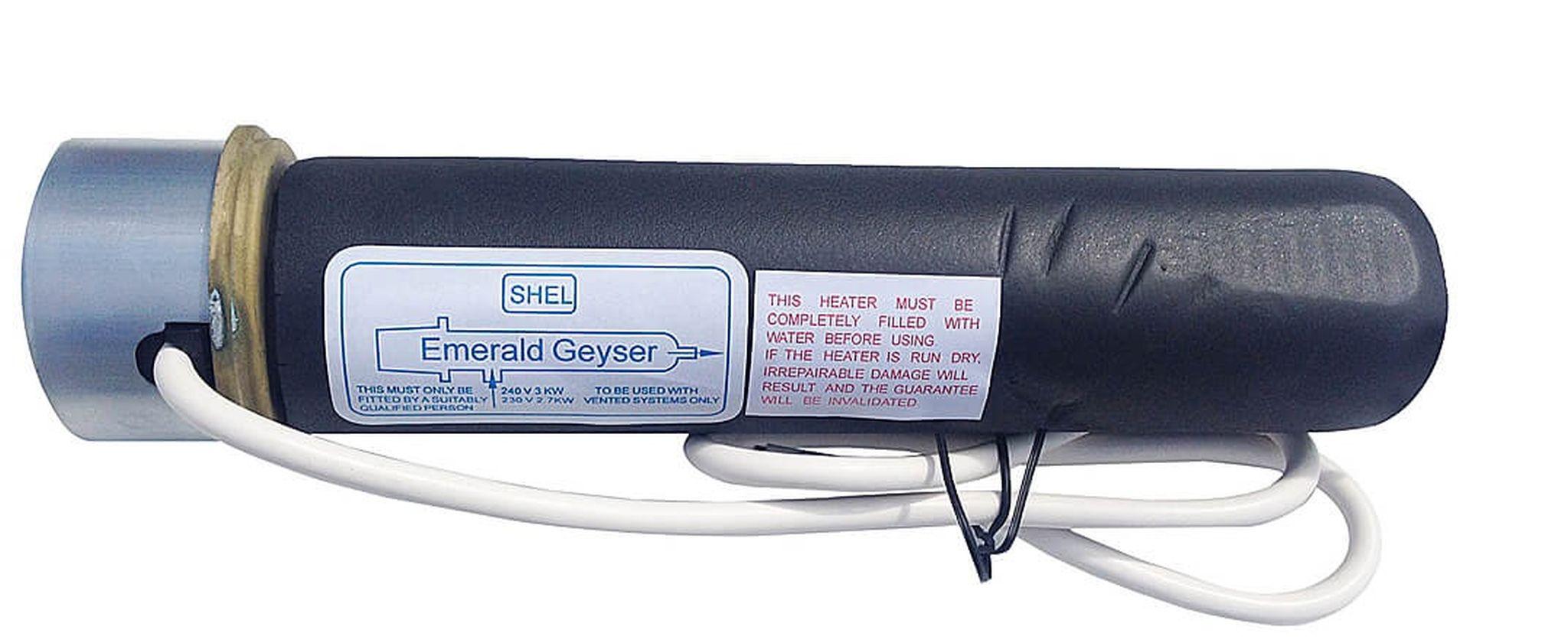
If I turn the photo the right way up, so it shows it in the mounted position, does that help?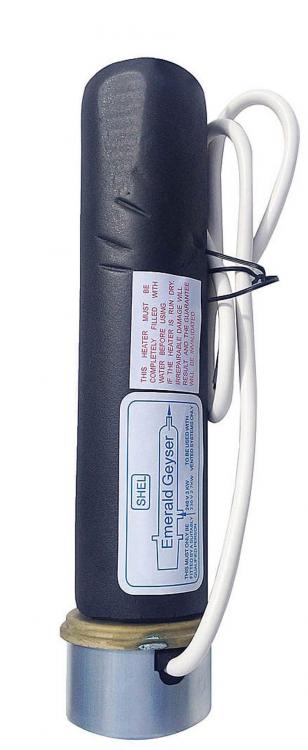
-
Just measured a bit of "50mm" Floplast waste pipe. It's actually marked with the dimensions on the side, "55mm x 2mm". A quick check showed that it's really 55mm OD and 51mm ID. Bit like OpenReach Duct 56, which is really 54mm OD and 50mm ID. All these dimensions seem to be randomly chosen, with no rhyme nor reason as to why a particular pipe is given a particular dimension as a name.
-
I do much the same, just stick the monthly .csv data into Excel and play about with it. There's only so much interest I can sustain in doing this, though. Discovering how the house behaved was very interesting for a time, but now it's really just more of the same, month after month. Nothing much changes, now that things are set up so that we don't need to fiddle with anything to keep the house comfortable and cheap to run.
-
The main reason I don't store loads of data, and then crunch it later, is that when I built the system I opted to use cheap, low power and simple PIC microcontrollers for the house data acquisition system. There are around a dozen of these around the house, all connected via a multi-drop serial interface. The big advantage is that each one only draws a couple of mA at 5V, so the power consumption of the whole system is negligible (less than 1 W, including the LCD displays). The disadvantage is that the data gets dumped to a USB stick, as a .csv file, using a pretty slow and clunky interface, that both won't handle high speeds, and, because it a real time system that can only do one thing at a time, when data is being written to the USB stick nothing else on that device is going on. 6 minutes gives me time to pull the USB stick at the end of the last write, copy the data to a laptop and then replace the USB stick ready for the next sample when I want to pull off data. Data is stored as monthly files, with the month and year as the file name, taken from the GPS master clock that synchronises everything. The system is dumb enough to not notice whether the USB stick is there or not until it tries to write to it. Arguably there are better ways of doing this, but back in 2010 when I built the first data logger like this (to get base data from our old house) I just used what I was familiar with. I've stuck with it, just because there are now "intelligent" sensors all around the house, some with LCD displays, that just work 24/7, and I don't really want to change things, given that they all do as much as I need.
-
Pretty much what I'm doing with energy data. I average readings over 10 seconds, and use this to display power usage on an indoor display, then average that data again over 6 minutes when storing the data for later analysis. The only difference is that I don't bother to store all the original samples, only the 6 minute average. For energy use this seems to be OK, in that there seems to be little difference between the energy readings I take and those from the meter.
-
Temporary heat source for UFH: Willis heaters
Jeremy Harris commented on oranjeboom's blog entry in Kentish RenoExtension
I have a feeling that either Willis didn't patent these things, or if they did, then it's now expired, as there seems to be several different manufacturers of them. This probably explains why there are now several different types of essentially the same thing. Once upon a time, the only manufacturer was Willis Heating, in Belfast (https://willis-heating.com/ ), but it seems that Willis have expanded into lots of related areas and don't seem to make the Willis heaters any more. I first came across them nearly 30 years ago, as they were pretty commonplace in parts of SW Scotland, as well as NI (probably because it was often quicker to get stuff from Belfast than it was from Ayr or Dumfries, at least for those out where we used to live). Not often fitted to new builds, but they seemed a pretty common fit to houses that had things like back burners providing hot water. The second house we bought when living there had a Baxi stove for hot water, with a Willis heater fitted alongside the cylinder. Seemed to work very well, really handy for heating a bit of hot water very quickly if the stove was out. You can now get versions with a 1 kW immersion, and I have wondered whether one of those, fitted with a thermostat set for around 45°C and plumbed in to the hot feed under the basin might not make for a handy way to get instant hot water for hand washing. They hold around 4 litres, more than enough for a quick hand wash. Found this close up of the labels on a Willis (actually an Emerald Geyser version) that shows clearly the direction of flow and has a sensible warning that the whole thing has to be filled with water: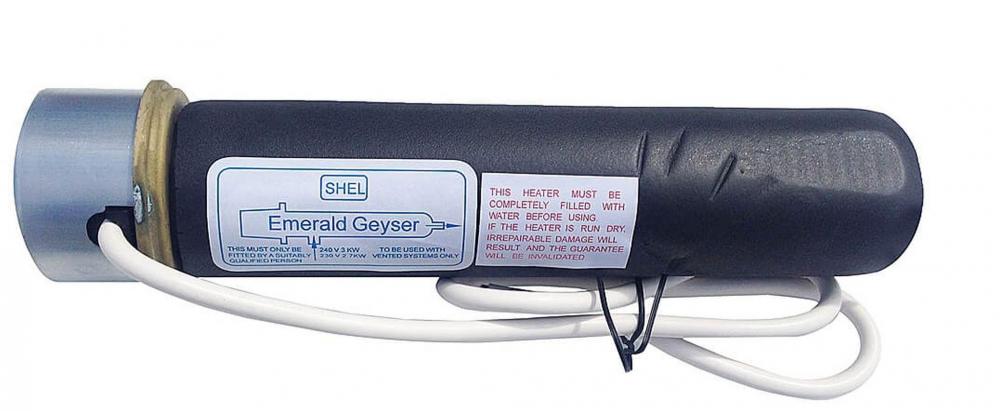
- 159 comments
-
- 1
-
-
- willis heater
- ufh
- (and 1 more)
-
I sample most data every 6 minutes, and find that's plenty fine enough, and still generates far more data than I really need, I think. I chose 6 minutes years ago, simply as it makes plotting stuff in decimal hours easier. My energy monitoring averages power over 10 seconds, for the local display unit, then averages those 10 second readings over 6 minutes for the stored data. Seems good enough for most practical purposes.
-
Embodied Carbon costs of future PV installations in UK
Jeremy Harris replied to Hastings's topic in Photovoltaics (PV)
The new office and lab build that was part of my last job before I retired housed ~900 people, all with keyboards and screens on their desks. The cooling system requirements, had we opted to install desktop PCs, would have prevented the building from being able to meet the energy target we were aiming for. The solution was to just have a small, very low power, thin client box on each desk, together with a low power monitor. Each user had a virtual machine running in our two data centres. Apart from being a lower overall power solution, it also had the advantage that users could "boot" their desktops near-instantly. As soon as they plugged their security pass into the slot in the thin client, their desktop appeared on their screen, just as they had left it the day before. Pulling their pass out of the thin client box shut the screen down immediately and paused their VM. Great for security, as no data is stored at the user's desktop at all, there wasn't even a USB port available (for security reasons). This was over 10 years ago, so there are probably better solutions available now. Certainly power consumption has markedly reduced, for a given amount of processing power, in the past few years. -
The concern I have over wood burning stove air pollution is that, unlike smoking, it probably doesn't affect the person actually using the wood burning stove as much as it affects those around them. Our house is in a village that's at the bottom of a deep valley, and the valley can literally fill with smoke on occasions. This forces dozens of families to breathe in high levels of toxic particulates, even if they themselves are trying to stay healthy.
-
The problem is that, unless you know the full history of the pallets, then you just can't be sure that's the case. Stuff does get carried on them and spilt on them, including bagged stuff that could contain anything, as well as liquids in containers that may have leaked in transit, and any soaked in contamination may well not be visible.
-
Temporary heat source for UFH: Willis heaters
Jeremy Harris commented on oranjeboom's blog entry in Kentish RenoExtension
Frankly I'd not risk it, Nick. Much, much easier to just plumb the things the right way up and have done with it. They work fine like that, have been for decades without any issues. It's no more risky for the electrical connections than an immersion fitted in the bottom of an insulated tank, anyway, probably less so, as any leaks are likely to bypass the electrics and run down the outside. These things have been running the right way up all over NI without causing any problems with the electrics. I just can't see any good reason for wanting to fit the thing upside down. -
Temporary heat source for UFH: Willis heaters
Jeremy Harris commented on oranjeboom's blog entry in Kentish RenoExtension
Except that mounting them upside down is the opposite of the way they were designed and intended to be used, and air/gas is always going to collect in that space, no matter how much you faff around trying to bleed air out around the immersion threads. I'm not a fan of fitting things in the opposite orientation to the designer intended, and in the opposite orientation to all the many of these things in use across NI. Far better to just stick to the original MIs, IMHO. How many years experience do you have of mounting them upside down and still being reliable? Willis has decades of experience of them being reliable when mounted in accordance with their original design. Yes, with a pump that probably works just fine. They were originally designed to just thermosyphon, as shown in the top diagram in the first post in the thread specific to this issue, but if pumped should work OK sideways, with the bottom port facing upwards. I still think it's better to mount them as Willis intended, though, as they've got a pretty good track record for working very well when mounted as designed. I doubt you'd hear any noise from that big air pocket, as the water is just going to flow undisturbed across to the "inlet" being used as an outlet. -
Dingdong- Smart Doorbell as builders hotline?
Jeremy Harris replied to puntloos's topic in Project & Site Management
Seems to be a common problem. A local watch repair chap has one of these, and I walked away after pressing the bell a couple of times, because it was really slow to trigger on his 'phone. He ran out and caught me just as I was driving off, but did mention that the system was often a bit slow to respond. -
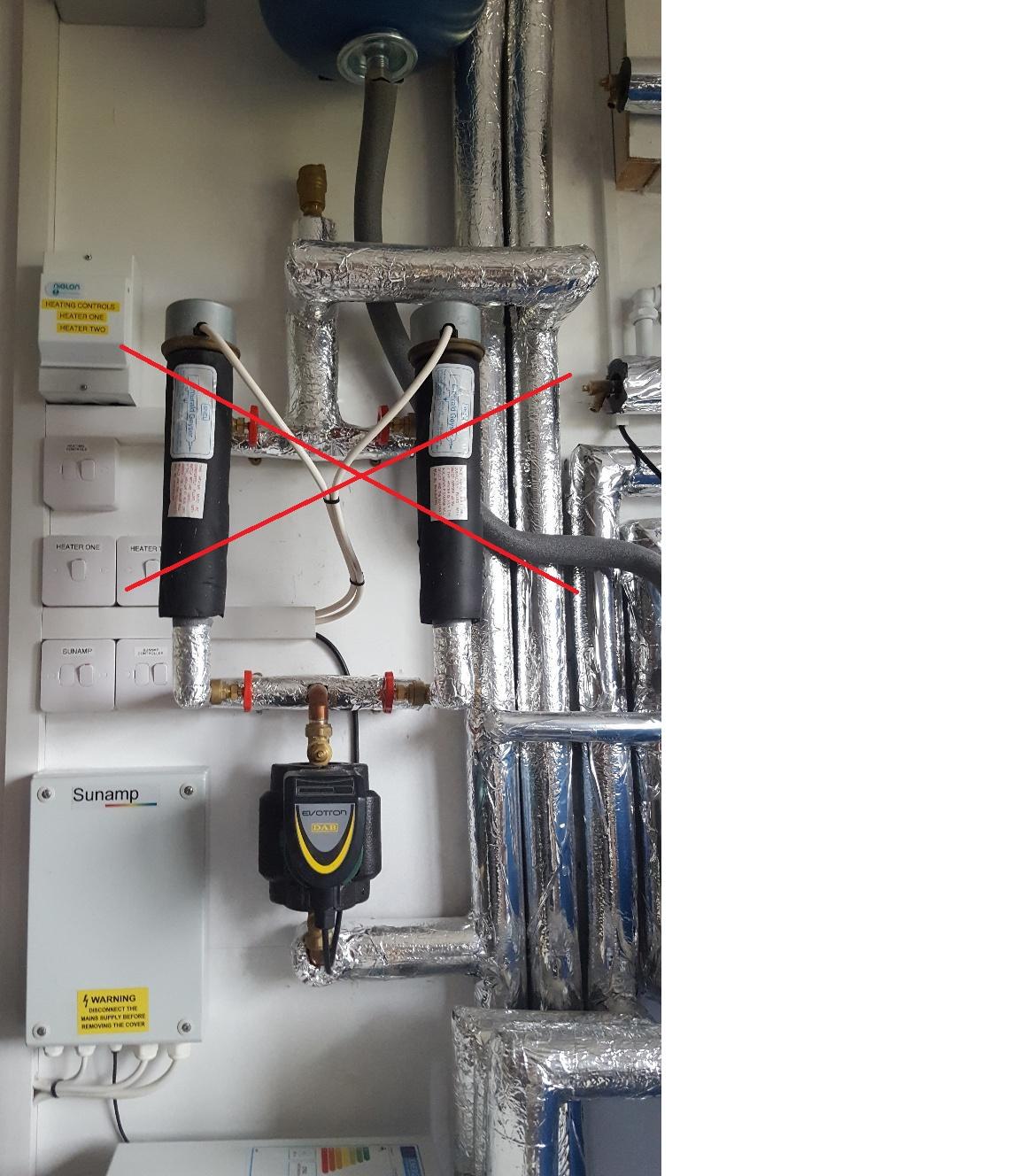
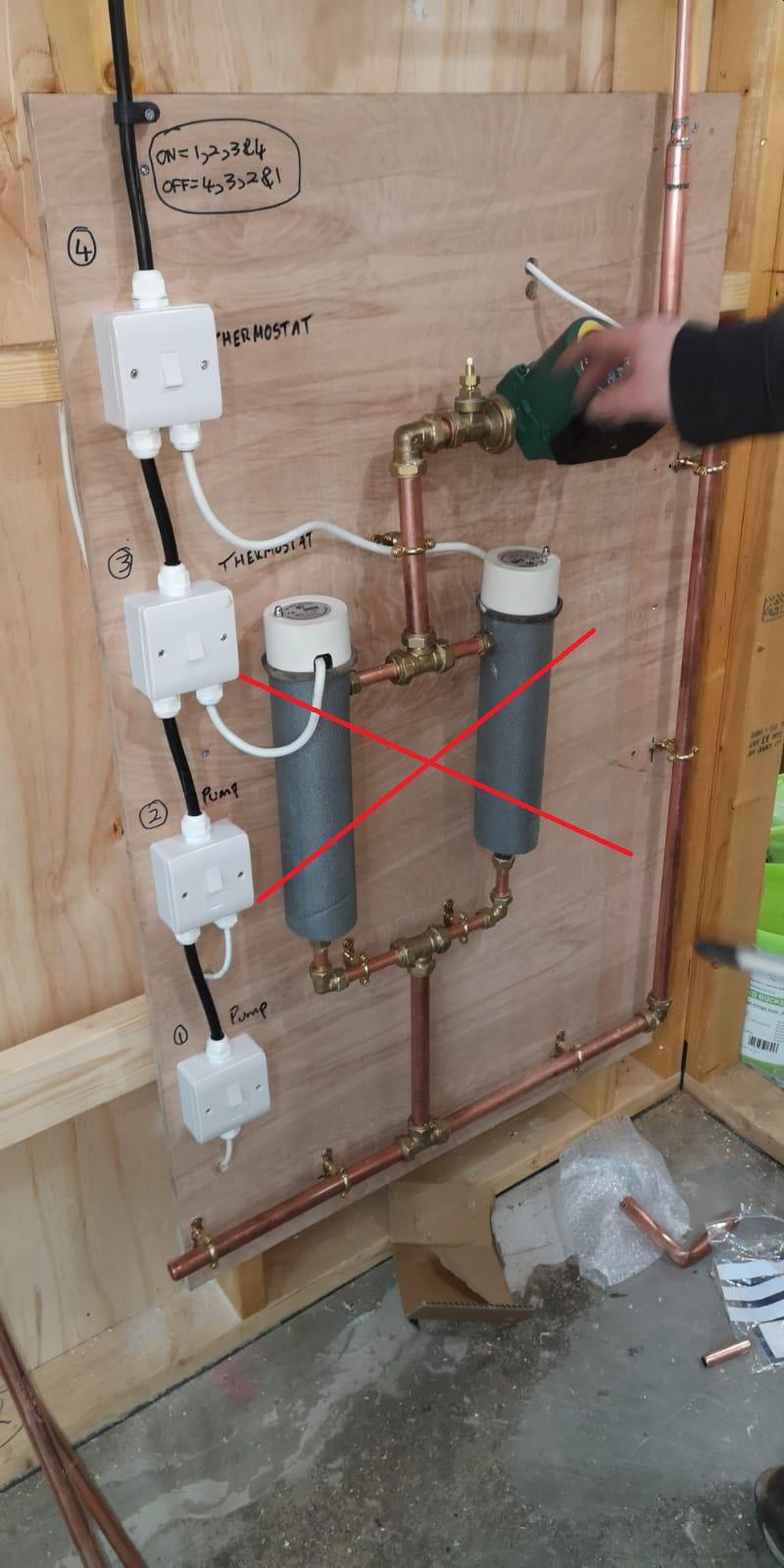
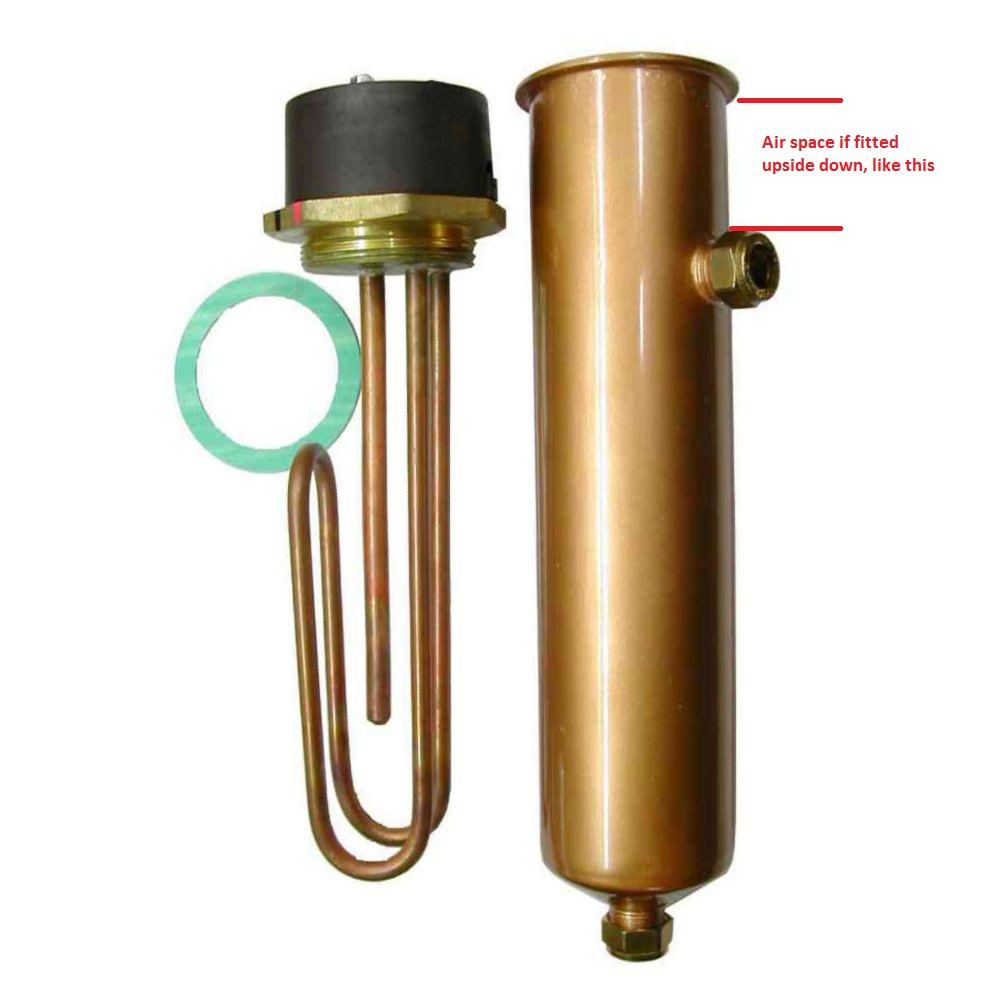
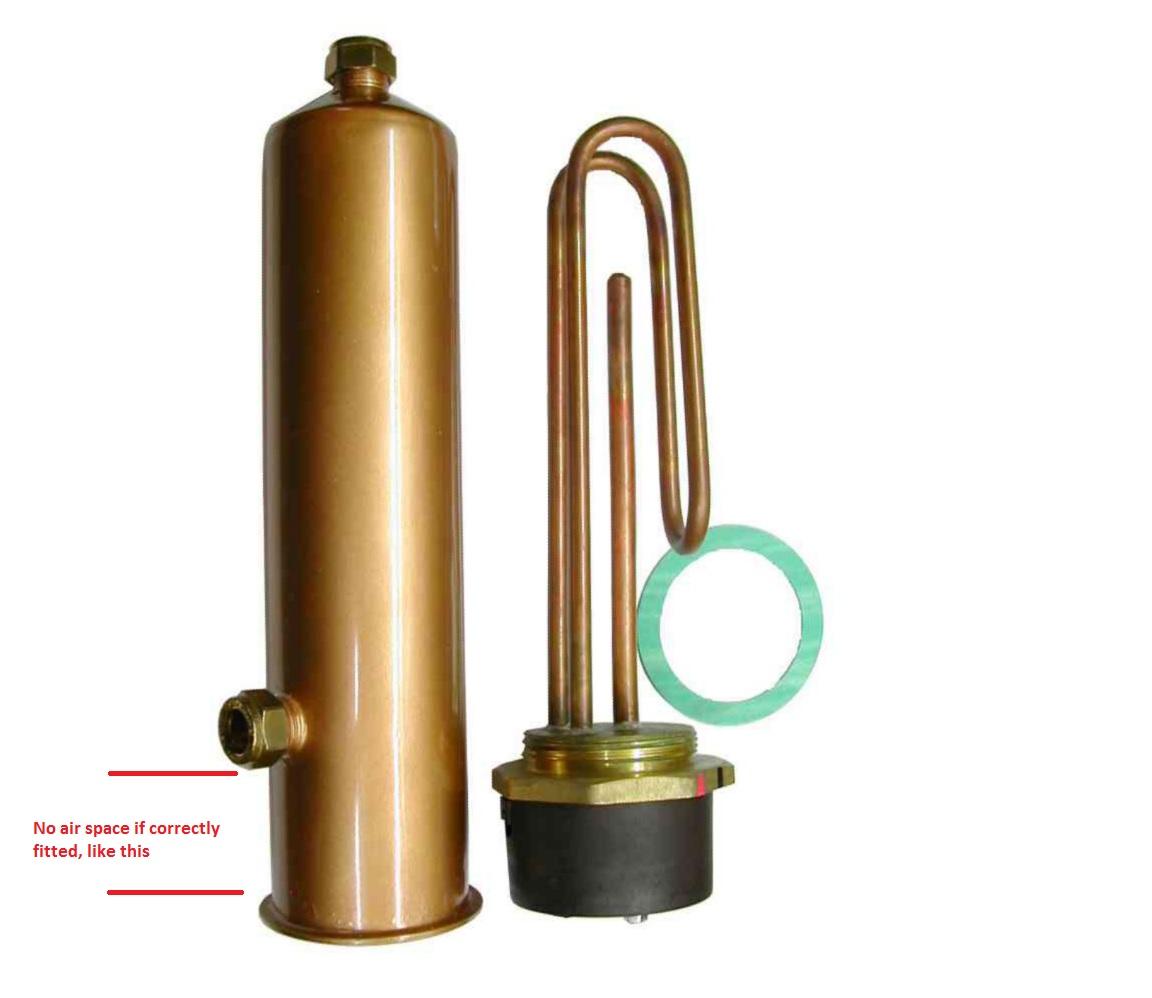
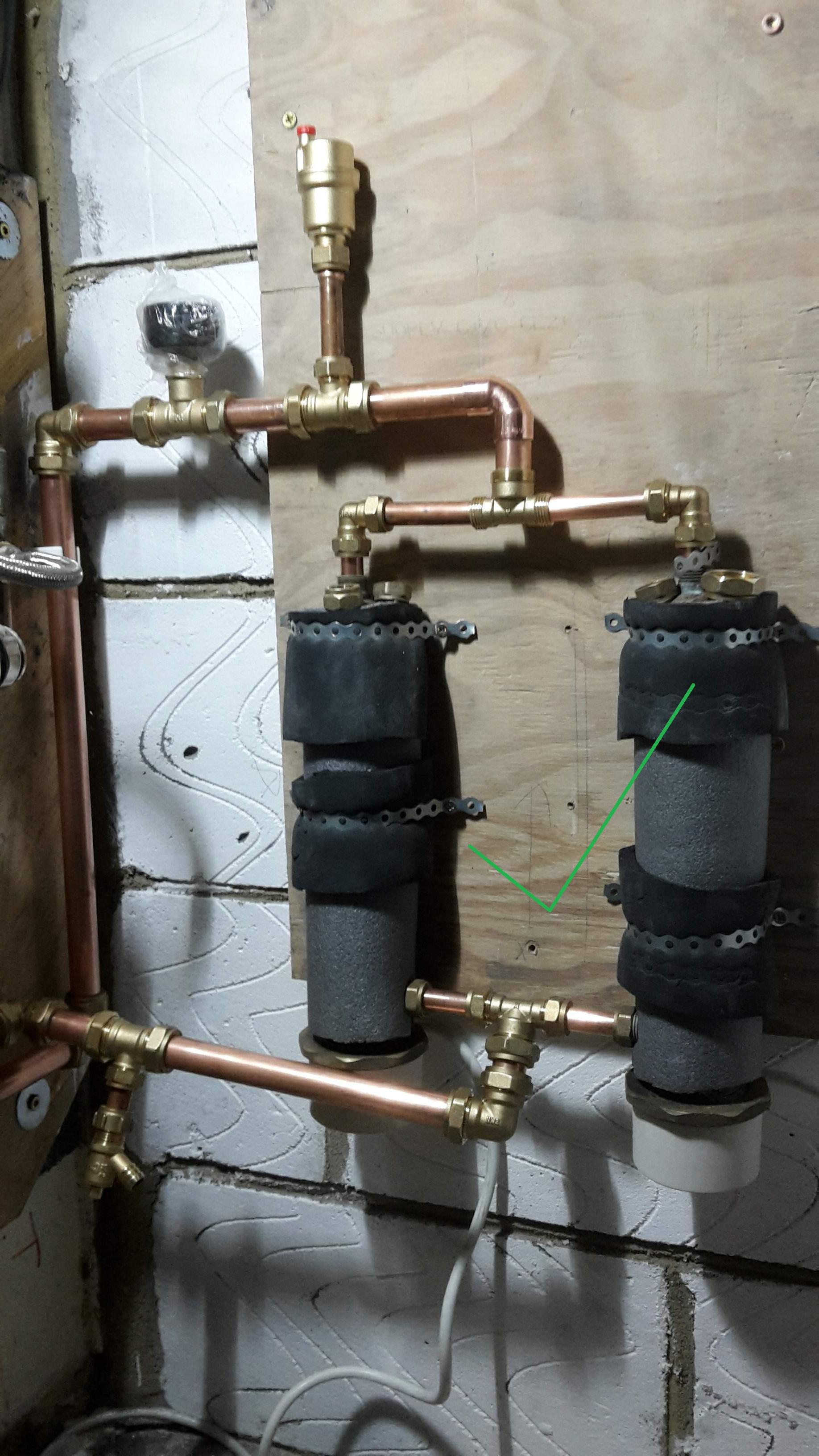
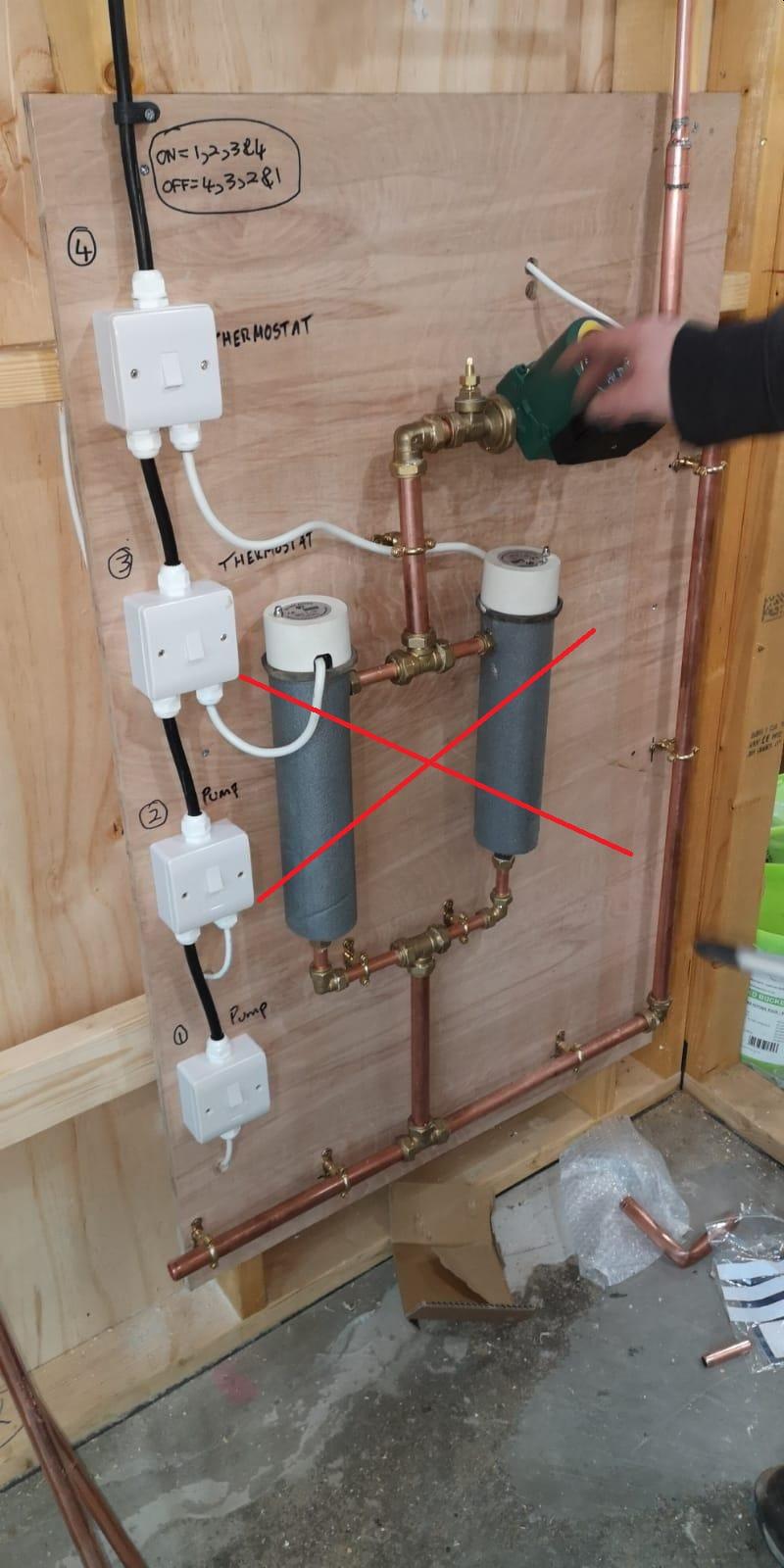
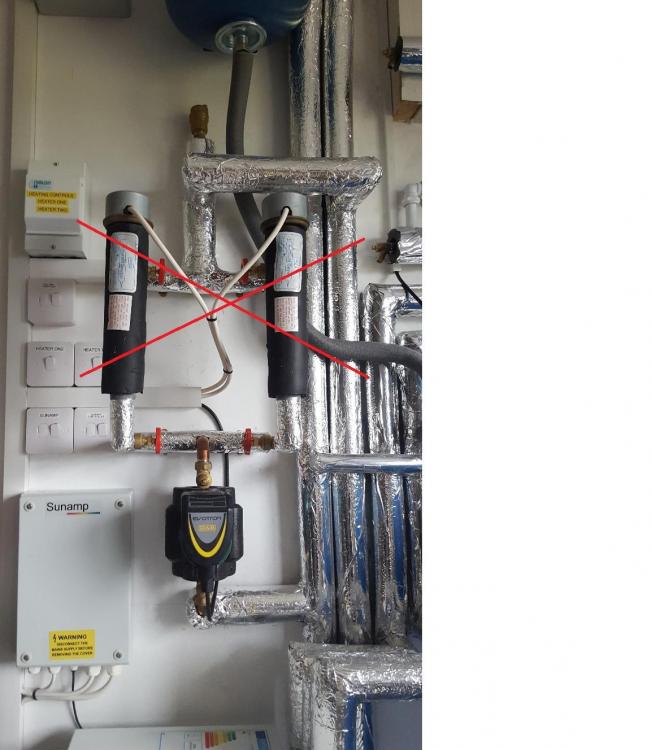
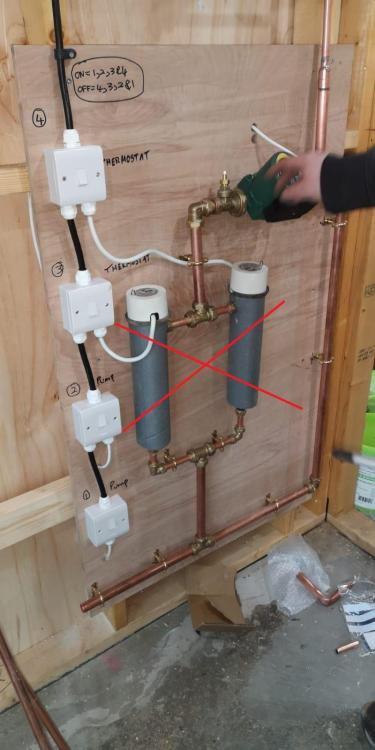
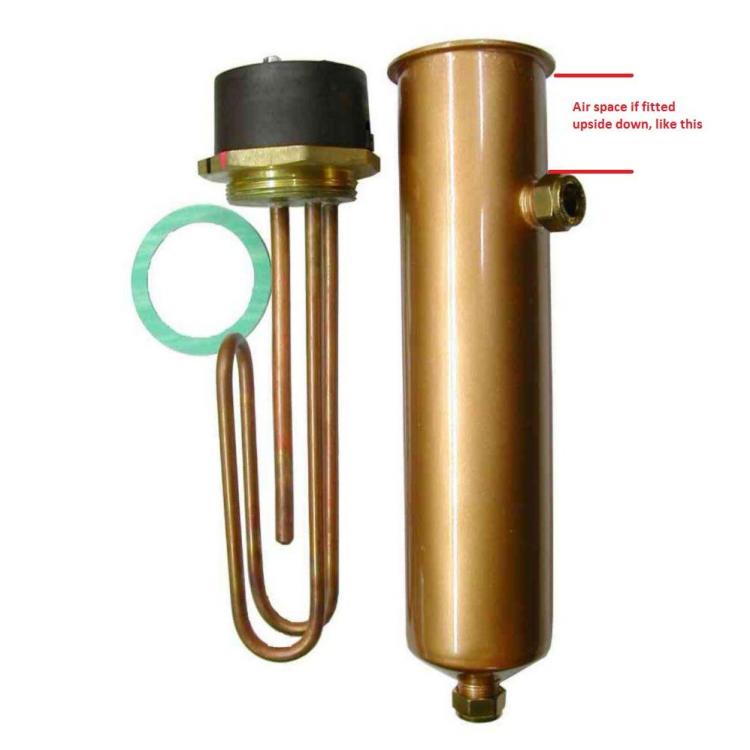
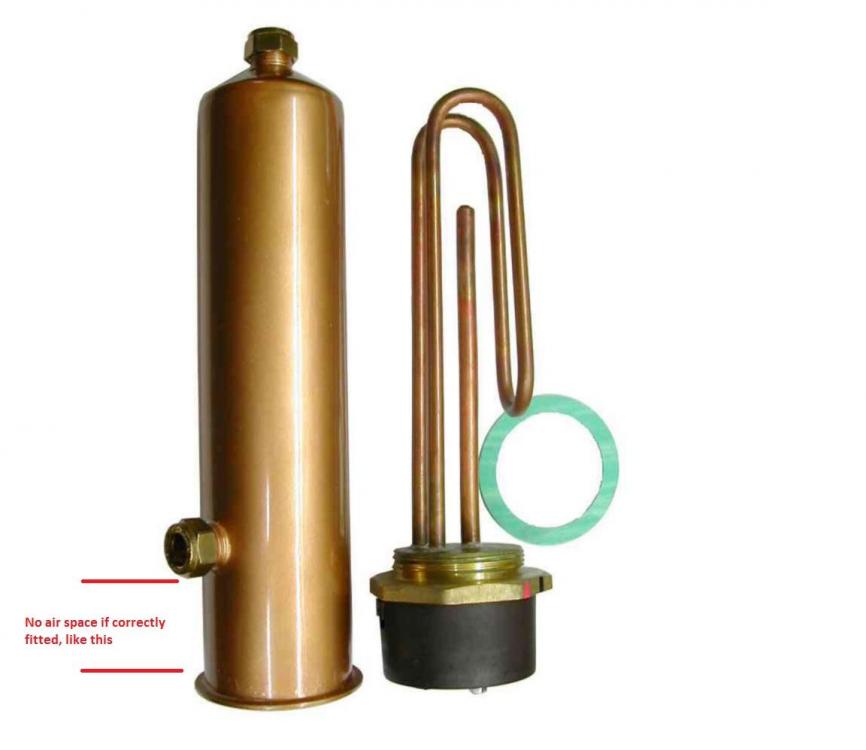
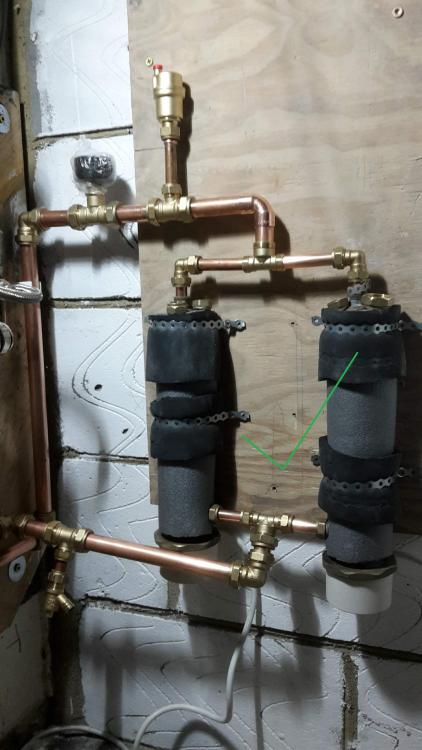
There seems to be a recurring issue with Willis heaters being installed upside down. The original MI's that were supplied with these back when they were pretty much only used in NI, had a plumbing diagram that was pretty near identical to this one, when they are used for their intended purpose, as a way of providing an immersion heater for a vented hot water system that didn't have one, and didn't have an immersion boss on the cylinder: I've seen a couple of photos posted here of upside down Willis heater installations, like these two (I've added the red crosses to show that they are fitted incorrectly): There is a problem with fitting them upside down, in that it creates an air pocket that cannot be easily bled, which then means that a part of the immersion heater element is running in air, so likely to overheat locally and probably have a shorter life than it should. This is best illustrated by looking at a Willis heater with the insulation removed, where the problem is pretty obvious. This is an upside down photo, annotated to show where the air pocket will be: and this is the same photo, but with the Willis heater correctly oriented, so there can be no air pocket: So far, the only photo I've seen on this forum with Willis heaters correctly oriented is this one (nice job @oranjeboom !): In addition to the risk of premature failure of the element by having an air pocket when these things are fitted upside down, I suspect that the electrical connections may well run hotter than intended (no water just under where they are to keep them cooler) and there may also be an increased risk of corrosion from the air trapped in the pocket. If anyone is using Willis heaters in an unusual configuration, given that they are ideal as a way of providing a simple heat source for low power UFH, then it's probably worth checking to make sure they are installed the correct way up. Willis never intended them to be used for anything other than the configuration shown in the diagram at the top of this post, and so probably didn't think that anyone might consider fitting them upside down. IMHO they could be better labelled, too, but I have a feeling that they are now made by several companies, rather than just Willis, so getting them clearly labelled etc may not be that easy.
-
Temporary heat source for UFH: Willis heaters
Jeremy Harris commented on oranjeboom's blog entry in Kentish RenoExtension
I think this photo: is either the second or third Willis setup I've seen with the things mounted upside down. Your set up, @oranjeboom is spot on, and is exactly how they are supposed to be fitted. Fitting them upside down leaves an air pocket in the section above the side (supposed to be the inlet) pipe, which then means that part of the heating element will be running in air, which is not desirable in terms of prolonging the life of the immersion element.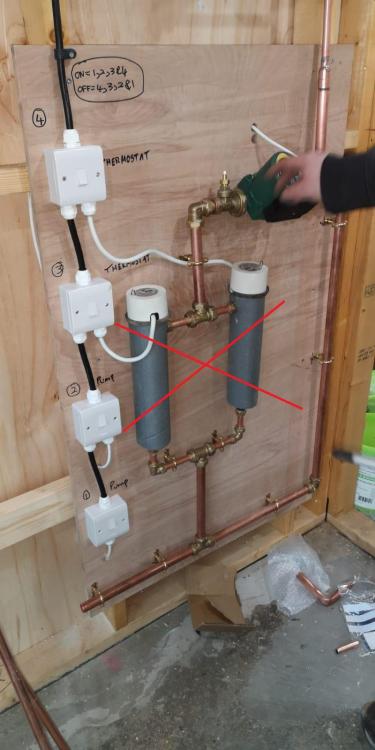
-
Temporary heat source for UFH: Willis heaters
Jeremy Harris commented on oranjeboom's blog entry in Kentish RenoExtension
Those Willis heaters are mounted upside down! They are supposed to be mounted with the heating element cap at the bottom, so there's no air pocket trapped adjacent to the heating element bit above the side branch. This diagram (randomly nicked from the web) shows how they are supposed to be installed: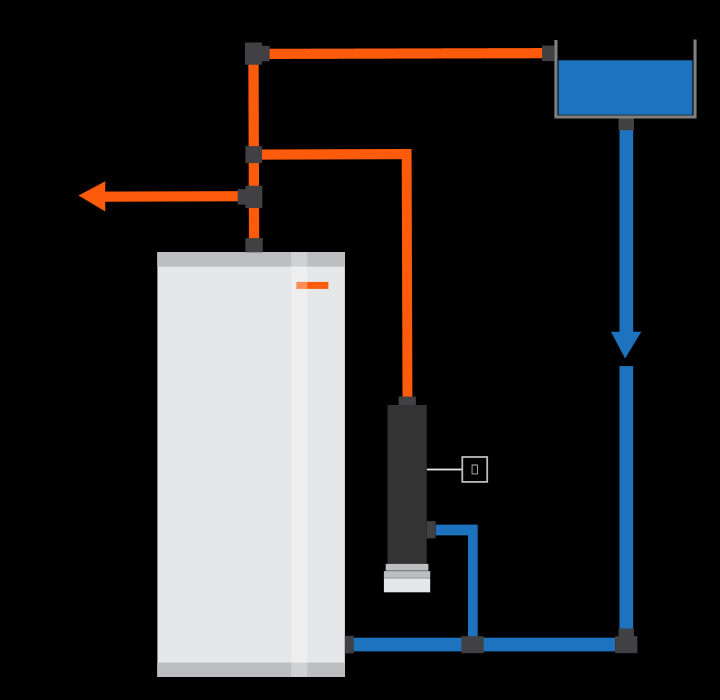
- 159 comments
-
- 2
-
-
- willis heater
- ufh
- (and 1 more)
-
I think that @SteamyTea was referring to his local water price in West Cornwall. We lived there for many years and water/sewerage charges are ludicrously expensive, have been for some years now.
-
Water charges are expensive in Cornwall, a LOT more so than in some other areas. Water usage there in summer rockets because of the massive influx of holiday makers, and it's the residents who have to foot the bill for all the infrastructure needed to supply this peak demand.
-
I'm most definitely not an "eco self-builder", by any stretch of anyone's imagination, but our heating is so far running 100% from night time E7, using an ASHP. We've not had to turn the heating on during the day yet, even during the recent fairly cold spell here, where the night time temperature was fairly consistently well below zero for a few days. It's possible we may need to run the heating during the day before the winter is out, but frankly I doubt it, given that the house seems to stay warm (between 21.5°C and 22.5°C) just fine with the heating only running during the midnight to 7 am period. If I was willing to give up the simple thermostat control, and opt for something predictive, like the system @TerryE uses, then I could almost certainly guarantee that the heating would never, ever, need to use peak rate electricity. The only flaw with having a simple room thermostat is that it doesn't know what's going to happen in a few hours time. Knowing that outside temperature is likely to increase the following day would allow the overnight heat input to be turned down, and similarly, knowing the temperature was likely to decrease the following day would allow the heat input to be increased. Not really sure it would be worth the effort, though, as the house seems comfortable enough with just the simple thermostat control and time switch.
-
any ipad users here? I need some urgent help with email
Jeremy Harris replied to ProDave's topic in Boffin's Corner
Happened a while ago with my wife's old iPad. Printing to anything other than an Apple approved printer/Airprinter seemed to need an app from the printer manufacturer. In our case the network printer is an old Samsung CLP-670, and she needed to install the Samsung print app to get printing to work. When Apple updated iOS, for some reason the print app didn't update, so she needed to re-install it. It seems that iOS does things very differently to PCs, and doesn't seem to use printer drivers, as such, and also only seems to have built-in support for Apple printers, plus a few that must have done some sort of deal with Apple. Thankfully setting up an iMac to use our network printer was a bit easier, as it seems that MacOS is a bit more accommodating, although it doesn't seem to have the full range of printer settings that are available from the Windows printer driver.