Jeremy Harris
-
Posts
26430 -
Joined
-
Last visited
-
Days Won
360
Everything posted by Jeremy Harris
-
Borrow my high pressure spray system?
-

Soundproofing a wall
Jeremy Harris replied to markbuild's topic in General Self Build & DIY Discussion
We were in a similar position about 30 years ago. First thing I'd say is don't expect miracles; you can reduce sound transmission but you almost certainly cant get rid of it completely. My expectations were too high and even though I managed to make a massive reduction to the sound coming through the party wall I was never happy that I'd done enough! I opted for a fairly cheap way to reduce the sound transmission, at the cost of a loss of some room space. I built a new stud wall about 4" away from the party wall, and not attached to it at all. I fixed it to the floor ceiling and side walls only. I then started to board it out with two layers of plaster board, bonded together with PVA. I used thick plasterboard planks, rather than whole sheets, that were only 600mm wide, but 3/4" thick. As I boarded it out, starting from the bottom, I filled the void between the new wall and the old with cellulose insulation. This was the densest stuff I could buy at the time in the local DIY store. Filling the very top was difficult, so I resorted to putting the insulation inside plastic bags and stuffing it in. To finish things off I put up bookshelves on that wall and filled it with every text book I could lay my hands on - the heavier the better. The result was reasonable, we could no longer here the couple next door shouting at each other, or things like their light switches clicking on and off, but we could still hear their stereo, but not usually their TV. All around I think it was a success, and not that expensive, as everything was standard stuff from the local DIY store. -
The tale of the sale of our old house
Jeremy Harris replied to Jeremy Harris's topic in General Self Build & DIY Discussion
Made some progress with the old house today. Had 7 tonnes of 20mm gravel delivered and after a lot of sweat now have a decent looking drive and parking area. I reckon it looks great, compared with the mess there was before, but according to my wife, the new gravel is "too crunchy"... Sometimes I think you just can't win. Mind you I was thankful that the temperatures were a bit lower today, and that the tipper driver was a star and managed to spread the load over around 1/3rd of the drive area, so there was no need to barrow stuff around, just lots of shovelling and raking. I reckon I'll sleep OK tonight... -
The tale of the sale of our old house
Jeremy Harris replied to Jeremy Harris's topic in General Self Build & DIY Discussion
Yes, it does!. This is the overgrown wasteland we started with, all those years ago: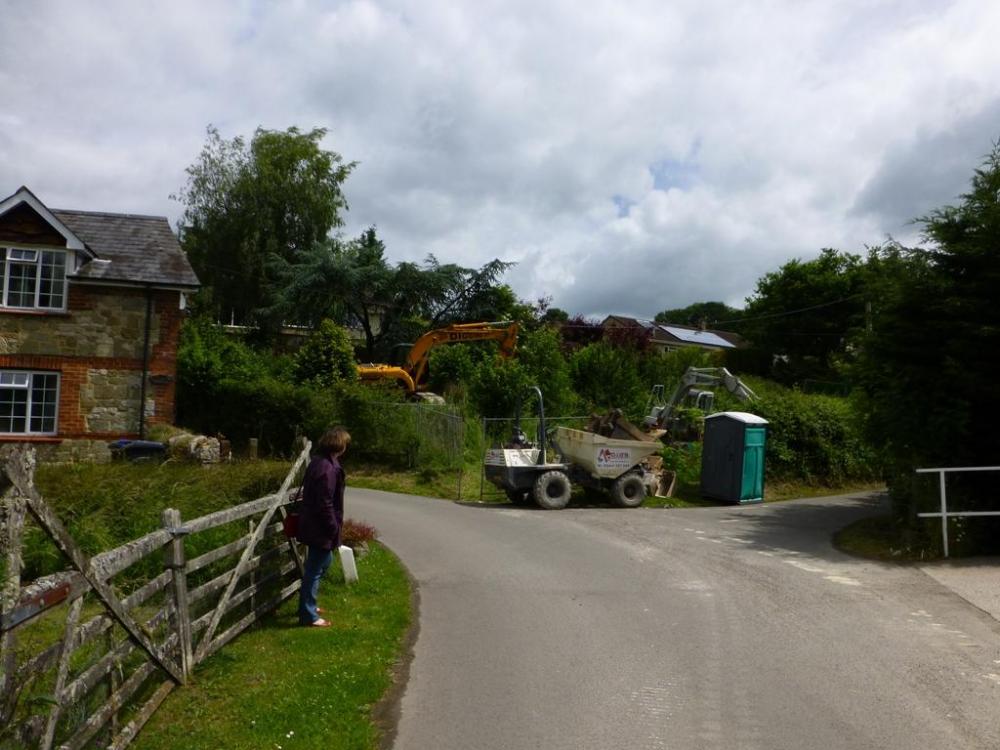
-
The Optimum domestic hot water and heating system
Jeremy Harris replied to Triassic's topic in Other Heating Systems
That's exactly what I originally installed, but a double thickness insulation one supplied by Newark. The heat losses were astronomical, at over 3 kWh/day, and that was with stipulating that the tank be double sprayed with foam from the factory. I then added an insulating hexagonal box made from 50mm PIR foam around it, taping the joins and filling the gaps with expanding foam, to increase the insulation level further. This got the losses down to around 2 kWh/day - still ludicrous, and way off the official figures using the BS test method (shades of the VW emissions scandal here). I ended up tearing it out and selling it on ebay cheaply to get rid of it, and replacing it with a Sunamp PV, that has losses of around 0.6 kWh/day, far more sensible. Bear in mind that a shower will typically be around 2 kWh or so, and we have two showers a day, so the original thermal store heat loss was equivalent to 1 1/2 showers a day... -
Selling a house with an ASHP
Jeremy Harris replied to newhome's topic in Air Source Heat Pumps (ASHP)
The question in your case is probably not the ROI, but the valued added to the house. If a heat pump installation cost, say £6k, then you might get some of that back through reduced electricity bills (your £571 would reduce to less than £200, as an example) but what would it add to the value of the house, either in terms of real value or desirability? Hard one to answer, but I'd say that anyone looking at the house and seeing heating bills that were around 1/3rd of those from your present system may well be inclined to think more favourably about it. Would they pay, say, £3k or £4k more for it, though? Hard one to answer, really, some might, some might not. It really comes down to whether that sort of cost is significant relative to the value of the house. As an example that's not really related, but illustrates some of the issues about house price and desirability, our old house was bought in a hurry (forced move by my employer - 5 days to find a house, the usual panic) and we regretted it almost immediately. It's on a road that's got a lot busier in recent years and has a small garden. Around ten years ago I drew up plans to convert it from a bungalow to a house (easy, as the original foundations were laid for a house and then the builder changed his mind, so I already had expired PP for a house with the same footprint). The plans I drew up turned an 84m² three bedroom bungalow into a 168m² 5 bedroom, three bathroom house. The planners thought there would be no reason to refuse it - all the houses around are two or three storeys - we're the only bungalow close by. The cost of the conversion would have been reasonable, just take off the roof, sister up the existing ceiling joists to create floor joists, build the walls up by around 1.5m and fit a new roof with attic trusses. Could even have reused the existing tiles, as they are a common pattern and anyway there is a pile of spares stacked behind the shed from when the house was built. I reckon £80k would have seen the job done. Now, the big question, and the relevance to your situation, is, would this be worth it? Would a 5 bedroom three bathroom house be worth at least £80k more than a three bedroom, one bathroom, bungalow on our site? The answer in simple terms is no, it wouldn't. The market wouldn't bear that sort of price for the small size of the plot and the location. Our garden is tiny (although our drive, garage and car port allows parking for up to 8 cars), and so we would never have recovered the cost. In your case you have to ask yourself whether you think that you'll recover perhaps another £5k on the sale price if you had heating bills that were around 1/3rd of those you have now. Only you can assess that, as it depends a very great deal on the value of your house and what the market is like in your area. -
The Optimum domestic hot water and heating system
Jeremy Harris replied to Triassic's topic in Other Heating Systems
That's my next plan, @jack. I'm working on it in my mind right now! We have an external fresh air intake duct right above the ASHP, and it's a nuisance as the outer grill regularly gets clogged with fluffy weed seeds and cobwebs. I have been planning for a long time to extend this down with an externally mounted duct so that it's turned through 90 degrees and so away from the wind that funnels all the fluffy stuff along the back of the house. At the same time I was planning to fit an easily accessible pre-filter, to help keep the main intake filter in the MVHR a bit cleaner. Last week I had the bright idea that it should be possible to fit a duct cooler in the same place as the pre-filter, and as that's only a few feet from the ASHP, I could easily plumb it to the existing connections, together with an electrically operated valve. Even better is the fact that the cooling mode is already signalled out to the ASHP via a cable, so I could use that to trigger a circuit to turn the duct cooler on or off (it only wants to be on in cooling mode). It would be simple to install, no need to mess around with drains, as I could run the condensate straight to the existing heat pump drain. It would be around head height, so easy to work on, too. It would more than double our existing MVHR cooling capacity, too, by cooling the incoming air to the MVHR (which by then would be at 100% bypass) to around 12 deg C. If the MVHR heat pump was to also kick in, then I know that's capable of dropping the air temperature by around another 10 deg C, so we could have a pretty powerful way of cooling the upstairs rooms. @Triassic, Sorry if this has gone off-track from the original topic, but getting back to that I think there is no one-size-fits-all option. There are just too many variables. You can say that you can design out overheating with PHPP - in fact you can't, really. A few days where the air temperature is regularly in the high 20s, low 30s and even the best shaded passive house is going to start to warm up, especially with the warm nights we've had recently that have not allowed a night purge to be effective. The location of the site will play a large part in the optimum system, as will the availability of gas. If I had to plan for the future than I'd say we're probably going to need more summer cooling than we're used to. I doubt that the weather over the past couple of weeks has been an anomaly, and suspect that periods of warm/hot weather may get more frequent. Gas is clearly really good for heating and hot water, and far away the cheapest and simplest solution, particularly if a combi will meet your needs, but you then need to consider whether or not you want to use renewables, either for moral reasons or to reduce your energy bill. A Sunamp will fit in front of a combi to provide pre-heat, or summer hot water, using excess PV generation, and makes a great deal of sense, but comes at a price. A heat pump is a more flexible source in many ways, as it's only slightly more expensive to run for heating than a combi boiler, but will provide cooling as well. Combined with efficient heat storage (and without wishing to push a particular product, nothing comes close to the heat storage efficiency of a Sunamp - it's at least three times better than it's nearest rival, but again at a price) an ASHP can offer some significant advantages, mainly because it's not a one-trick-pony. The ability to heat and cool is a very definite plus point, especially if you have PV, when the cooling will be free, as when you need cooling the sun is pretty much bound to be shining. I think that the best approach may be to assess your site, and your house design, work out whether you can economically get gas or not, work out the heating and hot water demand, and have a stab at guessing whether some form of cooling system would be useful, and then work from there, bouncing ideas around on here. When I started I didn't have the advantage of having many people around who had in-depth practical knowledge of low energy house heating and cooling options. Now there are enough here that have been through the hurdles of putting systems together that I feel sure that going through the various design iterations for any house should be an easier process. There are new systems coming on the market all the time though, so there will always be gaps in the knowledge here that you may need to work through. From my personal perspective I would say that heating is a non-issue - it's so easy and relatively cheap to heat a well-insulated and airtight house that anything will do the job well enough. Hot water is a challenge, as that remains the same as for any house, and a heat pump may or may not be great at delivering hot water efficiently - it depends very much on your hot water demand. Cooling is very well worth considering, I think, especially if you're in a spot that's likely to get very hot for periods of time (like this past week). Everyone will have a different take on things, though, so my priorities are certainly not going to be the same as those of others. -
No need for Part M compliance for outside sockets as far as I'm aware. None of mine are Part M compliant (they are all too high) and neither the electrician or building inspector batted an eyelid.
- 1 reply
-
- 1
-

-
Selling a house with an ASHP
Jeremy Harris replied to newhome's topic in Air Source Heat Pumps (ASHP)
Definitely a selling point. The valuer we had around at our old house yesterday noted the condensing boiler and reasonable DG windows, wasn't the slightest bit interested in the EPC certificate showing it's a band C, but was extremely interested in the energy bills that I'd collated showing that we paid around £800 a year for heating and hot water. He advised that purchasers rarely looked at EPCs, but did often ask what the running costs were (Council Tax, water charges, energy bills etc). Fitting an ASHP should make a big dent in your energy bill if you're all-electric, and that would almost certainly be attractive to any buyer, based on what I was told yesterday. -
Don't talk to me about procrastination! We had the completion certificate for our new house at the end of 2016 and we still haven't got around to moving in!
-
I'd be inclined to use bolts to hold the new frame to the old, if it were me. Might be slower, but you know where you are with bolts and can't easily make an error. Galvanised should be fine, or even just passivated, as they aren't going to be wet really. OSB and GRPM sounds ideal, CFS sell kits with all the mouldings needed for the edges etc to make life as easy as possible. Just need everything to be really, really dry, with no hint of moisture. If you've not already seen it, CFS have a lot of useful instructional stuff on doing this, too. I'll declare an interest - my cousin used to work for CFS for a number of years, so I've got into the habit of using them.
-
The tale of the sale of our old house
Jeremy Harris replied to Jeremy Harris's topic in General Self Build & DIY Discussion
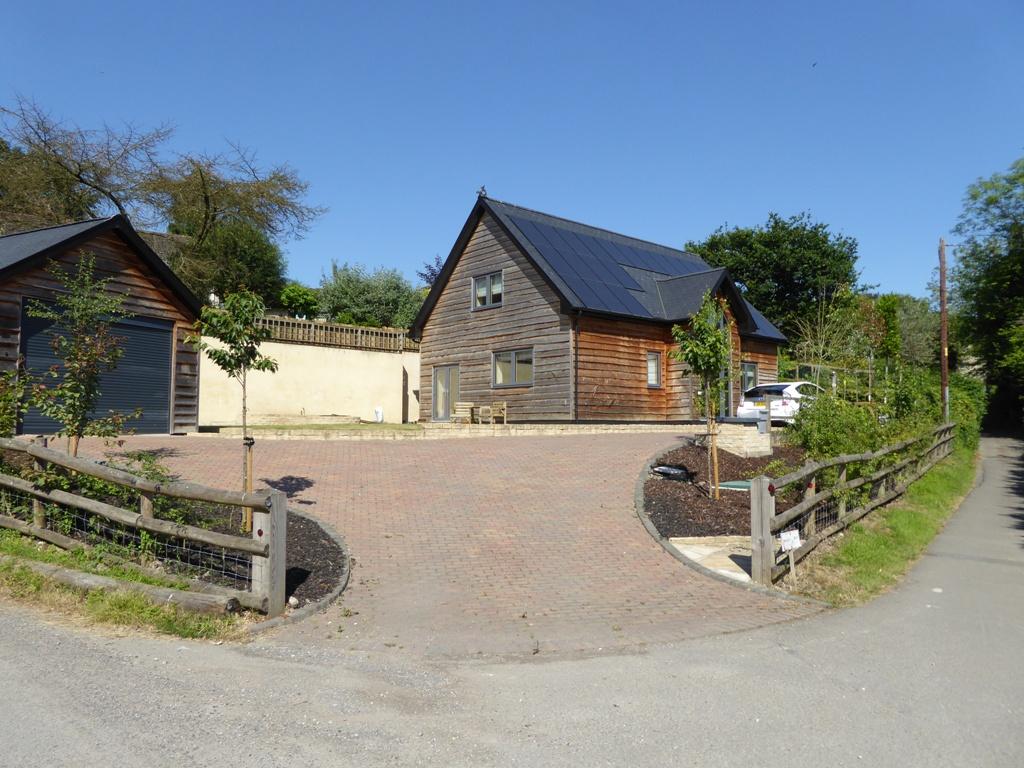
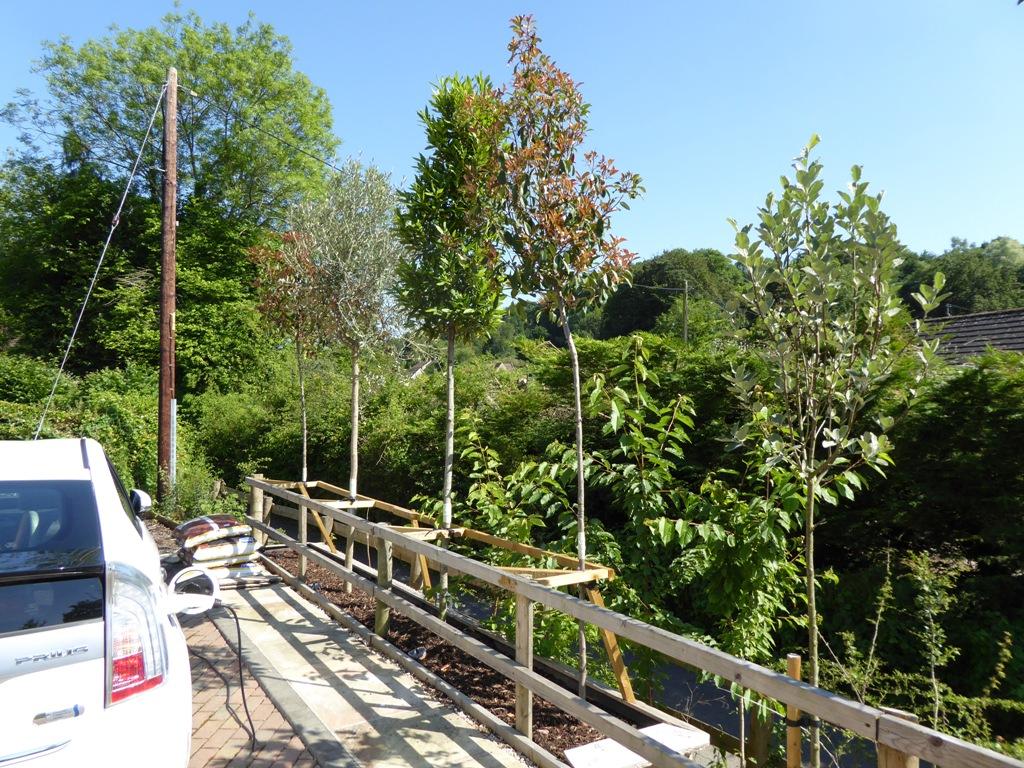
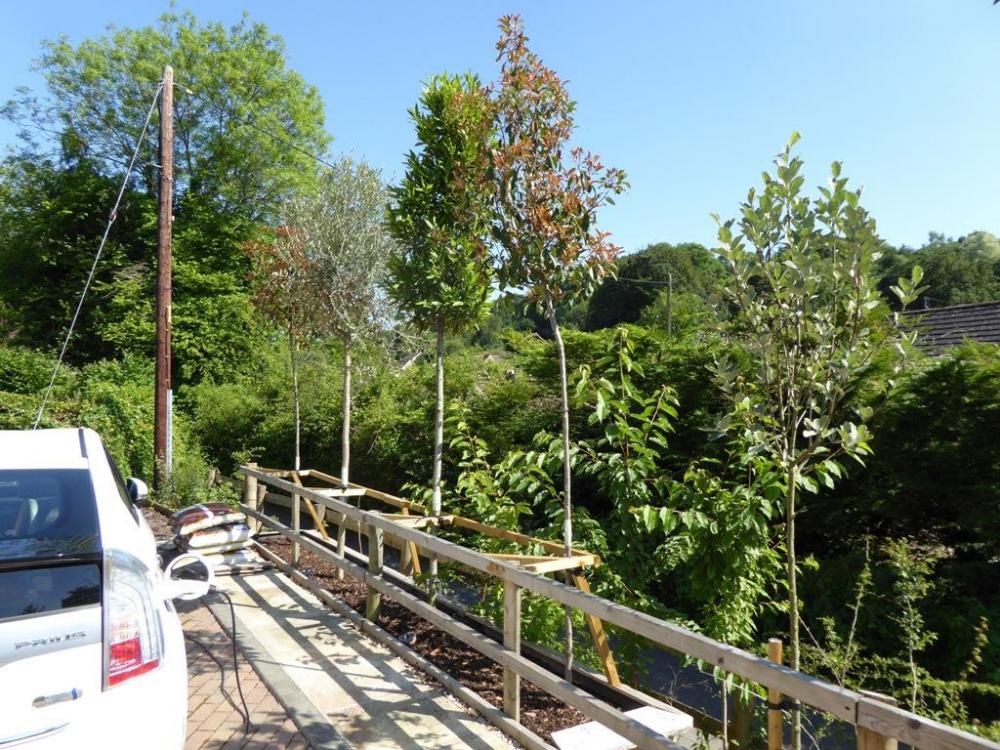
Thanks, we'll be greatly relieved to get rid of the old house, TBH, as we lost all interest in it a long time ago. For some reason it's been really hard to get motivated to tart the old house up for sale, when there are still little jobs to do on the new house to make it perfect - I'd far rather go over and potter around finishing off things in the garden of the new house than do things on the old house that I don't see as being very useful. Still, I have a few tonnes of gravel arriving at the old house today (with luck) to freshen up the drive, then it's just a matter of clearing out all the junk and tidying things up for the photos. This is what the new house looked like a couple of weeks ago - I'm putting up another 5ft 6in close board fence, with a side gate by the garage, on the dwarf wall on the garden side of the drive later next week, with luck: Here's another view showing the screening trees I planted back in March/April: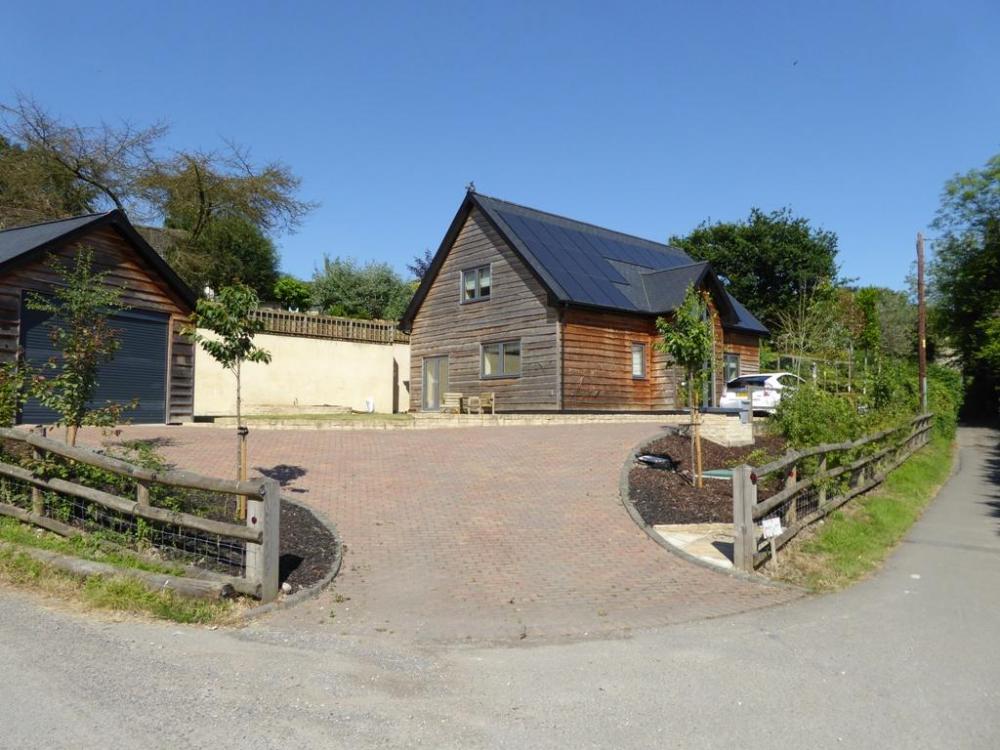
-
The tale of the sale of our old house
Jeremy Harris replied to Jeremy Harris's topic in General Self Build & DIY Discussion
Bugger - didn't read through the small print... -
Timber frame passive standard build
Jeremy Harris replied to Scotrock's topic in General Self Build & DIY Discussion
I just used expanded metal. Relatively cheap and provides a more robust rodent barrier. -
The tale of the sale of our old house
Jeremy Harris replied to Jeremy Harris's topic in General Self Build & DIY Discussion
Just read it here: https://www.stroma.com/certification/domestic-energy-assessment-dea -
The tale of the sale of our old house
Jeremy Harris replied to Jeremy Harris's topic in General Self Build & DIY Discussion
We're giving loads of furniture away to a local charity, as we've bought new stuff for the new house. Luckily the charity run a pick up service, so will collect the spare wardrobes, dining table and six chairs, sideboard, TV cabinet, and assorted other stuff, like coffee tables and bedside tables. I think our removal van will probably only be a transit, as there's only a bed, a wardrobe a bookcase and a couple of chairs that need moving, the rest is going. Yes, I had a look at them all, but Purple Bricks seem to have cornered the market locally and I couldn't find anyone that had used any of the other online sales places. If we get just £260k, then the commission from the cheapest local agent would have been £3,250, + disbursements (EPC etc) + VAT plus the cost of the conveyance, so well over double the price from Purple Bricks. -
Any refrigeration experts here (ASHP)?
Jeremy Harris replied to ProDave's topic in Other Heating Systems
There's nothing in the manual for ours that gives this either. I kept getting error messages and the unit shutting down until I worked out what the problem was. Luckily the integral pump in ours is capably of flowing over 25 litres per minute, so as soon as I realised that the UFH was the restriction the fix was easy. -
The tale of the sale of our old house
Jeremy Harris replied to Jeremy Harris's topic in General Self Build & DIY Discussion
Part of the delay is at our request - we wanted time to tidy up before the photos were taken! The visit this morning was just supposed to be a valuation, but on the basis of that I took the decision there and then to use them, but he wasn't equipped to take the photos etc and I wanted time for more clearing up, plus you have to instruct them via their app, you cant give an instruction directly to the valuer that turns up. Worth nothing that the way Purple Bricks work is to contract out everything, it seems. The company that installs the signs is just a sign installation company, the company that take the photos etc are a photo company, the EPC assessor is just a local company. I know that our local estate agents do all this stuff in house, including the EPC. As an aside, the cost of becoming an assessor has come down to £0 per per year, with just a small charge per lodgement, so it looks like anyone can apply to be an assessor now. -
I've heard good things about the Daiking hybrids, but they use gas or LPG. My understanding is that their gas consumption is pretty small, though, as they only use it to boost the hot water temperature by around 10 deg C or so.
-
Right of access to plot
Jeremy Harris replied to JackOrion's topic in Party Wall & Property Legal Issues
I would read that clause as being general, as it doesn't specify only vehicles belonging to the owner. just any vehicles needed to access the land -
Any refrigeration experts here (ASHP)?
Jeremy Harris replied to ProDave's topic in Other Heating Systems
Mine runs at around 25 litres per minute and cuts out at around 15 litres per minute, so sounds similar. It's one reason I couldn't run our UFH at first, as the restriction was too great, so I had to fit an adjustable bypass to get the flow rate up (this was before I connected the buffer tank with the valve normally open in heating mode). It does seem that ASHPs are a bit sensitive to flow rate, which is useful to know,. -
Right of access to plot
Jeremy Harris replied to JackOrion's topic in Party Wall & Property Legal Issues
As well as work vehicles is there also an issue with access to services? Will things like the foul drain, water supply, electricity supply and phone cable have to run under/over the neighbours land? If so they need to be covered too. -
Thought I'd start a thread as a sort of diary of how things go with selling out old house. We've been holding off selling it for several reasons, my wife still works close by, so it's a very short commute for her to work and back, My mother was ill and then died, which caused another delay and the perfectionist in me wanted to finish absolutely everything in the new house before we move, as I have a very strong suspicion that if I didn't things would get left undone for years. So, today we put the old house on the market, as we're basically sick and tired of it. I did a bit of tidying up, got the big hedges cut, cleared up the garden, cleaned all the outside, windows etc and tomorrow the drive is getting a freshen up with a new layer of gravel. The valuation was interesting. We had it valued 5 years ago at £260k, and generally prices around here have been pretty steady, perhaps rising slightly. We decided to use Purple Bricks, based on some first hand experience of friends and a couple of neighbours, and the fact that their prices are reasonable. The sale is a fixed price of £933, including VAT and including the RdSAP EPC that's needed. That's the basic package, that doesn't include large ads on Right Move etc, just standard listings. We've also opted to use their conveyancing, which is another £800 odd, and that means we don't pay anything until the house is sold. Interestingly, local agents around here charge between 1.25% and 1.5% commission. The valuation this morning (bearing in mind the house need completely redecorating, new carpets, curtains etc) was between £275k and £300k. As we just want rid of the place, I asked the chap for the best price to set to try and ensure we sold it quickly. He suggested that, as we weren't fussed about getting the maximum we could for the house, and because of the way house prices are listed and grouped on sites like Right Move and Zoopla, we should ask for offers over a set figure. He suggested offers in excess of £265k, I suggested we bring it down to £260k (he did think that was a bit odd!). So, it's on the market for offers in excess of £260k and we shall see what happens next. It'll take a week or two for the ad to make it's way on to the website, as there are photos to be taken, the EPC to be obtained (that has to be in the ad, apparently) etc. I shall update this as things progress to give an idea of how house sales are going down here.
-
Not hard to arrange at the planning stage, I found. I just made sure I had a couple of lengths of SWA buried so they ran to points either end of the drive to connect charge points to. So far I've only bothered to hook up the charge point nearest to where I usually park, but I really should get around to wiring up the other one, it's probably less than an hours work and I have the thing sat in a box waiting to be connected.
-
Bonded down Bamboo, how flat a floor?
Jeremy Harris replied to Tin Soldier's topic in Wood & Laminate Flooring
I bonded down bamboo to both a primed power floated concrete slab and an OSB floor. I found that just laying a good thickness of the Sikabond 95 adhesive on the floor, as if laying tiles, then laying the bamboo and just walking over it, resulted in a pretty flat floor, with no creaks. The adhesive will take out up to about 3mm of unevenness OK, but it is costly!