


Jeremy Harris
-
Posts
26430 -
Joined
-
Last visited
-
Days Won
360
Everything posted by Jeremy Harris
-
I had a batch of about 8 back boxes that had really tight threads. Not sure why, but they all needed re-threading. I found having boxes of different length screws to be very handy - all our back boxes are set so they only project into the plasterboard by a couple of mm, so most of the short screws that came with the faceplates were just too short. The downside is you end up with loads of screws left over - I must have around a hundred various length ones sitting in the spares box.
-

My Advice for Self-Builders
Jeremy Harris replied to Red2000's topic in General Self Build & DIY Discussion
Like others, we had problems finding an architect we could work with, so opted to do the design ourselves. The practical bit, sorting out number of rooms, functions, sizes etc was pretty easy, although required knowledge of the building regs to ensure compliance with Part M and Part B. The aesthetic bit was a great deal harder - I really struggled to stop the house just looking like a box, and as I have near-zero artistic ability I'm sure an architect could have added some value to the overall design. Having designed the house myself, I've realised just how much time and effort goes into it, so frankly I think architects are worth every penny. The big problem is that an architects fees will be a massive slice out of the budget, so affordability makes a lot of people question whether or not they should use one. A good compromise, and one we'd decided upon, until the chap decided to retire, might be to work with an architectural designer. Often they do a lot more domestic scale work, so have a lot of experience, and usually you can negotiate terms where they do as little, or as much, as you want. Certainly the chap I was talking to initially was someone I felt would have helped a great deal with the aspects I struggled with, and would have been happy to just do a modest amount of work, with no fixed schedule of fees. -
I have to say I prefer the "up/down" option if there's two storeys. We have landing lights that are upstairs and downstairs in one large open hall, and they are two way switched from the downstairs lighting circuit. That was really just the way it worked out, rather than a grand master plan - the ground floor was wired first and there are two lights in the ground floor hall and only one on the landing. You can get some really weird configurations though. Apart from the oddball lighting ring in the old house, one of the outlet ring finals had an odd split. The house was a bungalow, with two ring finals, and ended up with half the outlets in the living room on one ring and the other half on the other ring with the bedrooms. The really oddball one is that there were two double gang sockets about 3ft apart, one behind the TV, and one by the box where the satellite cables come in. One's on one ring, the other's on the other ring. I reckon it was done deliberately to catch out anyone tempted to just pull a fuse to do some work without testing that the circuit really was dead. Glad it never caught me out in the 18 years we lived there, I found it by accident when we had the satellite box plugged into one and the TV into another. I'd pulled the fuse to fix a problem with a kitchen outlet and the TV went off, but the satellite box stayed on... (Yes, I know I should have turned the supply off, but SWMBO was watching TV and it was a question of "which is the greatest risk?")
-
The standard screws are M3.5 x 0.6. You can buy the tap as a hand-held re-threading tool from pretty much electrical store. Often it is the screws that the thread fails on, as they are brass, which is softer than the steel tab in the back box. Always a good idea to run the re-threading tap through any screws that seem to be binding, as continuing to try and tighten them inevitable buggers up the screw.
-
That's pretty much exactly how our old "accidental ring" was created; when the front door was moved and the then owner decided they wanted a double gang switch for the hall light and front outside light, without realising that previously they outside lights had been on a different fuse and radial to the hall lights. I'm guessing that this was done at the same time that the bathroom was changed (it's right behind what is now the entrance hall) and the electric shower was installed. The fuse box only had 6 ways plus the cooker, so to install the shower the 5A outdoor lighting circuit was moved to the adjacent fuse and a 45A one put in its place for the shower. It's pretty clear this was done after the initial wiring, as the shower cable and its additional CPC were just draped across the ceiling joists, whereas all the other wiring is neatly clipped to planks nailed to the roof trusses. Funny how you can tell something about the personality of people who've done work. The original wiring is really neat, almost as if the chap used a rule to space every cable clip. and inside the fuse box all the wires are in order and run in straight lines, with neat bends down to the fuses. Makes testing a breeze, as it's dead easy to see which wires are which. On the other hand, whoever bodged the lights and wired in the shower was clearly someone who didn't care about neatness at all, with cable just draped across the ceiling joists and the leaving off of the neutral in the switch.
-
That circuit is an oddball. It is a ring final, for reasons known only to whoever originally wired it up. I strongly suspect that it's an "accidental ring" in that the kitchen, living/dining room and hall lights were wired as a normal radial, and the outside and garage lights were wired as a separate radial, with a third radial for the bedrooms, WC and bathroom. The pencilled circuit descriptions in the lid of the fuse box show that the outside and garage lights were originally on a fuse that was changed from a 5A to a 45A when an electric shower was added later. At that point, someone also fitted a double gang two way switch by the front door, to operate the hall and outside light at the front. My guess is that the feed for the outside lights was shifted to the least loaded lighting fuse and that circuit was turned into a ring final. It ended up like this because, unlike all the other lights in the house, the hall lights are wired loop in switch, to the switch by the front door. What seems to have happened is that the lines from both former radials were connected together at that switch, but the neutral from the outside light circuit was left dangling. This meant that the cable from the fuse box to the hall lights was also providing the neutral return for the outside light, whereas both cables were providing the line to it. My guess is that it was just a cock up. When I tested it, I saw two lines going to one 5A fuse and when I removed them and checked them end to end found they were a ring. I then located the two neutrals from those cables and the two CPCs, and found that the CPCs were a ring but the neutral was open. There's evidence that the combined hall and front outside light switch has been changed, probably when the front porch was removed and the front door proper moved to where the porch door had been. A glazed panel was also added, and my guess is that this is where the front outside light switch used to be, and there may well have been another light in the porch as well. The wall above the new double gang switch in the hall has a ridge running down it, which is where I think the new cables were chased in. I've no idea how long this has been like this, but would guess that it was done very shortly after the house was built. There's evidence of a lot of changes that were made around that time, the drive was turned around 90 deg to come out on another road, the garage was built (and looks identical to the house in terms of brickwork - same chap did both, I'm sure) and the bathroom was moved and a separate WC added. The other lighting circuit, that feeds the bedrooms, bathroom, loft light and WC is a fairly conventional radial, on another 5A fuse, wired loop in ceiling. The only slightly odd thing about it is that the light nearest the fuse box is actually the one at the end of the radial. That circuit runs around in a big U shape, so the two lights furthest from the fuse box are actually the two in the middle of the wiring run. Our new build is conventional, with two lighting radials, one upstairs, one downstairs.
-
STROMA certification.
Jeremy Harris replied to TheMitchells's topic in Regulations, Training & Qualifications
Handy things paper chits, though. I walked into Screwfix, showed them my ancient C&G teaching papers and they promptly gave me an Electricfix card, so I now get free hot drinks and the occasional doughnut when I go in there, and don't need to queue, as I can use the "trade" counter. Mind you, the discount isn't that great, but then I've tended to use Screwfix for convenience. Their click and collect system seems to always just work, which is more than can be said for some of the others around here (Wickes, for example, are a bloody shambles - half the time they don't have items in stock that they say they have). -
STROMA certification.
Jeremy Harris replied to TheMitchells's topic in Regulations, Training & Qualifications
Yes, you need to two qualifications plus membership of one of the accreditation bodies. Not sure if there's much to choose between any of them, although NAPIT were helpful when I rang them up a short time ago. The market around here seems to be dominated by ELECSA and NICEIC, not sure why. C&G lost a load of records, around about the time of the switch from IEE to IET, not sure if it was coincidence or not. I've still got all my paper certificates, but know for sure there are no electronic records from back then (late 1970's). -
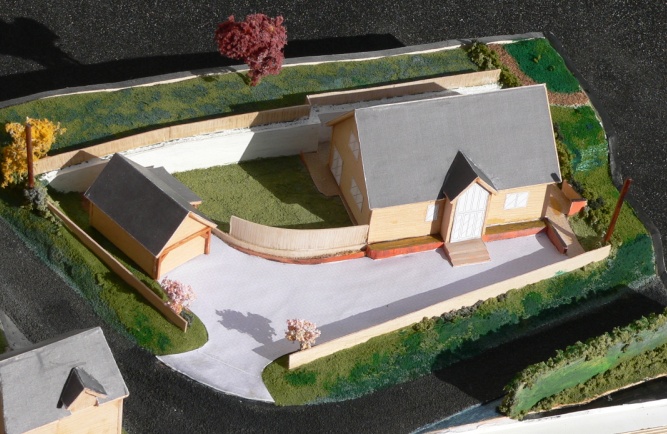
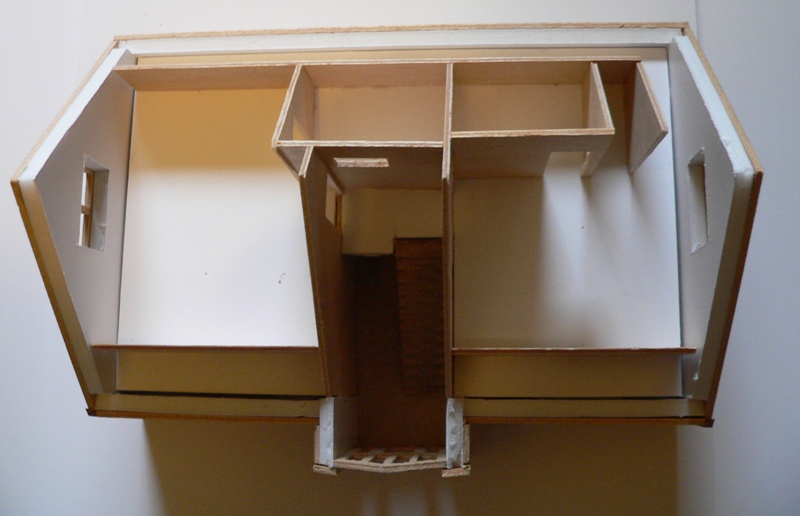
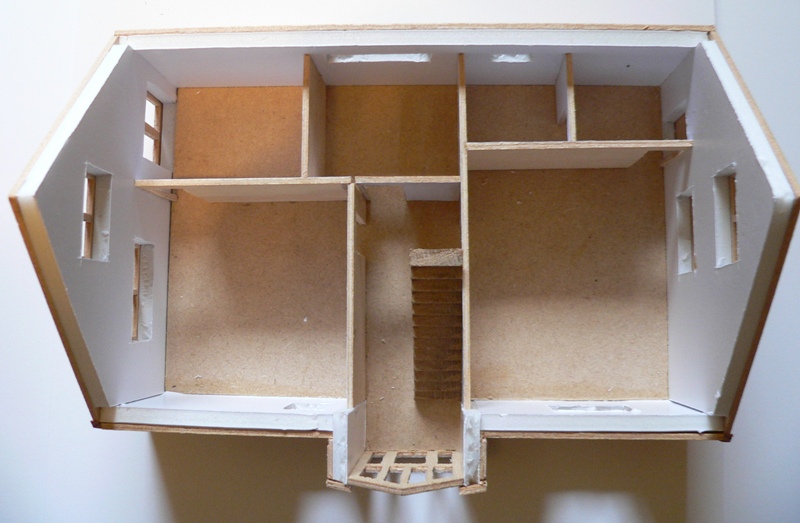
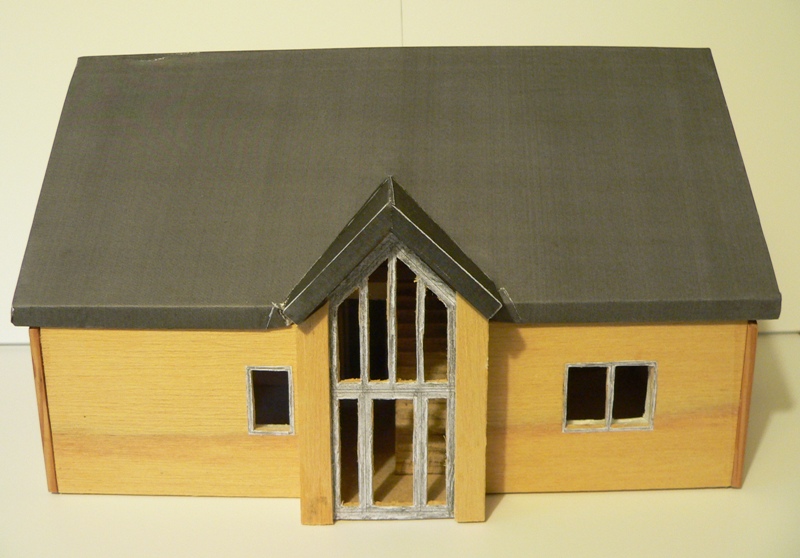
I made two models. This one was the one I showed the neighbours, planners, etc, and the roof doesn't lift off: I also made a bigger model (well, about 5 or 6 of them, for the several iterations of the house design) which was mainly to allow my wife to get a feel for the size of the rooms, as she was struggling to understand plans. I made the bigger model to a scale of 1:50, so I could use the same scale model railway plastic people inside it to give a sense of scale. Not sure what she thought of the bikini-clad lady I placed in the shower area to show that it was big enough, though:

-
STROMA certification.
Jeremy Harris replied to TheMitchells's topic in Regulations, Training & Qualifications
AFAIK, you need 2391 to do inspection and test, and 2393 for installations in dwellings. If you're confident enough you could do the 1 day Part P (2393) course (you don't need Part P in order to just do inspection and test, that's only needed for installation work) -
STROMA certification.
Jeremy Harris replied to TheMitchells's topic in Regulations, Training & Qualifications
I'm pretty sure you're right, but I think that, unlike the old days, you can now opt to just do the C&G 2391exam (it's back as of July last year). Back when I used to teach electrical engineering science to apprentice electricians, doing the full course (usually day release) was mandatory, IIRC. I believe that things have changed so that you can now just sit the C&G 2391 exam to get that part of the ticket (inspection and test). -
STROMA certification.
Jeremy Harris replied to TheMitchells's topic in Regulations, Training & Qualifications
@Nickfromwales, you can borrow my (fairly old) multifunction tester if you want to practice and get up to speed. It's nowhere near as easy to use as some of the newer machines from Fluke or Megger, but it will do every test needed. I bought it second hand when I thought I was going to be able to wire our build and get BC to sign it off, but only got to use it enough to find out how it worked (all testing back when I used to do electrical work years ago was with an Avo 8 and a Megger, none of this connect a magic box up, press a button and wait until it beeps and gives you all the info!). I can't see that I'll need it for a while now. Last time I used it was to do an EICR on our old house, and next time I'll use it will be to do a periodic check on the new house, I suspect. I could bring it with me to Bristol, if you want to borrow it. -
Like @jack, we didn't ask the neighbours for any feedback on our application, as we felt that would invite trouble. Our plot had a bad planning history, with a couple of refusals in the past and we bought in knowing that we were going to have to submit a new application, as we didn't want the bungalow that had somehow been approved (with 14 separate points of objection from the Parish Council and objections from the majority of the neighbours on the consultation list). Given the history of objections, I chose to explain, to all the neighbours on the previous consultation list, what we were planning to build, and in that explanation I addressed (without naming anyone) every point of objection that had been made. I made a scale model of what we were planning to build and included photos of this with a newsletter that I sent to the neighbours. As it happens, we submitted our plans shortly before Christmas, so I included a Christmas card with the newsletter. I also made the point of telling everyone that we were building our "home for life" and had no intentions of ever selling it, just to allay any suspicions that we were building to sell and make a profit. I did get a few phone calls and emails from neighbours, but all were either positive, or asking questions about our application that weren't planning issues (and without exception all the questions arose from the people concerned not having read the application properly). I answered all these politely, and I think this was one reason why we had no objections at all from any of the neighbours to our application. The scale model did make a big difference, I'm sure, as it was clear from the reaction of those that saw it that they hadn't understood from the plans that the height of the ground level where the house, garage and garden are was to be lowered by around 2.5m. I think a lot of people have some difficulty in understanding how something may look when only looking at plans. I know the scale model made a massive difference at the Parish Council planning meeting, as they went from having submitted 14 points of objection to the previous application to supporting our application, and that, together with no objections from neighbours meant we gained approval pretty easily, albeit with a fair bit of hassle just because we were inside an AONB, opposite a GII listed building, etc.
-
New build - heat and energy considerations
Jeremy Harris replied to Tyke2's topic in New House & Self Build Design
Ear plugs (I have the same problem - and no, it's not me, either). Best ones I've found are the Stanley orange foam ones, a pair is OK for about a week (yes, I know they are supposed to be "one use only", but I've never had a problem with them over the past five years or so). -
New build - heat and energy considerations
Jeremy Harris replied to Tyke2's topic in New House & Self Build Design
Very true. People who have visited our build have questioned the low level, directional, MVHR terminal in the wall by one side of our bed. It was specifically located there to gently blow cooler air on her side. We also have a 6ft wide new bed. Both are a way to mitigate the migration of the duvet in the middle of the night, as it gets thrown off from her side. My hope is that the cool air supply plus the larger bed will mean less disturbance to the duvet on my side... -
They all should be a heck of a lot cheaper than they are, as there's nothing close to rocket science in designing and building one. OK. this is stuff that I'm happy playing around with, but mine has been working faultlessly for well over three years, for around 1/10th the price of the commercial units that are available, and I can repair it myself quickly and easily if it ever does fail (I have a complete spare set of components for mine, so I can get it back running again within an hour or so if it ever fails).
-
It's the title of one of our blog posts: http://www.mayfly.eu/2014/04/part-twenty-eight-90-finished-so-only-around-90-left-to-do/
-
I think the idea of having more panels than would be allowed for a "no DNO consent" installation, using the 16 A per phase limit in G83/2 is a good one, but what might be more useful would be if you had an inverter rated to deliver a higher current per phase, which would normally be one set to operate under G59/3, but an export current limiting capability that complied with the G83/2 16 A limit. The advantage would be that you could self-consume more power, so if you were generating, say, 6 kW, then you could use 6 kW if you wished, with the export limiting function only kicking in once the house load drops. Might be useful if using AC coupled battery storage, as you could have a potentially higher output from the inverter that would allow for battery charging and house consumption, whilst remaining OK as far as the DNO are concerned. The snag would be the added complexity of measuring export and using that to control the inverter limiting. I'm not sure if there is anything around that will do that at the moment. The alternative for battery storage would be to opt for a DC coupled system, where the panels charge the batteries. Not as straightforward to set up, in that there aren't many off-the-shelf systems that allow this, but in theory it could be more efficient (although I think in practice the battery charge management stuff may well not be that much more efficient than a decent inverter).
-
Last time I looked at the specs for heating inhibitors, none used organics, most used sodium nitrite or similar. I do know that there were some issues with silicate inhibitors, but that applies to some automotive and aviation engine cooling systems as well (one aircraft I owned years ago had a system that wasn't compatible with either silicate or organic acid based inhibitors, only nitrite and phosphate based ones). Not 100% sure why you can't use one of the newer inhibitor compounds in a heating system, as I can't see any obvious reason why they shouldn't be compatible with all the materials within a heating system. Might just be that the manufacturers of boilers etc don't want the added cost of testing for compatibility, as the life of the inhibitor isn't a selling point for a boiler, whereas is is for cars, where servicing costs play a big part in fleet buying decision. Worth bearing in mind that ground source heat pumps usually have to use more expensive propylene glycol based antifreeze/inhibitor, rather than the cheaper ethylene glycol that's OK for an ASHP, simply because of the toxicity of ethylene glycol if it leaked into the soil from the ground loop, which is the main reason why it costs so much to fill and replace it every 5 years or so. Technically, I can't quite see why just the inhibitor element of the antifreeze couldn't be replaced, as that's the limiting factor in terms of the life of the stuff usually, and what sets the nominal 5 years that most manufacturers seem to recommend. You can get testers for checking whether the inhibitor within a heating system is still OK, but the sealed jam jar and clean nail test would be as good anything else for showing whether the stuff was still OK, and if it passed that test I'd have no problem with carrying on using it. I used to do this test every years on our old heating system, when I checked the magnaclean filter. Admittedly I'd usually top the magnaclean up with a drop of fresh inhibitor every year, but the stuff in our old heating system has been in there about 10 years now and still seem fine.
-
Air quality with mvhr
Jeremy Harris replied to lizzie's topic in Mechanical Ventilation with Heat Recovery (MVHR)
Hard to engineer an external extract duct valve that both works effectively and isn't a thermal bridge when closed, I think. The valve really needs to not only seal well when closed, but also be as well insulated as the skin of the house it's located in. It's a bit like the passive house cat flap, or letterbox, conundrum. You also have to add in the unbalancing effect on the MVHR, as when the extract is on the main source for air to get into the house will be via the MVHR fresh air intake, and with the much higher intake flow versus the exhaust flow through the MVHR heat exchanger my guess is that the MVHR won't do much to warm the incoming fresh air. Using such a system in winter will probably create cold drafts, as well as some noise from the MVHR fresh air terminals. In summer, a window could be opened to compensate for the high extraction flow rate, perhaps. There seem to be a few things to look at first, though, I think. First of all, are the PM2.5s from cooking harmful? We know that PM2.5s from things like wood and coal smoke, vehicle engines, etc are harmful, but we also know that PM2.5s from natural sources may not be harmful at all (the open countryside air is full of particulates on a breezy day - everything from spores and pollen to fine dust from soil). I'd want to see some evidence of harm from cooking related particulates before getting concerned, and I also suspect that there are a wide range of them, from very fine water and oil droplets that are probably pretty harmless, to particulates created from combustion during cooking that may not be so harmless. Perhaps our diet is untypical, but with an induction hob, very little frying (maybe once a month), food that's mainly steamed, boiled or baked, I suspect the highest risk particulates may come from the occasional bit of burnt toast. Finally, there are a range of different filters available for recirculating extractor hoods, and it may well be possible to fit an F7 filter as the final one in order to filter the exhausted air that's returning to the room down to about 1µ or so. -
I think the combined inhibitor/antifreeze stuff is glycol based. I strongly suspect that it's just a mix of ethylene glycol plus a small amount (0.1% to 1%) of sodium nitrite as a corrosion inhibitor. It's no cheaper to just make a DIY mix up though, at least not for just 5 litres of the stuff, as ethylene glycol is around £20 for 5 litres on it's own.
-
I was grateful that I was accidentally supplied with a buffer tank with an indirect coil in it by mistake, as that massively reduced the amount of inhibitor/antifreeze needed. Like @ProDave, I used a 5 litre can of the stuff from Screwfix that's about £20, IIRC. That was plenty to give 25% dilution for our UFH loops, ASHP volume and indirect buffer coil volume. Would have been expensive if I'd used a direct buffer, though, as the total volume of our system would have been up around 90 litres then, I think, so for 25% dilution I'd have needed to buy five (may have just about got away with four) 5 litre cans of the stuff, so around £100 rather than about £20.
-
Some continuous rubber tracks just have the driving teeth moulded in when they are made, so the steel is bonded to the rubber a bit like the way an engine mount is made. Those driving teeth have been loose in the track for a while, I suspect, and have now made a bid for freedom, almost certainly buggering up the track itself. Having said that, I once repaired a broken engine mount by using Sikaflex to bond the steel bit back to the rubber bit. That worked OK for a year or so, and was still OK when I sold the car. Not sure if Sikaflex would bond a digger track, though, there's probably a fair bit of damage where the loose teeth have torn out of the rubber.
-
New build - heat and energy considerations
Jeremy Harris replied to Tyke2's topic in New House & Self Build Design
Slightly off topic, but we did a fair bit to improve the thermal efficiency of our old house, which had conventional gas central heating with radiators under practically every window. After adding another 150mm of loft insulation, going around sealing up literally hundreds of tiny air leaks (mainly at the wall to ceiling junction, where there were barely visible gaps), installing 60mm of bonded EPS bead cavity wall insulation and replacing all the old timber windows and doors for reasonably good 28mm DG uPVC ones, I found that I could turn the temperature of our boiler down to about 45 deg C and it would still heat the house in cold weather. During one very cold spell I had to turn it up to 50 deg C, but I'm pretty sure I've only done that once. In effect, we've ended up with radiators that are too big for the heating requirement when using a normal boiler heating flow temperature, by a combination of having reduced the heat losses and the fact that I think the original system was a bit over-sized, anyway. We seemed to have an awful lot of big radiators for a relatively small house. I'm pretty sure we could have fitted an ASHP rather than a gas boiler and the heating would have still worked well, but with mains gas it's a bit of a no-brainer to fit a condensing gas combi, just to get a decent DHW supply, something that ASHPs will do, but with a hot water tank and reduced efficiency when heating DHW. -
New build - heat and energy considerations
Jeremy Harris replied to Tyke2's topic in New House & Self Build Design
Nothing to service in my ASHP. Only recommendation is that it be inspected annually and the evaporator coil and fan be cleaned, if needed. Easy DIY job with no safety issues (other than turning the power off before you clean it).

