


Jeremy Harris
-
Posts
26430 -
Joined
-
Last visited
-
Days Won
360
Everything posted by Jeremy Harris
-

Warm Air Hand Dryers - Anyone Used?
Jeremy Harris replied to Ferdinand's topic in Kitchen & Household Appliances
We had Dyson Airblade hand dryers at work. Very effective, better than any other air hand dryer I've ever used, but incredibly noisy. This was some time ago, though, so I don't know if Dyson has tackled the noise problem or not. -
Popping the inspection cover will also give you an idea of the invert, which in turn will give a good feel for how deep the pipe is. Could be a fair way down.
-
Idiots guide to mvhr.
Jeremy Harris replied to Russell griffiths's topic in Mechanical Ventilation with Heat Recovery (MVHR)
+1 to both the above ^^^ MVHR gives you very good air quality, and reduces the heating requirement, on days when you want to keep the doors and windows closed, because of the weather outside. If you want to open the doors and windows when the weather's fine then just do so. Our MVHR just provides background ventilation to keep the air in the house fresh all the time, and will boost up to a higher rate when it senses that the extract air is more humid, usually when we running a shower or when cooking. If we wish, we can just press the boost button, each press puts it in boost mode for an hour, so three quick presses gives three hours of boost. The house never has any condensation anywhere, clothes dry very quickly if just hung of the airer in the utility room (no need to boost to get that to happen), the house needs a lot less cleaning, as all the fresh air is filtered, and we don't have any spiders or flies in the house. -
Yes, they are 3/4" connections. The flexible pipes that came with the softener were very small bore, and I replaced them with full bore flexible pipes. Not sure how much difference this made, but it just seemed daft to connect it up with what looked to be washing machine hoses.
-
To an extent, yes. The brine overflow is about 19mm/3/4" OD, maybe 12mm/1/2" bore, IIRC, the back wash drain is about 10mm OD, so probably about 7mm bore.
-
The reason they don't share the same pipe is that the brine over flow is very low pressure, just the head of brine in the outer tank if the fill valve starts letting by (in essence it's just like a ball cock). The drain from the back wash is at close to mains pressure. Because of the need for no obstruction to flow from the brine overflow, it can't easily be fitted with a non-return valve, so can't be combined with the high pressure back wash drain. Ideally, the brine overflow also needs to be visible, so either fed outside or have a tundish if connected to a drain, but it's easy to see if the level of brine is too high, as you can see it when you check, or replace the salt blocks.
-
It's the overflow pipe from the brine tank. It won't normally have anything flowing through it, and can be plumbed to a drain, rather than out through the wall (ours is plumbed to a drain, well above the connection from the normal drain pipe to the same drain).
-
They come with a phosphate dosing filter to reduce the build up of limescale, or at least ours did.
-
At our old house we seemed to be lucky to get a kettle to last more than three or four years. Didn't seem to matter whether we bought an expensive one or a cheap one, they seemed fail after about the same length of time. Main problem is the very hard water, I think, it tends to kill kettles fairly quickly. When we lived in Cornwall, and in Scotland, kettles seemed to last pretty much forever.
-
I agree, but our Itho Daalderop 3 in 1 boiling water tap wasn't massively expensive. We opted for the brushed stainless one and it cost a bit under £700 IIRC. A similar quality 2 way mixer kitchen tap would probably have cost a couple of hundred or so, so we probably paid around £400 more for the convenience of having boiling water on hand. Definitely a "nice to have" rather than an essential, but not that much more cost overall when compared with a decent kitchen tap and the cost of two or three kettles over a ten year period. In the case of our unit, the water is held at around 105°C to 108°C in the reservoir and when dispensed is actively boiling as it comes out of the tap, so very close to 100°C, and will sometimes continue boiling in the cup if that's already warm. I may measure it later, just to be sure, but I'd be surprised if it drops to as low as 90°C until some time after it's been sat in the cup. It looks very much as if the water coming out of the nozzle is still slightly superheated to me, as there is definitely a risk of scalding from the spitting as the pressure drops as it comes out and the water flash boils as a consequence. You soon learn that there is a definite technique to using it, if you don't want to get splashed with boiling water.
-
No it's about 20 W all the time that it's switched on. We have it on a time switch, so it comes on early in the morning and turns off in the evening. Off the top of my head I think it's set to be on for about 15 hours a day, so roughly 300 Wh/day for the "keep hot" energy requirement, plus a bit used to heat from cold, or reheat after a cup, or saucepan, of hot water is drawn off. When re-heating it uses around 1.5 kW, and takes a minute or two to get back up to temperature after a cup of tea has been made. For much of the day the 20 W will come from the PV system, so I'd guess we're only paying for maybe 150 Wh/day for the "keep hot", plus maybe another 300 Wh or so per day for the re-heat energy. All told it might cost around 7p or 8p per day to run. It probably saves a fair bit of energy overall, as we often use the boiling water to cook vegetables, saving energy that would otherwise come from the hob. It's also economical in terms of the amount of boiling water used for a cup of tea, as it's only ever re-heating the cupful that's been drawn, rather than a cupful plus a bit extra in a kettle.
-
Ours has a pressurised reservoir that sits underneath in the plinth area. Holds a few litres of water at a bit above 100°C, at mains pressure. Ours is now over 5 years old and has been used a lot in that time. Seems cheaper to run than a kettle, partly because the power it draws during the day is often a lot lower than the power being generated by our PV system. IIRC it uses about 20 W when in "keep hot" mode.
-
The laws of physics dictate the thickness needed for a given U value, and the λ of foam glass is given on their website, so it's very easy to work out. The high compressive strength stuff has a λ of 0.05 W/m.K, the lower compressive strength stuff has a λ of 0.036 W/m.K Ignoring perimeter losses and the λ of the concrete slab itself, to get a U value of, say, 0.15 W/m².K the thickness needed would be about 235mm. To get the U value down to a lower value, say 0.1 W/m².K would need a thickness of about 350mm (the actual U value will depend on the area/perimeter ratio, edge losses, slab thickness etc, so this is just a rough and ready estimate). A layer of compacted glass shards 0.04m thick, if we assume the λ is around 0.04 W/m.K (which is probably optimistic), will give a U value of roughly 0.85 W/m².K, which is way over the limiting fabric values in building regs, which give a U value of 0.25 W/m².K
-
The thickness only depends on the insulation level you're looking for, really. Our slab has 300mm of EPS underneath it to get the U value down to around 0.1 W/m².K, and if we'd used foam glass we'd have needed a similar thickness, but it would have been a lot more expensive.
-
Unless you have a special need to use the higher compressive strength version of foam glass (for example as a thermal break if using strip foundations) then I can't see any real benefit. It's far more expensive than EPS and has a slightly poorer λ in it's least dense form. The one advantage it has is that it's available in a high enough compressive strength form to be used to take quite high loads, but the snag is that the high compressive strength version has a higher λ too, around 0.05 W/m.K.
-
Is vermiculite poured in neat?
Jeremy Harris replied to epsilonGreedy's topic in Stoves, Fires & Fireplaces
This is what we had in both houses, although I sealed it off in the last house. Both houses were originally fitted with baxi back burners, with a room-sealed air intake below floor level, via a duct leading to a big airbrick outside. -
Is vermiculite poured in neat?
Jeremy Harris replied to epsilonGreedy's topic in Stoves, Fires & Fireplaces
Be daft not to. Both the house we had in Scotland, that was built around 1990, and our last house, built around 1982, had an external air feed to the fireplace as standard, just to reduce heat loss. Should be standard, I'd have thought, on any modern installation. -
Is vermiculite poured in neat?
Jeremy Harris replied to epsilonGreedy's topic in Stoves, Fires & Fireplaces
Leca can be used as a loose pour insulation medium, that is pretty heat resistant. It's fired clay beads: https://www.leca.co.uk/main-navigation/domestic/chimney-flue-fireplace-backfill/ -
I have to say they don't inspire me with much confidence, either. Always get the feeling that they aren't really making a tight connection (as well as the damned things being fiddly to fit). We used to use them for bonding shielded aircraft wiring, though, with an adhesive heat shrink sleeve over the top, and I've seen them used to join underwater armoured cables the same way, so they must be OK. You can get heat shrink cable jointing kits that use them, too, like this: https://www.swaonline.co.uk/cable-jointing/heatshrink-joint-kit/heatshrink-cable-joint-kit
-
The way I'd do it, if I really had no alternative, would be to make an adhesive heat shrink covered staggered splice, using constant force springs to connect to the cable armour and crimped, heat shrink butt joint splices for the wires. Fiddly to do in situ, and I'd still avoid doing it unless there was no real alternative. Every time I use constant force springs the damn things make me curse, but they are classed as a maintenance free jointing method for SWA armour, when fitted correctly and encapsulated.
-
It's pretty difficult to make a maintenance free joint between SWA and T&E. It can be done, but if you can possibly avoid doing it life would be a great deal easier. What's the reason for not running the SWA inside the house? The easiest solution is usually to run the SWA to where it needs to connect, then, if need be, terminate it in a small box, fitted with the appropriate glands, and run a short length of T&E to the CU or wherever.
-
Filling holes neatly in k rend
Jeremy Harris replied to Pocster's topic in General Construction Issues
The cable entry hole needs sorting, with the cable re-routed so that it cannot lead water into the hole. There needs to be a drip loop in the cables, so that any water that runs down the outside of them drips off away from the hole. The cable entries I prefer for external stuff like this are these sort of bottom entry plates: https://www.screwfix.com/p/exterior-covers-pack-of-5/58284 You may be able to get these in white if you shop around, or you may be able to paint a brown one (not tried this, all the ones I've used have been on brick or timber). You can seal around the cables in the hole with sealant, hidden by the cable entry plate. The grommet type cable entries are not great on external walls, IMHO, as they don't allow water to drip away easily. -
Securing PV panels to shipping container
Jeremy Harris replied to NWGEAR's topic in General Self Build & DIY Discussion
Yes, like these (they are filled with ballast to hold them in place):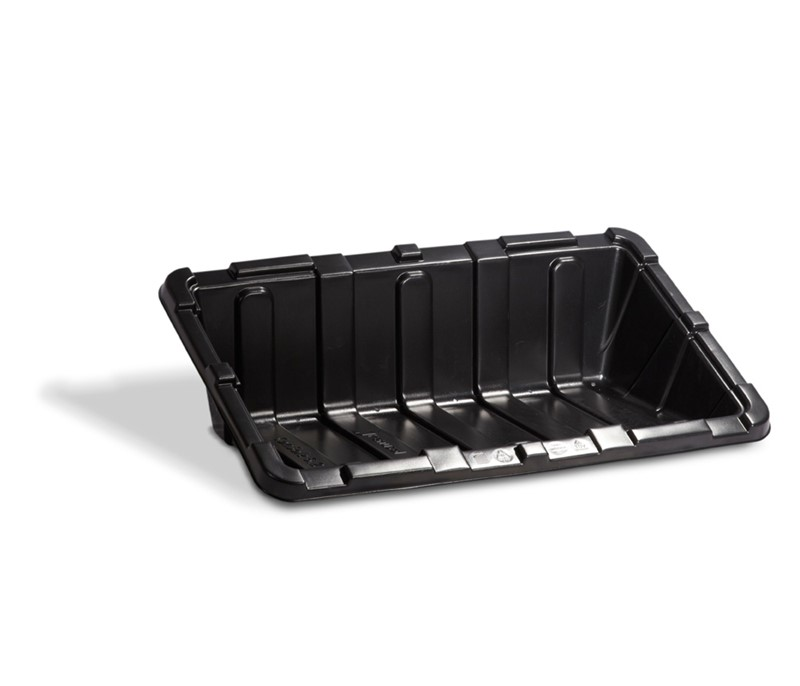
-
Securing PV panels to shipping container
Jeremy Harris replied to NWGEAR's topic in General Self Build & DIY Discussion
It is indeed. I compared Tigerseal to Sikaflex side by side on my old boat, no difference at all between them as far as I could see (other than Tigerseal being a lot cheaper at the time). Both are PU sealants/adhesives with, as far as I could tell, a near-identical formulation. -
Vaillant high(er) temperature ASHP?
Jeremy Harris replied to Nick1c's topic in Air Source Heat Pumps (ASHP)
Pretty hard to positively divert PV excess generation to an ASHP in practice, as both the PV output and the ASHP demand vary a lot, and the ASHP tends to go up and down a lot as it modulates. I'm not aware of any ASHP that will accept a variable power input of the type delivered by the majority of PV diverter units. Controlling resistance heating is a great deal easier, as it generally doesn't care too much about the way it's being fed with power. In practice I've found that just using a pretty simple "energy bucket" type excess PV generation diverter provides most of our hot water throughout the year. The cost of our hot water (the part we pay for) is about £30 per person per year, so there's not a lot of incentive to invest in something more complex in order to reduce that bill further.

