Jeremy Harris
-
Posts
26430 -
Joined
-
Last visited
-
Days Won
360
Everything posted by Jeremy Harris
-

How thick is a 100mm block? Not a trick question.
Jeremy Harris replied to epsilonGreedy's topic in Brick & Block
Yes, it's normal. Many of the dimensions used in building are not exact, some because we've metricated imperial measurements, some because traditionally dimensions were for pre-finished materials, and some because dimensions are just rounded up or down to make them easier to refer to. -
Spreader plates are much more heat conductive than biscuit mix, but they have little heat capacity, so the floor will tend to heat up and cool down much more quickly. If you want a more gentle heat, that tends to be a bit more even, then a biscuit mix will probably be better. If you want UFH that heats up quickly, then spreader plates might be better.
-
FWIW my garage will never house a car. It's an insulated workshop, that happens to have a garage door and is called a garage on the plans...
-
Our detached garage was built as a part of the house and zero rated for VAT. As I understand it that rule is the same everywhere in the UK.
-
The snag is that PV doesn't generate much when the outside temperature is low and heating is needed. In general, solar gain will heat the house up during bright winter days, so the time when heating would be needed would be cold and overcast days or cold nights, both times when PV wouldn't be delivering any useful power.
-
As long as it's properly sealed up, no, should be no worse. If rodents can get in then that suggests poor airtightness, so any construction method that gives good airtightness should keep out rodents. In the main, rodents only try to get into places that are warmer than outside in cold weather, so they are unlikely to cause a problem in any ventilated space under something like external cladding. Anyway, insect barriers have to be installed top and bottom of external ventilated cavities behind cladding, and if these are made from metal mesh or similar they would also act as a rodent barrier.
-
Heat storage in the slab is essential, though, it's both more cost-effective and also works to regulate the house temperature very well indeed. Very gently warming the slab (we're talking about 1°C or 2°C above room temperature at the most) can be achieved with a Willis heater or ASHP running on E7, so reducing the cost. If the floor wasn't a slab, but had some form of direct electric heating, then the electricity usage would shift to the daytime as well as the night, so cost more to run. In addition, the control system would need to be pretty intelligent, in order to cope with the more rapid response to external conditions that would result from losing heat capacity in the internal structure. Doing away with wet UFH would also remove the ability to cool the slab in warm weather, something that's extremely useful we've found.
-
Strange Cemex claim about their flow screed.
Jeremy Harris replied to epsilonGreedy's topic in Underfloor Heating
EPS/XPS are similar to PIR in terms of compressive strength. EPS is typically between 100 kPa to 300 kPa (i.e. EPS 100 = 100 kPa, EPS200 = 200 kPa etc). -
All electric heaters, bar none, are 100% efficient. The heat output from any electric resistance heater is exactly the same as the electrical power input, so 1 kW in = 1 kW out. Nexgen are just hype merchants who skate around the advertising rules using carefully chosen words to suggest that their heaters "might" be more efficient than others, as a way of fooling those who just have no grasp of the basic laws of physics. The hard truth is that a 1 kW electric radiant heater from the 1950's will be exactly the same, in terms of efficiency, as a 1 kW super-duper graphite (or whatever other resistance material someone wants to promote as sales hype) electric radiant heater. A friend of mine who lives in Penryn had a house, built in the 1970's, that had built in electric radiant ceiling heating. That was 100% efficient, but cost an arm and a leg to run, as the house wasn't insulated and was pretty draughty. Back then I think these electric heating solutions were initially dreamt up from the time a decade earlier when we all were led to believe that future electricity would be so cheap that it wouldn't be worth metering it.
-
Try this, it's simple, but OK for just working out a basic build up U value. It doesn't make allowance for thermal bridging, and assumes that thermal bridges will be designed out (as they should be, really). For interstitial condensation risk you need to use something like WUFI, but with an internal VCL the risk should be low. Simple U value calculator.xls
-
Extension/loft builder to handle new build?
Jeremy Harris replied to R Fleming's topic in Introduce Yourself
Welcome. My personal view is that I'd be extremely cautious about using anyone that uses one of the commission-based trade comparison sites, like Checkatrade, or the others. My own experience has been that the people who advertise services on those sites are those that cannot get work any other way. 99% of the good people will have more than enough work from word-of-mouth recommendations, so will never see the need to pay to advertise on sites like these. The really good people we've employed have all had full order books just from recommendations. None advertise anywhere, you'd have no way of finding them other than by word of mouth. In our case our ground works team recommended a brick layer, who turned out to be very good. He recommended a renderer/plasterer, who was equally good, and in turn he recommended a joiner and an electrician. None of these people advertised anywhere, other than being listed in a couple of local trade directories. Same goes for the chap that did all our landscaping work, and laid our drive, he doesn't advertise either and I only found him as a result of a neighbour recommending him. -
The regs allow controlled run-off to drains/soakaways, but there are increasing restrictions being placed on connections to combined sewers in many areas (here surface water drainage to a combined sewer is just outlawed, for example). When I costed up conventional pavers bedded on Type 1 and sand, with linear drains etc, the cost was higher than just using permeable pavers bedded on grit that self-drained. Works well, and no harder to lay (if anything slightly quicker, according to the chap that laid ours). The grit between the pavers also has the advantage that it seems less prone to ants and weed growth.
-
Worth mentioning that permeable pavers (as required by the SuDS regulations) need to be bedded on Type 3, using grit blinding, rather than Type 1 and sand, in order to comply with the regs. It seems that these regs are being fairly widely ignored, but in some areas BC and planning are pretty insistent about it (our drive was even inspected to ensure it complied, believe it or not). We had a planning condition that required us to get written approval for the SuDS-compliant drive surface/drainage arrangements.
-
The fairly large (900 people) new build office and lab building that formed part of the last programme I managed before I retired used pre-cast internally insulated panels, bolted to a steel and concrete frame. The advantages were the speed of fitting the pre-cast panels and the guaranteed thermal performance from having panels made under controlled factory conditions. Another advantage was the very high quality external finish on the panels, which meant not having to apply any other external finishes, just coloured cladding panels in places to break up the look of the large expanse of almost white, smooth concrete. The disadvantage was the need for a lot of heavy haulage and lifting gear on site (but we had two tower cranes already on site and a specially constructed haul road into the site). For a single house I strongly suspect that the cost of transport and lifting the panels into place would be just too high to make it viable. It would probably work on a medium to large development OK, though.
-
Strange Cemex claim about their flow screed.
Jeremy Harris replied to epsilonGreedy's topic in Underfloor Heating
I doubt there's much to choose between any screed in terms of thermal conductivity, TBH. Cement-based screed mixes will all be around 1.0 to 1.8 W/m.K, so reasonably thermally conductive (roughly two or three times more thermally conductive than the water in the UFH pipes). -
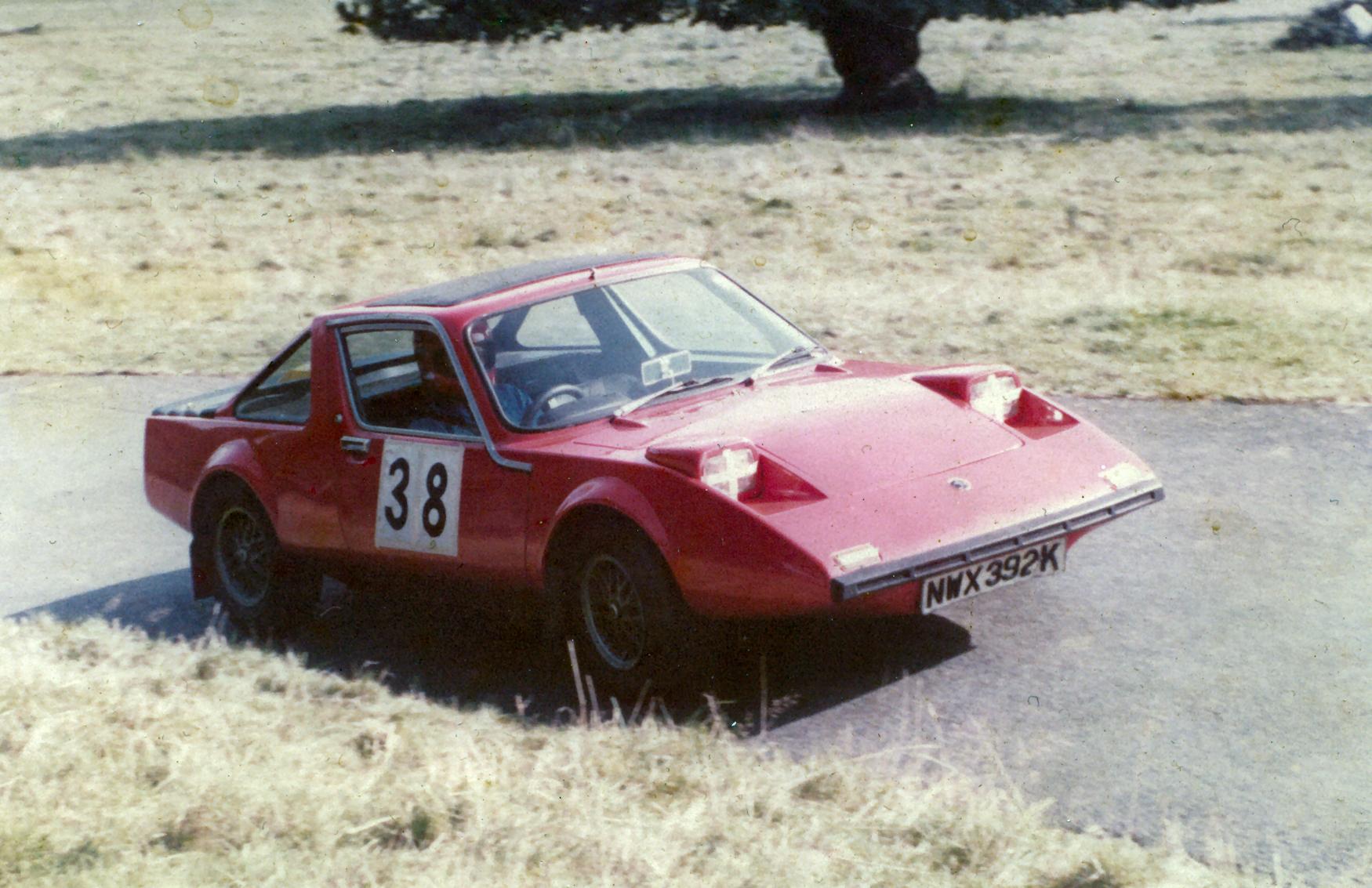
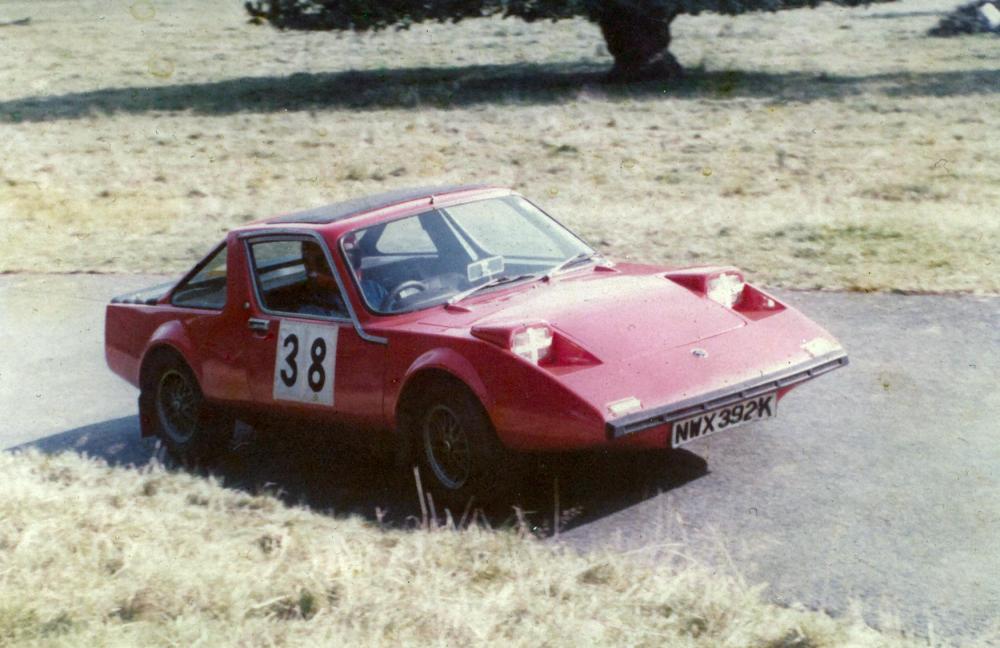
This is me, at Tregrehan Hill Climb, around 1978/9: and this was my normal commuting car for several years (the photo's from when I worked not far from @scottishjohn's neck of the woods): The little i3 is way quicker off the line than either of them, though. What's funny is the noise that the i8 makes. It only has a 3 cylinder engine, yet for some bizarre reason BMW decided to make it sound like this:

-
Self Insurance cost more if not taken at the start ?
Jeremy Harris replied to Willow's topic in Self Build Insurance
I did exactly this. I agreed with our ground works chap that the site would be his responsibility for the 6 weeks he was working, so his insurance covered everything. It worked well, as he wanted to do site security etc anyway, as he had a couple of diggers, a dumper, water tank, secure storage container etc on site. -
From a quick scan of their Ts and Cs it looks as if the insurance is fully comp, but the driver is liable for the excess, which could be up to £1,000. My guess is that this is to try to make their customers take a bit more care with the cars, and is probably little or no worse than the way hire car companies deal with damage.
-
Evezy are a start-up, though, trying to introduce a novel approach into car use, one that is unlike ownership or car hire in many ways (not least the price). With all car running costs (insurance, maintenance, breakdown cover, even charging) included in the monthly subscription they are pretty much unique, as their monthly price is what it will cost to run one of their cars, with no extras.
-
Not a good idea, as you'd then be building the house as a commercial entity, rather than as a self-build. That could well have consequences on things like CIL (the exemption is only for self-build) as well as for any finance (would need a commercial loan rather than a self-build mortgage, perhaps). It would also mean having to accept the responsibilities that a commercial house building company has to bear, everything from liability insurance to safety management regulations. I would go back to the insurer and question whether they understand that you are a self-builder, and hence a client as far as the services and suppliers that you may choose to use during the build.
-
One of the major issues with switching to EVs is that they need a change of mindset when it comes to how we use and own cars. For example, there's very little, if any, need for most EV owners to ever wish to stop at a filling station. After a while the idea of having to stop somewhere to fill up with fuel every week or two just seems a bit of an odd thing to have to do, as for those who are able to charge at home very quickly get used to just plugging the car in from time to time, either overnight on E7, or during a sunny day if you have PV. This even applies on fairly long trips; so far I've only had to break a journey to charge three times, and twice I didn't actually need to charge, it just so happened that there was free charging at a place we stopped for refreshment. Looking at our holidays since getting the i3, the hotel we stayed at for Christmas had a charge point, the hotel we stayed at for a short break in March had a charge point, there were charge points in the car parks at Southampton airport (I didn't need to charge, but nevertheless they would be handy for those that did), the hotel we staying at in October has several charge points, as does the one we're staying at in Devon over Christmas this year. I don't need to bother about charging en-route, as the car will just get charged whilst it's parked up, just as it does at home. The other switch is the way many (perhaps most) car owners are thinking about car ownership cost. What's now pretty clear is that most people "buy" cars on the basis of how much per month it's going to cost them. People like me, who buy cars outright are now in a minority, it seems, as more and more people buy with PCP or similar, and are only concerned with the monthly cost. The slightly lower total monthly cost for EVs, driven in part by the reasonably generous BIK for those who use their cars for business travel, makes running an EV look fairly attractive. I suspect that in the longer term, people like me, who always opt to buy a car outright, will become a pretty small minority, as more and more people switch to a lease-type ownership model. As that happens, the concerns over things like longevity, battery replacement cost, etc just fade away, as the costs associated with those things will just get swept up into a lease cost. It's interesting to see that short term leasing seems to be taking off reasonably well. For example, Evezy ( https://www.evezy.co.uk/ ) seem to be going from strength to strength, using a business model that I thought was doomed to failure. It seems there are a fair few people around who quite like the idea of being able to use a car with a no-strings-attached lease deal, one where they can just hand the car back anytime they like. Seems very odd to me, but there's no doubt that the concept seems to be growing more popular.
-
Why would most people ever need to think about replacing the battery, though? The battery life for most EVs will be way over 200,000 miles, and I doubt that many people keep cars to that sort of mileage (accepting that a few will, but they are a small minority). Resale vales of non-battery lease EVs seem to be fairly high, at least no worse than those for conventional cars. Battery lease cars are depreciating a bit more, not because of the battery failing (it's covered by the lease anyway) but because the battery lease cost becomes a greater part of ownership cost as the car value decreases. AFAIK, the only manufacturer still using the battery lease model is Renault, with the Zoe, other manufacturers who initially played around with the battery lease model seem to have decided to drop it.
-
I seem to remember a half-finished DIY whacker back in the early days of the bathroom. Maybe finish that one?
-
The current Nissan Leaf doesn't have active battery cooling, instead Nissan have opted to manage battery charging to limit temperature, something that backfired big time with the #rapidgate fiasco. Nissan have released a firmware update because of #rapidgate, but that has the unfortunate side effect of allowing the battery temperature to rise during fast charging, so those who choose to do repeated fast charges may now find their cars suffer faster battery degradation. Some owners are reporting battery temperatures of up around 50°C during fast charges, which is an uncomfortably high temperature for the cells IMHO. Whether this is a real issue or not no one yet knows, but their is a growing weight of circumstantial evidence that suggests that vehicles that have active battery thermal management systems tend to have a lower rate of battery capacity degradation. It's all a bit iffy, though, as I believe that the worst degradation seen on any older EV so far is only around 20% or so. This is complicated by the fact that those older, higher mileage, cars are using older battery chemistry in the main, so may well tend to suffer a bit more from degradation than newer cars. The Nissan Leaf is fairly unusual in not having a battery thermal management system. Most EVs have some form of active cooling/heating system to keep the pack at a fairly constant temperature. My car, like the Tesla, has a liquid cooled/heated battery pack, and this seems to play a fairly big part in ensuring the longevity of the pack, albeit at a small cost and weight penalty.
-
Charge cycling depends very much on total battery capacity. My car only has a rated range of around 120 miles, so 375 charge cycles per year would be around 45,000 miles per year. In reality I find that the range is closer to 140 miles, so 375 charge cycles per year would be around 52,500 miles per year. There aren't many cars that would last for 5 years doing that sort of annual mileage. Perhaps some diesels, but I'd suggest that many ordinary cars would be on their last legs after a quarter of a million miles. The VW ID.3 looks as if it's going to give well over 200 miles per charge, so for a 2,000 cycle usable battery life it should last for around 400,000 miles, which is way over the life of most conventional cars.