Jeremy Harris
-
Posts
26430 -
Joined
-
Last visited
-
Days Won
360
Everything posted by Jeremy Harris
-
Worth reading this MSDS: MSDS Dihydrogen Monoxide.pdf
-

access issue with property?
Jeremy Harris replied to legepe's topic in Party Wall & Property Legal Issues
If I've read the drawing correctly, then it looks like the broken fence leads to another bit of land, outwith the boundary of the property. -
TBH, I doubt this would have any effect on a Sunamp PV, as the water heater circuit is a closed loop inside the unit. The pump only circulates water around the internal heating loop, and there's no strainer in that AFAIK.
-
Might be worth checking to see if the local authority have done a metrocount on that road recently. If they have then that will give the number and type of vehicles using the road, together with the speeds. Someone on your Parish Council should know. We've just had a couple of metrocounts done in the village, as part of a scheme to look at reducing the existing 30mph speed limit to 20mph, and I don't think they were that expensive (can't have been, as if they were I'd remember it coming up in the meeting where we asked for this work to be done).
-
Introducing the Build Cost Spreadsheet (incl cost per m2)
Jeremy Harris replied to puntloos's topic in Costing & Estimating
Total build cost, less plot cost, excluding VAT (i.e. net cost after VAT reclaim) was about £1,380/m². Detached, 1.5 storey two bedroom house Started summer 2013 130m² floor area Passive house (meets or exceeds PHI requirements but isn't certified as a PH). New build on a difficult sloping site (site levelling costs included in plot cost, as we bought the plot for a lower price because of this). Located just in the South of England, about 10 miles West of Salisbury. No architect, QS, project manager etc, self-designed and self-managed Cost prediction was £1,200/m². Costs increased due to decision to upgrade MVHR, use oak internal joinery, improve the kitchen spec etc. Plot purchased for £90k, plot valued at £150k (difference was because of the cost of ground works needed to level site and cost of services provision). All materials and labour included. Around 3 1/2 years of my labour used in the build (I fitted plumbing, ventilation system, heating and cooling system, most of the oak internal joinery, kitchen, utility room, WC, both bathrooms, flooring, some wiring etc). Main contractor used to supply and install the passive slab foundation and insulated and airtight house frame. The only fees were the planning permission fee, building control fees and the final SAP EPC, which together came to a bit over £1k I think. Biggest unforeseen problem was getting the water supply sorted. The saga of drilling our borehole and then sorting out the errors from that wasted about a year of my time. -
How hot will it get in the attic?
Jeremy Harris replied to laurenco's topic in Lofts, Dormers & Loft Conversions
I doubt it, as the ground floor is pretty cool, as the slab gets cooled by the ASHP much of the time in warm weather. It's consistently a degree or so warmer upstairs, but 90% of that seems to come from the windows as far as I can tell (they get very warm inside). -
How hot will it get in the attic?
Jeremy Harris replied to laurenco's topic in Lofts, Dormers & Loft Conversions
We have blackout blinds in the bedroom windows and they don't seem to do much to reduce solar gain, TBH. What seems to happen is that the inner pane of glass gets very hot and then continues to release heat for hours after the sun has gone down. -
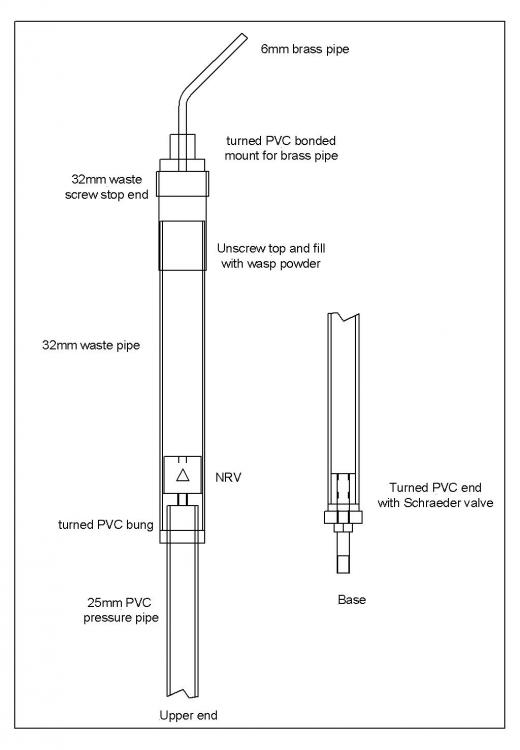
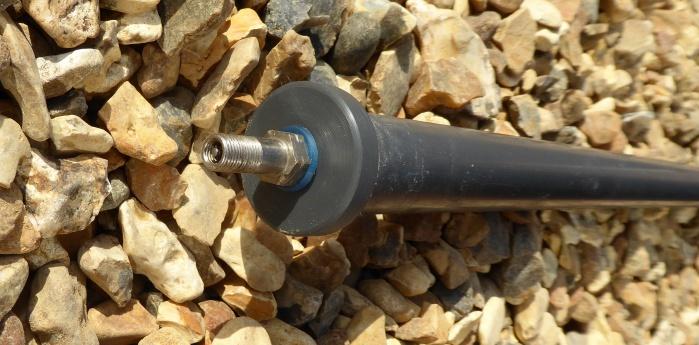
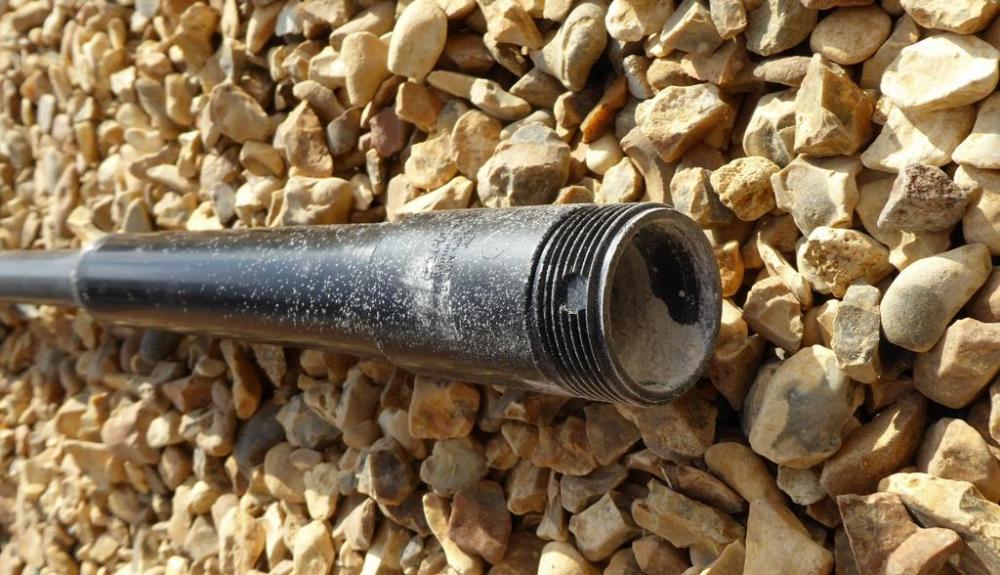
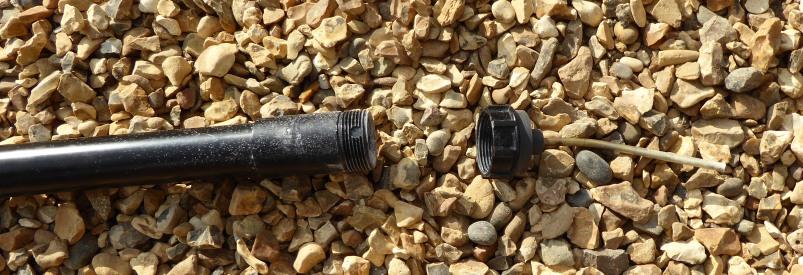
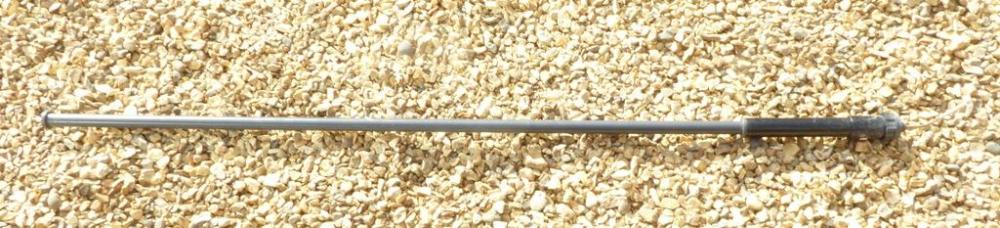
Pity you're the other end of the country, as you'd be welcome to borrow it. I just used a compressor with the tyre inflater hose to blow air into the base, which blows the powder deep into the nest. Takes a couple of seconds, and if done in the late evening is pretty safe. Still a good idea to run away as quickly as possible, though, as the little buggers get mighty angry, very quickly.
-
I made a gadget to blow powder into a wasp nest entry hole, whilst standing a safe distance away. Works really well:
-
Might well work, but it'd need something more gentle than a blow lamp, as the battery case is made from what looks like red HDPE.
-
Feel free to mention the brand. For years I used boiled linseed oil as a dressing on galvanised wire rope standing rigging. It seemed to hold up really well to severe exposure. The only real issue with the stuff is that it takes ages to dry properly, and I believe that modern linseed oil finishes incorporate a drying agent. Whether the drying agent impacts the longevity I don't know, but I suspect it might.
-
Changing the heating element means heating up the PCM somehow and draining it out of the battery, as the element(s) would be embedded in cooled, solid, PCM. Sunamp reckon the elements just can't be changed, and the whole unit has to go back to them for replacement. If it happens, then I'll definitely be looking at a way to try and replace the element(s) myself, but until then I'll just be keeping my fingers crossed that there's not a problem.
-
No, apparently it isn't. It's a concern that's been raised already, but Sunamp reckon that the element will last for the life of the unit, perhaps because it's relatively large and runs at a fairly low temperature.
-
The heating element issue is the now-obsolete Sunamp PV, which has a tiny 2.8 kW element inside a small tube in a water heating circuit. The heating elements in the current Sunamp UniQ range are much larger and run directly in the PCM.
-
We have a water softener, a Harvey twin cylinder one. Seems to work very well, and isn't expensive to run. Phosphate dosing also works very well at preventing limescale from sticking to surfaces, it's probably the best non-ion exchange limescale reduction system going, IMHO. We went for an ion-exchange softener mainly because our water isn't very hard, just hard enough to be a nuisance. Our boiling water tap was supplied with a phosphate dosing "filter", which seems to work well.
-
That sounds fairly positive. Not sure about the magic limescale thing, the way these things claim to work seems to have zero basis in any known principle. At best there seems to be limited anecdotal evidence that people are happy with them, but to some extent I suspect this may be due to a reluctance by those who've paid a lot of money for something to believe that it's not really doing much. One thing is absolutely certain; none of these things actually reduce the amount of calcium (or any other) ions in the water. At best they may (through some unknown process) change the way that calcium ions behave a bit. I have doubts as to whether scale build up is a significant issue with the Sunamp PV heater anyway, as the transition temperature for the PCM is 58°C and scale formation generally only occurs at temperatures above this. If there is scale build up on the failed heating element then it may be a possible contributory factor, but I can't really see how this could shorten the life by much. I've known immersion heaters work for decades in high calcium content water, and if anything they seem to fail more often in soft water, due to corrosion of the outer sheath allowing moisture in. The main improvement will come from the software update. This will increase the pump run-on time and so reduce the heat-soak from the element when charging stops. This makes a marked difference to the element peak temperature.
-
Double check valves. Why? Where? Says who?
Jeremy Harris replied to ToughButterCup's topic in General Plumbing
I'm pretty sure they are somewhere within the WRAS stuff: https://www.wras.co.uk/consumers/advice_for_consumers/what_are_the_water_regulations_/ Sadly that's not a very user-friendly collection of documents. -
Double check valves. Why? Where? Says who?
Jeremy Harris replied to ToughButterCup's topic in General Plumbing
A double check valve is required at the incoming supply and on any outside tap (because of the risk of back contamination from a hose etc into the potable supply). Most outside taps have an integral double check valve, look for the small drain screw on the underside, that allows the space between the two check valve to be drained. -
Everything is collecting data, it's how most of the "free" stuff earns money. The old adage "There's no such thing as a free lunch" applies to pretty much every bit of mainstream software out there now. What's worse, much of the time when you think you're "buying" something, the reality is that you're only renting it. A neighbour is as angry as hell right now because she "bought" a lot of ebooks, and now she can no longer read them, as it turned out she was only renting them (although this wasn't at all clear unless you really delved into tens of pages of obscure terms and conditions).
-
I was at a planning committee meeting for a small housing development (about 28 houses) a few years ago. It was passed, against a stack of objections, including from the planning officer, and despite being way outside the development boundary. I walked out just before the meeting ended and was stood behind the door from the meeting room, chatting to a journalist from our local paper, when the developer's representative and his planning consultant left the meeting (they couldn't see us where we were stood). The planning consultant said to the developer "I thought we'd have to give him a bigger bung than that". The young journalist stared at me with wide open eyes and said something like "Did I just hear what I thought I heard?". I said yes, just watch for Councillor **** getting another new car soon. Sure enough, said Councillor (who doesn't work and lives on benefits) was driving around in a brand new Range Rover a couple of months later... No one seems interested in stopping stuff like this, and what seems to happen is that small groups of "like minded" people end up with more influence than they should have on planning committees.
-
I'm not sure who here still has a Sunamp PV installation. @TerryE does, and I think there's at least one other member with one. Our's went back to Sunamp in exchange for a Uniq about a year ago. One snag with trying to measure those temperatures is that the pump varies it's speed in order to try and keep the temperature flowing into the batteries fairly constant.
-
The impression I have is that Sunamp have used a rapid prototyping approach when doing product development, with immature "production" standard kit being sold and then fixed in the field. This seems to be pretty normal with some technology companies, but is a bit of an odd approach for items intended as fit-and-forget domestic products. Why people are so tolerant of products that fail in one way or another and need constant fixes from the manufacturer I don't know, but it does seem to be becoming normal. There are lots of examples in the electric vehicle market of this approach, pioneered by Tesla who are still rolling out fixes to cars that are several years old. My BMW is no different, the Connected Drive app is a pile of crap, that BMW keep playing around with in an attempt to get it to work better, often breaking it or reducing functionality in the process. Even Nissan, who one might have expected to get things right first time ("right first time" was written on big signs on the production line when I visited their Sunderland plant years ago) have had to issue several firmware updates to their cars to fix really quite serious failings (#rapidgate for example). On the positive side, our Sunamp UniQ eHW 9 is now working very well indeed. The new controller and sensor array seems to be a significant improvement, with a noticeable increase in the utilisation of excess PV generation when compared to the originally supplied controller and sensor string. The threshold at which the controller calls for heat has been significantly reduced, so that it now pretty much always calls for heat after a single shower's worth of hot water has been drawn off. This has noticeably reduced the need for an over night E7 boost, to the extent where I could probably turn the over night boost off for now. What would be very useful indeed would be a way to switch the over night E7 timed boost on or off from the Sunamp controller. If there was a way of externally sensing when the controller is calling for heat, and then using this to switch the timed boost on at night, then this would remove all need for regular intervention.
-
No, the Sunamp PV heating element is rated at 2.8 kW at 230 VAC, so at 253 VAC it will be a bit over 3 kW.
-
The main difference between using a water-based paint and a solvent-based one is drying time. I've very successfully primed and painted MDF with cheap water-based paint, all it needs is enough time to dry between coats, plus a bit of sanding (which is needed if using solvent-based paint). Patience is key, just allow maybe three times longer for the paint to dry and harden fully.
-
Was in a planning meeting last night. What is clear is that planning policy has little bearing when it comes to decision making. I sat shaking my head in despair at our clerk as our chairperson advocated approving a development in open countryside, that was specifically in breach of both local and national planning policy. The chairperson's (socialist) view was that we should encourage development for farm workers. The house in question was a 168m2 three bedroom detached "single farm workers accommodation". The chairperson also failed to understand why it might be a good idea to attach an agricultural tie to the decision (and the applicant strongly objected to an agricultural tie, which was rather telling).