
Jeremy Harris
-
Posts
26430 -
Joined
-
Last visited
-
Days Won
360
Everything posted by Jeremy Harris
-
Good idea! Here goes:
-
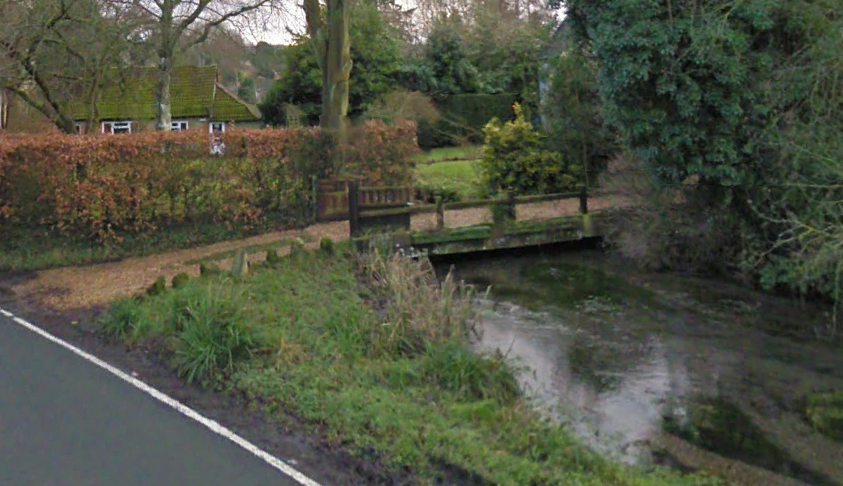
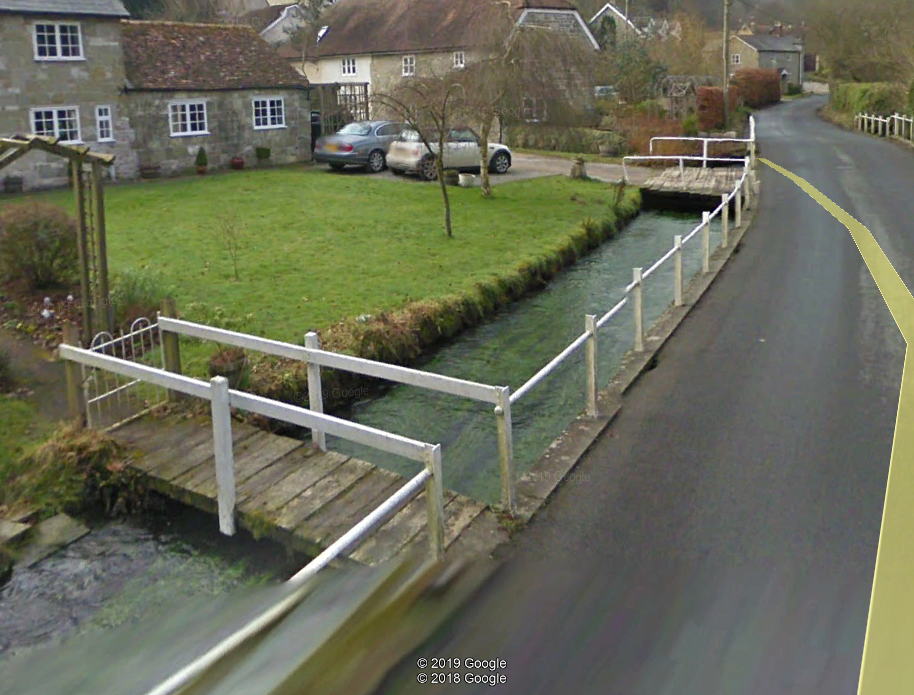
We have lots of drive bridges over the village stream here. All are built the same way, a couple of steel UBs covered over with railway sleepers. I'll try and wander around and take some photos of them later. None are more than about a foot above the stream normal water level at their lowest point. At a guess I'd say the UBs might be around 8 inches deep, then there's the thickness of the sleepers on top. I'll try and get some measurements when I'm out taking photos later. Several of these bridges look as if they've been there a few decades, so they seem to last OK. These bridges are also pretty strong. My neighbour over the road has had a few dozen 18 wheel tipper trucks in and out over the last month or two, and his bridge doesn't seem to be any the worse for it.
-
As it looks to be a fairly straightforward job, I'd be inclined to do it under a building notice, rather than a full plans submission. If your builder is familiar with building extensions he should be OK with this. Details of the way the building notice scheme works are here: https://www.planningportal.co.uk/info/200137/how_to_get_approval/78/pre-site_approval/3
-

Rust Removal Adventures: Electrolysis, Acid etc
Jeremy Harris replied to Onoff's topic in Tools & Equipment
Partly, yes, and partly because I think BMW are using their electric car model range to explore new materials. Being electric removes some of the constraints in design, as the drive train is a lot more compact. This is what the "chassis" of my car looks like, with all the plastic panels removed:
-
Rust Removal Adventures: Electrolysis, Acid etc
Jeremy Harris replied to Onoff's topic in Tools & Equipment
Some (like mine) are all plastic. Even the "chassis" of my car is primarily carbon fibre, with an aluminium alloy subframe at either end, where the suspension bits bolt on. -
Rust Removal Adventures: Electrolysis, Acid etc
Jeremy Harris replied to Onoff's topic in Tools & Equipment
It's easier to just get the remaining paint off and then treat the rust, either by electrolysis or by using phosphoric acid. I've not used electrolysis, but used to use loads of phosphoric acid when I had a side line in repairing rusty Minis years ago. Phosphoric acid has the slight advantage that it provides reasonable protection against future rust formation, as the black iron phosphate coating it leaves behind is chemically bonded to the steel, so good in terms of acting as a first stage paint primer. For best results get the paint off, remove the loose stuff, get all traces of oil and grease off, then either brush on or immerse the part in phosphoric acid. -
Rust Removal Adventures: Electrolysis, Acid etc
Jeremy Harris replied to Onoff's topic in Tools & Equipment
I've used phosphoric acid to convert rust to iron phosphate a fair bit, years ago. Works well, and isn't too expensive: https://www.ebay.co.uk/itm/Azure-Phosphoric-Acid-Descaler-Rust-Remover-30-Safe-On-Metal-Surfaces-5L/122401133301?hash=item1c7fad12f5:g:L9AAAOSwtBZbu3jY -
I built a new house today...
Jeremy Harris replied to NSS's topic in General Self Build & DIY Discussion
Sort of the antithesis of our discovery that we had a visiting otter. In our case, I was puzzled by piles of poo in the garden, mentioned it to the chap that was doing our hard landscaping, who promptly picked the poo up, crumbled it between his fingers, smelt it and pronounced calmly that it was otter spraint. As I was holding two mugs of tea at the time I declined his offer to have a smell of the stuff... -
Apart from the deliberate deception as to why "smart" meters are being rolled out, there are two things that concern me about them. The first is that they are already proving to be less than reliable than existing metering solutions (and less accurate in some cases). As they have the facility for your supplier to remotely disconnect your supply at your meter, via what amounts to an internet connection, we are already seeing instances where failures in the communications or data handling system has resulted in people losing power for hours, as a result of a remote disconnection command being sent in error. The second concern is the same as @ProDave, that the primary driver for them for suppliers is to allow the introduction of flexible tariffs, which removes risk from the suppliers and places it on the consumer. Suppliers want to be free from the half-hourly, day ahead, wholesale auction risk, and want to be able to sell electricity to consumers on a cost-plus basis. That will mean that consumers will find it very difficult to compare prices from different suppliers, as with tariffs changing potentially every 30 minutes, there will be no easy way to decide who is best value.
-
It's nowhere near long enough for us. It takes a fair time to pump heat into the slab, and we use all of the E7 period, not for peak power, but just for the longer time. Same with the car. I can't charge it from almost discharged in just four hours, so it's not really a good tariff for EV owners, unless they don't need to do a long charge from home. For us, E7 makes more sense, and means we aren't forced to have a "smart" meter (which wouldn't work here anyway, so the Octopus Go tariff wouldn't be available)
-
Yes, we were with them when they took over after our old supplier went bust. They annoyed the living daylights out of me, with all their "love and peace" crap in every bit of correspondence. They also managed to get our billing wrong several times in a row. The "Go" tariff is really intended to persuade people to have a "smart" meter, as all the suppliers are pretty desperate that everyone gets one of these, so they can reduce their tariff risk by passing it on to customers (this is probably the thing that causes some of the smaller suppliers to go out of business). For us, the very short off-peak period just isn't long enough to be useful. If my car needs a full charge it isn't long enough to charge it, either, whereas the E7 off peak period is fine. It's really a matter of analysing usage carefully, and making sure you can switch around half of it, or more, to the off-peak period for any split rate tariff. For us, Bulb came out on top, as I refuse to have a "smart" meter (and anyway, one won't work here) and we really need the 7 hour cheap rate period to be able to charge up our slab with heat in cold weather.
-
There does seem to be a bit of a problem with .pdf forms, where sometimes they do appear to be locked and cannot be filled in. Once or twice I've had this problem, and have just unlocked the .pdf so that I could fill in the form OK. Not sure what causes it, but I suspect it may be that some of these forms are created by people who then don't test that they work OK for other users. I doubt it's anything to do with your machine's set up, the chances are that someone has just left one of the security attributes set on the form (there's a list of things you can lock down when creating a .pdf file). Easy enough to unlock, usually, as .pdf security isn't super hard to get around most of the time. Back to the .dxf files and CAD. Best bet might be to see if anyone can recommend a simple free CAD application that will import and save in .dxf. I use an old version of AutoCad, but only as I have a copy that was provided by my former employer (AutoCad costs a lot of money). I'm pretty sure there maybe an older thread here discussing free CAD applications, but can't seem to find it quickly. Might be worth a look.
-
In slow time, you could have a look at getting to grips with a CAD application, if you wanted to be able to edit the drawings. There are some free ones around that should open and save .dxf files, I think. Your problem with the .pdf files form is probably because it's somehow been locked so that the "form" function doesn't work. I've received .pdf files like this before, and they are a bit of a pain unless you can get in to them to edit them. If you attach the blank form as an attachment here I'm sure that I, or someone else, could have a look and see if it's been protected or locked somehow.
-
The .dxf files are in drawing interchange format, that can be imported into pretty much any CAD software application, so you would need to have such an application installed to be able to work on them. The ,pdf copies I sent can be opened by any .pdf reader application, including that which may be built in to some web browsers (I know Firefox can open .pdf's, not sure about other browsers). Whilst the .pdf files are great for sharing documents and drawings that are only ever going to be read, .dxf is a format that allows someone (who has access to CAD software) to be able to very easily edit a drawing if required in future. Editing drawings in .pdf format is more difficult, as they have to first be converted to a common CAD file format, then tidied up (as the .pdf file format doesn't have all the required data in it), before they can be worked on, then converted back to .pdf to be read by anyone.
-
Cornwall has a bigger divide between those who are comfortably off and those who are living in poverty than many might suspect. All my family live in West Cornwall, have done for decades, and a fair percentage of them have been out of work for years on end. There are few well-paid jobs in the county, and most of the attempts to try and create them, often using economic development grant funding because the county is a deprived area, have failed. Looe is probably one of the better off areas in the county, as, like a few other places (Padstow, for example) it attracts people who move there having made money up country. You only need to spend some time in and around the relatively large Camborne - Pool - Redruth conurbation to get an idea of how poor large areas of the county are. Even places that used to be considered reasonably affluent, like Newquay, are struggling. The average salary for Cornwall compared to the rest of the UK illustrates just how big the income difference is. The average salary now is pretty much what I was earning there (on a national pay scale) when I moved away from the county nearly 30 years ago. I was viewed as being "well off" on around £25k way back then: The Wikipedia page on the economy of Cornwall seems reasonably accurate, and also sums up how attempts to kick start employment haven't really worked: https://en.wikipedia.org/wiki/Economy_of_Cornwall


-
Worth looking at the situation a bit further down the county. The area around Camborne/Redruth has always suffered from high unemployment and low income levels. There are areas where incoming wealth has raised income levels, but there are a lot of people living on very low annual incomes, and who are struggling to earn enough to be able to afford to buy a home, in large areas of Cornwall. It's one reason why the county has been receiving aid for many years now. This quote sums things up well:
-
I built a new house today...
Jeremy Harris replied to NSS's topic in General Self Build & DIY Discussion
Good idea! Have a bed of "sacrificial" hostas, to both feed the hedgehogs and, hopefully, keep the slugs away from everything else. -
I built a new house today...
Jeremy Harris replied to NSS's topic in General Self Build & DIY Discussion
I'd heard that dog/cat food was recommended, but the snags with that seems to be that it might attract other, less desirable, creatures, plus if it doesn't get eaten then I'd guess things might quickly get a bit smelly. One answer might be to find a way to selectively attract slugs to an area where hedgehogs gather. Just need to find some sort of slug attractant... -
@TerryE, my inclination would be to take a look at the board with a thermal camera as I suspect that the track temperature may well be a red herring, and the heat may be being conducted to the track from elsewhere. It's hard to see how that track alone could cause the temperature increase, and I suspect it may be coming from something like the relay coil. A thermal image would probably show whether this is the case. If you've got an Android device that has a micro USB connector, then I could lend you my Seek Thermal camera.
-
Really excellent air test result. My guess is that doors and windows were key to this, as every leak we found was from either a door or window, and most of those leaks were related to poor adjustments (the fitters seemingly couldn't be arsed to adjust them properly).
-
As @SteamyTea has mentioned, Cornwall is a pretty poor and deprived area (my family are all there, and I lived there for many years before escaping). Many older houses are really badly built, and were often only single storey, with rooms in the roof. Low ceilings were commonplace, three of the houses we had when living in West Cornwall had ceiling heights that were barely 6ft under the beams. Part of that may be because many Cornish people were quite short, which is probably related to the poor diet and relative poverty of the county. In many ways, traditional cottages in Cornwall remind me of rural Ireland.
-
We had a valuation based on our drawings and a site visit to the plot, after the ground works had been completed, but before the house was erected. It was a local valuer, rather than an estate agent, as the valuation was for our small self-build mortgage. IIRC it cost around £150 or so. Probably reasonably accurate, as a couple of houses in the village have sold in the past couple of years, and their sale prices seem to fit roughly with the valuation we had. Only issue I had was that the valuer knocked 5% off because the house was (in his words, not mine) an "eco house". I detest that term, as it's meaningless greenwash, but he took the view that a low energy house would only appeal to a small number of potential buyers. No idea why at all.
-
Spray Painting Outside of House
Jeremy Harris replied to Ferdinand's topic in Plastering & Rendering
I think most can probably be sprayed, but those that have a high granular mineral content (like Sandtex, for example) may be more difficult and cause a lot of nozzle wear. Probably best to ask the individual manufacturers, as it's fairly common to spray exterior paint commercially, so they will almost certainly have tested their paints with high pressure spray equipment. -
Nitro Pro doesn't behave well with office applications, IMHO. There's an installation option to not install the optional embedded toolbar features though. I also make sure that I don't set it as my default .pdf viewer, as I prefer that to be Foxit.
-
OK, sorry, my bad. I've fixed it and sent the amended drawings to you by email. Thanks for spotting it!