


jamieled
-
Posts
639 -
Joined
-
Last visited
-
Days Won
1
Everything posted by jamieled
-
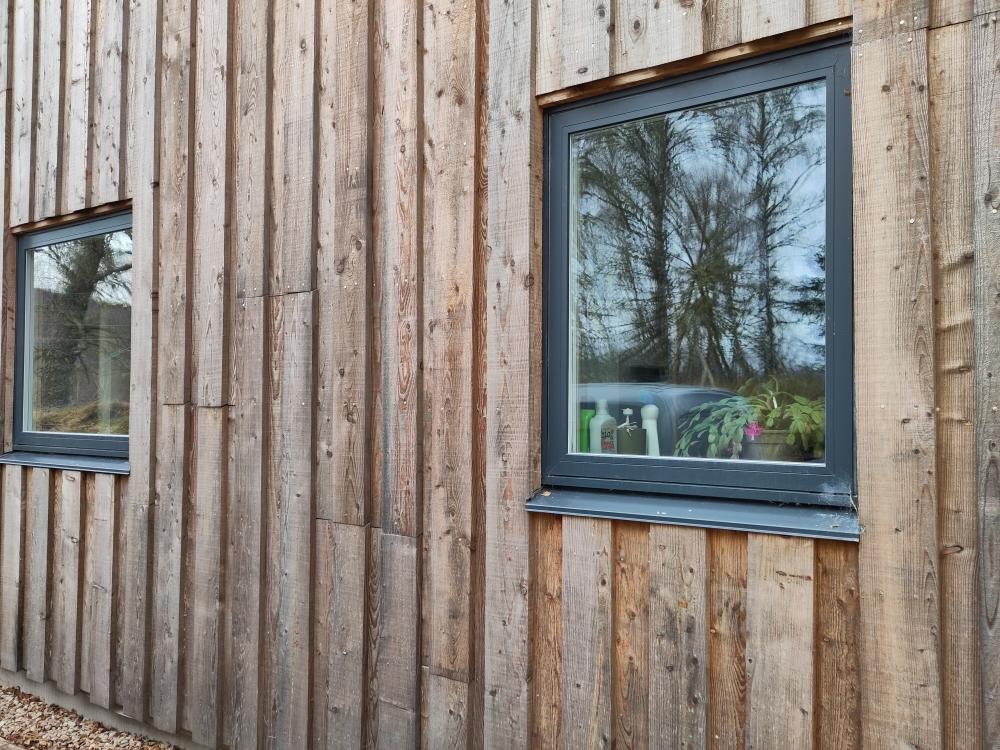
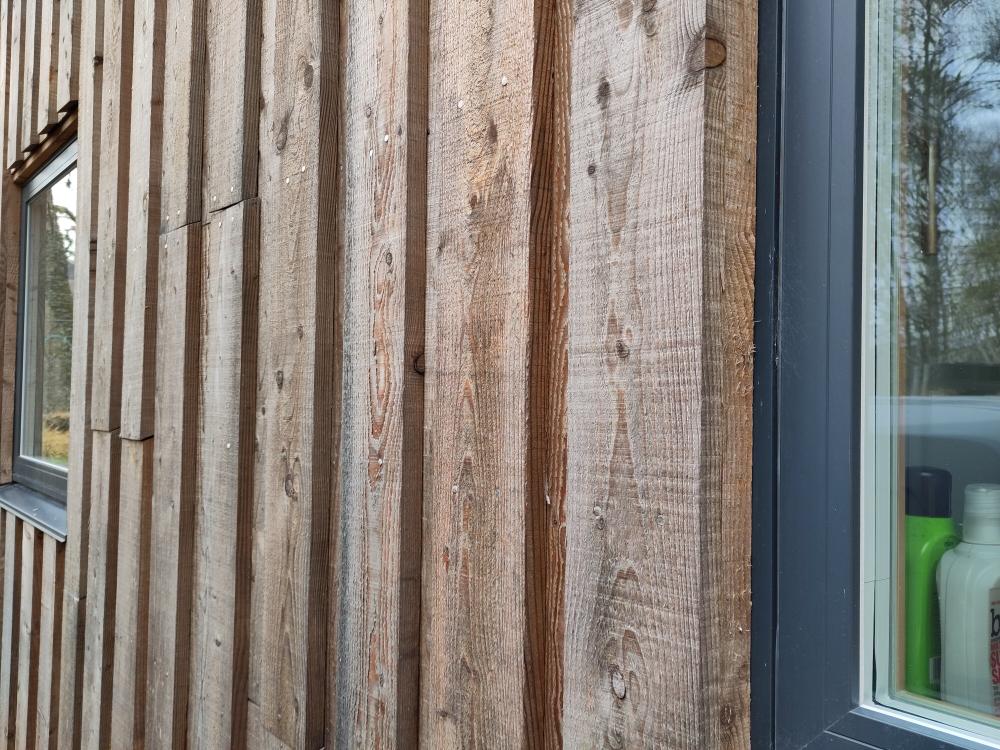
@eandg, yes, but our design was simpler as our windows were similar sizes between ground and first floor so butting the 'on board' sections up to the reveals wasn't so difficult. You sound like you might have a trickier situation, but I'd imagine with some careful planning you should be able to get it to look ok. Differences in the spacing are only really visible if you look hard enough, at a distance I think it looks pretty consistent, even when it isn't. @Jenkisee if these help you. The change in spacing is quite clear if you look hard enough, but it doesn't bother us, functions fine and nobody mentions it!
-
We reduced the gap between boards with boards beside windows and doors butting up with the reveal cladding. Needs relatively careful calculation to ensure you get the gaps right and so theres no obvious visible difference when viewed against the rest of the walls.
-
The science behind sewage treatment plants
jamieled replied to Crunchynut's topic in Waste & Sewerage
Glad to have found this thread. Any tips for a vortex where we're getting really high rates of floating sludge in the settlement chamber (and outflow chamber)? I manually push it all back through the floating sludge return every couple of days now. Started about 3 months after we last got it emptied. There's no particular nasty smell, but I've tried a few combinations of settings with the blower valves and haven't had much luck. It looks like when water inflows into the tank this pushes some sediment dense water into the settlement chamber which the floating sludge return then can't cope with. I might be wrong on this of course. -
Fire barrier tape for timber cladding cavity
jamieled replied to markharro's topic in General Joinery
Yep, it's expensive. We used stuff from envirograf. You probably only need the expensive stuff where you need the cavity ventilated. Use solid timber elsewhere (like corners). -
It can do, although you don't need to use it for a VAT refund application. In the end we used our council tax valuation which came later, essentially buying up al our landscaping materials prior to submitting the claim. As far as I'm aware HMRC have no knowledge of exactly when the house might be habitable/completed or whether you have a temp. certificate. As @jack mentions though, it's an area which it a bit tricky and so I'd caveat my own advice by saying this is what we did (I think we are in the same LA area) and it worked, but it may not work for others.
-
Thanks all, some interesting ideas. Planning/building regs is pretty clear for what we're trying to do. There is an exemption from full planning for sheds up to 280m2 which are for forestry/agricultural purposes. Prior notification is required though. Building control/warrant is not required so long as it is single storey and below a very large footprint threshold which we're not near (again related to forestry/agri exemption). Including an office in the future would technically need planning and BC due to the change of use (I think), hence thinking it through now to make sure we don't prevent ourselves from being able to do that if we wish. Like the idea of a heated workshop!
-
Creocote, not creosote.
-
Creocote?
-
For the next phase of construction here we need a big-ish shed. This is mainly for forestry - mechanical work on the machines and storage of kit. We've been working out of a shipping container for a while but that's not ideal on a number of fronts - no power/lighting and there's a bit of condensation in winter which doesn't help tools etc. It'll probably be a stick built timber shed, as that's easy enough to DIY, and timber cladding will be in keeping with the house. There's no need for full planning or building regs due to the end use. Somewhere in the region of 12-15m long by 5-6m wide, rectangular box. Likely using bought in trusses for the roof to keep it simple. Ground has been cleared and flattened by previous owners. We think it's primarily compacted rock, but trial pits have never given much insight as the digger we had was was too small (and ground too hard for it to achieve much). Q's: 1) I think we'll need a concrete slab for the garage/workshop area, probably with some reinforcement if it's going to take a tractor or such like. Is it essential to dig/pour footings as well, or can the shed sole plate just be fixed to the edge of a slab which is the same depth all over? I'm prepared to accept some risk here and not necessarily build to the standard of domestic housing, equally if it's all going to fall down quickly that's not much use either. 2)What thickness of slab and spec? 3) In the future we may need to hive off a small corner of it for an office. If we need to do this, then my plan was to build a timber floor above the concrete slab that can be insulated (essentially it will have a couple of steps up off the slab into the office). This is the easiest way I could think of building a small insulated room within a largely uninsulated building. Any particular problems with that approach, or any better ideas? As none of this requires structural design for building regs submission, there's currently no structural engineer involved. At some stage I guess a building gets big enough, or the consequences severe enough that it's essential, so we may need to go down that route if the answers are not obvious. Cheers in advance.
-
+1 to the depths required, particularly in the UK. The key difference that I'm aware is that gshp will still need some sort of heat pump to get useable temperatures, whereas geothermal operates between about 100 and 300 degrees Celsius and so doesn't need one.
-
You can probably just use any standard insulation. The air inlet pipe will likely be nowhere near the flue once it exits the plasterboard. There's no heat anywhere near the air inlet pipe on ours.
-
That's not smoke. It's steam.
-
cutting 210mm hole in timber frame?
jamieled replied to markharro's topic in General Self Build & DIY Discussion
I butchered it using a multitool. -
What size digger do you wish you'd bought?
jamieled replied to janelondon's topic in Tools & Equipment
I wouldn't automatically assume buying a machine will save you money. It might, but there's a significant chance it could be more expensive than hiring. Factor in the hassle and cost of breakdowns (esp if you're not mechanically minded) and also be aware there's a world of difference between buying and using yourself and buying for someone else to use in terms of maintenance, h+s etc. If you're paying someone else to use your machine, I struggle to see how that becomes cost effective Vs just getting a local digger driver in with his own machine. -
Postcrete? We have a timber frame I built, so a bit different but it worked ok.
-
Home grown Douglas Fir exterior cladding
jamieled replied to davidc's topic in General Construction Issues
I think the Scottish association of hardwood sawmillers has a list of mobile sawmills if you need to find someone to mill it. -
Trial pits prior to groundworks, how much £££
jamieled replied to Post and beam's topic in Foundations
Does seem a bit much. For ours, the cost of an engineer witnessing the trial pit was included in the structural design costs so I'm not sure what that part cost, then I paid a local digger driver about 130 quid for a few hours work. I did get a much higher price when asking a professional soils investigation company, but nothing like £6k. Usually just dug until the SE is satisfied, so it depends on the ground a bit - hits something solid and they'll probably be happy with that. -
I do wonder how much of this is just a bit of political posturing. If you were genuinely worried about domestic energy use surely spending the money on retrofit schemes, training and development would be of more use. Harder to do though.
-
Very interesting, seems a jump from current standards! I suppose the change in standards isn't automatic with the introduction of legislation, as that legislation could specify that the change happens in, e.g. 2030?
-
Another ashp/electricity usage question
jamieled replied to Jvh2012's topic in Other Heating Systems
@Thedreamerhedreamer do you know how different your MVHR ducting design is to say, a standard MVHR design, in order to accommodate the EASHP? -
We're probably not a million miles away from similar opinions. If I was to get a turnkey build then I would absolutely not do it, nor recommend anyone else does it, without a contract. 'Bit tricky to administer' does not apply to NEC contracts -they are a whole different ball game, they do not work as per lots of other contracts and there are better options for self builders. Not using a contract might put you at more risk, but if the self builder is doing a lot of work themselves and using trades (as a lot of people do), then trying to use or enforce the use of contracts can have downsides.
-
As above - where we used individual trades I got them to take responsibility for their work. I took responsibility for general site stuff such as having a first aid kit, providing signed off scaffolding etc which they might use.
-
As someone who has worked with NEC contracts in my day job I would strongly not recommend them for a self build unless you are familiar with them. They require quite a lot of understanding to administer and I would go so far as to say a self builder may be putting themselves at more risk by trying to do so. NEC contracts often use specialist contract administrators - they work well for the scale of project they were envisaged for. If you do need to go down the route of a self build contract then JCT is often mentioned and other options are available. For me, I had no contract on our self build. A few suppliers in or trades with terms and conditions but we had no main contractor overseeing the work. This is not me advising you not to use a contract, but the majority of self builds I'm aware of around us haven't used one so it is not unusual.
-
I can't remember the thread, but there was a discussion on here about a self build Vat tribunal case where two claims were eventually allowed. Of course, having to go a tribunal isn't exactly a smooth approach, but that case may have set a precedent. Will try and find it later.
-
Strip footings or insulated raft?
jamieled replied to Selfbuildnewbie's topic in Insulated Concrete Formwork (ICF)
It's generally accepted (by the energy saving trust and others) that gshp's are more efficient across the year than ashp. This is primarily because the source-target temp difference in the heating season is much lower with a gshp (soil temps generally higher than air). But as mentioned above, the additional efficiency comes with a high installation cost which may never be recoverd compared to an ashp installation. Gshp does not need hot rock, that is more akin to geothermal heat recovery.



