jamieled
-
Posts
639 -
Joined
-
Last visited
-
Days Won
1
Everything posted by jamieled
-
No you shouldn't submit a reply to your neighbours comment. As has been stated multiple times, a single neighbour objection is unlikely to result in your application being rejected. It would not help your case if your guests left comments either. The planning department has zero interest in how good your B and B is. You really need to get a better handle on the planning process and what the main considerations are in accepting/rejecting a planning app - this won't be rejected on the back of one comment, so if it was refused, and you chose to appeal, removing the neighbours comment probably isn't the issue you need to deal with. You would need to refute the material planning considerations that resulted in the application getting rejected in the first place.
- 35 replies
-
- 1
-

-
- planning row
- planning matter
- (and 3 more)
-
I understand why your neighbours comments might bother you, but planners are used to these sorts of comments. Don't sweat it, there's not a lot you can do and as mentioned elsewhere the comment is immaterial in planning terms. If your planning app is refused, its not going to be because of one neighbour objection.
-
I'm not sure what you mean when you say 'combat this'. Your neighbour is entitled to their opinion and to submit an objection. You could try and refute their comments but getting involved in a verbal battle on the planning portal is probably a bad idea. A single neighbour objection does not mean you won't get your retrospective planning permission though.
-
Why might my hot water tank not be working?
jamieled replied to jamieled's topic in Boilers & Hot Water Tanks
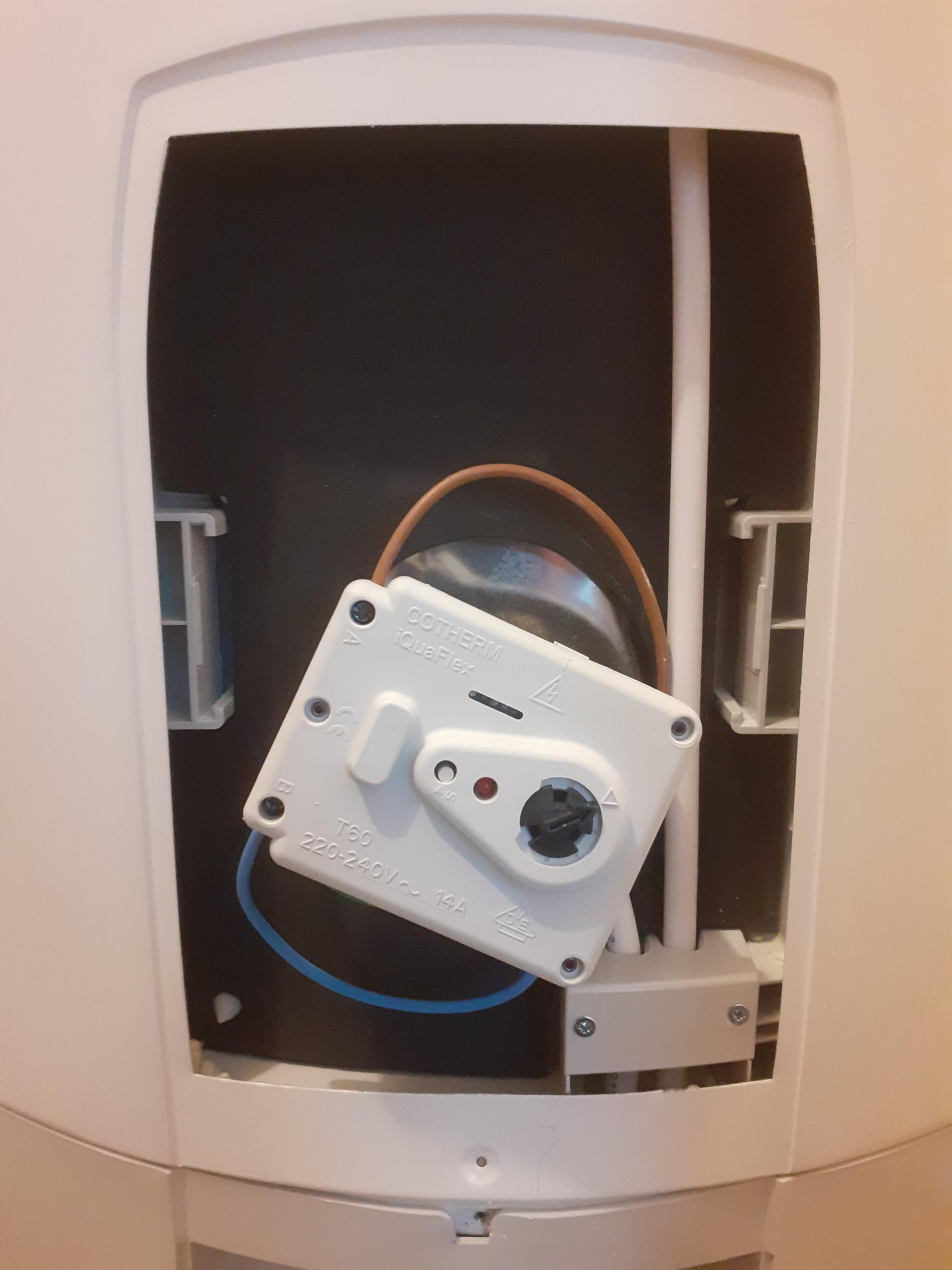
Yep, got the electrician to double check in case I was being dippy. The bottom thermostat is supposed to be some sort of 'smart' thermostat - changing the temp of the water as your usage changes but frankly I've never been able to notice it do anything other than a standard immersion with a fixed temperature. -
Why might my hot water tank not be working?
jamieled replied to jamieled's topic in Boilers & Hot Water Tanks
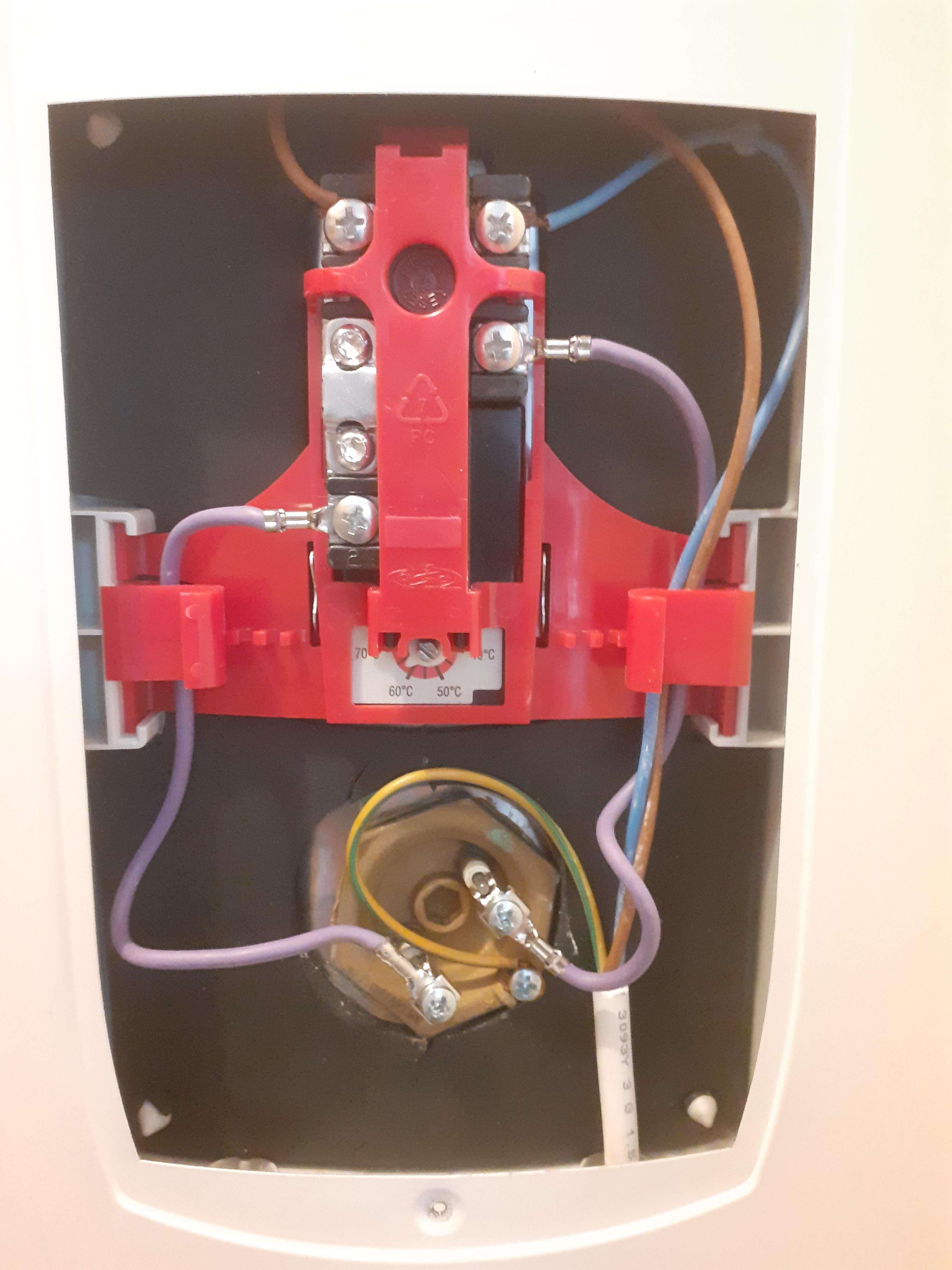
Embarrassing update no.1. The top immersion was not wired into the boost switch on the wall (the live cable end was terminated into a block inside the switch). I think this is from a miscommunication when we had a bit of damage from a line fault a few months ago-plumber replaced the damaged immersion element but the switch was never reconnected). Bottom thermostat is broken, but at least we have some working hot water now. -
Why might my hot water tank not be working?
jamieled replied to jamieled's topic in Boilers & Hot Water Tanks
Many thanks for the ideas, one of the local boys is going to pop round over the weekend. -
Why might my hot water tank not be working?
jamieled replied to jamieled's topic in Boilers & Hot Water Tanks
Yes, that is the reset button for the top thermostat. It doesn't do anything - the manual suggests there should be an audible click when resetting if the safety cutout has been activated. -
Why might my hot water tank not be working?
jamieled replied to jamieled's topic in Boilers & Hot Water Tanks
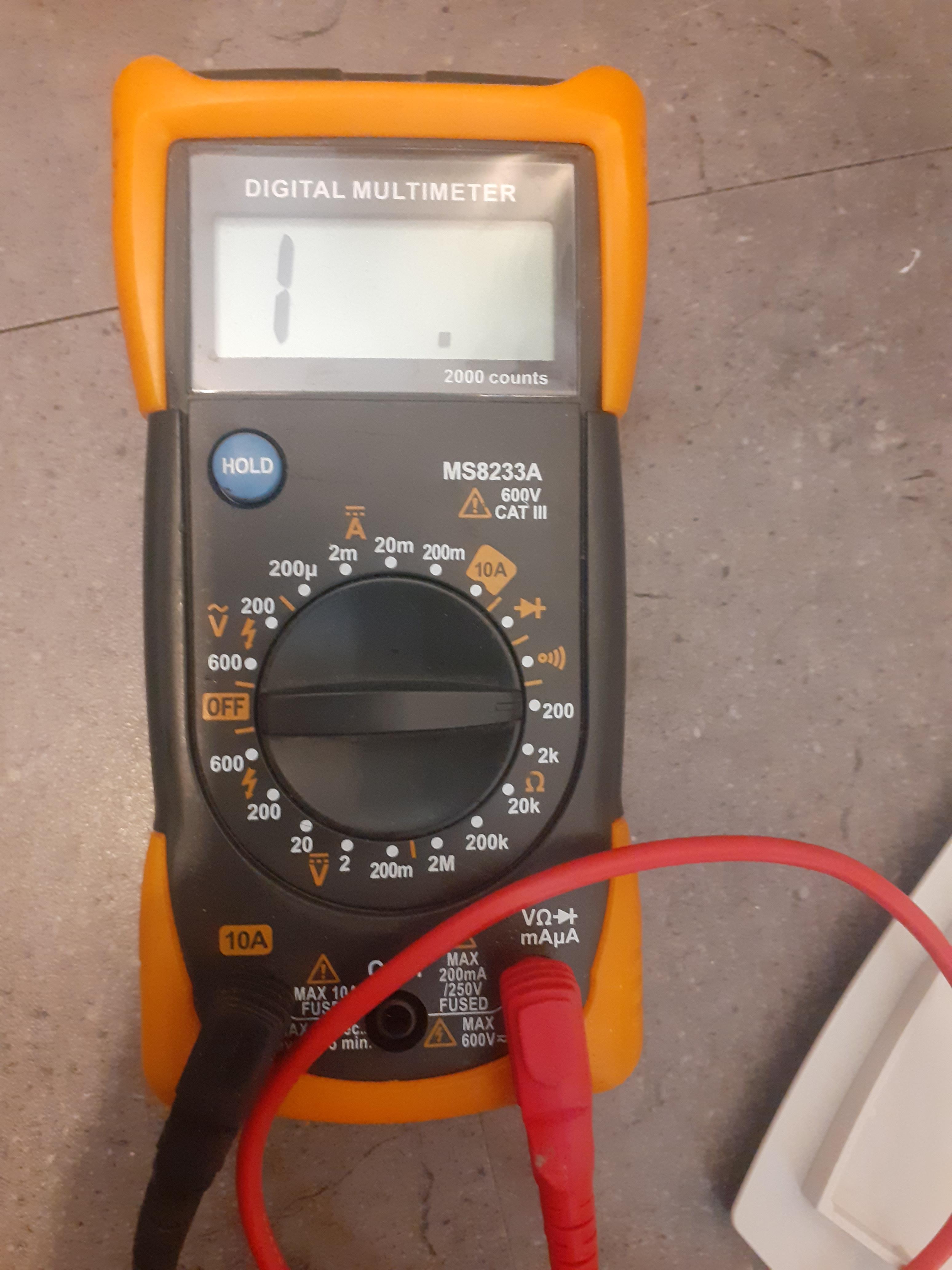
Thanks @ProDave. For the top immersion I can test on both the element and the incoming L and N attached to the thermostat. 18 ohms on the element and I get this on the incoming L and N: Bottom element just 18. Can't access the L and N as the ends are terminated inside the grey thermostat box.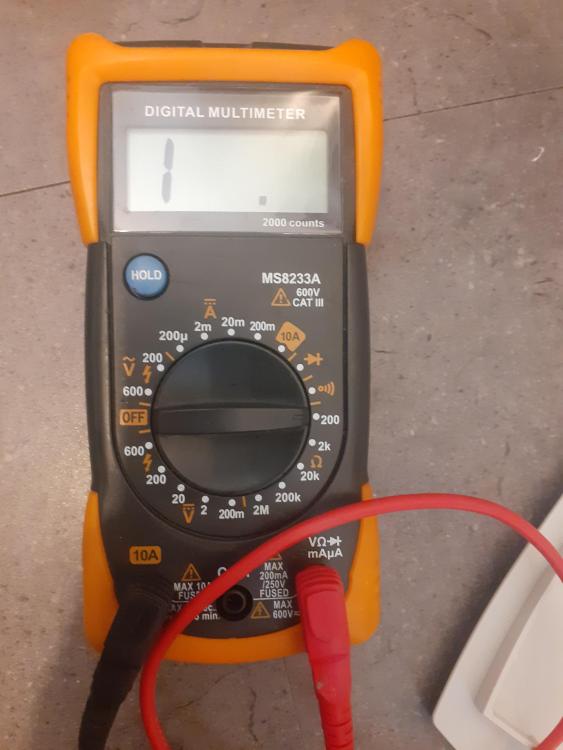
-
Why might my hot water tank not be working?
jamieled replied to jamieled's topic in Boilers & Hot Water Tanks
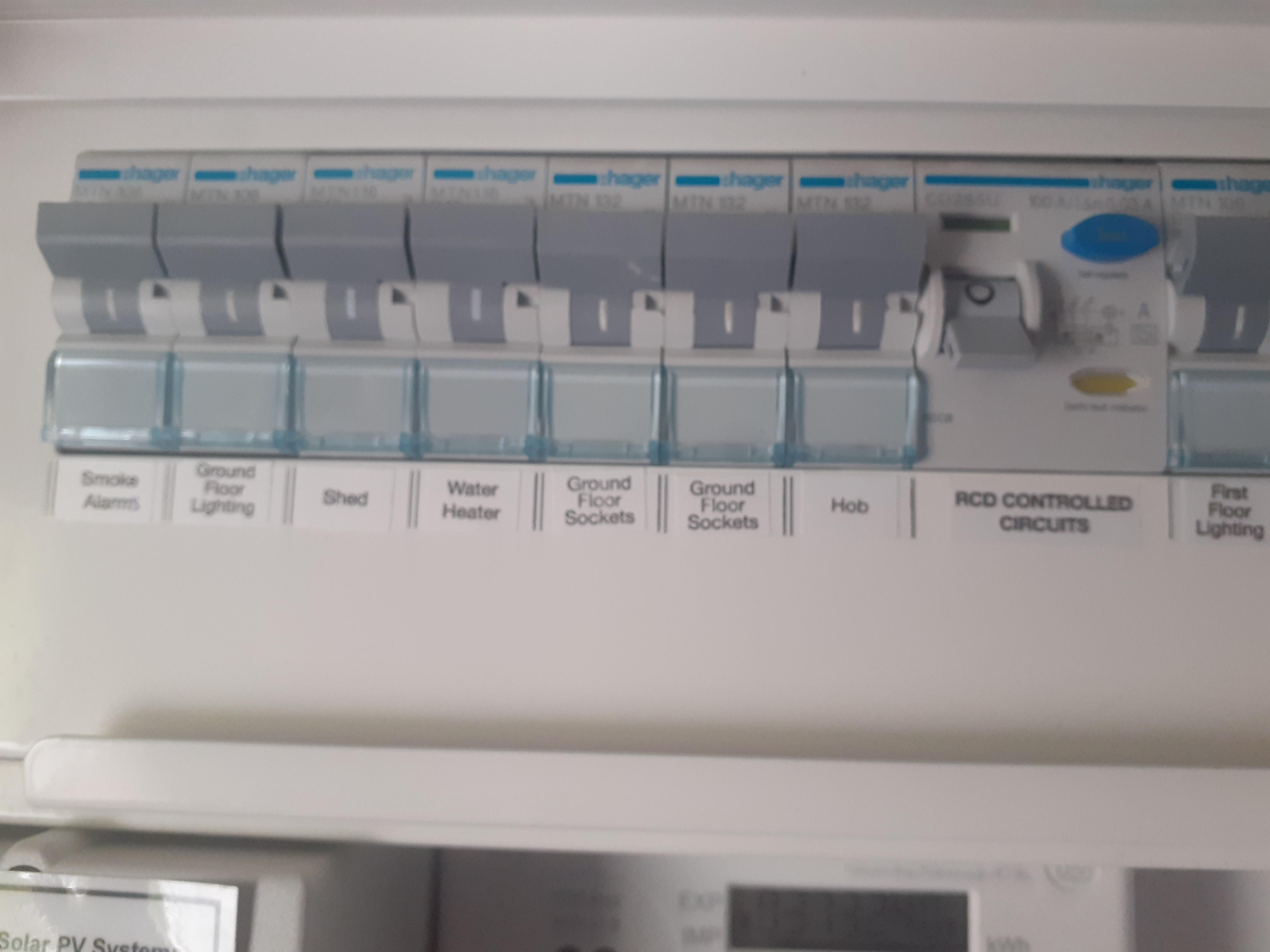
Electrician it is then. Is this likely to be related? Press the test button on the CU and it shows a yellow window which I believe is an earth fault?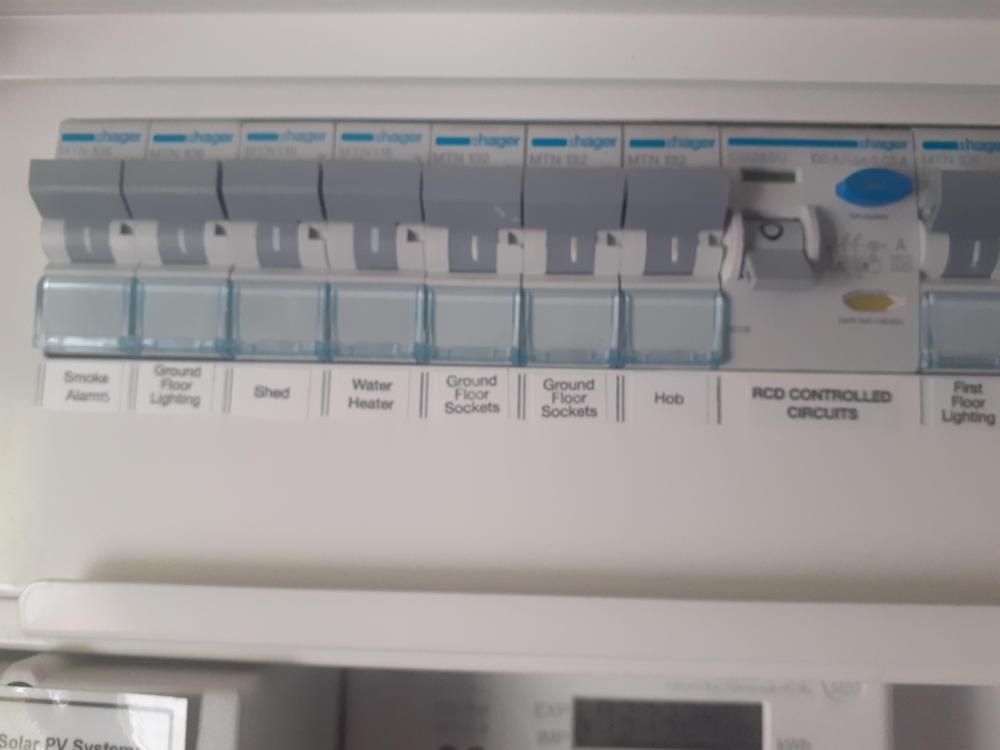
-
Why might my hot water tank not be working?
jamieled replied to jamieled's topic in Boilers & Hot Water Tanks
My multimeter capabilities are pretty limited and usually used for fixing vehicles. Otherwise my safe working practices in the house usually start and end with switching off the thing I'm working on at the CU, though I realise that has limits in what you can check. -
Why might my hot water tank not be working?
jamieled replied to jamieled's topic in Boilers & Hot Water Tanks
Both immersions gave a reading of about 18. Top: bottom: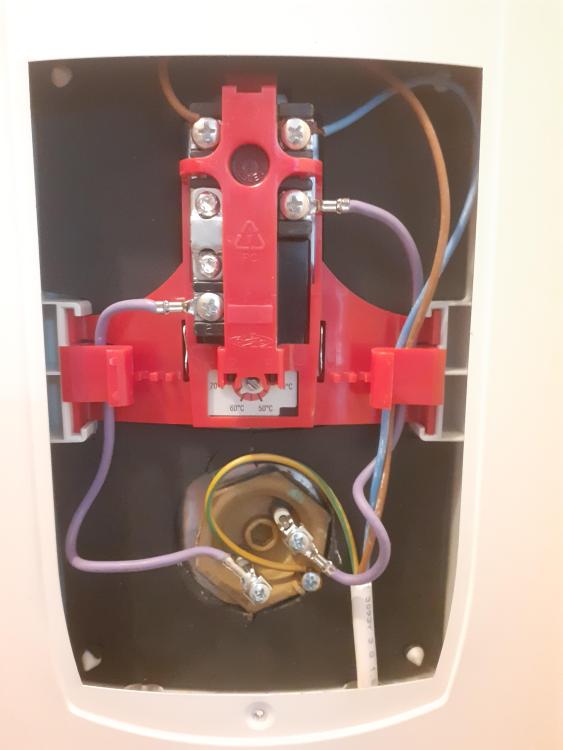
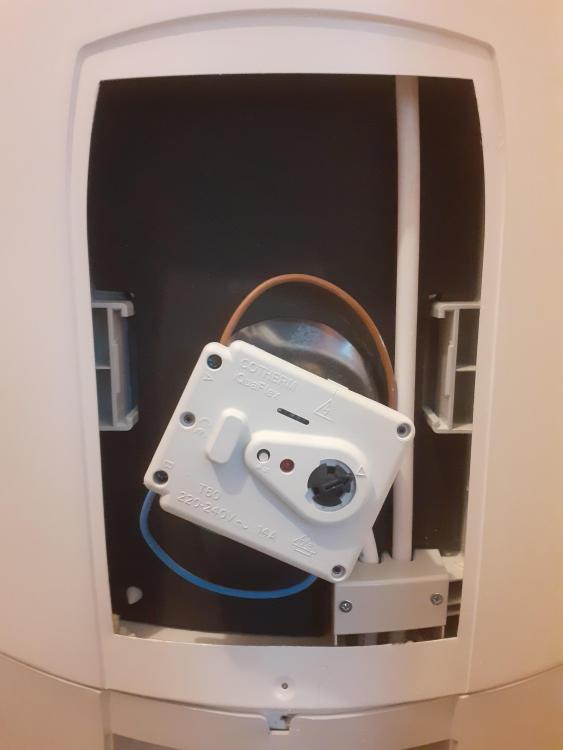
-
Why might my hot water tank not be working?
jamieled replied to jamieled's topic in Boilers & Hot Water Tanks
Pretty sure it'd rcbo but it's not something I know much about. New house, new CU about 1.5 years old. Same with tank/immersions. Nothings tripped. -
Why might my hot water tank not be working?
jamieled replied to jamieled's topic in Boilers & Hot Water Tanks
Yep, Have a multimeter. -
This will probably end in me calling a plumber anyway but I though it might be worth giving it a go here first. I have a relatively new OSO unvented cylinder with two x 3kw immersions. The top immersion is connected to a wall switch and wired to the CU which allows you to boost for 0.5, 1, 2 hrs. The bottom element is connected to a myenergi eddi which diverts from our PV and controls a programme boost to top up. We normally just use the bottom immersion. Today it seems to have stopped working. I first noticed when the eddi was exporting all our PV which is unusual. It seems to think the bottom thermostat is at temperature but the tank water is tepid at best. I'm guessing a broken element or thermostat - anyone like to hazard a guess? The OSO tanks/elements seem to have safety cut outs and reset buttons but they don't seem to do anything suggesting that is not the problem. The top immersion doesn't seem to work either - when I try and boost it from the switch it looks like it's on but it's not drawing power from the grid. To be honest I can't remember when (if)I've ever used it so it might have gone phut a while back. But the fact they're both apparently not working seems an unlikely coincidence to me.
-
Low room output radiant (not convective) wood burning stove
jamieled replied to davidc's topic in Stoves, Fires & Fireplaces
We spent quite a while considering this for our place - we have a lot of timber available. In the end I was persuaded to keep space heating and hot water seperate. We have a ~5kw woodburner which is our only source of heat. Hot water via direct electric immersion, a lot from solar PV. I'd be interested to know whether it can be done well though - my main concern was around overheating if we were reliant on it for hot water, but if there's another source like an ashp then that's dealt with. We only ever considered the boiler bit of the stove for DHW and I think it's maybe trickier that way. Our hot water tank gives out a bit of heat - it's set to a high temp but we make good use of the heat in an airing cupboard and it doesn't noticeably effect the rest of the house. -
I am in the North of Scotland and I reckon the shallowest cover on my mdpe is probably about 400. We've had some fairly cold days of about minus 10 or so with no bother. I'd be more concerned about cover depth for mechanical damage.
-
I had this quite a bit. Might depend a bit where you are in the country. In our LA in Scotland you need to submit forms through the ebuilding portal when you reach the notification stages defined in your building warrant. Despite doing this at a fair few stages it only rarely triggered a visit from the BCO. As long as you've done what you've been asked to do regarding any formal notification at stages I'd just continue with lots of photos.
-
I had costs from pasquill and glulam solutions for our ridge beam. In the end I used Pasquill, partly as we were buying a load of JJI's from them as well so it made sense with delivery costs.
-
Moving from self-build insurance to standard house insurance
jamieled replied to jamieled's topic in Self Build Insurance
As far as I'm aware the only landscaping that needs finished for completion is anything related to access(surfacing, access ramps/steps etc). We're still working away on most of our landscaping post completion in the same manner that you're planning to. -
Moving from self-build insurance to standard house insurance
jamieled replied to jamieled's topic in Self Build Insurance
This is true even within the same council authority. Our BCO from Highland Council wouldn't issue one despite us being nearly finished and all the main bits certified. In the end it wasn't a problem but I'm glad we didn't rely on it. I think one problem is that the legislation allows for a temporary habitation certificate but it gives a lot of discretion as to how it is interpreted, hence the differences seen across the country. -
SW normally stands for 'surface water' in drainage terms. No idea on yer pipe though.
-
Our external water pipe is about that depth and not insulated. We live in a relatively cold part of the UK. We don't have any problems with that section of pipe.
-
Small scale domestic hydro power generation project
jamieled replied to ProDave's topic in General Alternative Energy Issues
Peltons are normally used in high head situations. For lower head applications kaplans are typically the preferred choice. -
I have an insulated raft and we don't have this. This thread is the first time I've ever heard of the possibility.
-
British Timber Cladding (cedar v larch)
jamieled replied to Kernow's topic in General Construction Issues
I can only comment on Larch, as that's what we have. Using local timber was one of the main factors in our decision. Weathering seems relatively consistent on a given aspect, but different between the aspects (i.e. SW facing has weathered more). Some folk make a big deal out of the timber origin, and while it's important, so is the planned cladding orientation and fixing method. We had a few banana boards in the cladding stack that were no use. Larch is slightly prone to cupping, but if you double nail each board and ensure the inner/outer boards have their grain correctly orientated (If you're using board on board) this works to your advantage.