
Nickfromwales
-
Posts
31377 -
Joined
-
Last visited
-
Days Won
346
Everything posted by Nickfromwales
-

The basic architect questions thread
Nickfromwales replied to SilverShadow's topic in Surveyors & Architects
Prob better to use the £100 for beer as nobody can get the application approved. The architect should be advising as part of their ‘professional advice’. -
Same if the existing boards are ok. Maybe use the opportunity to put some fresh acoustic insulation in there. For my SiL’s house I put plywood inside the metal webs of the MF tracks to beef up the walls before plaster boarding. Made the wall much stronger.
-
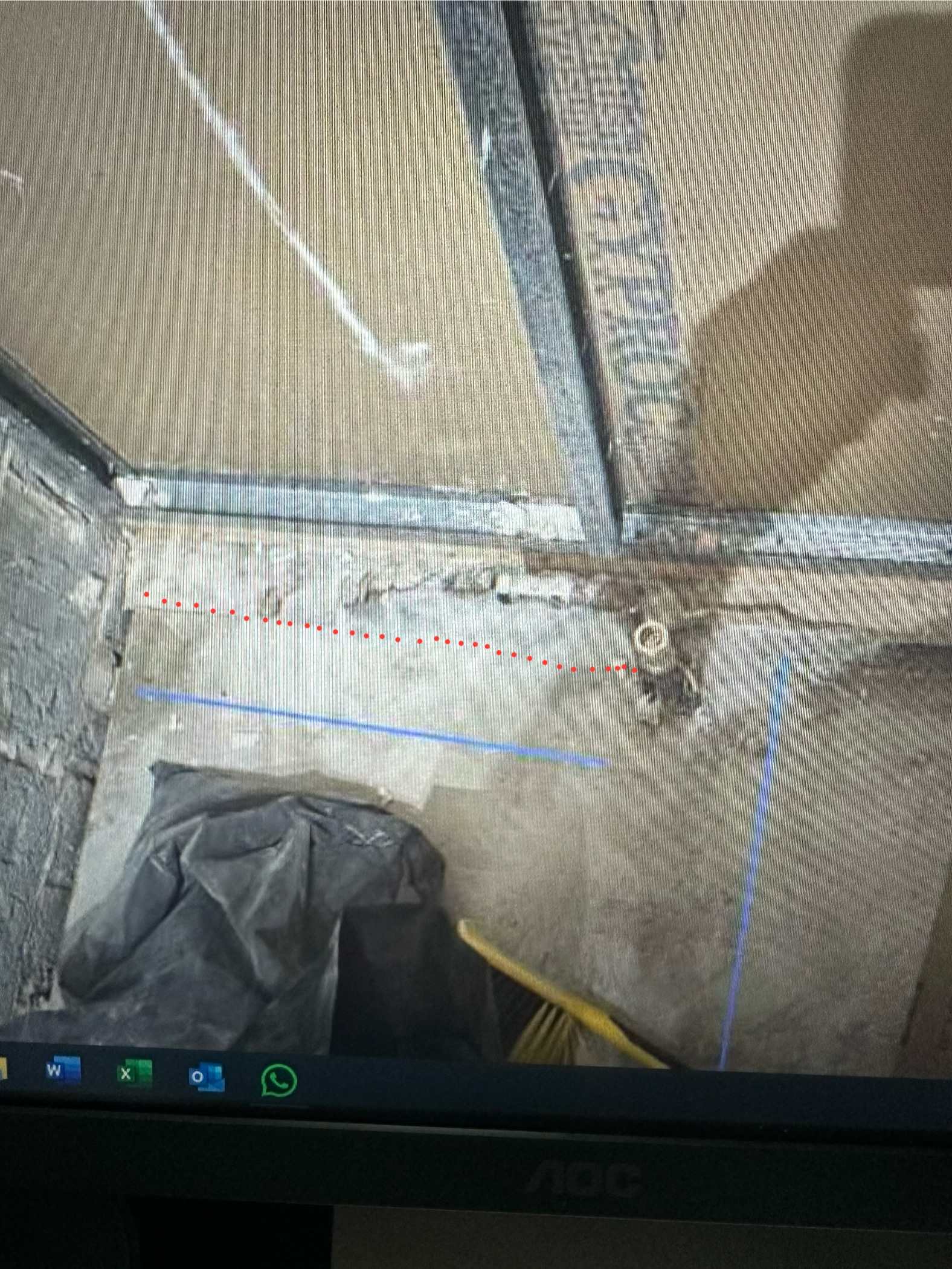
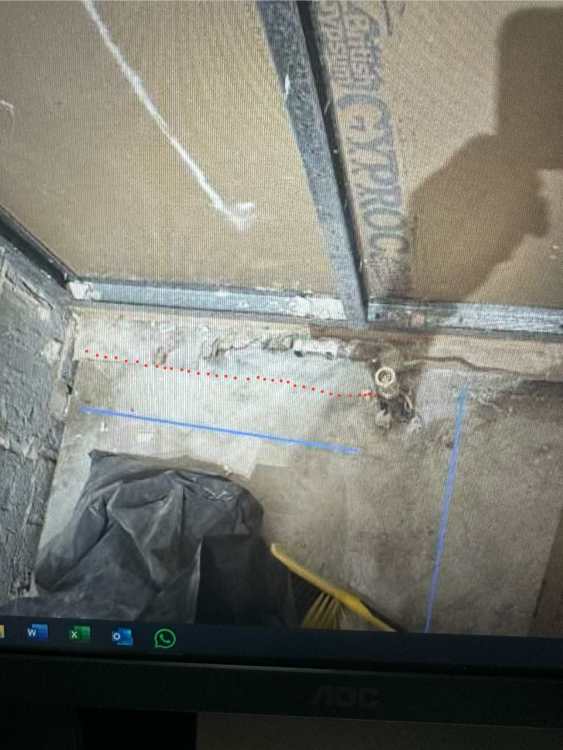
Cut along the red line, to leave the chipboard under the stud wall. Then put a piece of wood (18mm plywood or similar) under that existing flooring, wide enough to be 75mm under existing and 75mm on show, and screw / glue it by fixing down through the chipboard into the plywood to form a connecting ‘tongue’ of plywood. Then your new flooring will sit on that, which you then glue and screw down into, and job done.
-
erm....the other £70bn is engineered and just finds it's way out of the public purse and into the hands of c****. Same thing, year in year out. That's why in the UK we're switching off streetlights to try and save money. #utterlyfeckedandnothingwecandoaboutit
-
I was happy to install YY, until the merchant said they just don't sell any of it! 3-core flex it is. I just observe segregation where things like long LED strips are in the mix, so the DC runs are not bunched with equally long runs of AC stuff; unless it's a small bit of LED which doesn't really seem to ever care how you run the cable.......no complaints yet, so I'll belay starting to panic before bedtime. This. Under-volt = over-current, and then the LED's are on a shorter lifespan. RIP.
-
That's SELV, Safety Extra Low Voltage, old boy What someone says when a random Welshman on the 'interweb points out that they've spelt SELV incorrectly 🤦♂️😆
-
What does this architectural symbol mean?
Nickfromwales replied to Tony L's topic in Surveyors & Architects
That projects out almost as much as the previous detail though? Very little in it, from what my Pentium 1 brain is looking at. Ultimately you will get a solution to the remit you have provided, so if you have specifically asked for the least projection solution possible then the AT needs to sharpen his pencil; however if you just said "give me a secret gutter" and no further information re particulars of how you want this to be presented have been forthcoming, then you must be willing to accept a draft revision (for discussion) at the outset so you can see what you 'don't like' and then request changes to arrive at something more inline with your expectations. This is self-build and feck all goes right first time plus...we're only human too. The issue I constantly struggle with is getting exacting information from my clients, but it's not because they don't know what they want, it's more about things getting lost in translation; folk simply don't know what the options and possibilities are, so they need to see something in front of them so they can say "close, but no cigar yet....let's discuss!". That's why I choose to work with a select few (patient and pragmatic) people, as they get the haywire between my ears. We arrive at solutions very quickly, with zero friction or fuss, and all whilst sharing the same common goal; get the client the best things we can for the least amount of time / money spent. Every damn day is a school day. I don't care who you are, how old, how experienced, if you can't be open to a bit of collaborative thinking and discussion (2 heads blah, blah, blah), and be patient whilst the answers begin to form into a thing or shape you like, then how would anyone ever get to the finish line with hair and sanity still intact? It's not a war, or a battle, it's a team effort; all you need are good team members to work with. So if the right solution doesn't jump off the 1st page of a thick book, best to not shit the bed methinks. Share your findings, google search images, likes and dislikes, and discuss! Then the juices will start flowing Then it'll be the best house it can ever be. Tres bien. -
What does this architectural symbol mean?
Nickfromwales replied to Tony L's topic in Surveyors & Architects
Erm, no? The red line is exaggerating the issue, and the only thing I would improve upon here is that the two insulation layers should meet, and not be separated by the flooring / deck boards as shown. The cold element of the steel is the edge of the upper 'toe' so is marginal at most (imho). Not if the airtightness is detailed correctly Attempting to use the PB layer as your AT layer is not a robust plan afaic, so maybe I have misunderstood you in that respect? The detail shown doesn't show an AVCL, so one can only assume you have not yet crossed that bridge with your AT and that's why it isn't detailed, yet? -
Amen.
-
What does this architectural symbol mean?
Nickfromwales replied to Tony L's topic in Surveyors & Architects
Literally.................. ....took the words right out of my mouth, Mike. -
Is that your advert in the marketplace? "350 bats, free to good home"
-
What does this architectural symbol mean?
Nickfromwales replied to Tony L's topic in Surveyors & Architects
It has to be wide, as it's so shallow though? If it was narrower and deeper then the rafter would snap in half and that's not any of an improvement is it lol? Doesn't look as if it could be any higher up with a 200mm rafter either, so a solution that loses you the least internal skeiling height most prob, preserving GIA. Airtightness trumps insulation here afaic, so for the last one we only put 20mm of XPS (Jackoboard) over a steel column to stave off cold bridging, then bonded the plasterboard to that. Was a huge uplift to the wood the (sacked) builder just fixed to the steel. Not much needed to address the steel tbh. You can't double or triple the insulated plasterboard, just fit as much depth as is practicable in rigid insulation board (less PB), then a service batten and plasterboard to that, which should do the job -
I'd recommend a TCT percussion SDS drill vs diamond core, as that'll be 'soggy' and a total bastard to core drill multiple holes in. Not so bad if you can hire a diamond core drill with a hose pipe attachment to allow water to flush the hole whilst it's being drilled. May need both, if you hit a bit of rebar as the TCT SDS won't like that very much whereas the diamond will whizz through it.
-
Yea. Let’s ban him!!! Shocking sir, call yourself a professional? 🤣
-
Just done 9x Fakros and had ‘input’ as to how / when they went in. 22mm fibre sarking board over 300mm posi joist roof with blown in cellulose. Breather membrane sat directly on the sarking, then 50x25mm vertical rising counter batten, then 50x25mm roof battens laid horizontally for concrete tiles. Zero issues. Manufacturers installation guidelines trump everybody else, including the BCO! The membrane should have been flat on the sarking afaic. You need to get the roofer to expose the heads of these openings, and check how / where water is getting in. If the membrane has this droop then these are just going to become natural gutters, which collect and pool water at the top of any openings / solar PV trays. Poor suggestion from Potton here I’m sorry, but they’ll just blame your roofer.
-
Forget trying to fill the cracks from the face, I believe the phrase applicable here is “pissing into the wind”. If you want the wall to be ‘pretty’ then fit some horizontal battens and some vertical cladding, timber or synthetic, as then the water can dribble out of the new drip holes and down to the ground, behind the cladding. That’s perfectly fine, assuming the walls been there for x number of years and there’s no notable movement of it from its original cast position?
-
Rainwater pooling next to external wall
Nickfromwales replied to LLL's topic in Rainwater, Guttering & SuDS
I spotted that in the other thread. The condensate from a boiler is corrosive, so you’re not allowed to discharge that into metal pipe work. -
Windows delivered - wrong internal finish/colour
Nickfromwales replied to AppleDown's topic in Windows & Glazing
Thanks for the update. Install them first to see if they offend you, and if they don’t then step away from the spray can and use the savings for bathroom fittings -
We thought it was blockwork because of the horizontal lines. That's the correct answer, give yourself a gold star and a Werthers Original. You just beat me to it......
-
Yup. The second pic looks like someone’s poor attempt to relieve the trapped water. Looks like it’s just had a drill put through it. These drainage outlets need to be 40mm waste pipe minimum and be kept clear. Defo needs addressing properly but you’ll always have this runoff. Working out how far down you can make the holes would help, as the lower the better, if you can do fewer larger holes, but smaller ones (32mm or 40mm) would need to be high and low to cope.
-
My apologies, I hadn’t noticed that Prob best to stop this before we get shouted at 👀
-
What does this architectural symbol mean?
Nickfromwales replied to Tony L's topic in Surveyors & Architects
He takes the biscuit. Does that count? -
What does this architectural symbol mean?
Nickfromwales replied to Tony L's topic in Surveyors & Architects
Many heads always better than one, imho. -
My fear, as con’y roofs are open to atmosphere.
-
House has prob been retrospectively blown in with beads on the external walls. Probably a cold room too, with that horizontal radiator …..