
Nickfromwales
-
Posts
31377 -
Joined
-
Last visited
-
Days Won
346
Everything posted by Nickfromwales
-

Struggling to find an sink trap adapter.. Any ideas?
Nickfromwales replied to FuerteStu's topic in Waste & Sewerage
Just reduce 40>32mm at the point these two meet, and fit a smaller trap? That’s what I do, as I never run long lengths of 32mm pipe for basins any more, always 40mm and then reduce at the bend where it turns from vertical to horizontal. I use a 40mm 90° bend with a 40>32mm reducer glued into the bend, and then a short piece of 32mm to an 1.5” trap. Simples. You can even just buy an anti-siphon 1.5” trap. -
Waterproofing window sill with too little incline
Nickfromwales replied to Bruce's topic in Waterproofing & Sealants
Is there mastic sealant under the cill? As it appears to be a unit that weeps out of that small shadow gap, onto the top of the cill and away, then I’d say you’ll be better off pumping a load of clear sealant under the cill to appease the BCO. They often don't / won’t comment on solutions or methodology as they get into trouble or can become liable if their suggestion fails. Some BCO’s are helpful and pragmatic, others are clueless, obtuse dickheads. As your builder if the weep / drip from the frame of the unit only comes out above the cill. If so, pump it full of clear frame sealant and you’ll be fine. Out of curiosity, has it been in for long and any signs of ingress to date? FYI, this is your builders problem to solve, not yours, so get them to take over solving the problem but tell them you want to discuss it before they “do something” and you don’t know what it was, plus your BCO will need to say they’re happy with it before it’s done; you could end up having to remove the sealant if they don’t like / approve it. -
Kick them to the kerb ffs. This is ever so slightly important, so don’t give poor performance a second chance to romance you back into you using them. Put your efforts in now, and don’t just use them because of this initial familiarity, so far they’re not looking good at all. ”Bin”. Simple as.
-
Avoid that Sineat(?) adhesive. Was getting sucked dry in no time, and boards weren’t staying stuck to it if any open time had been introduced. Switched back to Gypsum and totally different results. Client bought Sineat stuff as it was the path of least resistance, but even their plasterboards were shit in comparison. If a roller dipped in 50/50 SBR/water solution, put on with a shaggy roller is cheap and simple, then I’d say sizing the walls the day before to bind the surfaces would be a no brainer. Not exactly something you can revisit, is it? Don’t get lazy now, get your finger back out and put in the time and effort 🫡. SBR is cheap enough, and can even be applied with a Hozelock spray bottle that you pump up, but you Siri need to take a soft brush to the wall (hence the roller application as it kills both birds).
-
Long time reader(years of), first post!
Nickfromwales replied to Pete89's topic in Introduce Yourself
Just using a porous block which has a continuous woodcrete bridge from external leaf to the internal leaf, doesn’t bode well. Needs a lot more detailing, such as parge coat for airtightness, but it’s just very poor vs EPS and let’s rainwater through which is annoying and caused delays on a previous project. If you’re rendering, it’s also much more of a process to get it to a point where the walls are flat / smooth enough to flat(single)-coat. Nudura are very good blocks, and are 8’ long so produce much straighter walls and fill area faster. PM me if you need a good ICF installer to do founds / frame / roof / floors & walls etc via one contractor. -
ASHP low pressure help pls
Nickfromwales replied to canalsiderenovation's topic in Air Source Heat Pumps (ASHP)
….. no comment, lol which is very unlike me! Good that you feel confident doing the filter check, nothing better than that sense of accomplishment and it’s good to get to grips with simple shit you can check yourself (like dipping the oil in the car etc). Quite a few folk on here mention the Heat Geeks for having a decent installer network, so maybe start looking into getting some names and numbers. I think the HG’s are middlemen, so expect to pay them and have a 3rd party subby turn up. That’s what happened on the job I’ve just been on, also felt a little “rushed” on the full install with some schoolboy errors. The boss of the firm that sub’d was a good egg and quite knowledgeable in the cold light of day, but they are very much in and out to make money imho. When asked to do some extras, it was a firm “no thanks”. The lad (+1) that were left on site were nice guys, so as a minimum at least they didn’t offend! Russian roulette it seems, but if you saw the job I’ve been on this week you’d consider yourself bloody lucky. Absolute pile of dogshit, so I’ve ripped the lot out and done it all from scratch. Not one bit could be retained, just a joke, and the previous “engineer” on his mother’s side just left a couple of Boy Scouts behind who didn’t even own pipe clips. I mean not one single pipe was clipped, including the D2 discharge, with the weight of that having broken the sunfish into two halves which were just hanging a few inches from each other. Theres always someone worse off etc, but just an embarrassing offering of people with great websites and shiny new vans paid for by unsuspecting victims of underwhelming cock ends. Choose well!! 🙏 -
A 20a relay bridging out the 20a DP immersion heater switch will give you the ability to turn the immersion on / off with logic should get you there simply. I am not familiar with your HP, but does the MI’s state it needs to be able to turn on the immersion for weekly purge?
-
You should have selected an architect, then formally engaged, then they should have offered to connect you with trusted associates. Typically it makes sense to get a draft revision of your chosen plans for discussion and comment, before you ask a planning consultant to engage; if there’s nothing yet to review then they’re redundant. Sounds like some backscratching, or over-enthusiasm to spend your money. Time to see other people methinks, just not good behaviour.
-
Long time reader(years of), first post!
Nickfromwales replied to Pete89's topic in Introduce Yourself
ICF is a great choice, and you’ll be very happy. I'm not a fan of woodcrete, so my advice would be to go with the EPS based systems. My experiences are direct, not hypothetical, as I’ve worked with a lot of self builders and have been on all types of projects, through to PH / PH+ and beyond, with the benefit of these being anything from masonry EnerPHit style refurbishments, to turnkey TF, and all types of ICF. Seen the good, bad, and ugly. Good to see you getting this in check before breaking ground, as early planning will pay huge dividends later on. -
Indeed, but I think putting it simply @MikeSharp01’s looking to explore and understand. We suffer the same affliction. For simplicity, immersions usually have an inbuilt thermostat, some fixed max temp and some user-definable, but ALL with a manual overheat cutout. The immersion should simply only require a suitable sized heat resistant 3-core flex and that to be broken by a local 20a DP switch, fed from a unique 16a B breaker in the CU. That’s it. Some ASHP’s have an inbuilt immersion, others need to manipulate a 3rd party one, the idea of each to be able to perform the anti-legionella purge. I fit a lot of Panasonic unit, and these use an inbuilt 3kw heater to cover the event of the compressor failing, this provides space heating in failsafe. I’m not certain, but to heat the DHW in such an event, iirc, it would issue a signal to turn on the immersion. Either that or you just go flick the 20a switch when you realise the 💩 has hit the fan. Cylinder DHW temp is a simple probe stat that pushes into the stat pocket. I push some insulation in to keep the probe in place by friction, and to make it a little more accurate / reliable. As above, too many different ways from too many manufacturers, and should just be one standard. But that would be too easy I guess.
-
ASHP low pressure help pls
Nickfromwales replied to canalsiderenovation's topic in Air Source Heat Pumps (ASHP)
In the Telford MI’s, cylinders over a certain size have instructions to bridge the cylinder flow and return tappings together with a simple inline gate valve (iirc) to allow a permanent, adjustable bypass to take this bump out of the road. I wonder if the engineer upped the pump speed, in an attempt to combat the frequency of the low flow issue, eg giving the ASHP access to a bit more throttle; this would account for why you had no cylinder noise issue before. I strongly dislike these filters as they have such low capacity for functioning when there’s even a slight build up of crud. @canalsiderenovation Get a larger mag filter installed, like a Fernox TF1 or an Adey Magnaclean for easy life going forward. This one will keep blocking prematurely afaic. I'd also ask specifically if the pump speed had been increased and that’s what has caused the cylinder rattle. -
ASHP low pressure help pls
Nickfromwales replied to canalsiderenovation's topic in Air Source Heat Pumps (ASHP)
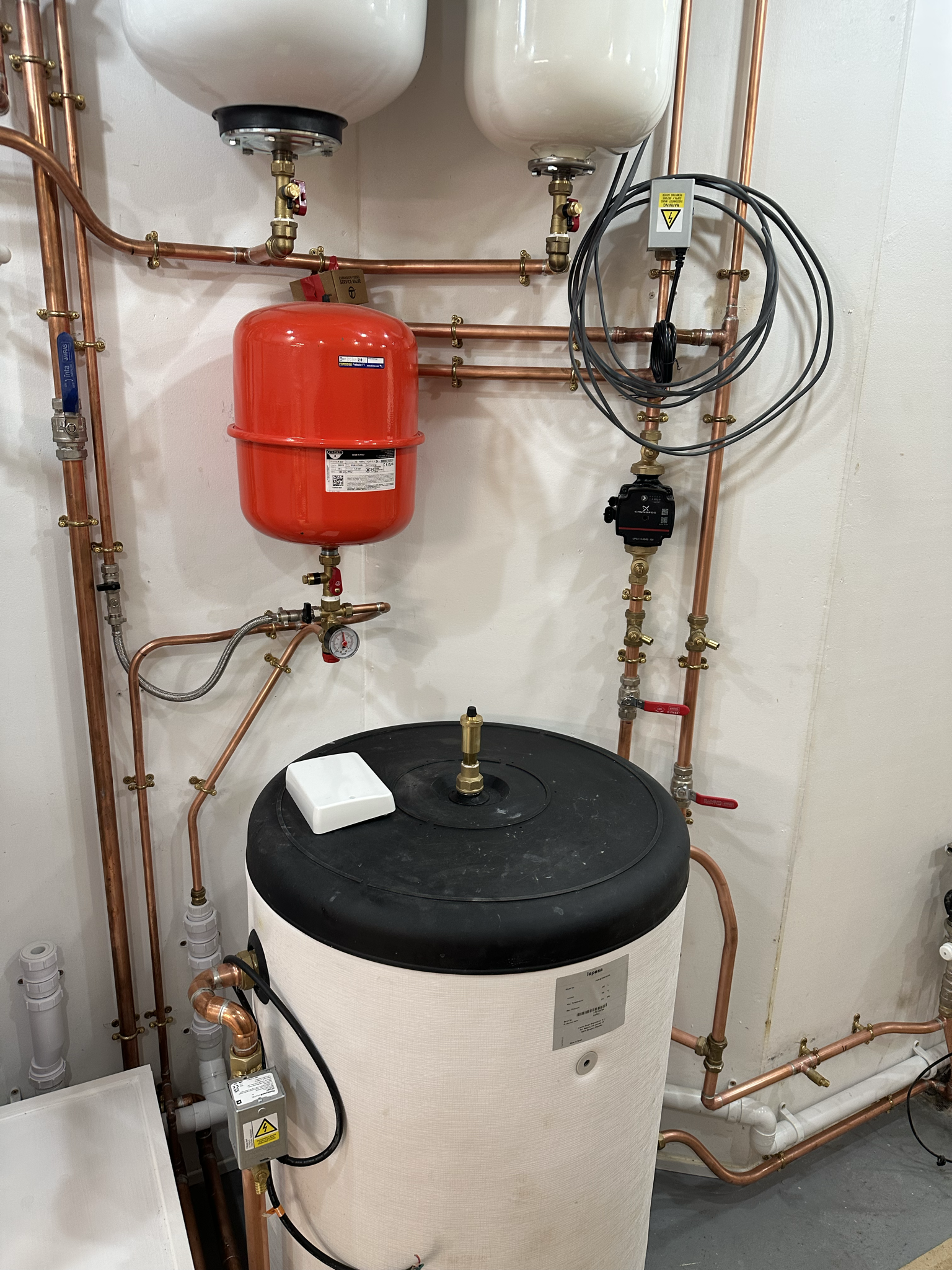
This is why I always bin the tiny supplied tundish and go from 15mm in / 22mm out, to 22mm in / 28mm out, and have the vertical drop sufficient for the gravity runoff to never back up. I always add another EV and I always buy my own tundish. Stock supply doesn’t cater for worst case or near-to-ok installation standards (or worse), plus the supplied items are bean-counted to death. Factory EV to the left (400L UVC) and the one I added sits alongside. As this has a hot return there is additional heated volume of DHW outside the cylinder to consider, so I always go nuts on expansion and I don’t get recalls to jobs. Some of my handy work : Note, these EV’s all have the splendid Tesla service valves on them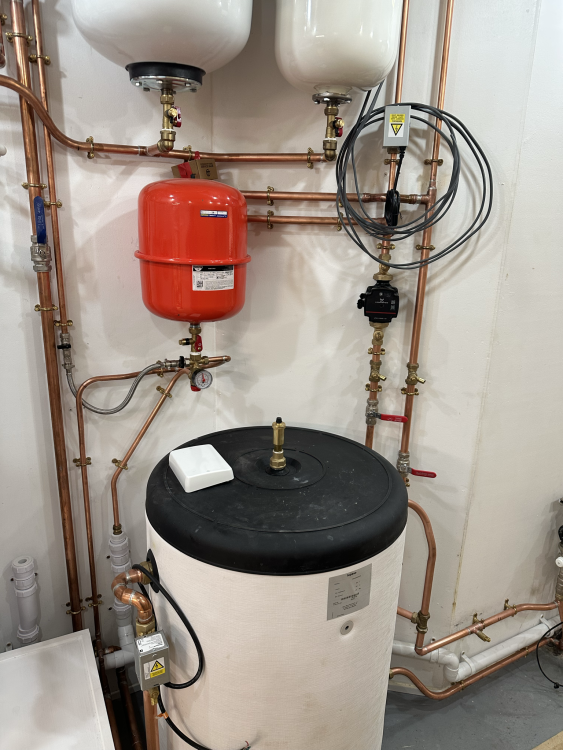
-
Plaster-In LED Lights - Fire Resistance
Nickfromwales replied to Jammy5's topic in Building Regulations
Ask the supplier if the lights are fire rated or not. If not, then you’ll need to fit fire ‘hoods’ behind them, in the void, or make boxes up out of 15mm FR plasterboard (sealing all joints with intumescent caulk). If your steel is not exposed, it doesn’t need to be fire boarded, as the 12.5mm PB + skim coat gives you 30 mins FR. -
Should I be concerned about this crack?
Nickfromwales replied to Whats the crack's topic in Brick & Block
Likely that the original windows were solid timber, maybe a hardwood, so when the windows were changed to UPVC the external face course of brickwork had a chance to drop slightly. Back in the day the windows would have gone in as the wall was going up, and they would have bricked to them / on top of them. A lot of bay windows fail after the original hardwood windows have been removed as useless fitters don’t realise they were sharing the load through the frames / mullions. Not a worry, very typical, just needs pointing again to do the job a bit better. -
None whatsoever, and even less of a worry here as you’re skimming new over new. This is perfectly fine for refurbishing old houses, so fill your boots. 🥾
-
ASHP low pressure help pls
Nickfromwales replied to canalsiderenovation's topic in Air Source Heat Pumps (ASHP)
They’ll have to raise the red vessels, as that’s on fixed pipework, but the white ones are on flexible hoses so make sure that if they just bend the hoses instead of lifting them that the hoses aren’t kinked. If you can ask them to raise the brackets for all the vessels, to accommodate the Tesla valves, then I’d do so to ensure as good job has been done as possible for the fee. -
ASHP low pressure help pls
Nickfromwales replied to canalsiderenovation's topic in Air Source Heat Pumps (ASHP)
Ok. Once the glycol has been topped up, ask them to pressurise when cold to exactly 1.5bar so you can use that as a benchmark to monitor by. -
ASHP low pressure help pls
Nickfromwales replied to canalsiderenovation's topic in Air Source Heat Pumps (ASHP)
Yup. Shite service. -
You should just be able to PVA the wall, but then I'd never do less than 2 sets over PVA, if you want it perfect.
-
ASHP low pressure help pls
Nickfromwales replied to canalsiderenovation's topic in Air Source Heat Pumps (ASHP)
....they didn't top back up and run the system to bleed it after topping up the glycol.... That's what my money is on if this issue never previously existed, and has now 'gone away'. Will be interesting to hear you report back as it is best to now check it every other week and note any drop. Check it when the system is cold if you can, so the readings aren't of hot (expanded) and then cold (contracted back). Amen. -
Maintaining air tightness with downlighter
Nickfromwales replied to Annker's topic in Heat Insulation
Check out https://tornado.co.uk/?srsltid=AfmBOoosdIVoVQ8X45D5y7q25CnrsiL903M2bP-rKjIiqQV0YigJYT_0 -
Maintaining air tightness with downlighter
Nickfromwales replied to Annker's topic in Heat Insulation
As with everything, there are good, bad, and excellent folk out there. -
Likewise. My solar go to guy was as curious to know, but the industry in general (and the on site sparkies at the time) were clueless. I even drew a picture on the wall, of the how the pickup coils were positioned and functioned, to show it should be a feature that comes regardless, but also got blank stares.
-
Maintaining air tightness with downlighter
Nickfromwales replied to Annker's topic in Heat Insulation
For a clients build which had some deep lights and mist heads, I just used an off-cut of duct (125mm for mist heads iirc) and some AVCL to create ‘top hats’, and then taped these into cutouts. These were done after the cellulose had been blown in, but wasn’t too difficult or messy as I could push back and compress it enough for it to stay in place for cutting the membrane. A bit of cellulose fell out, but prob not equal to what I needed to remove to create some clear area for the recess, so all good. Doubt you could do this approach before insulation gets blown in, unless you somehow support these when the cellulose gets pressure filled; otherwise your inny’s would become outy’s.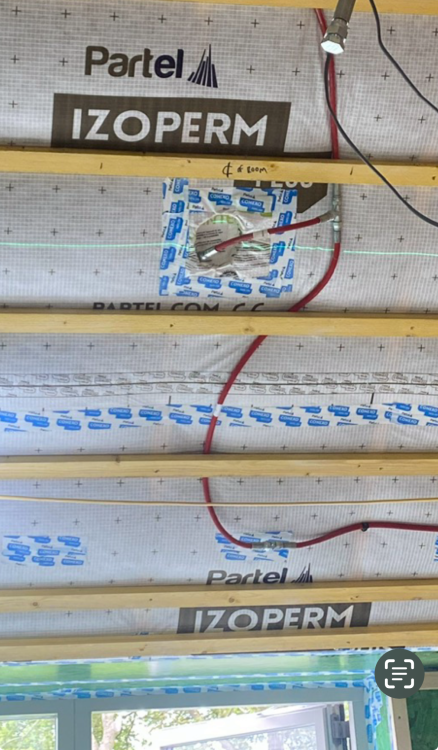
-
I think these “should”, by the laws of physics, as in EMF passes through coils to register the flow of energy, so should work bi-directionally in principal. Depends on whether the software is told to register the flow in each direction or not, eg it charges you but doesn’t (won’t) refund you. So to answer the question, I’m not sure.