
Nickfromwales
-
Posts
31377 -
Joined
-
Last visited
-
Days Won
345
Everything posted by Nickfromwales
-
You’d need an 1100mm tray minimum, so a drop down seat can go at the shower end. The valve and riser rail need to be in front of the user when they’re sat down, with the riser rail at half height in the room. I fit extra long hoses, and a second ‘holster’ up high so an able-bodied person can enjoy a shower in there too, or your new visitor can use it standing up whilst they’re still possibly able to do so. Needs to be a sliding door or hinged to open outwards, not an infold, to cover you against someone taking a tumble and holding the door shut. Single storey small side extension would seem less damaging to the look of the house, and be far more practical. All depends on the age of the person, level of mobility, and if their situation will worsen over time. A grant may be made available to you or to them so ask CAB for advice on this, to maybe offset the builders costs.
-

ASHP low pressure help pls
Nickfromwales replied to canalsiderenovation's topic in Air Source Heat Pumps (ASHP)
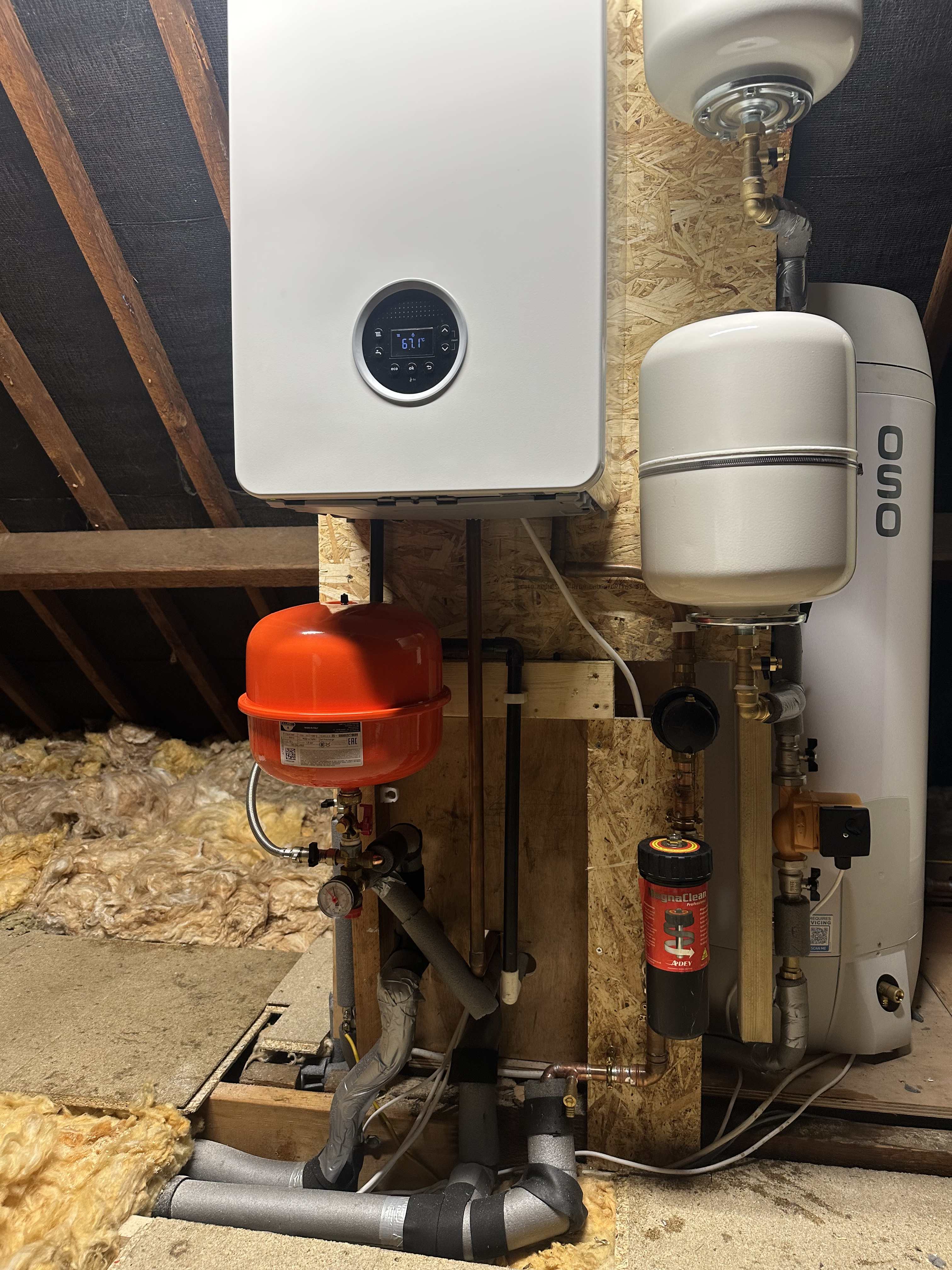
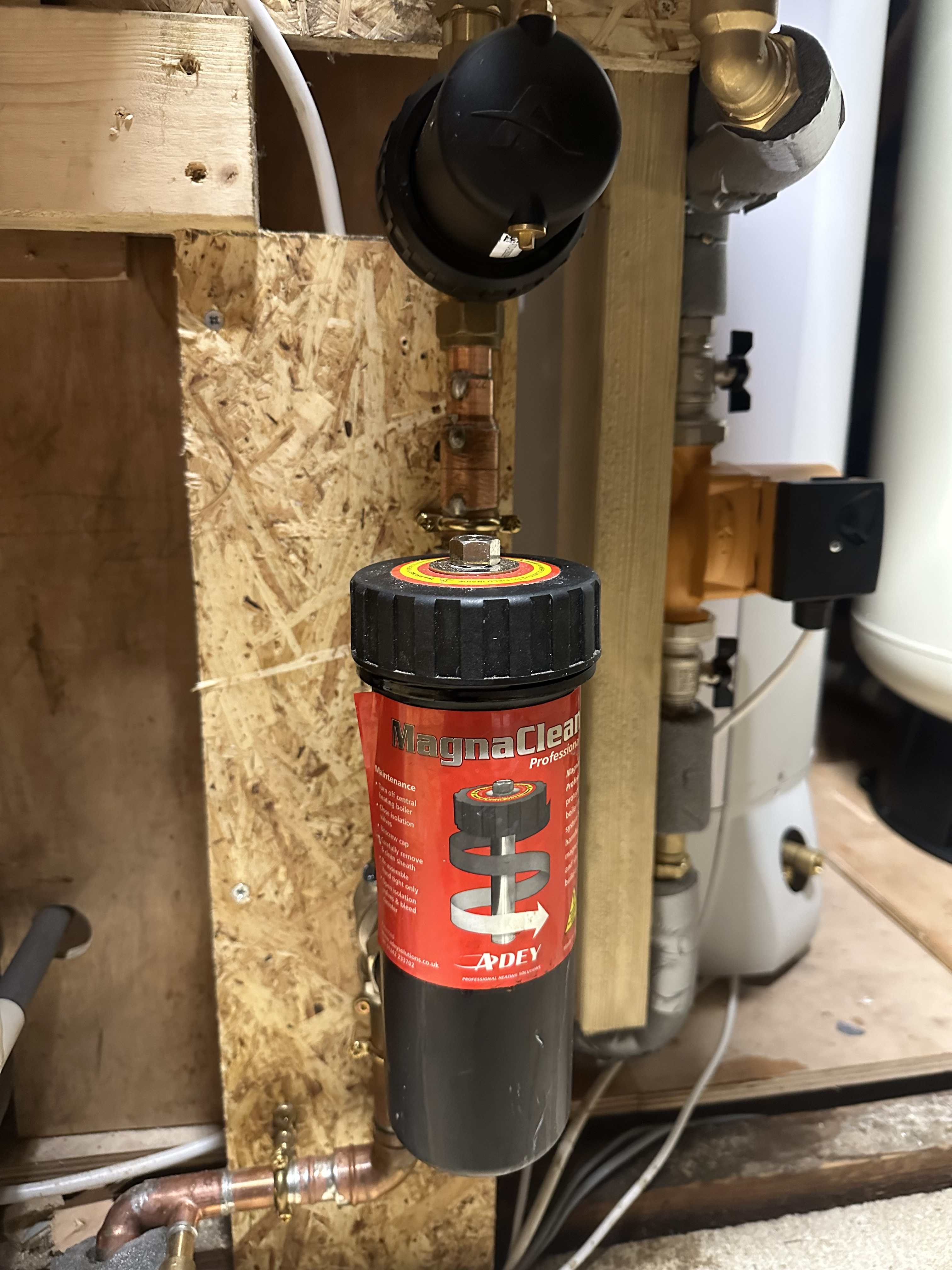
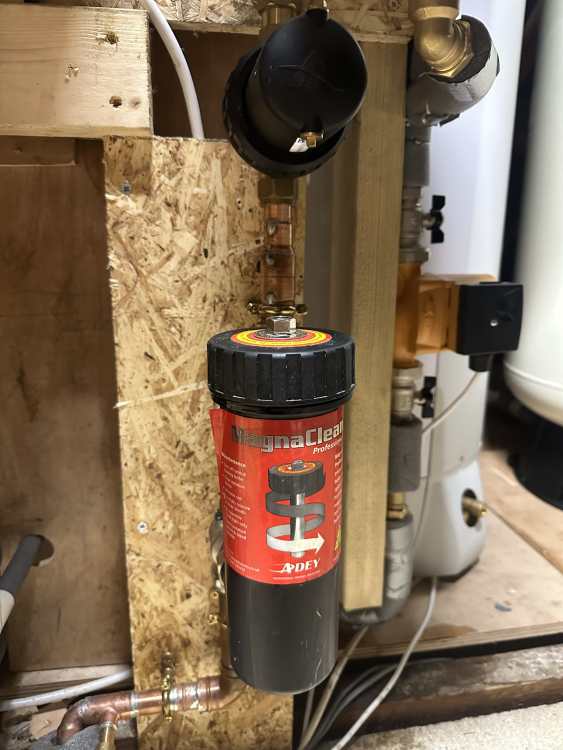
Prob best to add that the mag filter should be upstream of the strainer, to capture as much crud as possible before it blocks the much lower capacity strainer ‘sieve’. Also ask (whoever) to fit a mag filter which has a drain point at the bottom (a-la the TF1); it was annoying as feck to have to siphon out the water in an Adey Magnaclean to dump in some inhibitor this week. The client had a new WB boiler fitted, so the one above was requisite for warranty. Note that is an Adey one (mass produced for WB most prob) but has a vent on top and a drain off at the bottom. The Magnaclean had just the vent at the top which was quite annoying. More annoying was the valves on the Magnaclean wept slightly when in the off position. @canalsiderenovation, I’d go for a TF1, but the biggest plus here is when the system needs dosing again. You just turn off the valves either side of the filter, put a bowl under the filter and open the drain to empty out. You remove the magnetic cartridge and clean it, then put it back in, remembering to check you closed the drain off properly (1/4 turn like the filling loop ). You can then self administer the additional glycol by pouring it into the empty filter vessel. Close the lid, open the two isolators back up, vent the filter with a radiator key, and get your arses to the pub. No plumber needed. When the dust settles, give me a nudge here and I’ll add more details of a few things you can do to make self checking and self maintenance a breeze. In the meantime, shake the shit out of their quote, and ask for them to resolve the noise issue before a single penny gets even considered to be heading to them. Personally, I’d tell them to FO based on time lost, inconvenience based on their incompetency, and the fact they’ve cured one issue and caused another. I stand on my previous statements……these lot wouldn’t have stepped back over my threshold. Stunk of “useless tossers” from day 1, sorry . Here you go. https://fernox.com/product/tf1-sigma-hp-filter/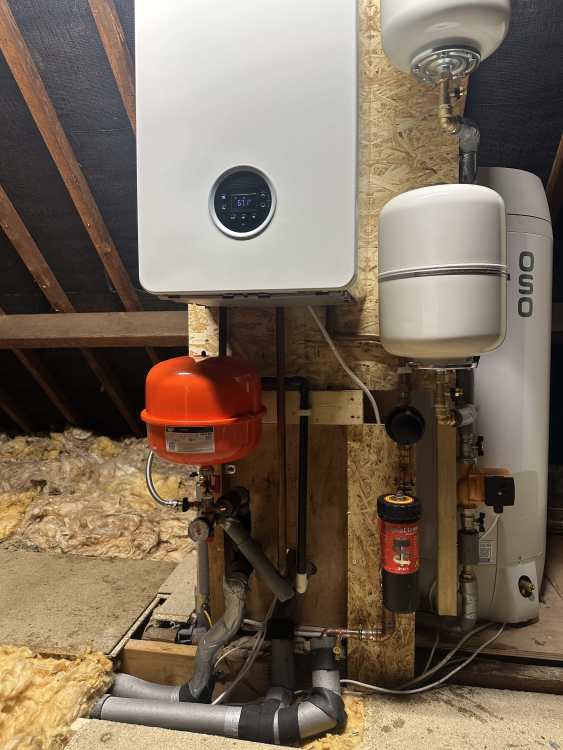
-
Makes the house feel much bigger when there’s usable outdoor space such as this. Looks a million dollars and very neat work. Did you clad the steels with wood / other?
-
You’re not supposed to use a 13a FCU for a constant 3kw device such as an immersion. You’re supposed to have a 16a breaker and a 20a DP switch as an isolator.
-
How to rectify plumbing planning error
Nickfromwales replied to Tetrarch's topic in General Plumbing
I tried this once, and it was a total flop. The flow just bypasses across the top couple of rungs, and buggers back off upstairs. I had to re-pipe it (I did this with surface mounted chrome plated copper pipe with chrome compression fittings, and it looked ‘not terrible’) and sent flow and return to the bottom of the rad to make it work properly. Vertical or column rads are a pita to get to function properly, towel rads even more so. You could try using a dip pipe, bonding it the the valve stem internal bore to push the flow to the bottom of the rad, if you are competent DIY’r and don’t mind taking a risk.- 1 reply
-
- 1
-

-
Sounds like you found a good builder, with a broader than usual skill set Happy days.
-
Too isolated an event to change the world methinks I’ve fitted a gazillion concealed showers, and the worst thing that’s happened has been the thermostatic cartridges need changing, which you do with the valve in situ from the front. I am a big fan of Grohe iBox’s, and the spares and support will be around for decades. I do like the simplistic approach of the digital showers, but having control boxes mounted remotely with electronics and mechanical gubbings, which do go kaput and need servicing / maintaining, is sometimes not practicable. Digital a good solution if you need pumped off gravity hot and cold water.
-
Space cooling for first floor?
-
Cooker and extractor etc are vat reclaims or as they’re part of the functionality of a habitable dwelling. Built in oven is, extractor is, job isn’t. Buy a down-draught hob so extraction and hob in one unit and that will be accepted afaik. Get your VAT advice in check independently (for the whole project) well in advance is my 2 cents. @saveasteading Here’s another helpful Welsh fella for you!! https://www.vat431.co.uk Tell him I said to look after you
-
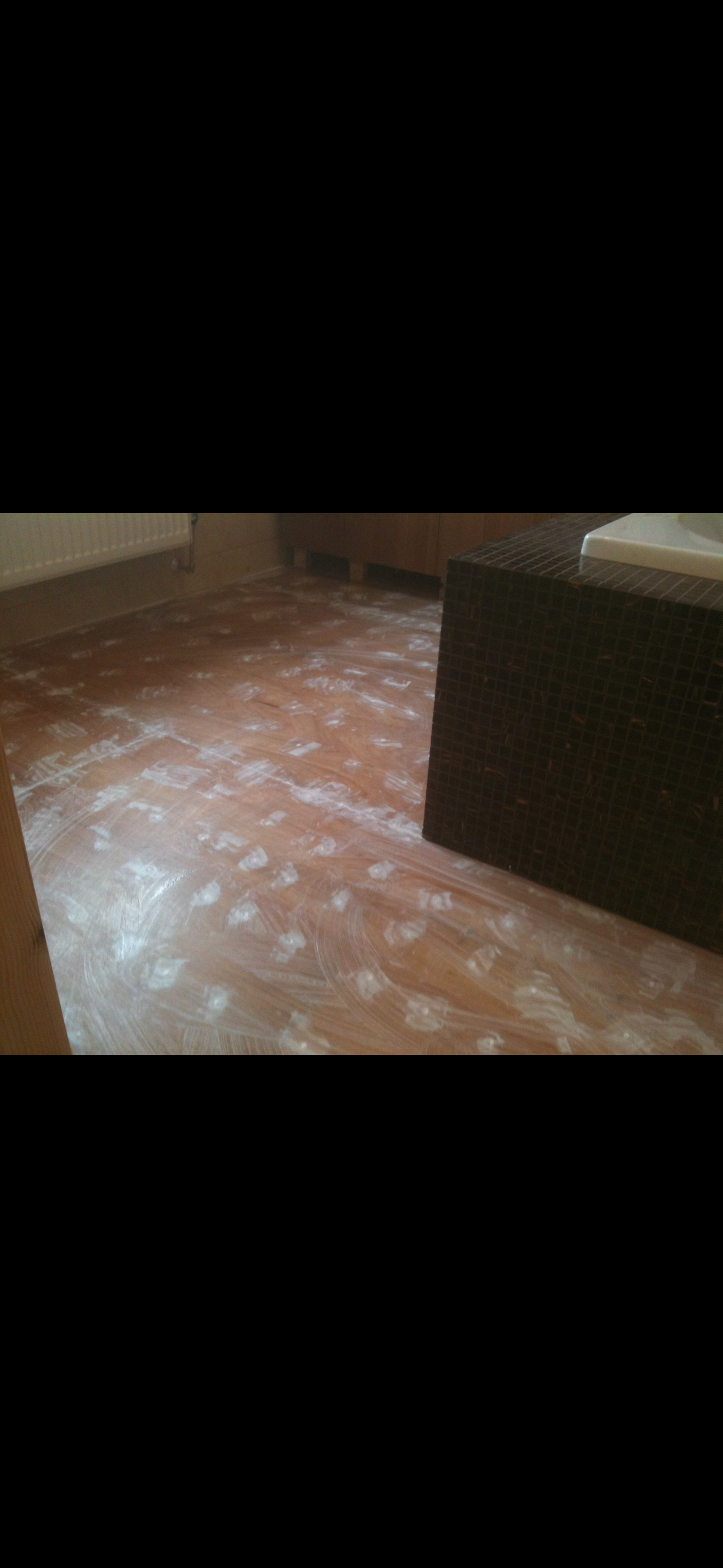
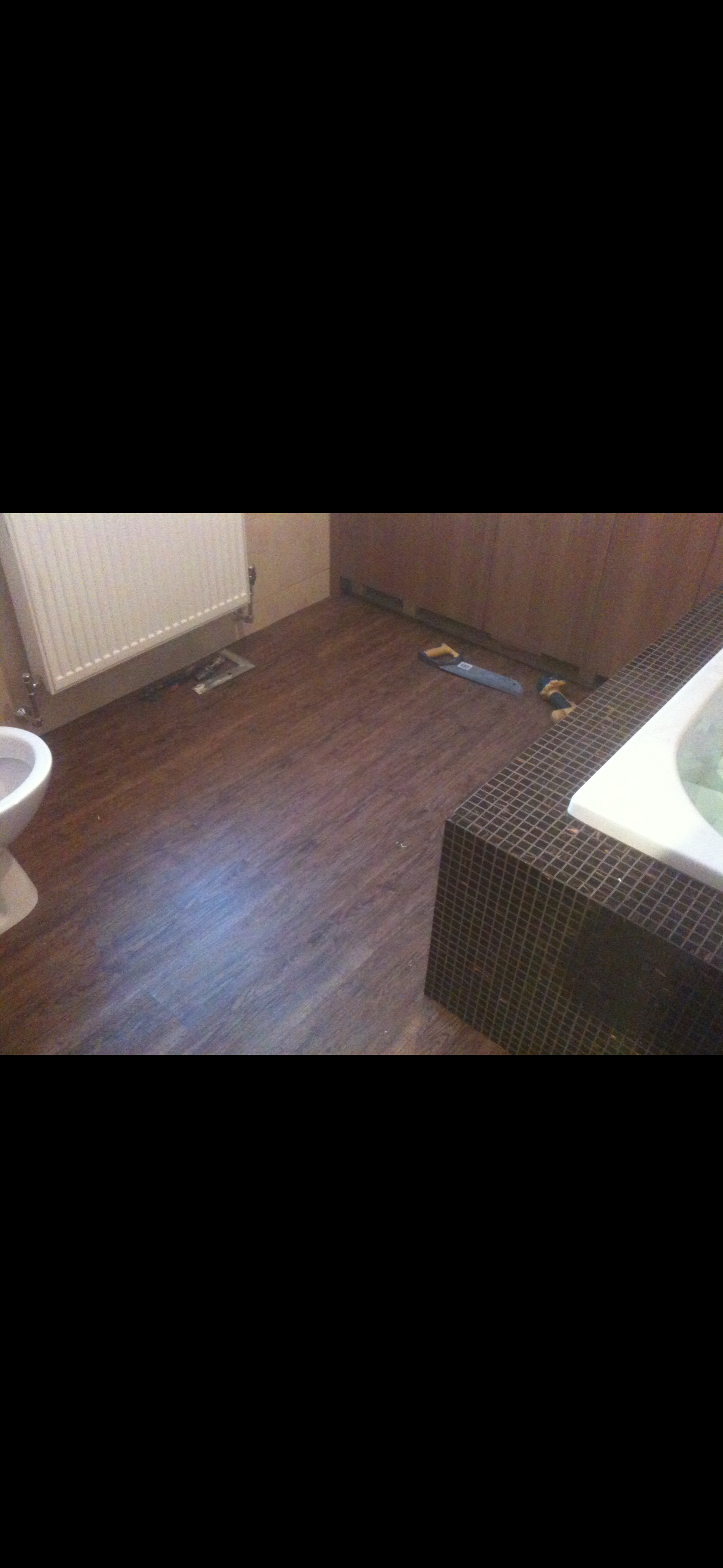
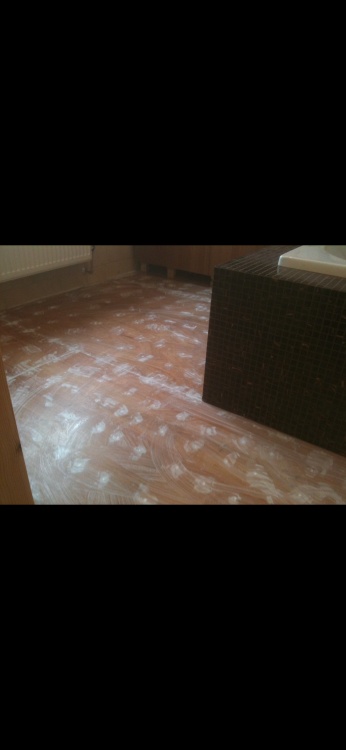
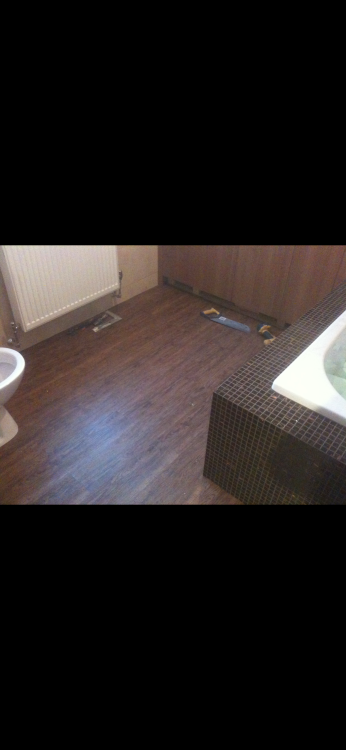
The ones in my pic were self adhesive, so I had to get the prep spot on. All a bit dark for me but the client was ex UAE, so that was his chosen colour theme. Mosaic tiles were a right bastard to do, tiny glass ones which I had to mitre….. joy. Slowly leaving that life behind. The LVT shop should be plenty well equipped to tell you which glue to use, and how thick to apply it. Usually they sell you a 3mm notched trowel to spread it around consistently. Much better to reduce the ply and have the lip. You’ll thank me later, even though the thought of (edit) deleting the lip seems a good one right now. . I use ultra stuff, so this primer watered down 75% primer / 25% water, and just have a wet sponge full of it to work into the surface of the plywood. It needs to be completely dry before using LVT glue on top, so give it 24hrs after saturating the plywood with it. Link Keep driving the screws into the ply until they’re about 2mm below the surface of the plywood. So for 9mm ply into 22mm P5, you’d want 4.0 x 30mm screws.
-
Scaffolding - render residue
Nickfromwales replied to Lincolnshire Ian's topic in General Self Build & DIY Discussion
You’d get get beaten up by the scaffolders, if you asked them to wait whilst you scraped off each board! 🤣 -
All vaulted ceilings, so this would be more of a compromise over wall mounted. There are walk-in or fitted wardrobes throughout, so I’ve considered using those spaces, but the master bed WIW is on the outside wall, at around 2.1m internal head height, so would only really work for 3 of the 4 bedrooms. I’m doing (sense checking at pre-construction) all the MVHR layouts atm, so radial 92’s are already going into the 400mm posi roof structures to combat the open aspects of these large, vaulted spaces, but I’m unsure if the mechanics of ducting the AC would work. I had already specd fan coil units over the bed 3&4 fitted wardrobes, which I could easily vent in / out of the open landing (2-storey gallery) which I’ve now abandoned, so there are still possibilities. Just need to see how many ducts it would take, and where the air would get to the upper levels for the AC to cool effectively. Heating, as you know, is required by the thimble-full when at PH level; that’s the lowest priority but the system does need to be able to service both heat and cool. I do like the integrated ducted units like in nice hotels, but service and operational noise is a worry. Can I ask exactly how audible your system is when cooling, and does it heat effectively too, if you’ve used it for heat?
-
Scaffolding - render residue
Nickfromwales replied to Lincolnshire Ian's topic in General Self Build & DIY Discussion
It’s how us Welsh folk emphasise. I see lots of kind people feck a good job up by doing something daft. So please DON’T feck anything up -
Indeed. Thanks for the link too, I’ve just shared it. The units will be located strategically within bedrooms, eg away from the beds, so they will have sufficient effect, but the absolute minimum of nuisance. These are going to be (slightly over) sized to provide the necessary effect, but with very low operational noise.
-
Scaffolding - render residue
Nickfromwales replied to Lincolnshire Ian's topic in General Self Build & DIY Discussion
Do NOT clean the boards off near your new render!! Leave the Scaff guys take them down and they’ll just bang off the excess as they go. It’s another day in the office for them, so chill out -
Not sure what shop it was….but I’ve been fitting high end bathrooms and kitchens for decades, and I’ve never used anything other than regular plywood off the shelf, or the very worst case of the client poops the bed I fit ‘marine’ ply, but as it’s all covered by tile adhesive and tiles, or glue and LVT, there’s just no way the ply can fail (if the jobs been done properly). Just regular BZP countersunk posi head screws, cheap and cheerful, which I buy to be 5mm shorter than the sum of the 22mm deck and the plywood of choice. FYI, it’s not a great idea to finish the floor level with the tray. Sounds great on paper, but is wholly impractical in real life. I’d say you’d want 10mm of upstand showing, so you can fit the flooring against a vertical surface with some real estate to seal the two together with clear CT1. If you’re good laying the plywood, eg screwing with higher frequency at the edges and seams, then that will reduce or remove the need to feather. You can just get away with spot-filling the screw heads one by one, and sanding those and the seams to get it smooth and regular. Sealing with Ultra flexible-prime watered down 25% would then give you a very good platform to start laying the glue and flooring. Bare, dry, non-sized plywood isn’t the best thing to try and lay the flooring onto btw.
-
For 2 current (sizeable) new builds I’ve just bleached the complexity, @JohnMo will be proud, and lost the AHU’s and FF UFH etc, but have advised both clients to install proper AC in the upstairs rooms which they’ve agreed to. The sniff of heating is simple then, but cooling (both of these customers were very concerned about comfort and NOT being too warm during the summer months (all 2 of them 🤣)) so AC just seemed to tick all the boxes. Not everyone is bothered about cooling, but when it is part of a remit conveyed to me, then I can’t just talk them out of it as it may only be used sporadically. Not expensive by comparison, much easier to have room by room set temps, and the controls are just the remotes sat in their respective wall holsters or set on a piece of furniture, looking after the spaces accordingly. The ethos is to leave these run on demand, so any change up / down in temp is countered as it happens; this should mean the units are only ever running very low and very quietly, doing to bare minimum duty. This should maximise longevity and reduce running costs, but summer cooling via the AC HP is likely to always be met if solar is present, so it’s offset so to speak. There are some very nice looking wall mounted units available, Matt white finish etc, so that’s the way forwards methinks. You just cannot beat having AC keep you cool in those stinking hot few weeks / summer months, and my sons attic room is just a joy during these times as I put AC up there for him (otherwise he’d be dead) and it’s defo high up the list when I finally do something nice for us, eventually……
-
Does your local pub have an engraved 1/4 pint glass for when you go out for a beer?
-
Yes, it is!! Some folk need to take a day off lol. However........ 20 degrees C in a passive house (ish) setting is absolutely NOTHING like 20 in my stone survival pod. At 18 degrees and with MVHR / UFH these dwellings just perform so much comfortably then a 'naturally aspirated, box of upset', such as mine. I just pay the gas bill and don't read it for too long. @-rick-, are you in a super-duper, energy efficient and low temp dwelling with MVHR currently?
-
Yup. Why introduce any unavoidable risk, especially if you're cladding over it which would make rectifying any feck-ups a costly process. It's more of disappointment / frustration vs life or death, so patching it in should be fine if it's not the fundamental rain screen.
-
Hi. For LVT you usually have an 18mm or 22mm P5 deck board, and then glue and screw down some ply over this to act as a binder, but also as particle board doesn't like feathering compound as much as plywood does. The screwheads all need filler-ing and sanding back, so the plywood surface is relatively flawless. Then goes down the LVT. I've never seen any particular plywood needed for this, it's just a floor. If you want to seal it, then tank the plywood layer and drop a few mm of feathering compound over that.
-
Contractor drilled through Electrical Cable
Nickfromwales replied to Jothetaxi's topic in Electrics - Other
Lift your hands up in the air, and say "I didn't do it, I was in a different fecking country!!". I think you should pull the band-aid off, and tell the contractor that this is between them and UKPN, and you wish to hear no more about it. A service alteration at the very worst should be sub £2k, so they'll have to give their purse strings some slack and stump up. Doubt they'll be so quick to do it again then! -
Contractor drilled through Electrical Cable
Nickfromwales replied to Jothetaxi's topic in Electrics - Other
In Leicester the builder dug up the 3ph cable that serviced the very busy steakhouse / pub next door. Plans didn’t show the cable. Neither builder nor client paid a penny, nor were they asked to. It shut the pub at peak lunchtime on a very busy day, so lost revenues would have run into multiples of thousands. The repair was made immediately and THEN the cable was added to their records. Bottom line here is, the supply head and meter would have been in this locality, so the likelihood is that Gumbo, the low earning digger driver, just didn’t put 2+2 together or do any diligence whatsoever. Depth of the service should have been identified by the digger operator having a banksman (or woman 👀) looking for the cable manually, with a trench shovel, and then this would never have happened. Has a bill been presented to anyone? It’s on the contractor if he was principal, but very likely it’ll land in your lap if you were principal. Too many people operate sites with their heads down and fingers crossed. If that’s saved north of (say) the £5k bill then you’re still ahead. -
BCO is just out of their depth / comfort zone, so has gone into the default “ass-saving” mode. @Oz07 is bang on the money, set the two professionals up to communicate directly so you’re 1) not losing things in translation, and 2) are not introducing any emotion into the mix. Easier said than done, and sometimes we don’t know when emotion compromises any situation. I’ve dealt with one SE lately, and after he stared and pondered and scratched his head, I just said get your lead SE to say yes as this is all perfectly fine, please. He left, did as I asked, lead SE confirmed all my adaptations were spot on and the lot was signed off without further hesitation. Been doing ‘construction’ for north of 30 years, and not had a proposal fail to date. They just need to tweak their antennae’s to align, and the problem will disappear quickly.
-
Is anyone actually building at the moment?
Nickfromwales replied to flanagaj's topic in General Self Build & DIY Discussion
Yup. The steel beams that MBC are supplying are currently getting penetrations in them and plating back up so we have a hole for 110mm soil pipe and 4x MVHR ducts, plus some small letterboxes for plumbing and electrical to go through. No extra cost to the client as we planned these well in advance amd the 1st fixes for M&E will just fly in now; I’ve mapped al the pathways and that meant a glulam had to be binned, but just a coupe of clicks in a mouse and it was sorted. Nothing really to drill through as built now, so happy days.