
Nickfromwales
-
Posts
30356 -
Joined
-
Last visited
-
Days Won
297
Everything posted by Nickfromwales
-
Nope, it’s the UVC
-
Try doing litres per minute flow at the outside tap, Link Then pressure; static ( with all taps shut first ) then dynamic ( with the kitchen sink tap going flat out ). Link Let us know the results. If the results come back poor, then you will need to eliminate the possibility of a compromised mains pipe, so you’d then need to dig down by the street connection ( external stop tap in the ground ) where it enters at your boundary and connect to that temporarily and re-perform the survey.
-
 This needs to be set around the perimeter Link to allow the screws to expand and not push directly against the walls.
 -
Ouch. That’s shocking. The suppliers are usually able to do a route map when supplying with sections / pipe ways / crossovers all avoided etc so this should have been relatively neat and organised. The boards absolutely must be bonded down, don’t even DREAM of pouring screed over that, it’ll be a train wreck. Pipes will have to come up, boards up, and redo I’m afraid ?. There is no quick fix here.
-
Mostly down to the length of the run. 25mm is what most settings will happily survive on, but then you’d upsize according to how adverse the run is between street and stopcock. But yes, a survey is always recommended in every instance, where practicable.
-
Consider it gone ?
-
And I have no idea what a Fresno is.....poxy phone. Should have been realms of the smaller pipe being Minus the typos, yes lol. Should really read twice before hitting send ?.
-
My answer to @nod is because that’s the question he asked; The size of pipe required to do a 30m run, typically, will sit at 25mm. If it was north of 50m then I’d look at upsizing, but the typical offering from the domestic water supply will be within the Fresno’s of the smaller pipe bring acceptable. My comments downstream were relative to the points made as the thread drifted
-
25mm should suffice. ?
-
If there is a vertical drop with an open vent to atmosphere, and the two WC’s have horizontal runs to the vertically rising SVP then AAV’s are absolutely not needed. The air break in the 110mm horizontal pipe is all the air admittance you’ll ever need, and more.
-
Get rid of the AAV's, as they've been fitted in error. Immediate horizontal run = instant air-break, so really not necessary at all. If you install 2x 50mm AAV's then each need to go back to 110mm pipe bosses on individual 50mm pipe runs. You cannot fit 2 on a single stem of 50mm pipe, only 1.
-
+1. 15mm will be ample.
-
Length of run?
-
Will give a slightly better dynamic pressure ( with the bigger pipe ). The thing to understand here is that you will get X flow and static pressure at the mains connection point ( usually at the street ) and what you need to do is preserve that value where it arrives at your internal stopcock. So you look at the incline / length of pipe / straight or convoluted run etc and decide which size pipe is required to stave off the losses created by the pipe run. You want to get as close to the original values at the stopcock as possible, so the size is not relative to the supply, it's relative to what you need to not suffer significant losses from conveying it from street to house. If you're digging a trench anyways, then upgrading from 25mm to 32mm is a negligible increase in cost, and a wise investment in the future. Remember that in areas which may attract development the water authority may not improve, just add properties to, and then your connection dynamics may change. A bigger pipe makes complete sense, and is a great insurance policy too.
-
Lots of these out there and working, but when they fail it's an end of days event. In an office environment that means shutting down for a full hygienic deep clean / new floor coverings etc. Just dig the trench and have it right first time. "Short cuts take three times longer".....
-
2 guys and a machine will have that done in a day. Bite the bullet, as a Saniflow is a "#1" device on a good day but quite horrific on a bad one. There's over £1.5k in that sentence. Roughly the cost of digging and dropping in a proper connection for @iSelfBuild. Then no swimming around in brown dolphin milkshake and swapping out knackered units.........
-
Unvented Cylinder Installation. Spot the Problem!
Nickfromwales replied to Iceverge's topic in Boilers & Hot Water Tanks
If you can run 2x 12mm MLP to completely replace the 26mm > 2x16mm runs, that'll improve things a fair bit. As above, everything is balanced as there is a PRedV at the stopcock location, so everything downstream of that is at the same potential. -
That has the same openings each end.
-
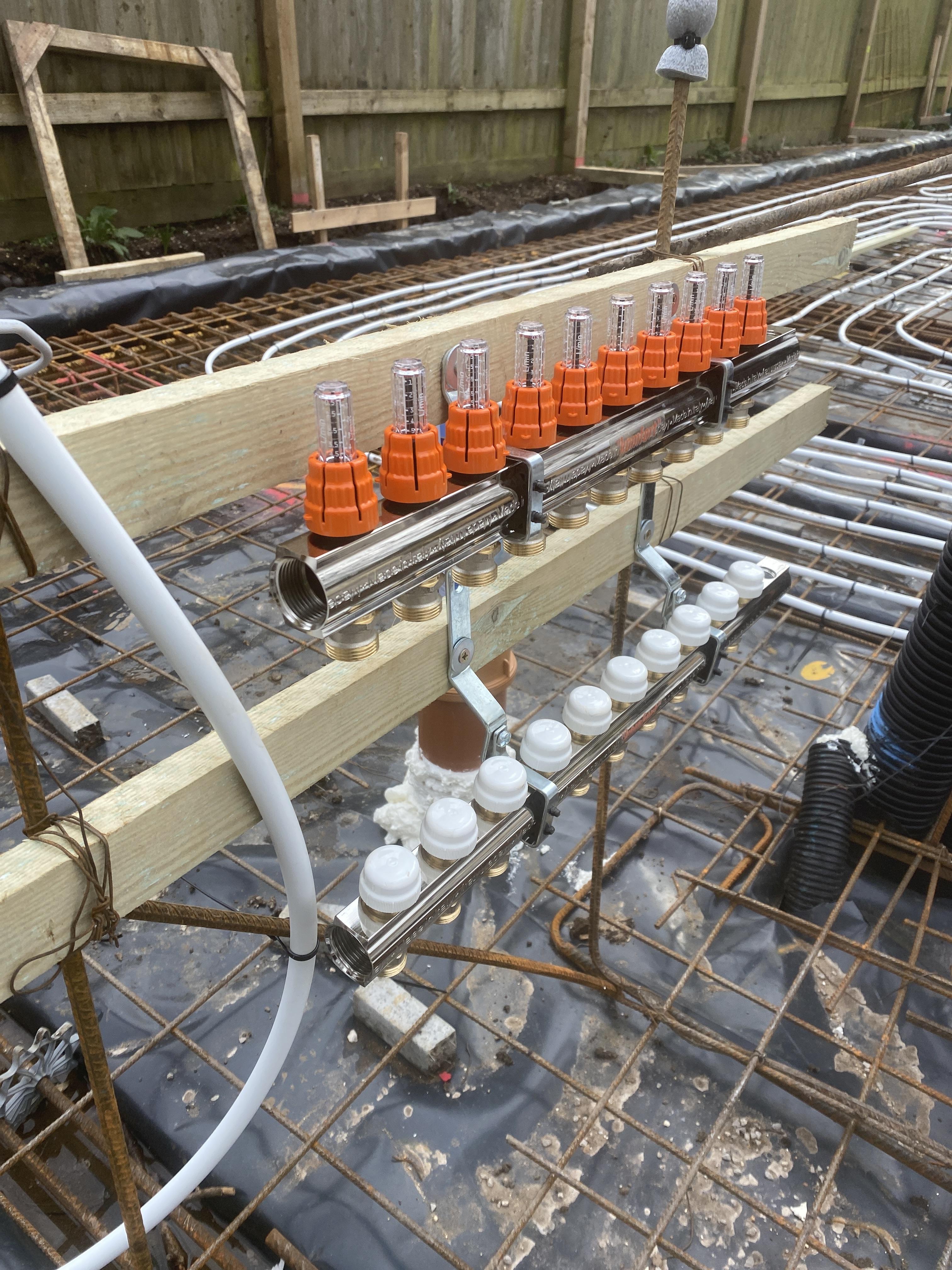
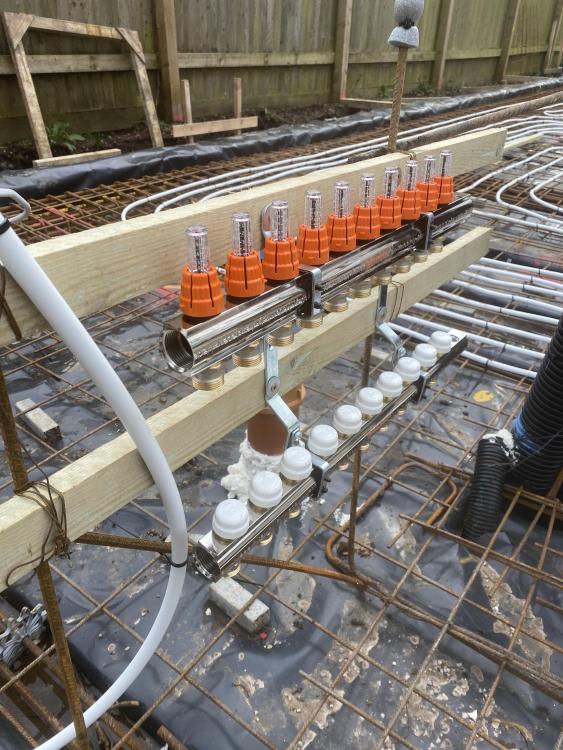
Yes, that will work just fine. I’ve done that in small under stairs cupboards where a 22-port manifold needed to be 6+6 going around a corner. If you go for a Komfort manifold the you’ll be able to come out of the end with 1”x 22mm brass fittings and use copper 22mm ( for a full bore link ) or 28mm Hep2o if you want to use plastic.
-
Unvented Cylinder Installation. Spot the Problem!
Nickfromwales replied to Iceverge's topic in Boilers & Hot Water Tanks
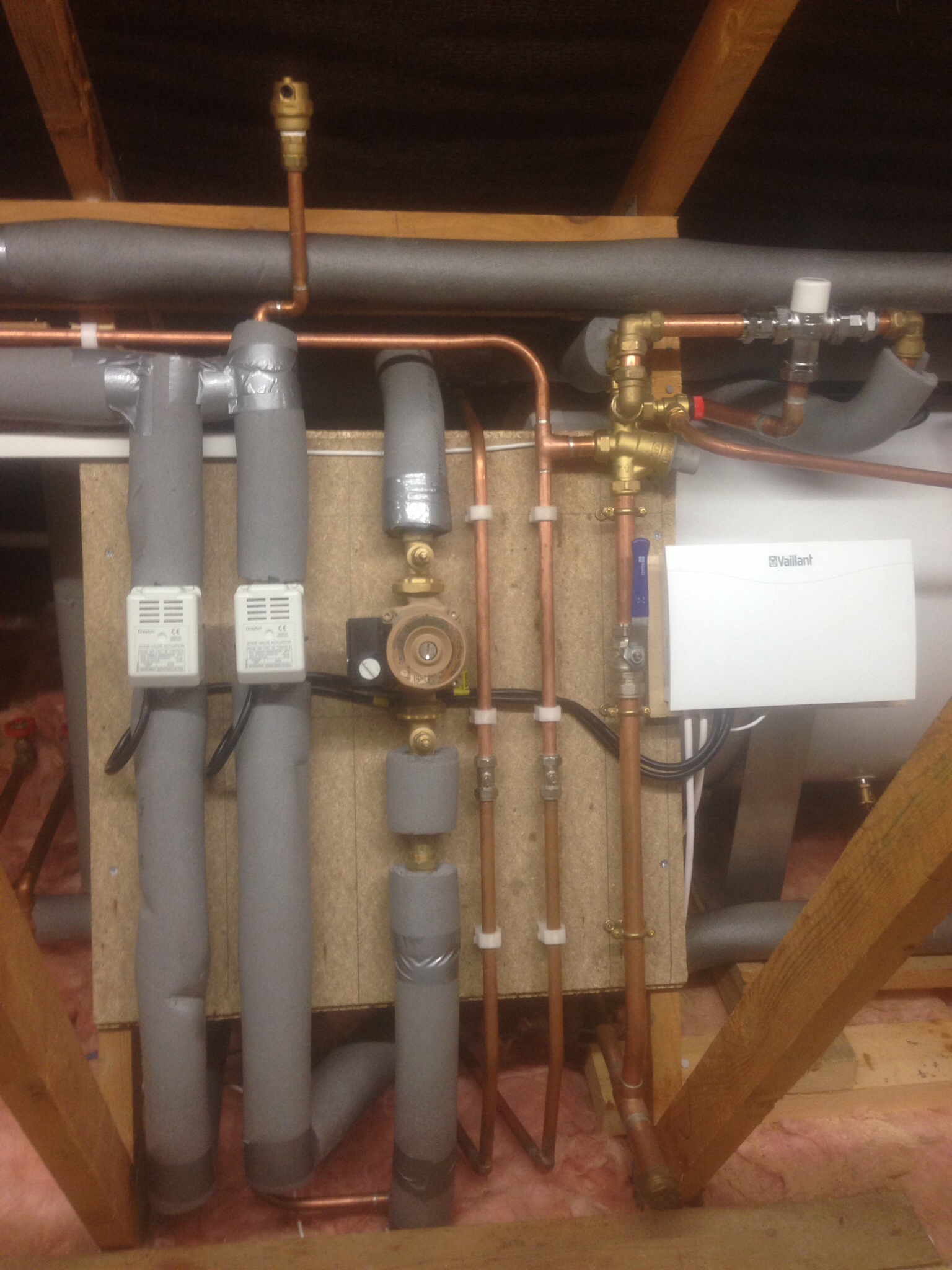
Wow, just wow. G3 is in place for a reason. Having heard that a country that boasts better BRegs than old Blighty ignores such a thing is staggeringly bad news. Having followed this with ‘interest’ before replying, I have to say that I don’t think you have a bad plumber. He clearly has no idea about G3 compliance, but in honesty the UVC MI’s should have accompanied your cylinder and I’m pretty sure ( albeit assumed ) that they would have stipulated the criteria for a basically safe and compliant installation ( most of all in respect of D1 & D2 discharge particulars ) for him to have followed. However, you state that you wish to move in, so I will focus on your safety and that of your family; The UVC has a T&PRV and it is now fitted to a poor but functional standard, ergo the UVC cannot get to a terminal failure condition, whereas in the first picture it certainly was a huge concern. Good news there, the plumbers remedial work is robust. The one thing missing right now is a 22mm non return valve on the hot output of the UVC. This will protect the cylinder against incorrect plumbing of the balanced arrangements prior to the feeds to it, including unregulated back flow from incorrectly plumbed mixer outlets. That NRV can be removed later, if further improvements are made, and ideally presented here for scrutiny, ( but it needs doing before you move in with the setup as-is ). At that point you have a safe install. It’s not ideal now, but it’s not terrible, ( the first pic WAS terrible ), so you’re ok with it if you do the above amendment. These things do fail with quite spectacular results, so do not treat this like it’s just a leak or something simple that would go wrong....I’ve seen a few go and it’s usually resulted in a 5 figure insurance job ( if the G3 in UK was adhered to and the UVC was regularly inspected.) The correct valve for the EV is this Link so no excuses, get that changed too before you move in. The EV can be laid on its side, but the internal rubber diaphragm will have far reduced longevity if you leave it like that. Get it turned vertically ( with the feed at the bottom ) also, if you want the best for reliability. ?- 69 replies
-
- 1
-

-
- uvc ( unvented hot water cylinder )
- plumbing
- (and 1 more)
-
Ok, if retro then scenario 2 for you. With the secondary pressure REDUCING valve at the stopcock location, and the single check NRV on the hot outlet of the UVC you are then fully balanced without using the balanced draw off on the multi block. Chop hot and colds in wherever you like them then.
- 51 replies
-
- 1
-

-
- cold mains
- bar
- (and 2 more)
-
Combi boiler slow leak advice
Nickfromwales replied to Simba_ali's topic in Boilers & Hot Water Tanks
All depends if it’s evaporating when hot. If so, you’ll never find it. -
Completely new installation, or existing conversion / retro fit onto existing house plumbing?
-
yup
-
+1