
Nickfromwales
-
Posts
31390 -
Joined
-
Last visited
-
Days Won
346
Everything posted by Nickfromwales
-

50mm liquid screed UFH with Sunamp as storage
Nickfromwales replied to westcoast's topic in Underfloor Heating
PCM58 is called that for a reason . With an ASHP you can heat an UVC to 55oC, but the immersion heater can then push you way past that to 85oC for a huge increase in stored heat energy fir the same capacity device. SA wins on physical size, UVC wins on not being a single trick pony. SA fails by the sheer number of failed units I’ve had to exchange or repair vs UVC’s. -
50mm liquid screed UFH with Sunamp as storage
Nickfromwales replied to westcoast's topic in Underfloor Heating
You’d still be using the ASHP for DHW, via an UVC, would you not? With such a thin screed there will be a very short “thermal time constant” so you’d be stuck with buying electricity on demand. Expensive option if you don’t have a passive raft / similar to invest cheap heat into and leave it leak into the property, as it’ll be 1:1. If you have other plans for DHW, you could still just buy a cheap ASHP for heating and get close to 1:4 or at least 1:3. With electricity prices rising, I’d not go direct with a thin screed tbh. -
Watt hour were you up until?
-
Are solar panels worth it with my roof and sloping direction?
Nickfromwales replied to MrTWales's topic in Photovoltaics (PV)
Elementary, my dear kW’stson. The car can only charge at a certain rate of knots. To absorb sporadic pockets of excess solar PV the charger needs to be in ‘eco’ mode, and the car tethered whilst this is happening. A domestic battery is fixed, and is dedicated to absorbing these ‘opportunities’, and will be the simplest and best option if capturing solar PV revenue is the remit. Most people will be wanting to drive places during the hours of daylight…. 100% sound advice. -
Are solar panels worth it with my roof and sloping direction?
Nickfromwales replied to MrTWales's topic in Photovoltaics (PV)
They don’t live with you The actual loads will be the vampire loads of a typical house. Stuff that you cannot be bothered to unplug, or switch off, or put into ‘power-saving’ mode. So a £3k system in my house would probably pay back its capital investment 3x over in its useful lifetime. -
Praise be!!! Someone has finally said it. This haas been my advice to clients for a long time, even more so where the source of DHW is from PV or an ASHP.
-
OSB / Plasterboard bathroom walls
Nickfromwales replied to MortarThePoint's topic in General Construction Issues
Agreed, which is why I always tank / make bombproof every single bathroom job I do not like cement board, as it doesn’t comply to the uneven nature of stud walls etc. Last time I used it, to an architects spec, it was bonded with Sikaflex as well as screwed. Never had a bathroom fail, and I learned fast back in the day through insurance work. A good way of knowing what ‘not to do’ was to take note of what had been done ( which failed, sometimes catastrophically ) and not repeat it. -
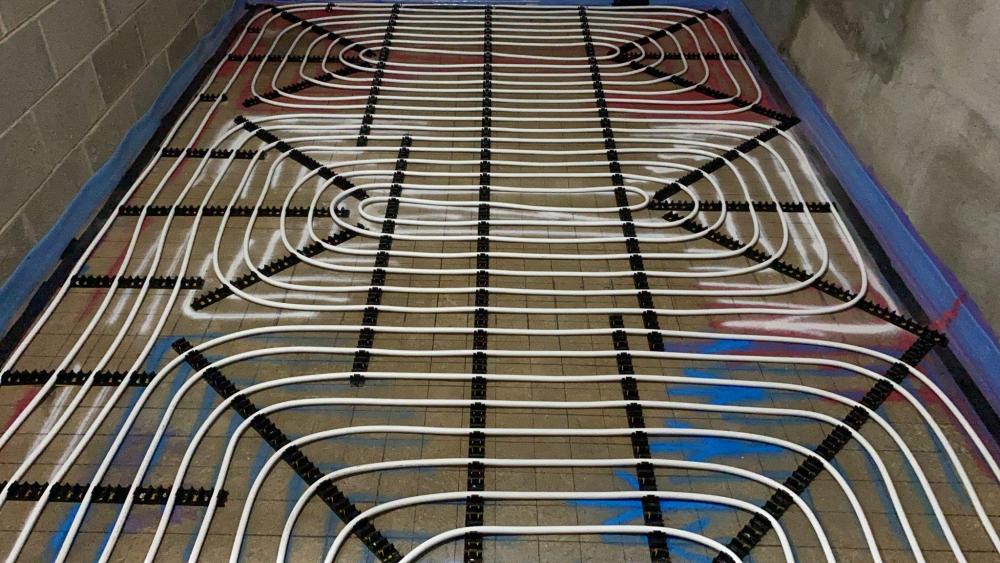
Gas nailed onto concrete, with clip rails.
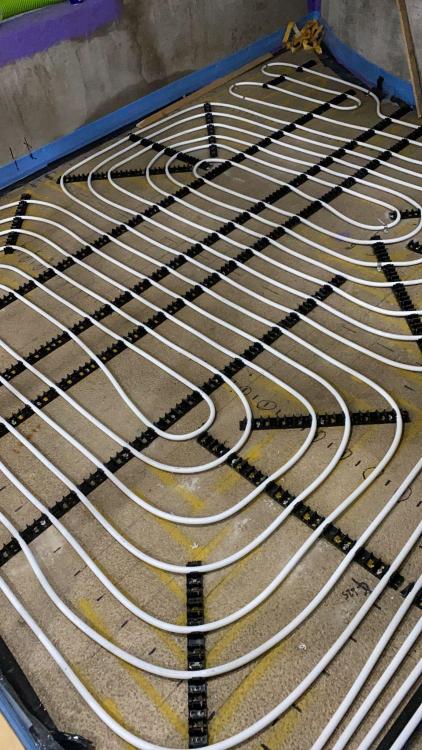
-
Yes, yes it is. There’s a magical, almost mystical fountain of youth that it pours out from. The more In drink, then less old I feel., ”All hail the ale”.
-
Simple solution is 3x2 studs, the right way round, and double up at each stud with 2x 3x2’s glued and screwed together. Shallower footprint, more insulation, stronger than a 4x2. And deffo no need for noggins then.
-
OSB / Plasterboard bathroom walls
Nickfromwales replied to MortarThePoint's topic in General Construction Issues
Because they will all be tanked. -
OSB / Plasterboard bathroom walls
Nickfromwales replied to MortarThePoint's topic in General Construction Issues
In absolute honesty, no need. Most use an off cut of the wall / board material, so you’re on the money -
And congrats on popping your 1k cherry
-
Times that by 22 and you’ll realise what a real problem you have……..
-
So you can get an early start checking for whether I said KwH or kWH or anything else i can do to keep you from relaxing. K-Wh
-
New Member & New Build (ASHP, MVHR & PV)
Nickfromwales replied to F113tch's topic in Introduce Yourself
Ah, beer sometimes isn’t a help. Is that reference to the uplift in the basic ( minimum ) permissible target values? Basically Irish BRegs creeping over here. -
New Member & New Build (ASHP, MVHR & PV)
Nickfromwales replied to F113tch's topic in Introduce Yourself
Eh? Within the insulated envelope? -
Its going to be a long night lol. More Cornish liver oil is required.
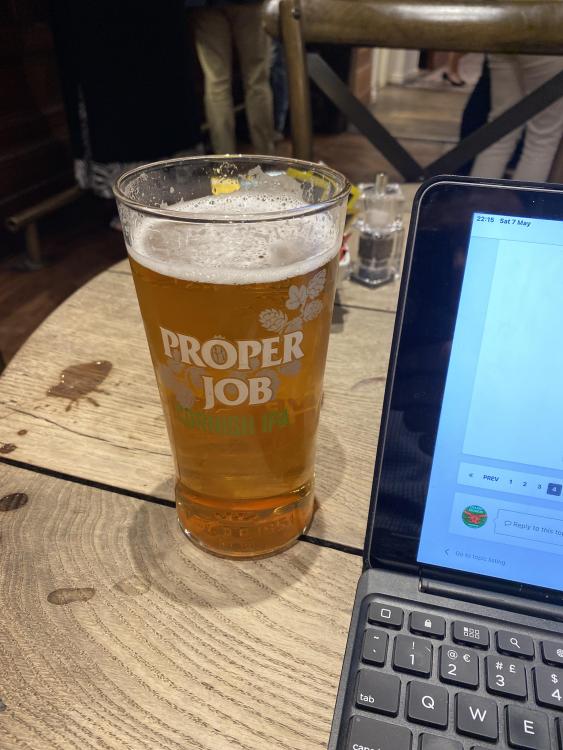
-
OSB / Plasterboard bathroom walls
Nickfromwales replied to MortarThePoint's topic in General Construction Issues
OSB to about 15mm off the screed. Same for PB. Tanking should be done after plastering, not before. The tray gets fitted ( bonded ) back to the surrounding walls with a decent amount of clear CT1, and then no water can ever get to either the PB or the OSB. Cementitious tile adhesive gets used too fill the 15mm gap whilst tiling the floor, which is pretty impervious to moisture. The aim is to keep the water where it’s supposed to be, so the quality / integrity of the tiling / wall covering is key to success. -
I’m always up for a challenge.
-
Crikey. I need more beer. That’s more maths in that paragraph than. I’ve encountered in the 30 years since I left school Blue Peter badge on its way as we speak lol. No, it’s still a NOPE. Take it from someone who has owned and used a range of lasers for a very long time. For clarity, before we get our handbags a-swinging….. The question was about lifting the line up / down, and with some lasers they come with a bracket with a rack and pinion mechanism which allows you to fix the bracket and then tweak the beam up or down + / - 40mm ( whilst not tipping the laser back or forth ). You are correct that the beam would give 3 different plains, sides and front climbing, levelling, and climbing back down again. Why do I know? Because I bought a cheap laser back in the day and tiled a bathroom ( a bloody big bathroom too ) and the chuffing laser ( el-cheapo ) hadn’t levelled itself as the manufacturer promised it would. Tiles ran uphill 25mm over 6m. I kept quiet, and I imagine they’re still the same today. Oh, to be young. The room was so long and narrow it was lost in the natural perspective and nobody noticed, complimenting me on my laser and how cutting edge I was………..
-
Nope. They self-level or flash to say out of levelling range, if you buy anything tidy. My Bosch does than with a thumb turn to adjust up/down over about 90mm travel.
-
50mm liquid screed UFH with Sunamp as storage
Nickfromwales replied to westcoast's topic in Underfloor Heating
All day long. You can bypass the Sunamp and just fit Willis heaters for direct electrical heating, but then you ar stuck with a ratio of 1:1, whereas with a ASHP you’d be more like 2.5-3:1 so around a third of the cost. Completely dependant on whether or not the HP is matched well to the dwelling, and can run at a reasonable CoP. -
I wish. Still satisfying to see the letter on the digital displays reading “ReD” ( reverse direction ) when we fire up customers installs. Basic digital meter in mine, and I get nagged to death by SSE to upgrade to a smart meter, but not sure why they’re nagging. Makes me suspicious.
-
I use Paul at UFH Trade Direct ( 01925 571999 ). Great service, quick delivery, good prices. Never let me down, where others have.