

Nickfromwales
-
Posts
30335 -
Joined
-
Last visited
-
Days Won
297
Everything posted by Nickfromwales
-

Boiler short cycling with low flow temperatures
Nickfromwales replied to seanblee's topic in Central Heating (Radiators)
Very much unsuited to how an oil boiler wants to work. Exactly why in the last job with mixed temps flow vs oil boiler, I did a thermal store to provide temp & hydraulic separation and provide a wallop of DHW too. I’ll stick to my guns, this needs to be set up for the boiler to heat a buffer 100% on / 100% off, for more set durations, and the lot will run more efficiently. Then these ‘smart-arse’ controls will come into their own. 👌. -
Boiler short cycling with low flow temperatures
Nickfromwales replied to seanblee's topic in Central Heating (Radiators)
So all the way around the gardens and back to basics then? KISS lol. 👌 -
You’ll hate me, I don’t ever use fully threaded screws as I don’t like the way they can ‘jack’ the board up away from the joist . You then have to murder them to get the heads sunk and the board down tight. Yes, I’m an objectionable individual, you’ll get over it 😆
-
Yup. The ‘eeek’ sound comes primarily from the deck boards ‘rubbing’ up and down the screw shank or nail. 5x 5.0x50mm screws per joist with a line of D4, and never had a single noise on any of them. Using gas nails is ok, but in the old days when I had to go faster to make money and gas nail them, I made sure I stood with both feet either side of where the nail was going so the board was compressed to the joist before firing. I also made sure to use quality ring shank nails, and put 2 in if I was ever only 95% sure that the first one ‘didn’t feel right’ eg went in too easily.
-
If you can use a pencil and a ruler you can have folk here help, by scrutinising options / designs, and get it over the line that way. The caveat is you roll the dice that were all not locked in padded cells
-
1000%. Most architects suck at these things tbf, it’s not exclusive to yours 😉 If you have the manifold on the upper floor it’ll happily travel down to the lower and back up again. Having the manifold below the upper floor will just constantly trap air (gasses) and airlock and cause you ongoing grief a-plenty. How big an area, and have you got an UFH design done yet we can tear into shreds for fun? 😀
-
Boiler short cycling with low flow temperatures
Nickfromwales replied to seanblee's topic in Central Heating (Radiators)
Ah, I didn’t realise (read) that the TRVs fed back too. That’s a lot of info for the system to juggle!! -
Can we run our heating/hot water system past someone?
Nickfromwales replied to K44's topic in Other Heating Systems
Not entirely, lol, I think we got away either way it. Not taken any offence, I’m too stubborn and thick skinned to allow anything other than a round from a .50 to penetrate mate The install was put in according to the clients wishes, would have been better on the 40° roof, but a compromise was struck, in a nutshell. 👌 -
Run the UFH through them? Maybe not squire! I’d decide where movement is going to occur, and mitigate that in the design for these steps. Microcement has some tolerance, but you’ll need the top tread bound to the upper floor section to avoid a hairline crack happening where the step ends and flooring begins. Timber would have been a disaster! Good call 🥾 👉 🚪
-
Hijacking is good, fill your boots lol. I’ve done scores and scores of these types of floors, and there’s zero need for the Lewis deck etc, and fyi I like that system a lot, it’s just unnecessary for anything other than the more sizeable dwellings. I was going to spec it for the 2nd floor areas for an 1800m2 property, for eg. Mid-sized you’ll get away with screed over timber deck, just make sure you’re chosen P5 deck boards are D4 glued and fixed VERY well, as the squeaks and creaks come from the fixings, not the wood!!! Not many people know that.
-
….trying to catch up with me in ma’ 🇩🇪. 🚙 💨
-
Heated rear windscreen, to keep your hands warm when pushing it. 🫡🤣.
-
Boiler short cycling with low flow temperatures
Nickfromwales replied to seanblee's topic in Central Heating (Radiators)
I’m confused. The thermostat onboard the boiler manages that and the 3rd party controls just give a call for heat signal? Are you saying the 3rd party controls give 6 on signals per hour and the boiler doesn’t get to satisfy its own onboard stat? -
First timers attempting an ICF and Oak Frame house in Devon
Nickfromwales replied to MCoops's topic in Introduce Yourself
It’s mostly from additional costs for labour etc which clients just don’t see / aren’t aware of with woodcrete ICF. This massively affects their top lines and forces most to quote themselves out; it’s hard to find anyone decent enough to demonstrate this uplift before signing up vs the shitheads who get you signed into a contract full of exclusions / omissions and Carte Blanche mechanisms for adding ‘extras’ aka variation costs. This can be massive on anything other than a simple ‘cube’, and after seeing one clients build cost go up by nearly 60% I said to myself “f*** that for a game of marbles”. EPS for me or TF, other than that I just don’t bother quoting for the job. Life’s already hard enough tbh, why make it harder? Great for DIY’ers with the time to write off, but commercially it is a ballache. -
Can we run our heating/hot water system past someone?
Nickfromwales replied to K44's topic in Other Heating Systems
The issue with heat banks (thermal stores / buffer tanks) is that they need to be huge to have any useful effect or storage / stamina. I installed a 2600l Galu buffer on the above solar protect, with a log gasification boiler, and it just about provided central heating via radiators for a 24hr period if heated mid morning to late afternoon to 85°C. Anything smaller would have not made it through a 24hr period. Slightly difference if there’s a wood burning stove inside the house, as that will get heat to the surrounding rooms (if the doors are all left wide open and the fire stoked and burning well continuously) but to be storing that burn in a buffer tanks to carry you over needs at least 1000-1500L to scratch the surface. I’ve looked many times at banking heat for domestic dealings, and, as much as it sounds great, the sums just don’t work when you begin a design / concept and then realise just how quickly that size tank gets sapped of (useful) heat energy; anything below 50°C is pretty much useless in a standard home with radiators, so at 85°C you have a useful capacity only for that 35° of headroom. -
Can we run our heating/hot water system past someone?
Nickfromwales replied to K44's topic in Other Heating Systems
Couldn’t agree more, but this was pre Covid, literally on the cusp of it, and the electricity market was a very different place back then. -
Can we run our heating/hot water system past someone?
Nickfromwales replied to K44's topic in Other Heating Systems
45° south facing arrays in populated areas can also cause inverters to shut down temporarily midday, due to over-volting the network. Always best to look properly at the whole picture, for anyone considering installing solar in a densely populated area / cul-de-sac etc, where most people may be out in work all day and exporting. I wonder how well documented evidence of these instances are and how ‘problematic’ that actually is though. Anyone? -
Can we run our heating/hot water system past someone?
Nickfromwales replied to K44's topic in Other Heating Systems
I’d have to argue about that with you, as the numbers don’t lie. I had feedback from the PV installers for the first years figures on just how “unbelievably well” the array was performing, the clients words and he was not a daft boy. If you read my above, the remit was to have these installed so as to not bastardise the landscape, and if they WERE to be sat at a horribly unsympathetic angle of 45° then 1), they would have been quite ugly to look at and 2), they’d have needed MUCH bigger distances between rows to prevent the forward most panels from completely shading the ones behind them . A mono-pitch roof / array? Or 3 rows of panels banked one behind the other…..? So for comments or a fair comparison, “apples for apples” plz. How many Watts per panel are yours? I assume 540W per, by the rough maths. These panels were German-made Solarwatt Vision 325’s, glass/glass, as the client wanted them to be as robust as possible and take impact from flying debris, otherwise we could have installed much higher output cheaper Chinese-made panels to boost the output. With a 30 year @ >90% performance guarantee the SW panels were a no brainer, as longevity of the installed equipment is paramount to preserve the indicative ROI. If the array fails early, goodbye payback. 45° is a wonderful angle, I don’t disagree, but not here and not for this client. No 2 projects are the same, nor are any 2 remits, so we work to the client and their remit and treat each self builder / new client uniquely. No copy / cut / paste for me, as I feel that is just a lazy way to do things and quite a disservice. Discuss, summarise, discuss again, and only then do we crack on; eg only when the client has been given enough information and can then make their own informed decisions 🫡👌. Also please understand that this was put through MCS etc, so anything less than admirable install wouldn’t have got through the software at the design phase so it HAS to perform adequately, at the bare minimum, to get through these preliminary measures of due diligence; we do this on paper early on for every install, eg to firstly see if there’s a valid reason to NOT install PV etc. IIRC, less than 70% irradiance is a fail. To combat the reduced irradiance of the shallower angle we designed this particular array to feature more panels than was required, peak summer, to offset the reduced output from the remainder of the ‘solar year’. Again, the numbers were known, discussed, and understood comprehensively by the client long before a deposit was taken. Hence they have more panels than you, but less gross output than you. As I said, this array is spewing out power for a lot of the year, and was placed to get sunlight from <08:00 - >18:00 peak summer; dependant on certain trees remaining crowned / surrounding (client-owned) woodland being managed. Winter is a shitty time for any solar array, it is what it is, but numbers and results speak for themselves . -
Can we run our heating/hot water system past someone?
Nickfromwales replied to K44's topic in Other Heating Systems
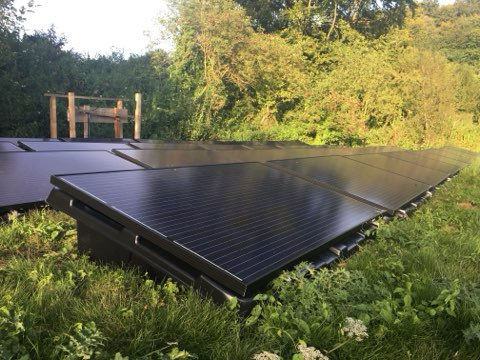
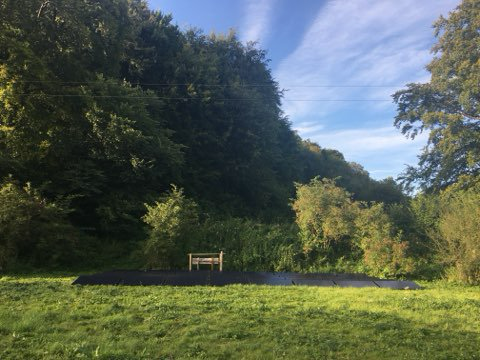
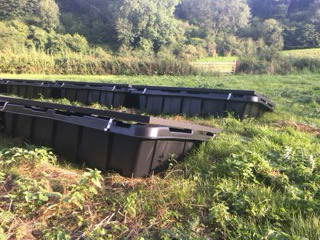
Yup. He agreed to give it ‘very regular haircuts’ lol, so we agreed to ‘flush fit’ it down as low as possible. He was concerned more about the ramblers, whom he had given access to cross his property to, regarding this not being an eyesore for them! Planning etc was almost a secondary concern lol. Theres about 6kWp there, external inverter hidden in there, and AC was exported 135m back to the house. Performing extremely well as we could pitch and orientate it to maximise irradiance. There was zero chance of getting on the (diminishing course stone) roof of the 200 year old listed cottage…. We dared not even take the moss off it! -
Do I have enough radiators
Nickfromwales replied to tommyleestaples's topic in Central Heating (Radiators)
Ah, ok lol. Thanks. ☺️ I’d definitely be beefing up the two standard radiators then, looking at location they could become type 22’s without impact? Vertical rads don’t do a great amount, and please realise my focus for the end result is always on the adverse weather days, not just ‘everyday’ . I won’t install a system where the client turns the room stat up to 22°C and the system cannot get there / struggles to get there, because it’s blowing a hoolie outside and it’s -3°, and you should be looking for lower flow temps. One get out of jail card is to turn the violet flow temp up during the worst of the winter months, but then efficiency will suffer when you need it most. -
Can we run our heating/hot water system past someone?
Nickfromwales replied to K44's topic in Other Heating Systems
Annoyingly, anything ground mounted over 9m2 requires planning permission, but I believe this is waived if it’s on a raised framework which is then, technically, not a true ground mount ?!? This country has some bloody weird and often obtuse rules and regs, and you’d think adding solar for the good of the environment would be less hassle! Considering the massive solar farms we get to look at, and wind turbines, a ground mount of 9m2 (less than 3 domestic sized panels) is a garbage allowance. For completeness, the above array went through PP first time with zero objections, as we planned and executed it as sympathetically as possible. The client reports that it is outputting some very high numbers all summer long. 👌👍 -
Can we run our heating/hot water system past someone?
Nickfromwales replied to K44's topic in Other Heating Systems
If this isn’t ’impossible’ or impractical I would definitely put solar at the top of the list, as using electricity for the rest of your days is going to happen, and only get more and more expensive to do Is there much of a cost impact to do the report? -
Can we run our heating/hot water system past someone?
Nickfromwales replied to K44's topic in Other Heating Systems
👌
-
Can we run our heating/hot water system past someone?
Nickfromwales replied to K44's topic in Other Heating Systems
There's your first very bad idea, sorry. And here's why: Why use the immersion less and heat everything else with other direct electricity? The water in the cylinder, via the heat pump, will be abundant and cheap as chips!!!! Do NOT fit an electric shower, or any other instant water heaters, as these are all the last resort when you have no possibility of fitting a hot water tank (or combi boiler). Can you do a ground mounted array? I'll post some pics of one we've installed for clients previously, in an area of outstanding natural beauty, and a conservation area, and it passed with flying colours. Yes, but it's messy, complicated, and I doubt 'sensible' when you have such cheap hot water already. -
MVHR newbie
Nickfromwales replied to vala's topic in Mechanical Ventilation with Heat Recovery (MVHR)
Can you update us on the house type / construction / airtight etc please? Are these not in thin spreader plates directly below the deck boards (P5 Egger boards)?


