
Nickfromwales
-
Posts
31382 -
Joined
-
Last visited
-
Days Won
346
Everything posted by Nickfromwales
-
Don't give him any more ideas......🙄
-

Condensate Drain Pipe
Nickfromwales replied to Fiona Brick's topic in Mechanical Ventilation with Heat Recovery (MVHR)
Contest the bill and ask for the cost of the traps and the fitting of to be deducted from it, if you've not yet paid it..... -
Running hep2O in insulation below screed?
Nickfromwales replied to daunker's topic in General Plumbing
If hot comes via the control group and the cold comes from the raw mains, and they converge at the same mixer outlet, then there is a differential there that needs addressing somehow. The MI's for the UVC will demand that the CG / PRedV is within close proximity (immediately off) the UVC, and this cannot be mounted remotely. If this was a retrofit then you'd have to install a second PRedV at the incoming cold mains stopcock, and still fit the CG as per, plus then you'd have to fit a single check NRV on the hot outlet of the UVC to prevent any chance of back flow (reverse pressurisation) to the UVC. If you have 5-6 bar coming in then I'd preserve that all the way to the CG and enjoy better dynamic flow rates, and then look at branching off that 6bar backbone for the raw (unsoftened) cold mains; these typically go to the kitchen sink for human consumption, but also to things like a Quooker tap or fridge dispenser etc, and also the filling loop for the heating system (as you're not supposed to fill that with softened water). Are you having a softener? Therefore what I have done above, is drop the incoming mains supply to match the value of the PRedV in the CG so the system has no unbalanced feeds meeting at any mixer outlet, so as to prevent the backflow issue completely (even in the event of the raw PRedV failing for eg). For that job the mains is around 2.5bar or slightly over at night, so neither of the PRedV's will ever tap out, they are there for any eventuality such as the network pressure getting hiked up as the surrounding areas get massively developed with new homes. Yes, it'll need balancing down to the same value as the CG PRedV. -
Imprinted concrete - Grandad has been ripped off
Nickfromwales replied to diyenthusiat's topic in Driveways
Yup, needs a summer and a winter ideally, to ascertain if it’s going to last the duration. -
Imprinted concrete - Grandad has been ripped off
Nickfromwales replied to diyenthusiat's topic in Driveways
Just how much and how well is the question. At least they did this, as proper shitheads would have just dumped concrete onto whatever was there and run off into the sunset. May be best to just 'polish' what you have as well as you can, but you can gauge what's lost here by the price per m2. No probs if you would prefer not to share that at this time, but you can reach out to reputable companies and see how far apart these are to se if you're way off or way over, as they may have priced it keen for cash and you still then have a hypothetical budget to remedy. Not the best situation, but really not the worst. The old boy could have given them a big cash deposit and never saw them again, for eg. -
Imprinted concrete - Grandad has been ripped off
Nickfromwales replied to diyenthusiat's topic in Driveways
Citizens Advice Bureau would be your first phone call. Then escalate from there if they say you have a case / opportunity to go after these muppets. If it can be sealed / coloured etc then value your sanity before the pursuit of a long and painful (and possibly fruitless) process. If the prep work was done better than the presentation, then you need to pick your battles, but if the prep was equally shite then the only issue is that the slab may fail and start to break up / otherwise degrade. Feck..... How much and how many m2 plz? -
Imprinted concrete - Grandad has been ripped off
Nickfromwales replied to diyenthusiat's topic in Driveways
I am no legal eagle, but that sounds like evidence to me. Were they paid in cash or BACS / cheque? -
Imprinted concrete - Grandad has been ripped off
Nickfromwales replied to diyenthusiat's topic in Driveways
Ask me how many old radiator valves I have replaced lol. We all gotta start somewhere. -
Imprinted concrete - Grandad has been ripped off
Nickfromwales replied to diyenthusiat's topic in Driveways
My company has an opening for this guy, he can start Monday -
Imprinted concrete - Grandad has been ripped off
Nickfromwales replied to diyenthusiat's topic in Driveways
Which is worse for the chap as you can go for a charging order for any of his personal property / home if successful with a claim. -
Imprinted concrete - Grandad has been ripped off
Nickfromwales replied to diyenthusiat's topic in Driveways
C'mon, we've seen better legs hanging out of a nest -
Condensate Drain Pipe
Nickfromwales replied to Fiona Brick's topic in Mechanical Ventilation with Heat Recovery (MVHR)
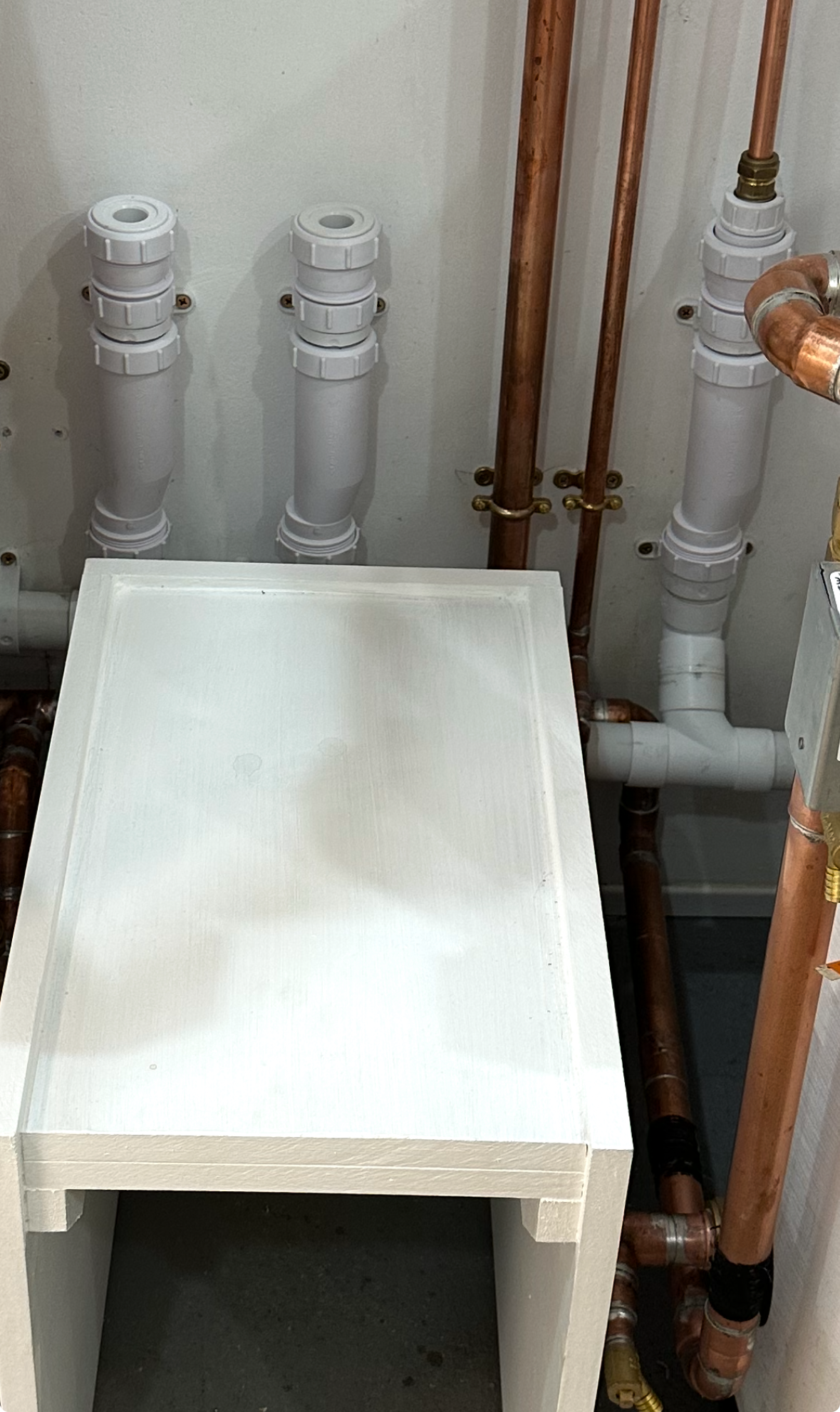
I'm assuming 'reduced intelligence' lol. Was anyone around to guide these installers, such as yourself or a project manager? If not then you'll be holding yourself accountable methinks, as otherwise they could have just legitimately mistaken this for a waste connection. The lack of traps etc just demonstrates the reduced intelligence to a T. Mixture of oops, and a lack of technical GAF here, so just get a plumber to connect the trap to the correct pipe and move on with life -
Would need BBA approval for use here, or an acceptance from the BCO and warranty providers that the certification and intended use qualified. I quite like the Zip products for going in around window and door openings a-la the USA / Canada etc, but the UK is only now adopting (stealing and copying) these “modern construction methods” so we’ll be the last to benefit from them I guess.
-
Imprinted concrete - Grandad has been ripped off
Nickfromwales replied to diyenthusiat's topic in Driveways
Well, let’s start off by saying I’ve seen MUCH worse, but it’s not the prettiest I’m afraid. If it’s solid / sound, and doesn’t show signs of cracking (after a year) then you could get it covered with a resin top layer maybe. To be honest, you’d be far better off asking the folk on https://www.pavingexpert.com Don’t get too down with this as it’s not life or death, and hopefully you can find these guys trading details and approach them via the small claims mechanism. -
Condensate Drain Pipe
Nickfromwales replied to Fiona Brick's topic in Mechanical Ventilation with Heat Recovery (MVHR)
Connecting the groundworks outside is another subject, and would need feedback from whoever put them in to see if this is an intended soak away or the opposing pipe is connected to a drain system. -
Condensate Drain Pipe
Nickfromwales replied to Fiona Brick's topic in Mechanical Ventilation with Heat Recovery (MVHR)
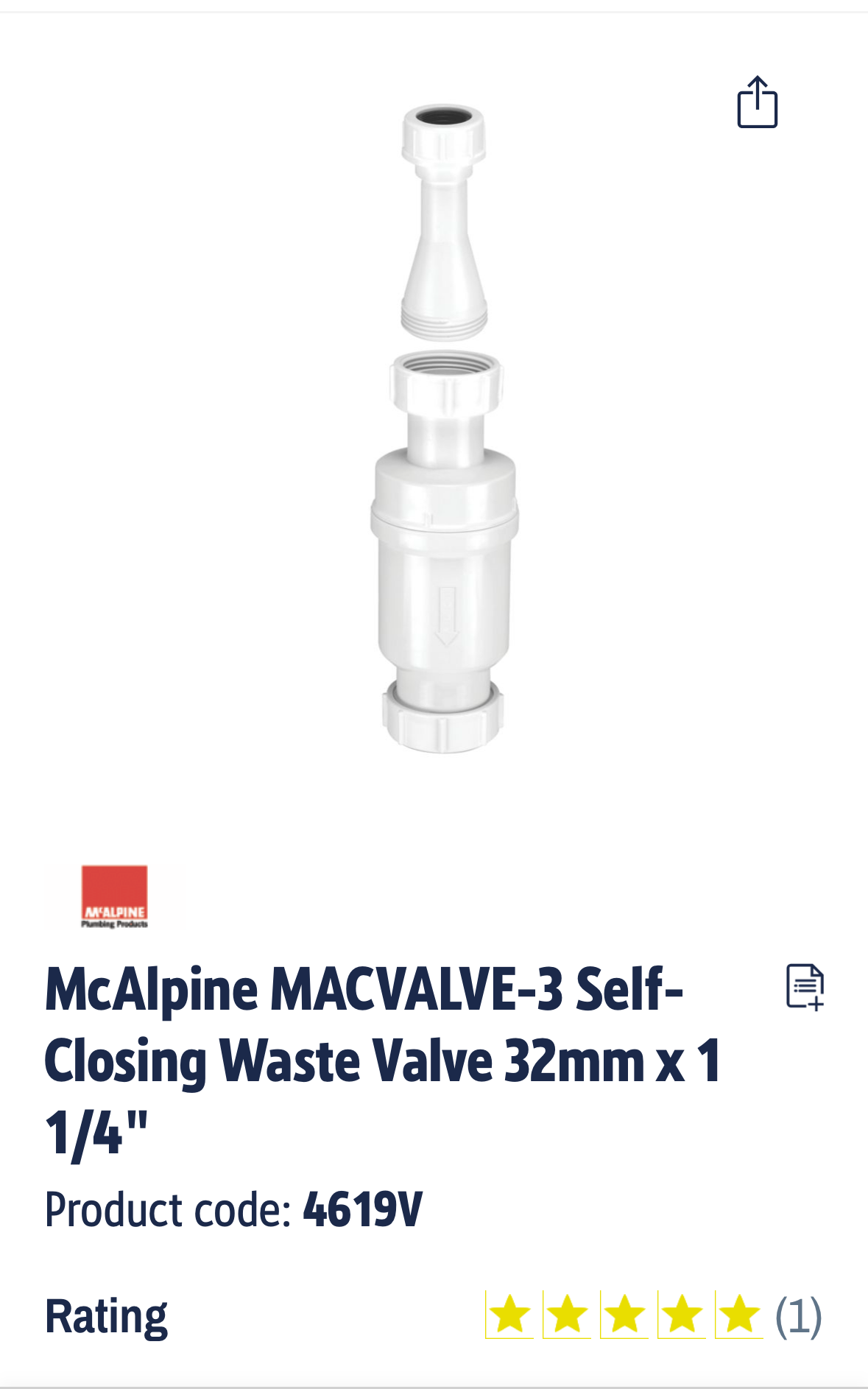
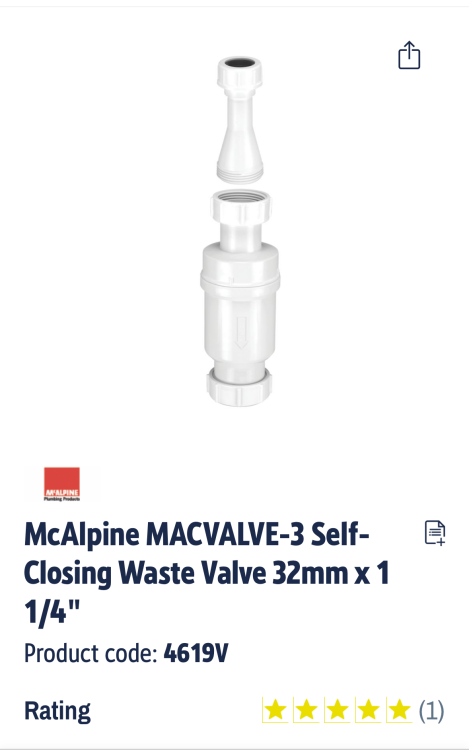
So, basically, if you blew down the white pipe it would blow out the end of the pipe externally, which is not great at all. You need the traps as stated, or a sealed connection from the flexible hose to the rigid white pipe (and then use the excess hose inside the machine to form a U bend (trap) there). You can see these types of traps here, 1x for a heating system discharge and 2x for the softener. These look like a balloon end inside and let water out but not draughts etc in.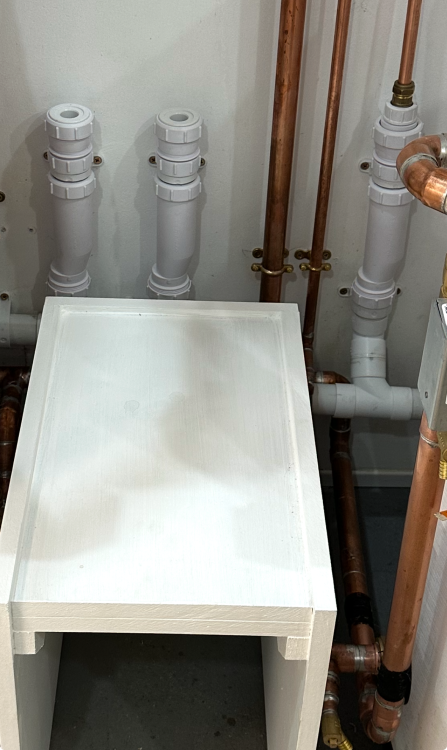
-
Best pipe insulation and where do I need it?
Nickfromwales replied to MikeSharp01's topic in General Plumbing
...or practical necessity in anything bigger than a flat. On a project we just fired up such a system, and the kitchen sink is appx 5m from the UVC. As the taps are modern EU regulated offerings there is a 9 second delay to get premium hot water to that outlet (15mm). In normal occupation the HRC will keep a fair amount of the primary hot pipework warm / hot throughout the day, so I will assume this will reduce to maybe 4-5 secs, but if not this may end up getting added to the HRC. For the small running cost per annum (likely entirely offset if you have PV) it is a great thing to open a tap and the hot water is available instantly, particularly for low volume / high frequency outlets such as a hand wash after using the loo or rinsing something at the kitchen sink. I do like the option for the Quooker hot (as well as boiling) water doo-dah at the kitchen sink, if that meant you could otherwise do away with a HRC, but it's always down to the individual case / client and distances from UVC > outlet. We always discuss this very comprehensively before getting the tools out, so expectations are managed and nobody can whinge afterwards (if the water is slow to arrive at these modern, low-flow rate taps etc, for eg). -
Maintain pressure prior to screed
Nickfromwales replied to Post and beam's topic in Underfloor Heating
You'll sleep tonight! Good news, and now, on to the next problem -
Yes, and one to consider if sitting the sole plate across the top of the uninsulated concrete in the frost zone? Me personally, I'd rather some externally and then less internally (but defo both) so the GIA doesn't then suffer too big a loss internally to get to BRegs levels. Marmox breakers may be a big help here of course.
-
Ok, great. FYI, on a 'huge' basement we recently quoted for I also recommended installing a layer of 75mm or 100mm EPS around the whole thing after the tanking was done; a), to provide some resistance to the static ground temps, but b), more importantly, to protect the external tanking solution from mechanical damage (a stone / other reducing effectiveness or causing a failure) as I really didn't want to ever have to revisit this for the sake of a couple of £k worth of (seconds) sheet material. 2 birds with one stone afaic, and a good place to invest in a second or third set of belts & braces.
-
Best pipe insulation and where do I need it?
Nickfromwales replied to MikeSharp01's topic in General Plumbing
Same we do with the MVHR ducts where we heat / cool (temper) the airflow to rooms. TBH I don't insulate everything any more, so putting insulation on where needed afterwards seems the most cost-effective. I work out the lengths of the hot & HRC run, walk it out, insulate in and tape it up well, and them pull it in in one go; we use band or 50mm waste pipe clips around the insulation to fix it into place vs clipping the pipes and then having to stop/start the insulation. -
What tanking measures and insulation will be put in place?
-
If they sign off the cylinder as a G3 annual inspection the warranty with Telford will be fine. Telford don't care who inspects it, just as long as the benchmark book gets stamped / signed each year (book this a week or two early so you don't lapse).
-
Best pipe insulation and where do I need it?
Nickfromwales replied to MikeSharp01's topic in General Plumbing
UV resistant neoprene for outdoors stuff, to an ASHP for eg, but also the neoprene doesn’t get munched on by rodents for some reason whereas EPS outside is a buffet! -
Best pipe insulation and where do I need it?
Nickfromwales replied to MikeSharp01's topic in General Plumbing
The black neoprene and cheap grey EPS stuff are near identical in thermal performance, which I was surprised by, so I now install EPS internally with wall thicknesses to suit the application. I seldom insulate the cold pipes tbh, as plastic pushfit (Hep) pipe seems to be a world away from copper in terms of condensation risk. Plant rooms need everything insulating imo as the temp differences there are the most adverse, so defo the cold mains supply to manifolds but only in a 9mm or 13mm wall product. Insulating the hot pipes where there is no hot return (in such a dwelling) seems pointless too tbh, so I just put hot & HRC together in the same insulation to wrap them up nice and toasty (25mm wall) and then call it a day after that. Very different advice would be stated if this was a typical uk home with pipes under voids / in cold attics etc obvs.