
Nickfromwales
-
Posts
30334 -
Joined
-
Last visited
-
Days Won
297
Everything posted by Nickfromwales
-

Radiators needed for ASHP and UFH?
Nickfromwales replied to YorkieSelfBuild's topic in Air Source Heat Pumps (ASHP)
A lot of the bread and butter ASHP companies don’t really seem to put a lot, if any, proper thought into the type of dwelling, longevity by better design, and end user (occupant) comfort. I’ve had a few to do quotes for me in an attempt to bring in more competitive pricing via my business, but these are inevitably just copy / cut / paste solutions by firms who are happily plodding along, busy anyways, whilst functioning like a sausage factory job to job. Mention cooling or low heat requirements and they start telling you they “don’t work on properties like that” and don’t get back to you ever again, largely I expect because it requires thought, effort, and time (which to them is money). Most seem quite short sighted but also very busy! -
Is that for I-beam vs posi? Much of a saving to be had? A bit more of a PITA if fitting MVHR or soil pipes within the voids though.
-
Yup. 👍. This chap was a real scrote who puts profit before EVERYTHING. Need a new 22mm gas run? Nope. This one would charge for it, and then simply go and break the gas regulator seal at the meter and turn it up to get the correct working pressure at the alliance’s via the existing 15mm pipe! And much more and worser things to boot. Made himself a fortune at the expense of others (staff) and customers. Was a good day when I just picked my stuff up and booked a taxi home. You (literally) can’t put a price on self respect and decency, which is why I don’t have a fortune!
-
Who can dig the trench for my new electrical supply?
Nickfromwales replied to Bancroft's topic in Electrics - Other
Great excuse to go hire a digger and have a bash at it. You can hire a CAT scanner to check for buried services first. Digger driver for an asshole builder, who decided to save the scanner hire fees, promptly went through the 3-phase cable to the pub next door, just before lunchtime and they were packed lol. “No curly fries today sorry!”. DIY is great, but checking where and what your doing first is a must . For every job I’ve been on, the contestable trenching has been excavated by the groundwork’s contractor. -
We used these for a 3 storey shop conversion. Happy with price and service. https://www.mitek.co.uk/products/posi-joists/ No affiliation, so get a few quotes obvs. +1 to changing the joists to run the shortest span. With all posi joist designs I do I let them calculate deflection with joists at 600mm centres, then drop that down to 400mm but with the same spec joist. By design there’s a bit of deflection that’s too close to the wind for me aka ‘bounce’ and using the beefier joists at 400mm spacing seems to manage that well. It’s only a few extra joists for a much better job, but also always use 22mm P5 flooring and not 18mm.
-
Rooms adjacent to each other and set to different temps will just fight to acclimatise to one ambient, I had this explained to me properly by my go-to ASHP & MVHR suppliers. Seems madness to think it would not do as it says on the tin, but the cooler space will just attract heat from the others, and that’s just down to physics. Then add a quality MVHR with excellent heat recovery statistics into the equation and you’ll also have a bit of ‘heat balance’ from moving air right around the property 24/7. Individual room control afaic is more about wanting to sporadically heat one room or space for comfort use, and then allow it to revert back to playing nicely with the rest of the house. You’ll struggle to reduce the temp of any one space significantly eg by turning the heat off / down, as it’s wrapped around by other heated spaces that will attempt to contribute. I’ve learned so much about this, over the last decade or so, a lot from here, but most improvements have been made since dumping everything I (thought) I’d learned in the 25 years or so prior to the last 10. You genuinely, really do have to reprogram your brain to disregard the way we’ve lived previously in poor housing stock, and start over when considering solutions for anything built to a good standard (eg NOT to British building regs) that is airtight and well insulated, with quality doors and windows and so on. It’s just night and day different, but people get stuck in the old ways of thinking and that needs to be a million miles away for sure!
-
The other side should have been benched in with mortar too, methinks. It’s a pig of a job when a riven or wavey tile is ending just where you didn’t want it to, and then you can’t easily fit 50mm or so of the next course, but that could have been done much neater than that!
-
Help, Chimney 'knee' construction
Nickfromwales replied to Post and beam's topic in Roofing, Tiling & Slating
Keep asking questions and we’ll all try to keep answering them 👍🙂 -
Help: Remove Hard Sealant to replace glass
Nickfromwales replied to LLL's topic in Windows & Glazing
I doubt you’ll get the putty to reconstitute after drying out over the many years it’s been in there. Hammer and chisel and work carefully is the way forward. Remember to use lots of gentle taps, so you don’t crack the pane of glass next to it!!! 👍🫡 -
Is Ecobrix worth the extra £££?
Nickfromwales replied to Great_scot_selfbuild's topic in Foundations
Yup. Clients who built with Velox were advised by the architect and by the V rep that it was ok to have the woodcrete below DPC in a waterlogged site, and I thought it was a barking mad idea… …almost as barking mad as the architect not installing insulation between the ground bearing heated raft and the soaking wet clay in his GA drawings 🤷♂️. Queue yours truly promptly asking WTF, at the pre-construction stage, and then a miracle happens where the ‘new’ drawings have EPS, PIR and Marmox detailed in. Ffs. 🤦♂️ Woodcrete above ground yes, if you must eg DIY, but you’ll still not change me from EPS ICF as the best option overall; insulation better, full fill vs part fill with concrete, weathertight at the pour stage, and wonderfully airtight by default. Needs no parge coat etc, easier for 1st fix and affixing sheet material to, with these things then saving time and money downstream. Most EPS ICF companies support self builders and DIY’ers, so the only downside of EPS is you have to hire bracing props in to hold it together during the pour, as there’s a LOT more concrete in those than with the pre-insulated core woodcrete blocks. -
Are you just installing solid timber or have you looked into posi joists (open metal web) too? There not huge money, and would attract a free design in most cases. Much better for 1st fix electrical and plumbing, so consider the downstream savings to be had there vs drilling and notching into solid timber for pipes and cables.
-
Help, Chimney 'knee' construction
Nickfromwales replied to Post and beam's topic in Roofing, Tiling & Slating
Just to add some more salt, you need to work out what will happen to the open end of the membrane / batten / tile (at the top edge of the rising sloping brickwork) as the dimensions to work to there will affect how far in / out the lead chimney skirt is set in. There’s a lot going on here, sorry to pickle you. -
Help, Chimney 'knee' construction
Nickfromwales replied to Post and beam's topic in Roofing, Tiling & Slating
I guess the gable flashing could be simplified and done with a single length of very wide lead flashing, with that mechanically affixed to the SIP and left turned up ahead of the roofing work. Then it simply gets dressed back down onto the roof (tiles / slates?). I’d probably want to use a self adhesive flash band to cover the top of the lead, where you’ve installed the fixings through it to affix, just to make it bombproof against water ingress. To be clearer, once the lead is flat against the wall, you’d have the open edge of the lead facing up, so that prob would benefit from being covered over by the flash band. Would prob need at least a 600mm wide roll of lead I think, but I am dumbfounded that your roofer hasn’t just pushed you out of the way and just simply got the f@ck on with this. It’s nuts tbh.
-
Help, Chimney 'knee' construction
Nickfromwales replied to Post and beam's topic in Roofing, Tiling & Slating
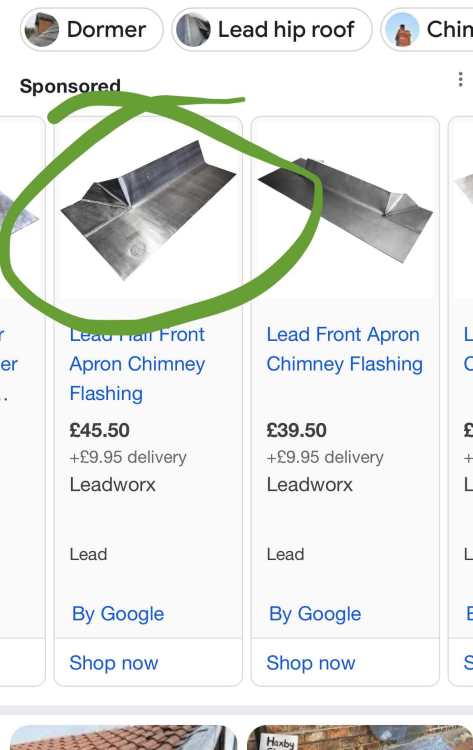
I think you need to lean on the roofer here, as there should be part plastic lead skirt ‘trays’ that are installed onto the SIP and emerge from under the hardie. Cant think of the bloody name for them. Something like this but not for a cavity And for the sides of the chimney you need to grind out the mortar lines and take out the corners so you can fit these type of things. This isn’t for the feint-hearted tbh, it’s a lot of work and you can’t get this wrong, particularly where the internal angle of brick flashing meets the one on the gable.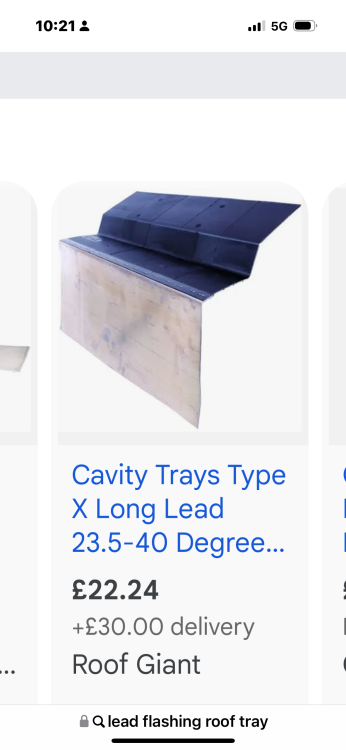
-
Help: Remove Hard Sealant to replace glass
Nickfromwales replied to LLL's topic in Windows & Glazing
Apply gaffa tape to both sides and smash the entirety of the glass, work from inside to out, and some of the putty should start to break out too. Remove the rest with a chisel or scraper, and DEFO use eye glasses / safety goggles as tiny shards of glass will go flying out and that’ll not end well for the old mince pies. Any reason to not fit glass again? A local glass supplier will cut you a new piece exactly to size for prob less than £20. It’s likely that if you use Perspex / other synthetic product you’ll scratch it with the scraper when you bench the putty back in. -
Help, Chimney 'knee' construction
Nickfromwales replied to Post and beam's topic in Roofing, Tiling & Slating
Needs a decent bit of thought and some robust methodology then tbh. The lead should already be in the brickwork of the chimney, should it not? Who’s coordinating this? -
Is Ecobrix worth the extra £££?
Nickfromwales replied to Great_scot_selfbuild's topic in Foundations
You’d just use that then to create the whole garage structure and swap disciplines at the dwelling, or just carry on with it. -
Is Ecobrix worth the extra £££?
Nickfromwales replied to Great_scot_selfbuild's topic in Foundations
I’m expecting that they’d have a LOT of work to do to make a woodcrete subterranean structure watertight tbh. Rainwater was getting to the room interiors on 2 previous projects with woodcrete, at the very bottom of the block and at DPC, where it was literally forming a mini river across the slab. Woodcrete is entirely dependant on the external rain screen being 100% kosher and weathertight before this issue goes away. It can be done, just why would you make such a rod for your own back? EPS here is a no brainer, and sorry @nod, but better and higher performing than blocks (which are also porous?). -
Is Ecobrix worth the extra £££?
Nickfromwales replied to Great_scot_selfbuild's topic in Foundations
Hi. Ecobix (used to be Durisol) are only part filled with insulation, and part filled with concrete, but the woodcrete construction is also quite porous. Tanking for subterranean conditions would need to be meticulous with that type of product imho. Have you considered an EPS block such as Nudura? The XR35 gives a complete 100mm external insulation shield, is near zero water / moisture permeable, and then has a solid concrete core with a second solid layer of 100mm EPS internally. That has a nylon spine set into the block every 405mm for fixing sheet material. -
Contesting final invoice - please help!
Nickfromwales replied to Tom's topic in General Self Build & DIY Discussion
Like fecking clockwork, lol, 🤪 The job's not 100% complete so they CANNOT expect 100% of whatever they think was agreed. #movethegoalpostswhydontyou Scaff = FO, they just became distracted by a pot of gold elsewhere, that's down to their complacency. Holding back an assumed sum for the warranty is the biggest sticking point as who decides what is fair / unfair there? I very much doubt they'd come running back to sort defects when they're already trying to charge you for fecking the tiles up..... Time to get this to bed and move on. Then go on holiday, you need one! -
Help, Chimney 'knee' construction
Nickfromwales replied to Post and beam's topic in Roofing, Tiling & Slating
In a nutshell, yes, as you describe. Needs to be treated timber, and you defo do NOT want to be drilling and fixing into the diminished section of the bricks or you'll crack / break them out most prob. You want to be drilling at 90 degrees to the timber and have the holes placed so that the drill is impacting just below each mortar line, eg into the meatiest part of each brick and NOT into the 'tail'. Cut that counter batten off and tape up the holes, then install the wall plate to match the timber atop the bricks, and the rest is history. Roofer should be able to batten and membrane etc from there, after you've changed his nappy...... Can't see any lead or other flashing? What's going to sort the break between the roof and the bricks? -
Plume management kits and fecking scumbags
Nickfromwales replied to Adsibob's topic in Boilers & Hot Water Tanks
The reduced height one seems to replace the other, as that is marked (superseded)? Clear as mud though, in fairness If it is turned to be flat against the side of the building, eg completely parallel with the wall, then you will eventually get marking appearing on the wall as the flue discharge (plume) is mildly acidic. Exhaust. The condensate expelled from a condensing boiler is acidic, with a pH between 3 and 4. Condensing boilers require a drainpipe for the condensate produced during operation. This consists of a short length of polymer pipe with a vapour trap to prevent exhaust gases from being expelled into the building. I'd angle it 45 degrees off perpendicular, if possible. -
I shudder to think back to the days when I just did things without a real consideration for impending death etc. Climbing up the flat roofs one by one on the rear of a 4 storey house set into a steep slope, 20m of 5" kopex flue liner in one hand, whatever I could grab on to in the other, and then balancing on my tip-toes on the very top of the ornate ridge tile, and then uncoiling and sending the new flue liner down the chimney.....only to then look the other side of the building and see one sloping slate roof, realise I'm over 5 storey's high, and staring at a distant pavement with 'crunch' written on it in my blood. My then boss (self-serving tosser) shouting up at me to hurry up, we haven't got all day....from the rear patio. Not sure how I am actually still here tbh, but it's probably largely due to my refusals to ever go on a roof in the rain, unless there was a scaffold.
-
If they did, I'd be out of a job
-
Happy days, and good to hear this may just have been a routine maintenance thing, so hopefully the unblocked drain hole will now improve the situation going forward.