
Nickfromwales
-
Posts
30329 -
Joined
-
Last visited
-
Days Won
296
Everything posted by Nickfromwales
-
If it's an afterthought then yes, that's your best option. TBH the fused spur could go anywhere, but if next to the CU is the least obtrusive then go with that. How will you join / extend the cable from the device? I assume wagos in an IP rated wago box / similar will be the weapon of choice, is this termination behind the body of the WC and not on show?
-
Please explain this a bit better! What is a shower toilet? The manufacturers installation instructions should detail this to the nth degree, do you have them? Yes, cables are usually run to a simple closed disconnection plate at the device, and then the serviceable fused spur is outside the room, or at high level over the door etc.
-
Defo often gets next to no consideration. Great point to add!
-

Roof insulation/rafter changes on lean-to extension
Nickfromwales replied to battenburg's topic in Building Regulations
Internal wall insulation is an option, to improve the damp situation, but pointless unless the roof is brought up to a reasonable spec also. The damp issue is caused by warm humid air inside the house hitting very cold sections of masonry or the cold plasterboard of the ceiling btw, and that is more of an issue than the ventilation. If this is not an utility, and has no sink or appliances in it giving off steam and humidity, then some humidity controlled extractor may suffice; caveat is this will suck heated air out of the house and into the lean-to, and then out to the clouds, but it is what it is. The quicker and still effective way to better this ceiling can be to use a foil faced PIR insulation board over the current timber (remove the plasterboard first) and go for a min 40mm thickness there, then foil tape all the joints as your VCL (vapour control layer). Then install a 25mm x 50mm counter batten and then your new plasterboard. The extra air gap will help manage the changes in temp of the surfaces of each layer. If you arrest the airflow through this then even the small amount of insulation will still reap plenty of benefit. If you can go for 60mm or 75mm of PIR insulation then do so, just depends on headroom etc. Use a surface mounted light fitting, and try to keep the newly boarded ceiling penetration free, to stop heated moist air from entering the ceiling void, and seal the hole where the cable comes through for the light(s), avoid spotlights if you can. Clever use of lighting will negate the expensive ball-ache of cutting in roof lights. Avoid IMHO. The vapour control foil layer needs to be linked to the insulation of the outside walls, with suitable tapes / foam, so air from either voids and the room interior can't mix. Foam sealing the internal wall insulation is of paramount importance, to stop 'thermal tenting' where heated air gets sucked up the back of the insulation via convection, causing long term problems which will remain hidden for a good while. An expanding foam which is airtight and doersn't bridge moisture is required, so use a foam such as Illbruck FM330 to seal 360o around the internal wall insulation boards. These can be pre-insulated plasterboards LINK which kill 2 birds with 1 stone. I would keep this a million miles away from the council, and do it the best you can independently, as they'll want war & peace and the cost will shoot up obvs. There's not enough weight to be added here to concern yourself about foundations tbh, so set that aside A decent job of installing these things is paramount, as adding the insulation but not getting it taped and sealed against draughts etc accordingly will just make you worse off not better. The floor can be made 'damp-proof' by applying a liquid damp proof membrane (DPM), and then some Marmox insulation boards, say 25mm thick as a thermal break, fixed down with flexible tile adhesive, and then a decent engineered wooden floor can go down; materials chosen to be kinder underfoot so heating is perceived as less of a concern. For heating you can add a radiator, off the central heating ideally, or an electric oil-filled one will suffice (with timer and thermostatic control). You can also install an electric heated mat under a wooden floor, if you wanted belt and braces, but that's expensive to run tbh. Making sure the back door leading out, if there is one, is replaced with a modern draughtproof door will pay huge dividends. Others will chip in, just my 2 cents. -
Service access area / void
Nickfromwales replied to newbuild upnorth's topic in General Construction Issues
The first question must be, if it is a "single compartment dwelling" surely? If this is a single storey dwelling then it wouldn't suffer anywhere near as many fire related regs. If most 2 storey homes don't need fire barriers between ground floor plant spaces and the upper floor, then this defo shouldn't need anything more. Be very careful there as sometimes the BCO will add a load of unnecessary belts & braces at your cost, just to cover their ignorance or inexperience. I see this way too often tbh, and previously I had to stop a BCO from getting the client to plasterboard a steel in, when it was already fully enclosed by the cosmetic plasterboard and plaster finish, attracting the 30 mins FR he wanted already!!, yet he wanted another layer to be added. I chirped up and stated that was completely wrong. He said "oh yes" and rescinded immediately....... Client didn't know any different so was just nodding and agreeing with him. @newbuild upnorth is this a single or 2-storey dwelling? Can you share floorplans? -
Cold Flat Roof - walls on 4 sides
Nickfromwales replied to Chris Miles's topic in Building Regulations
Yup. Once a professional backed with PI insurance says it's kosher, esp your SE, then your BCO should back down. They know a lot about some stuff, and some about a lot of stuff...... Ask the SE to speak to the BCO maybe, as they'll be less dissmissive of another paid professional who should overrule them anyways! -
These are called "sequential" shower valves, and are usually factory restricted on purpose. Not my 1st choice, as I have fitted one once, and didn't like it, nor did the client. Annoyingly the fact of how it functioned was not exactly obvious!! You can look to see if there are restrictors in it, but most modern showers are set to use less water for efficiency. A lot do, so you may be stuck. What is the water system? Gravity hot water tanks with a copper cylinder, or an unvented modern cylinder, or a gas combi / other?
-
vent-axia sentinel wired remote
Nickfromwales replied to Ajm's topic in Mechanical Ventilation with Heat Recovery (MVHR)
On some the part that turns is the silver disk, so you need a flat blade screwdriver that goes across the flats. Turn this VERY slowly and carefully, as these are quite fragile PCB mounted components. It may be the spindle in the dead centre also, but a bit hard to tell from the pic. If that is a oblong shape then it may be so. -
I've been on a good few of MBC's projects and can speak very highly of them, particularly the fact they are turnkey foundations / frame / airtight and insulated in one contract. From what I've seen it's a very stress-free process if the foundation and the frame come from the same supplier too. If you disjoint these things by appointing them to different companies you will then have to wait for the foundation to be poured before the TF company will come to measure and make the frame to suit the slab, whereas MBC put the frame into production much sooner as it is they that are doing the slab too, from their own drawings. Slabs done independently will need to meet tolerance criteria from follow on TF companies too, so you'll need to manage that yourself by being on it like Velcro, but a non-issue if it's the same company. If you're technically minded and a bit hands on, not so much of an issue obvs, but something to seriously consider when costing the thing in its entirety as some cost is hidden value. Some TF companies don't install service battens anywhere where there's no airtight membranes, so defo check the small print for big costs / differences or you may not end up with the saving you thought you were getting
-
All the wetroom glass panels I do are just the glass bonded to the tile with clear CT1. 👌. Nice and neat, with no profile for grot to accumulate in.
-
No direct experience myself, (yet), but I'd be buggered if I would be installing concrete blocks in my own B&B foundation. I have currently spec'd this for a client, where I intend to lift the blocks out of the existing B&B and replace with EPS system, and then use more of it in the wrap-around extension. As for rodents, I guess a question for the manufacturers, but I haven't heard of any issues (when discussing with others on the trade shows/events). Yup, I remain unsurprised when these folk fail to make any major effort to get off the tracks they've been cutting for the last however many years. Looking at one clients plans this week, and in the first (FOC) chat I had with him I listed about 6 faux-pas; a few were embarrassing oversights tbh which didn't make the chap very happy, esp when I heard how much he'd been charged!! I am often discussing projects and opening peoples eye's as to 'what's out there', and it bemuses me to hear that a lot gets overlooked / under-discussed tbh. A lot of the UK's professionals around self build clientele are still walking on all 4's it seems..... A few good ones out there obvs, but they're the exception IMHO which is sad and frustrating, and often expensive! Most people are just missing a second set of eyes and ears, and ideas for alternative modern build methodology. The cost-effectiveness is one thing here, but also this could leave you the additional internal floor to ceiling heights you wish to preserve. Win-win , but also you could DIY this with relative ease if the setting out is done meticulously.
-
Mimicking solar panels from an AC supply
Nickfromwales replied to Beelbeebub's topic in Photovoltaics (PV)
At 40 panels divided by 17 flats, net delivered will be <1kwp per flat @460w per panel. Expensive pita of a job / idea imo, sorry. Then add maintenance and inverter(s) (17 of them) being replaced in <10-15 years, if they last that long, and there’s your ‘money savings’ gone and then some. KISS is my 2 cents, so leave well alone. -
Mimicking solar panels from an AC supply
Nickfromwales replied to Beelbeebub's topic in Photovoltaics (PV)
Have you checked with a structural engineer to confirm you can attach 2 giant sails to the chimney stacks? -
I usually CT1 or Sikaflex EBT bond a batten to the tiled floor, or sub floor minus finished flooring if LVT / floating wood, and then bond the decor panels to the batten with silicone. Silicone will hold plenty good enough, and can be freed up with a chisel / small pry bar if it needs to be disassembled ever.
-
If that’s a block and beam foundation then have you considered an EPS block vs the concrete blocks? When you factor in logistics etc, the uplift can often be justifiable. Beamshield videos show examples, but prob others out there at different price-points.
-
What distance does the pipe need to run horizontally for?
-
What distance is there between the chords, inside your friends posi joists?
-
ASHP - our architect negative about them
Nickfromwales replied to Wadrian's topic in Air Source Heat Pumps (ASHP)
Including the internal unit, or the external unit only? Where did you install the internal unit? -
ASHP - our architect negative about them
Nickfromwales replied to Wadrian's topic in Air Source Heat Pumps (ASHP)
Most noisy heat pumps are ones which have been setup to run under duress, in a house it probably shouldn’t have been introduced to, or a cheap dogshit / budget unit bought from Ali-express. Running heat pumps at their max temp threshold is bad darts, so imo max flow temps should be 35°C, but one we commissioned in 2022 had a flow temp of 26°C for space heating and a client complaining the house was a bit too warm and could we make it a bit less aggressive! Low temp heat sources need to be matched with dwellings which are sympathetic to them. Or stay on gas. -
ASHP - our architect negative about them
Nickfromwales replied to Wadrian's topic in Air Source Heat Pumps (ASHP)
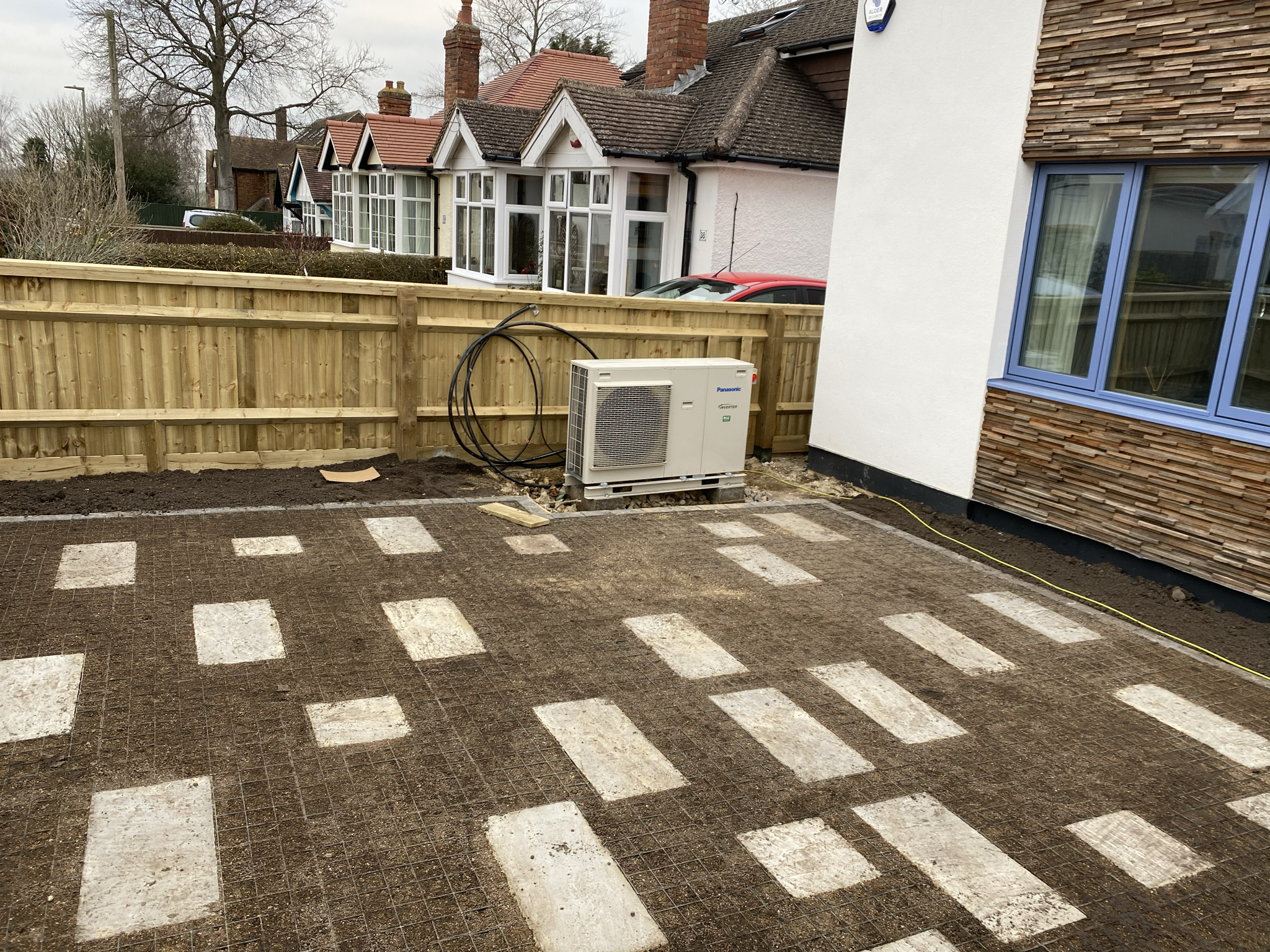
I’ve installed a Panasonic in a clients front garden, next to the boundary fence, and when on full wallop the lady next door asked if it would be noisy when it’s in use. I said it’s on right now, and she’s said “oh, I couldn’t tell”. Bingo. Another where the client could hear a boiler flue 30m away over the unit he was stood next to, again going full wallop as I was there switching these on for the very first time, the latter in dec and an outside temp of -2°C. Your architect is saying the wrong thing, as regardless of where the heat comes from a kw is a kw, so a 16kw ASHP will produce………16kw, and a 16kw GSHP will produce……..16kw 🤷♂️🤦♂️🥹. So, they’re completely out of their depth and should stop giving you advice imho. They may be very good at designing houses, best they stick to what they know.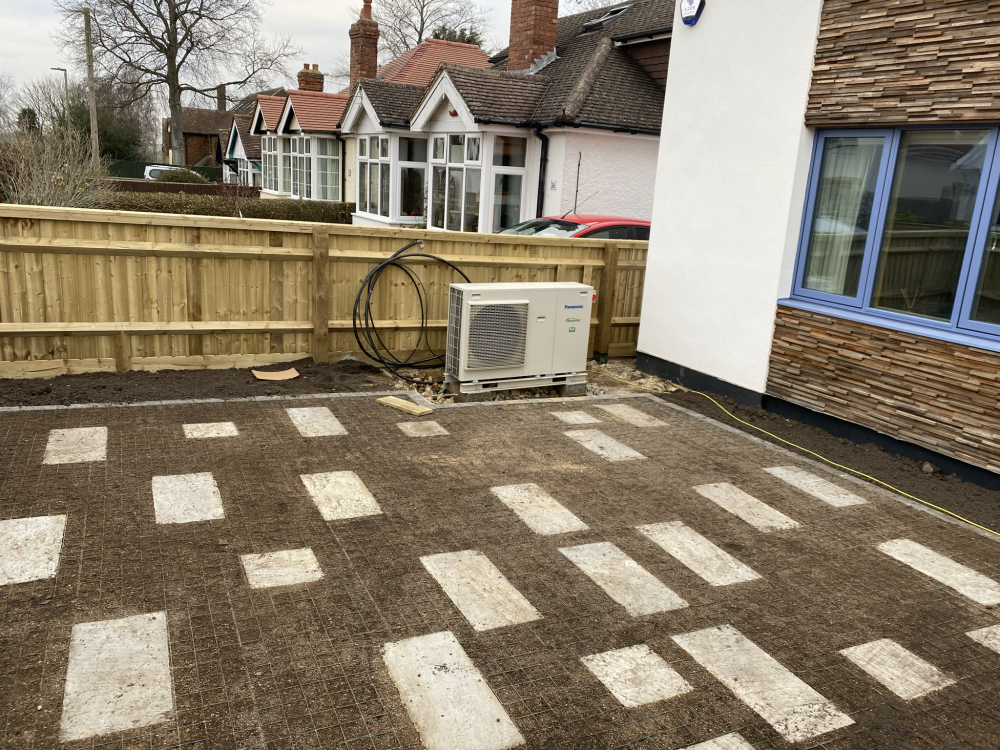
-
I’ve been saying this for years…. Ideal for commercial or affordable etc, but not for a dream / forever home. Lots who have chosen SIPs still try to defend the choice, but it’s crap. Take that person to a cellulose blown TF house (walls and roof) and they’ll shut their mouths in a millisecond. Graveyard silent vs you thinking a window has been left open somewhere. Ive had to specify cooling for other such instances, and I get questions on “will I really need to spend out on cooling?”…..”yes you will”.
-
You don’t mention airtightness? That’s # 1 on the list, and imo more important than the insulation solution(s).
-
If these are outside your airtight envelope and you have MVHR then the subject is almost entirely moot, is it not? You can choose EPS in the floor, or PIR + additional membrane, so as to minimise / eradicate the effects of such off-gassing. Go twin wall and pump the voids with Warmcell (cellulose) insulation. If you do go SIPs then check the spec as you may find additional PIR has to be installed to meet b regs minimum requirements, which is more time / money / complexity, and often omitted by the frame erector so they can get in and out and on the road to the next one. 😕
-
There’s so much velocity at the outlet it doesn’t matter tbh, and you can still do a soil stack in 3” pipe if it only serves a single WC, no actually need for 4”. 4” just gives redundancy and is the knee jerk.
-
Yup. Anything “bespoke” seems to attract crazy uplift with costs, aka supply / demand, but just showing options so you can maybe source similar to suit etc.