


Ajm
-
Posts
18 -
Joined
-
Last visited
Ajm's Achievements

Member (3/5)
1
Reputation
-
Shower light with extractor fan - heat loss & air leaks
Ajm replied to renovator123's topic in Ventilation
I've used the Quinetic wireless switches from tlc-direct for cases where I've missed a switch like this. Since the switch is self powered it can even be in the bathroom. -
How to unlock cool mode on Panasonic heat pump
Ajm replied to Ajm's topic in Air Source Heat Pumps (ASHP)
To answer the question myself - in case someone else needs it! Googling found this: -
I have installed a Panasonic Aquarea WH-MDC07J3E5-1 heat pump and chose this model specifically as it is advertised as being able to cool as well as heat. However, cool mode does not appear in any of the menus for setting it up and it appears it has to be unlocked. I did find one reference to having to do this on a dip switch but no details of which one. Does anyone know how to unlock cool mode? Or where I might find the information. Thanks Andrew
-
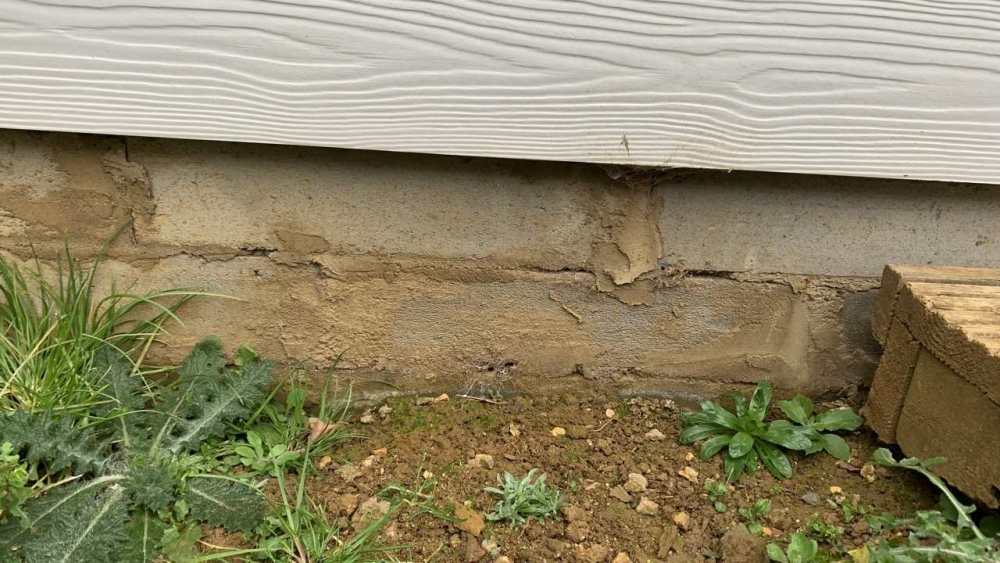
I thought that since they are below dpc there could be damp rise up the blocks and it needs to escape somewhere.
-
We have built a timber frame extension with grey trench blocks below dpc. The blocks look a bit ugly so was thinking how to improve appearance. Thought about using brick slips or tiling (for example with quarry tiles). Will these stay stuck on the wall and allow it to breath as it is below dpc? Any other suggestions? Thanks Andrew
-
How to release water in combi boiler to repair a leakage?
Ajm replied to LLL's topic in General Plumbing
Drain cock could be anywhere on the system - and there might be more than one! They should be at low points so the water can drain away from as much of the system as possible. Also helps to open air bleed screws on radiators to let air in as the water escapes. Draining from the boiler won't drain from the radiator if the radiator is lower down. I'm only a DIY but have done quite a bit of work on central heating and have never drained system by dismantling boiler! Always find the drain cocks. -
How to release water in combi boiler to repair a leakage?
Ajm replied to LLL's topic in General Plumbing
you need to look for a drain cock low down on the system somewhere looks like attach a hose to the outlet and open the valve on the left for it to drain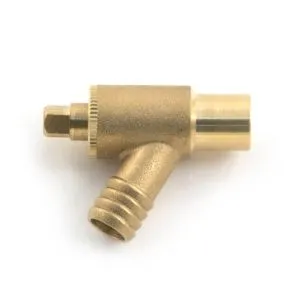
-
For a flat (or slightly sloping roof like this) I would always lay the wall plate flat on top of the wall, both front and back the same. Both strapped down. The only times I'ver bolted a plate to the face of the wall is when putting a single storey flat roof extension on a two storey house, so the 'back' wall extends above the flat roof.
-
Have a look at this thread on another forum: https://www.ukworkshop.co.uk/threads/help-how-to-fix-a-wall-plate.133457/ it shows how the wall plate rests on top of the wall (bedded on mortar) and straps go across it and down the wall to tie it all down. Then rafters are fixed to wall plate using brackets. In my experience 4x2 for wall plate is fine when used in this way. Looking at the span tables I would say 5x2 a bit small, I would use 6x2 (145x47)
-
this might help https://www.timberbeamcalculator.co.uk/en-gb/span-table/flat-roof-joists?load=1&class=C16
-
Thanks @Mr Punter - will BC accept DIY commission since there won't be a 'certificate' with someones name on it! something like: https://www.tester.co.uk/sauermann-kimo-k-si-vv3-rotating-vane-anemometer-hvacr-distribution
-
We have come to completion on our extension which included relocating kitchen and a new en-suite bathroom Building control have asked for: Extract fan test and commissioning certificate I've never heard of this being needed before. Anyone else come across this and how we go about getting this? The kitchen has an off the shelf extractor (Airflow ICON 60) and the bathrooms are connected to a self-installed MHVR. Thanks for any input
-
Sorting out expansion vessel and overtemperature valve
Ajm replied to jack's topic in Boilers & Hot Water Tanks
Our UVC has a NRV right at the cold inlet, part of the tank. If yours is like this fitting an EV on the cold won't work! Also should there not be a NRV between the branch for the tank and the feed to the cold manifold to prevent expanded water from the tank feeding into the cold water supply? -
Using self levelling compound on a rough floor with a slope.
Ajm replied to Frazer G's topic in Floor Structures
We've recently been using ultraplan renovation screed (we found screwfix cheapest!) to level rough and un-level floors throughout. Priming first with 1:1 diluted primer. Some areas well in excess of 10mm, some only a few mm. I would also vote for using a spiked roller for shallower areas We also found it useful to put screws into the floor on a regular grid so that the tops of the screws were level and at the finished level required. This gave us something to gauge the the levelling compound as we pushed it around gently with a float. As @Iceverge mentioned, it doesn't level over a large area but smooths itself in small area - so a little persuasion is needed to push it to the required level. -
we used something similar in our upstairs, under engineered wood floor. It works fine, bearing in mind it does not behave thermally the same way as underfloor heating embedded in screed downstairs. It heats up much quicker but also cools down more quickly as there is no thermal store. However, since we only have the one room upstairs and it is open to the ground floor we have rarely had to use the upstairs heating. The only time we did was back in 2011 (I think) when we had a few days of -20 outside temperature and we needed the extra heat in the house. The air source heat pump continued to work well even down at those temperatures. And the upstairs UFH did its job.


