


MJNewton
-
Posts
1354 -
Joined
-
Last visited
-
Days Won
1
Everything posted by MJNewton
-

Any electronic component experts? SMD identification.
MJNewton replied to ProDave's topic in Boffin's Corner
It'll be an S. A7 = Type = BAV99 S= Manufacturer = Infineon 64 = Date Code (YM) = 2006 April Here's the datasheet. -
dirt around mvhr outlets
MJNewton replied to Patrick's topic in Mechanical Ventilation with Heat Recovery (MVHR)
Maybe we all get it, but only certain types of vent that blow the air against the (slightly rough) ceiling surface end up 'catching' it. Here's my type, which whilst intended to throw air sideways by virtue of the internal profiling, won't ever throw it towards the ceiling so my dirt/dust is probably just landing elsewhere in the room!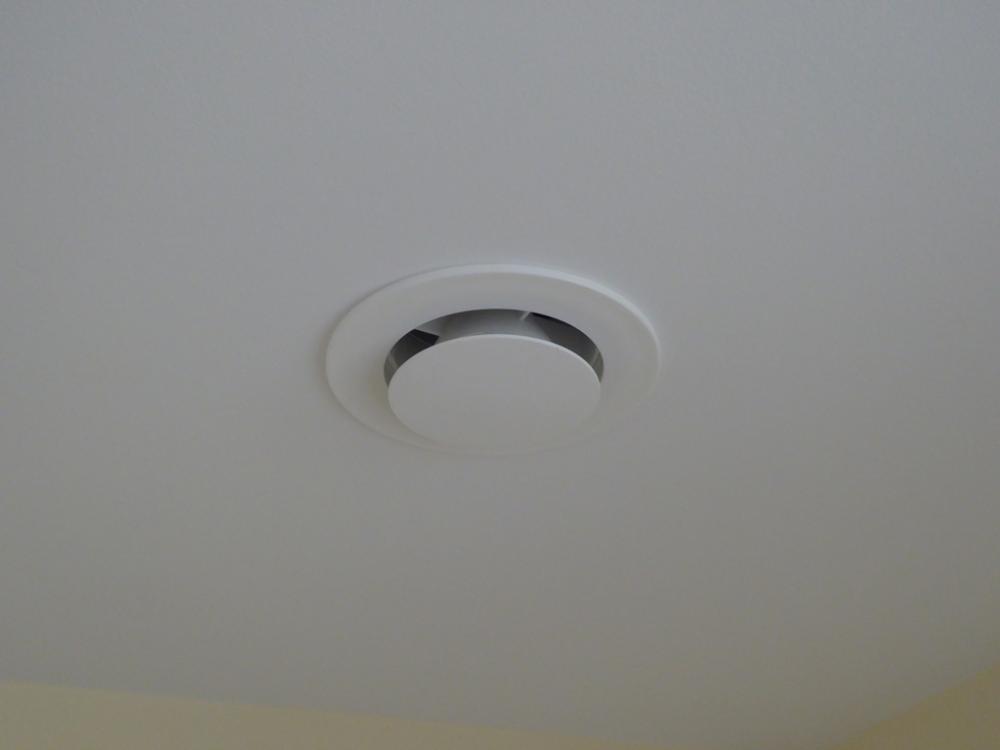
-
dirt around mvhr outlets
MJNewton replied to Patrick's topic in Mechanical Ventilation with Heat Recovery (MVHR)
I haven't, but then my vents don't fire out quite as close to the ceiling as yours appear to. That said, I don't get much (if any?) dust/dirt building up inside the vent and its supply pipe as the air being pumped in is reasonably well filtered. Do you have a filter installed in the MVHR unit? (Edit: Sorry, you quite clearly referred to the presence of a filter!) -
Detailing for cill drainage with a 'flush' finish patio
MJNewton replied to SBMS's topic in Landscaping, Decking & Patios
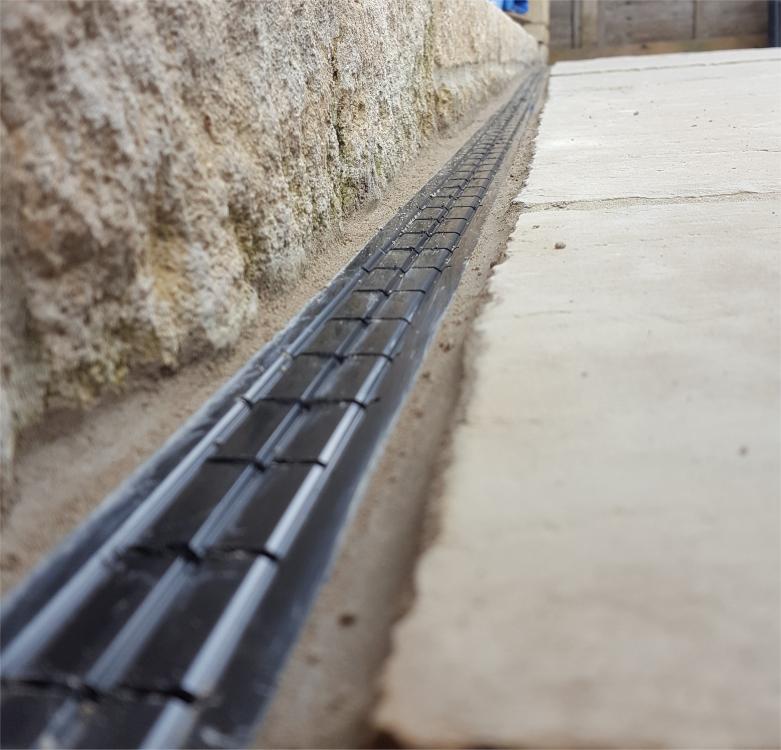
Here's a rather fuzzy enlarged zoomed crop which hopefully illustrates: You can see the plastic-capped drainage points at periodic intervals along the front (one on the left had fallen out at the time of the photo being taken!). The drain in front is a 'Deck-a-Drain' channel: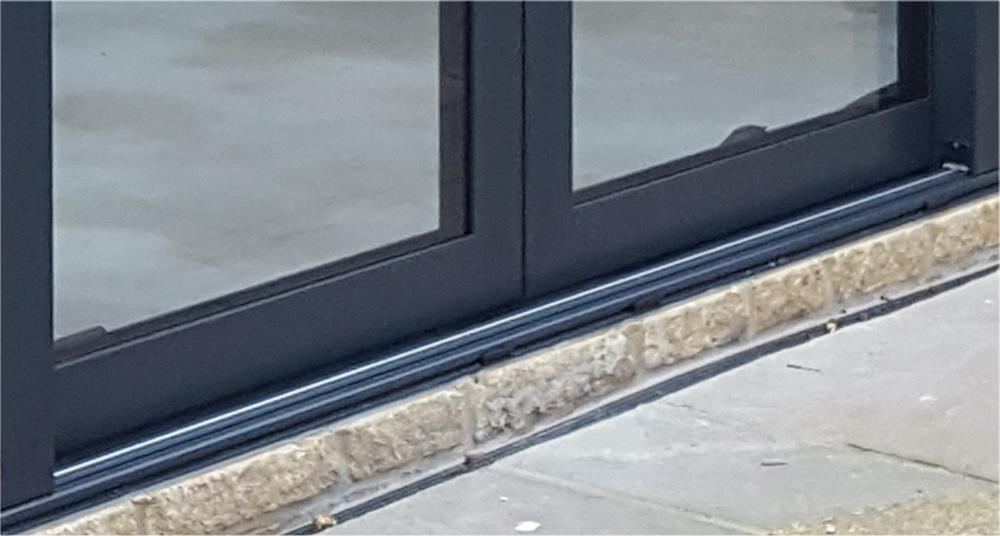
-
Detailing for cill drainage with a 'flush' finish patio
MJNewton replied to SBMS's topic in Landscaping, Decking & Patios
I thought it looked familiar. We’ve got a set of CP130’s (LS variant so lift-and-slide) and don’t have a cill. The frame sits on and flush with the outer brick face. It’s one course up so a different arrangement to yours. I’ll see if I can dig out a photo if it might help. -
Detailing for cill drainage with a 'flush' finish patio
MJNewton replied to SBMS's topic in Landscaping, Decking & Patios
The cill itself won’t have any weep holes in it - they will be in the aluminium profile that sits above it. Specifically, I expect they’ll be in the front section (in that little cutout section). What make are your sliding doors? Are they Reynaers? -
Even posher people had a gap in the wall for the VCR to go in. My uncle had a top-loading Betamax and he had to slide it out to access it!! (Not ours I hasten to add!)
-
Draughts beneath plinth where dishwasher located
MJNewton replied to newbie282's topic in Heat Insulation
The plinth cutout is to prevent it fouling the dishwasher door. Without that hole most dishwashers couldn't be fully opened (or, if installed already open, couldn't be closed!). I'd take the dishwasher out (integrated doesn't mean not removable!) and seal along the gaps at source with sealant (anything would do - silicone, caulk etc) or foam if large enough. Might you need to go under/behind other cupboards too? -
Boiler broken, new build around the corner. What to do?
MJNewton replied to Goodremy's topic in Boilers & Hot Water Tanks
System boiler means unvented whereas regular (heat only) means vented which is what they have now. Not necessarilly. We've hot a heat-only boiler with an unvented cylinder and CH system. A heat-only boiler - as the name implies - just provides heat and so you need external components (pump at a minimum but also valves if more than one circuit) to incorporate it into the wider system. In addition to gas and (if a condensing boiler) condensate drain, it has a single a flow and return. A system boiler has the pump built-in and separate flow and returns for CH and HW. Vented vs unvented is an orthogonal issue not tied to heat-only vs system boiler type, but specific boilers may be designed to only work with one or the other. -
Nuaire MVHR System Leaky Ceiling Vent
MJNewton replied to tomaus's topic in Mechanical Ventilation with Heat Recovery (MVHR)
Now that we’ve got cooler outside temperatures, what are the temperatures of the supplied air like? It should be obvious if the summer bypass is activated. -
Show me your inlet/outlet valves
MJNewton replied to SuperJohnG's topic in Mechanical Ventilation with Heat Recovery (MVHR)
We've got the Hybalans+ Conus Air Valves: No adjustment at the terminal and so require throttling at the manifolds instead. In all honesty whilst I put a lot of effort into choosing terminals I liked I must admit we just don't notice them anymore - they just end up blending in with the surroundings once your mind ends focused on things other than the MVHR installation!
-
Yeah, I bet even after only a few hours it'd be fine for a cat to walk carefully on. If sand and cement it is pretty dense and tampered down. Of course, cats being cats, they'll chase a mouse around on it, dig holes etc, so I'd keep it away for a day just to be sure.
-
One day you'll be thanking him... 😁
-
Deeper the better is my preference, within reason of course! Gives more room for smart relays, dimmer modules, easier/neater wiring etc. Also far better for them to be too deep than too shallow thus require retrospective remedying!
-
Ours is on a wall in the loft (above a bedroom) and I opted to effectively sit ours on some rubber exhaust hangers to provide some isolation from the building. We don't hear it, but that doesn't mean it was necessarily necessary as we didn't try it mounted direct!
-
Connecting Shelly 1PM to Shelly Motion Sensors
MJNewton replied to Adsibob's topic in Networks, AV, Security & Automation
It looks daunting but I promise it's quite straightforward... If you go in to the Shelly app and select a sensor you should be able to configure it, one setting of which will be a menu related to actions or something similar like the following: -
Connecting Shelly 1PM to Shelly Motion Sensors
MJNewton replied to Adsibob's topic in Networks, AV, Security & Automation
I suspect the 'Addon Sensors' section on the 1PM is intended for directly connected sensors, whereas what you've got are remote sensors. That's not a problem though; they can send commands over the network. I've not used a Shelly Motion sensor before but I am assuming there's a setting somewhere that can trigger a URL call when motion is detected. In here you need to put something like the following on each of the sensors: http://<ip.address.of.1pm>/relay/0?turn=on&timer=60 (where 60 is the time in seconds that you want the pump activating for) There are further details in the published API but that ought to be enough to at least get things going. -
It's not more the surrounding piperwork (and/or pump, if present) is it? Normally UVCs are so well insulated that they don't tend to emit much heat. Does no harm adding more insulation I suppose though, and of course if you've already got it!
-
If concerned about the thermostat could you just leave a gap for it in the jacket? That said, is it really worth insulating it more than it already is?
-
If you're in a position to test it straight away then Amazon's return's policy/process is second to none if there are any issues.
-
@Ultima357 did a great write-up of a DIY actrive carbon filter with seemingly really positive results...
-
Looks perfect! Personally I wouldn't worry about branding.
-
Sorry, should've caveated the suggestion with the admission that I only found it through Google! I see there are some online sellers (in Poland, example) but they seem to limit shipping to the EU. Could maybe get it sent via someone over there (involving your perhaps!).
-
How complex is the existing building and proposed extension? If fairly run of the mill then I wouldn't want to be paying (extra) for an 'Architect' - I'd be more than happy for an Architectural Technician (which is the title I am most familiar with, but which is presumably synonymous with 'Architectural Technologist' that George mentioned). Aside from being cheaper they might also be a bit more down to earth (no offence intended to any resident architects!).
-
How about this if you can find a stockist? Hard to imagine anything smaller really!




