AliG
-
Posts
3211 -
Joined
-
Last visited
-
Days Won
11
Everything posted by AliG
-
We have had a couple. I thought I was going to have to get a ladder out to remove one body, but it was gone within two weeks. Kudos to my wife who said this would happen.
-
I recently tried to price up a double garage if it was built by a main contractor. I was getting to a number in the low 20s with a flat roof and rendered. This assumed a good quality electric double door. The big expense seemed to be the foundations/slab. I did look at single versus double skin and concluded that an extra skin adds maybe £1000 in cost compared to a single skin and was probably worth it for the lack of hassle in the long run. You lose space due to piers in a single skin anyway.
-
I would look at the planning history for your street and see if anyone else has applied for a similar extension and been rejected. A look on Google maps shows that pretty much none of the houses on the corners have side extensions, a couple seem to have small single storey ones in the area. The council may refuse on breaking the building line, again on all the corners, the side of the house on the corner lines up very well with the front of the house behind it, or due to traffic sightlines, although I don't think this would be any worse than currently. As said the actual objections are just complaints they should have made to you personally and are of no planning consequence.
-
I think a lot of good points about how unsteady you can get as you get older and this is not just a bathroom issue. I took a cake round to our 92 year old neighbour. It became obvious that I couldn't hand it to her as she couldn't carry it and use her stick to get to the kitchen, so I had to carry it in for her. Being able to do things with one hand is very important. I'd certainly be considering a rail next to the WC and possibly in the shower. The shower seat is definitely the simple option, from speaking to my parents the issue is simply getting them to admit that they might need something like that. This is why I wouldn't want a door on the shower if it can be avoided, it is just another thing to deal with and get in the way.
-
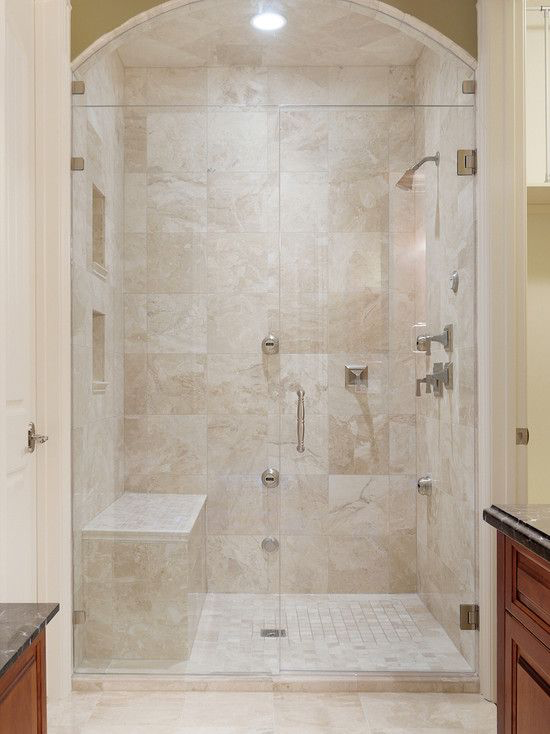
You can just build a bench area into the shower as an option, or there are various seats that you can have in a shower. What I don't know is what works best for an older person - shower seat, walk in bath etc. I googled it and this seemed a useful guide to walk in baths versus showers versus wet rooms. It sounds like walk in baths are for people who want to have a bath and not a shower but have limited mobility. A wet room seems the best solution for covering all kinds of mobility issues. https://www.absolutemobility.co.uk/blog/walk-in-bath-shower-or-wet-room/
-
Are the stone resin trays that have a bumpy surface better for grip? They look like they would be but that is not necessary the case.
-
That is true, the floors are tiled, I was wondering if vinyl might be better in this case and then the splashing would be more of an issue. We only have 150 or 200mm rainfall heads, the bathroom people did try to spec 300mm and then I think you'd be getting water everywhere. Maybe I am a bit more restrained in my showering!
-
We have three showers with a 1000mm screen and they work fine, maybe a little water gets round the corner, but not noticeably. The difference may be that we have shower heads on an arm so they send the water pretty much straight down as opposed to on a rail on the wall where they have to send the water outwards at an angle.
-
My parents really struggle with how slippery a shower tray is. I would try and get something with some kind of rougher, higher grip surface. A tray is a lot easier to seal and clean than a wet room floor, if you ply and then tile the floor, you can get a low tray that will be level with it. Again look for non slip tiles. In a 1600mm space I would have a 1000mm screen and 600m space to walk straight in. No doors to open and close, way less to clean. Put the shower head at the end where the screen is and the valve at the other end. You might want to put a seat in the shower, or in the space opposite the toilet. It is so much easier to get dressed sitting down in the bathroom.
-
Thanks, unfortunately I think they can do any thickness between 20 and 150mm and suspect it will be the thinner ones that were used. The reality is there is no taking the floor up now, so you just have to find a way to work with what you have there. You could maybe improve the roof insulation, but that is likely the only area that can be easily changed.
-
The board does the same thing, but it is just not thick enough, so a lot of heat will be going into the concrete and the ground rather than the room. Happy to help. I just noticed something on your settings. You have Monday to Friday morning set as 20C. As the temperature doesn't normally get below 20C, according to the charts, the heating won't come on in the morning. It is coming on in the afternoon when it is set to 22.5. I would try setting it to 22C in the mornings, 20C during the day and when you are in bed and 22 or 22.5C for after work. This way if it does get cold it will kick in to stop the temperature getting lower and so it will heat up faster. I would also look at setting different rooms differently. We have the kitchen at 22C, but the dining room at 20C as we are hardly ever in there. As your house cools down quickly, I would also set the switch off time no more than an hour before bed. Setting the Differential to 0.5c will also keep the temperature more consistent. I spent ages setting up the heating in every single room in the house as they are all different depending on whether they are bedrooms or living rooms, how much use they get, what direction they face and what flooring they have. We have quite a few south facing rooms where the heating is switched off and never has to be used, we also have a couple of colder north facing rooms where the thermostat is set lower as the heating kicks in at a lower temperature and a room with the heating on feels warmer than one where it is off even if the temperature is lower. It looks like you have only one setting for all the rooms. We have one thermostat on an outside wall and all the others are on inside walls which also makes a slight difference. In my last house where the insulation was poorer I had to set one thermostat 5C lower than the room temperature as it was on an outside walls that had a draughty cavity.
-
That's probably the issue, it is recommended to have at least 100mm of PIR below UFH. People like UFH but it is not a great retrofit product. It works best in well insulated houses built with UFH in mind. But there's nothing we can do about that now. By increasing the set back temperature you will stop it getting so cold and the house will heat up faster, simply by never starting from as cold a point. But this could increase your bills a bit if there is not enough insulation under the UFH. You would just have to try it and see. Are you finding your gas bills unexpectedly high? How much gas are you using compared to the size of the house?
-
I doubt would be worth the cost and effort. The biggest driver of the times and costs of heating is going to be the insulation of the room. You do have a faster heat loss than most people on the forum, but considering this is not a new build, I don't think it is surprisingly fast. It would be useful to know that there is enough insulation in the floor. Looking at the expansion foam around the edges, did they lay a concrete floor then put the insulation panels on top of it? Having looked on Google they look like they might be low profile panels that would not really provide enough insulation on their own and would allow a lot of heat to leak into the ground and slow down the system. They may have made this choice to maximise head height or to not alter the floor levels. I would be surprised if the floor was not warm at the temperatures you are running with makes me wonder about the amount of insulation in the floor.
-
I used to have mine set back 2-3C, but I changed some rooms to 1-2C just so if they did cool down they would warm up faster. If you want it to be 22C I would recommend setting it back to 20C during the night and when you are at work. The 0.5C differential helps as at 1C it has to be1C away from the set temperature for the UFH to switch on, so say you want it to be 22C. The UFH switches off at 22C, it starts to cool down to 21C then it comes on. It could get to below 21C before it starts to warm up again. Thus with 1C you can find it getting colder than you would like before the heating kicks back in. I am a bit confused though as looking at the charts, it doesn't look as if it is taking too long to heat up and the temperatures look broadly ok. The only thing is it looks like set at 22C it is dropping to 21C which you maybe find a bit cold in the lounge before the heating comes on. The 0.5C differential might help.
-
Empty Plot vs. House to Demolish – which option?
AliG replied to bpk101's topic in General Self Build & DIY Discussion
It won't be appreciably cheaper than that on a plot with an existing house as the utilities will have to be disconnected then connected back up again and won't necessarily come in at exactly the same places. -
Empty Plot vs. House to Demolish – which option?
AliG replied to bpk101's topic in General Self Build & DIY Discussion
If the plot is in a street that already has utilities in it, the cost of connecting to them should be pretty modest, £5000ish in total. Sometimes people get caught out by things such as them claiming the system is full and you have to play for extra capacity. -
What temperature do you run yours at?
AliG replied to recoveringbuilder's topic in Underfloor Heating
The entire outside of our house has these, they are dot and dab on the block walls and screwed in timber areas. No issues at all. -
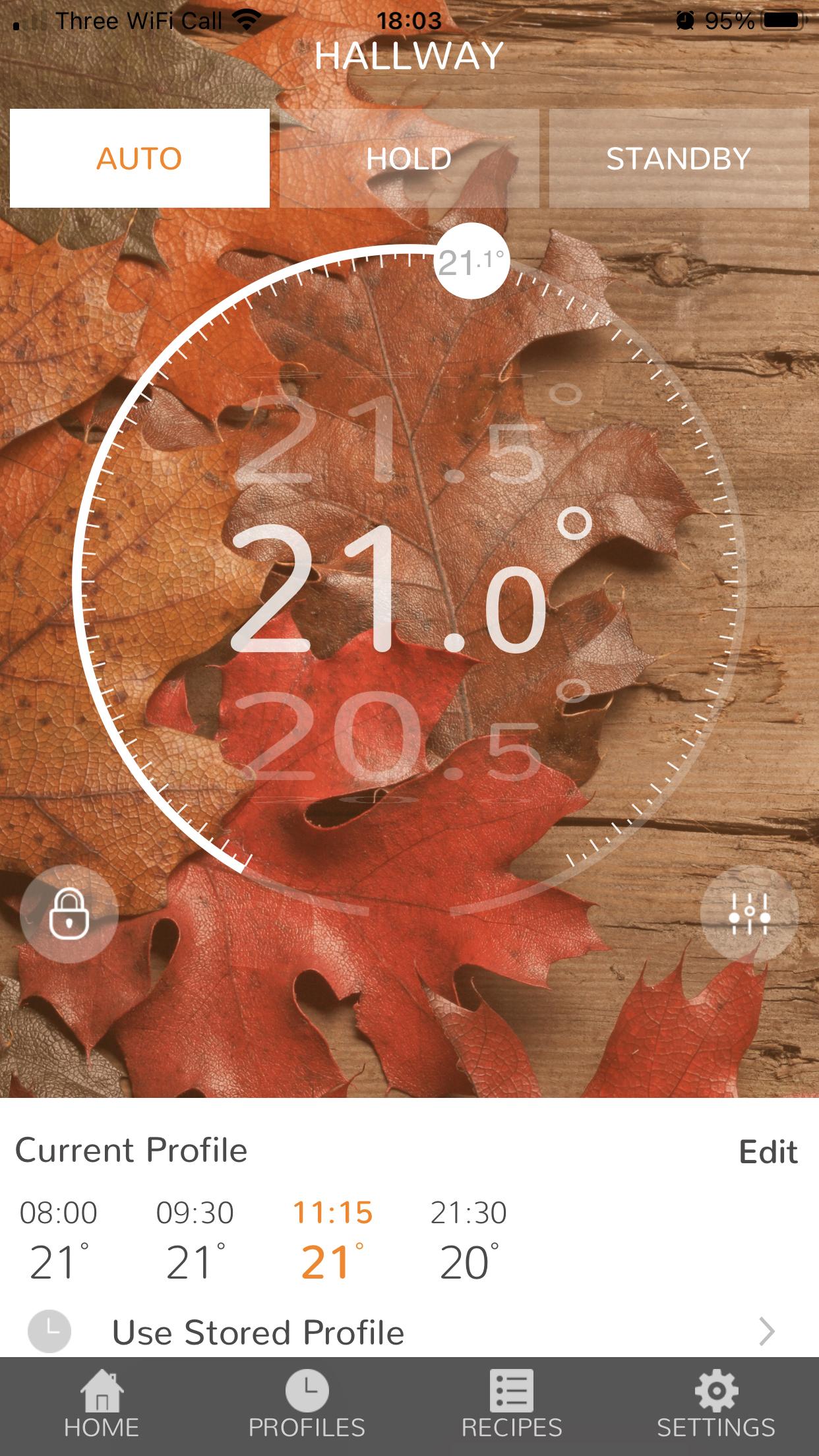
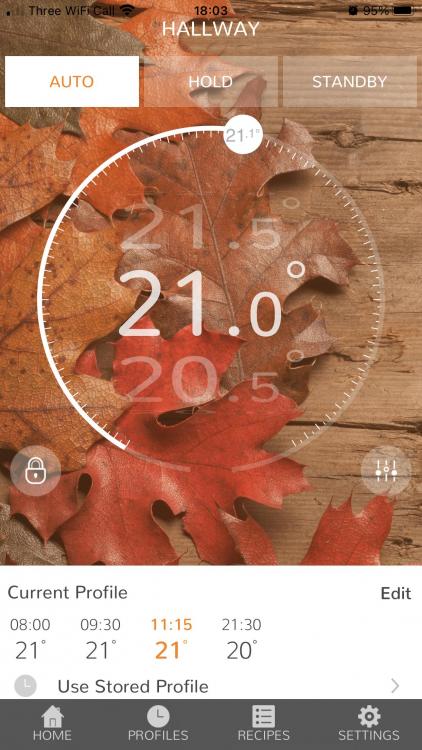
So I see a couple of things here. UFH is slower to heat a room that radiators. Depending on how fast it heats up it may need to be on over an our before the target temperature you are looking for. If you tap on he three vertical lines in the right side of the screen as shown, it gives an option called optimum start. Using this, Heatmiser is supposed to calculate how long rooms take to heat up, so you set the temperature you want e.g. 22C at 6am and it calculates if it needs to switch on at 4.30 or 5 or 5.30 etc. I have mine set to a maximum of an hour as it heats pretty quickly. It also gives you the option to change the temperature differential before the heating kicks in from 1C to 0.5C. I did this, as for example if the thermostat is set at 20C and the differential set at !c, the heating won't come on until 19C which is a little cold. Do you want the rooms to be to temperature at 6am and 4pm, or did you set these times as before you end them to be at that temperate to give it time to heat up. If these are the times you want the temperature then it may simply be that you need to change the settings so it starts to heat up an our before you need it, it does not look to be heating up particularly slowly to me. The other issue is setting the temperature back to 16C when you are not at home. I don't know what your local temperatures have been like, a couple of nights last week it got to 3-4C here, but it looks like you are sometimes losing temperature quite quickly at night, 3C over a couple of hours in the lounge. I suspect if it was really cold you would lose 4-5C. It will take a long time to heat back up from this kind of loss. You probably need to look at the temperature during the night and when you are at work as being set at 20C so that if if gets really cold, the heating kicks in to stop the temperature falling even more, then it is less hard to get up to temperature at the required time. Out of interest, have you felt it too cold or slow to heat up in the last week. The temperature has been normally between 20 and 22C which would seem reasonably comfortable. It looks like heating up last Sunday and Monday morning may have been an issue
-
Empty Plot vs. House to Demolish – which option?
AliG replied to bpk101's topic in General Self Build & DIY Discussion
We did a knock down and rebuild, but it only made financial sense because the house we built was considerably larger than the one we knocked down. Even at 50% larger it wouldn't have worked. There will be a premium for a new house over an old house but unless you think the house underutilises the plot and you can build a much larger one it is unlikely that it would make financial sense. -
What temperature do you run yours at?
AliG replied to recoveringbuilder's topic in Underfloor Heating
My heating wouldn't be on yet if it was set at 18-20C. I wouldn't be married either! -
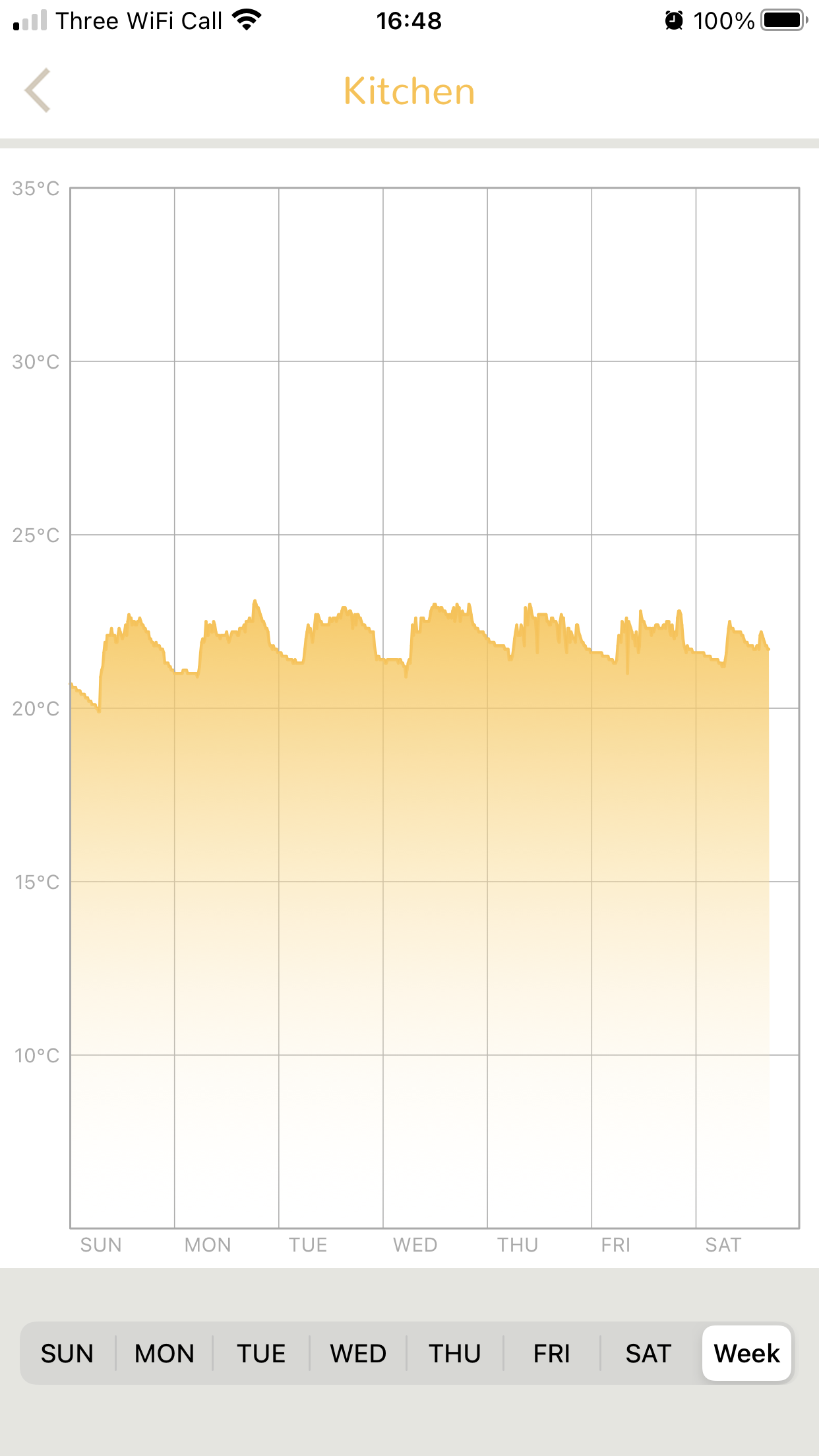
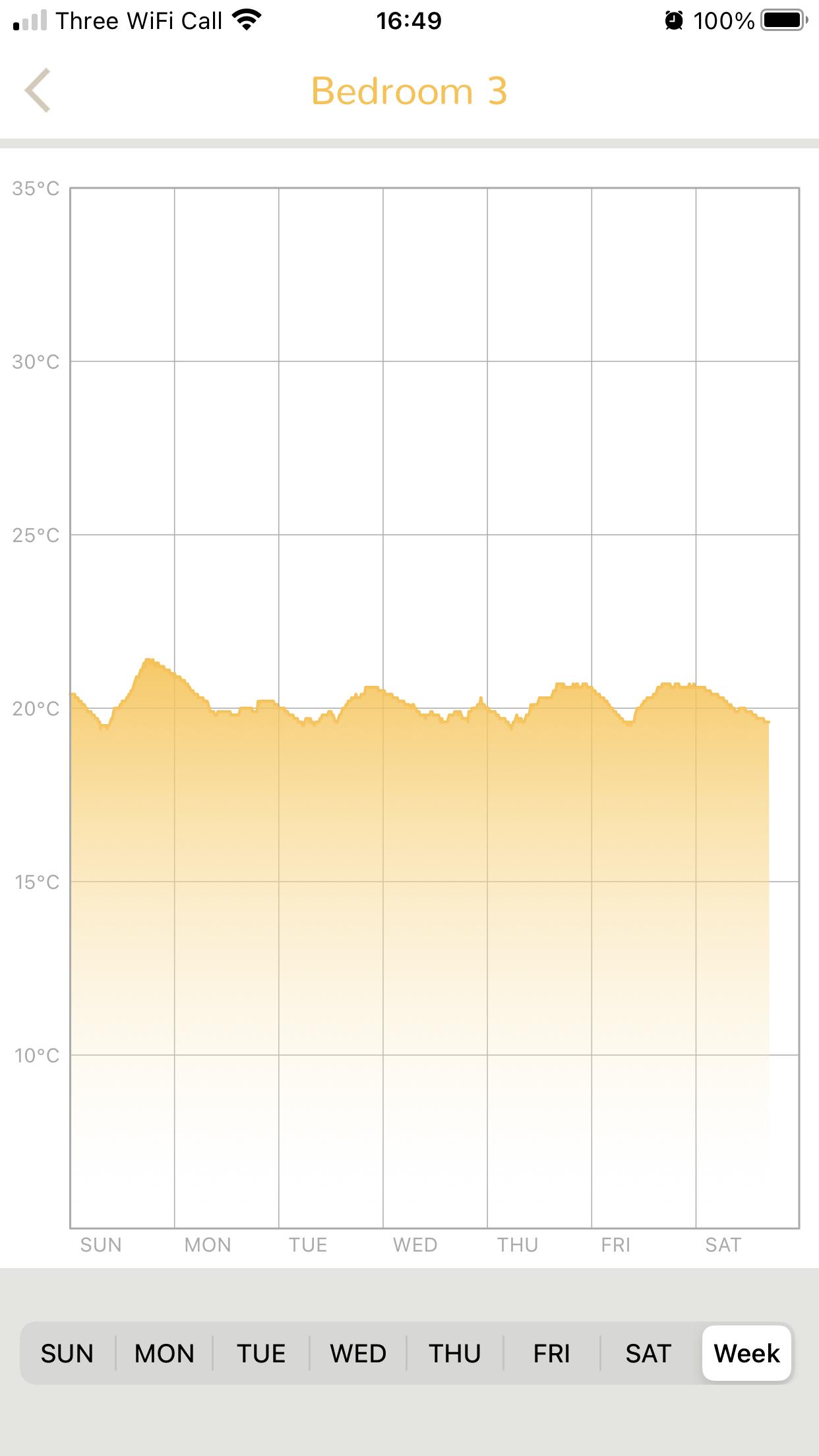
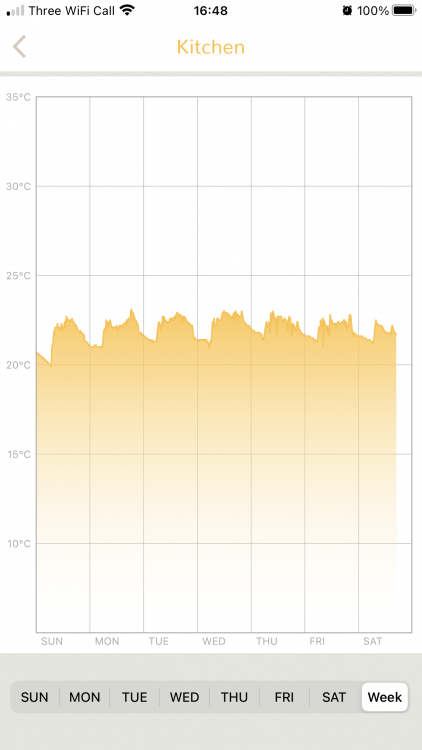
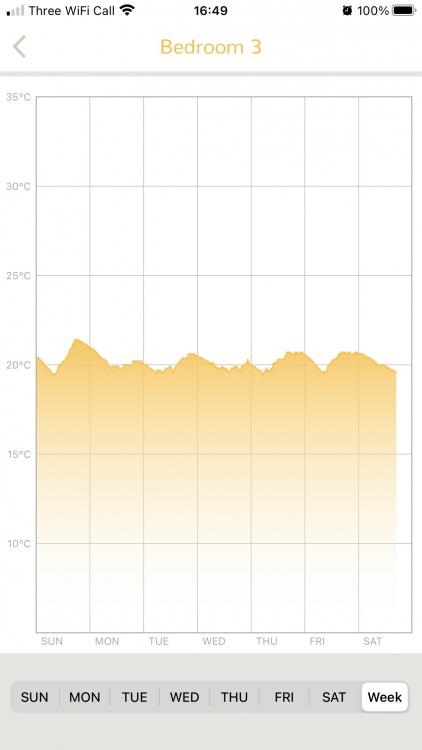
We had the kitchen in our old house retrofitted with UFH and a similar floor build up to this, except with tiles. It really struggled to heat the room when it was cold, I had to turn the flow up to over 60C as you have done. But I don't think it would have been an issue in the kind of temperatures we have recently. Can you post the charts from the Heatmiser. UFH can take a long time to heat up compared to radiators. It would be interesting to see two things, how fast he room is heating up, but also how quickly it cools down during the night if the heating is off or set back. Most people on the site with better insulated houses might only see a 1C drop in temperature overnight with the heating off and low outside temperatures. Mine tends to drop 1-2C depending on the room and the outside temperature. If I attach the kitchen in my house you see it cools down slowly, not as slow as some, it is a downstairs room with tiles and a screed over PIR floor. It heats up very quickly, you see a very sharp spike in the morning when the temperature increases. If I attach bedroom 3 - It is upstairs, and above the garage, it also faces north and has a wooden floor, so it is by far the slowest room to heat up in the house. I did spend a lot of time last winter trying to optimise the system and found that in the couple of rooms that lose a lot of temperature it was probably more efficient to only turn the heating down 1C during the night, otherwise the temperature fell so much during the night that the heating ran for hours in the morning to get them back up to temperature.
-
What temperature do you run yours at?
AliG replied to recoveringbuilder's topic in Underfloor Heating
We are set at between 20 and 22 depending on the room. My wife was complaining that the kitchen was cold even though it was 22 the other day and the heating was off. I think that at this time of year the issue is that it starts to get colder and darker outside, but it often isn't cold enough inside for the heating to kick in. Thus you don't get the radiant heat that helps you to feel warm irrespective of the air temperature. Once it gets colder and the heating kicks in more it feels warmer even at the same air temperature. -
Good that you went for a 1100mm wide door, our door is the same size. I see a lot of houses with a pair of doors when they want a wider door, but no one wants to open two doors all the time so usually it ends up like having a smaller than normal front door. One wider door is a better option.
-
Sorry @JamieG I was and I should have reported back. The SE did describe it as a bit brief, but it was al that was needed for the foundation designers. The company who did it was called Aitken Labs in Falkirk. I have booked them in to do a percolation test for a soakaway now.
-
Access/Mesh points/WiFi booster
AliG replied to Coops85's topic in Networks, AV, Security & Automation
As said if there is no way of getting Cat 5/6 to a point for a booster then the powerline stuff is the next best option. @lsb there is a form you can fill in on the Openreach website requesting connection for a new property. Openreach are in charge of the cables. They will then give you a reference number and once on site they will come and look at the best way to connect up. It sounds like you are already on site so ready to do this. https://www.openreach.com/single-plot-sites However, once the cable is in, you then need to sign up with a phone provider who will request that the line is actually connected. It is a somewhat convoluted system. On our site they gave us a reel of cable and we put it in ducting between the house and the pole. Is the pole adjacent to your site or is there something else in between as that will make a difference, but they will advise once they take a look.