
Dreadnaught
-
Posts
1819 -
Joined
-
Last visited
-
Days Won
5
Everything posted by Dreadnaught
-

Ceiling height for open-plan room
Dreadnaught replied to Dreadnaught's topic in New House & Self Build Design
Yes, that is an interesting idea. I hadn't thought of that. -
My new build will have a large-ish open-plan room and I am wondering what ceiling height would be best. Its a perfectly rectangular room, 9515mm by 5174mm to contain, in a row: kitchen, dining table, sitting area. Its a modern bungalow and the roof above is flat. One unusual feature is that there is only a single external window in this big room, high on one of the short sides above the kitchen units. To compensate there will be at least two large roof-lights (each 2400 mm x 900 mm, flat glass), possibly three. Its a passive house so the roof will be thick (about 550mm). What ceiling height will give an airy feeling with a sense of good proportion and no sense of claustrophobia? The minimum of 2100 mm would feel too low, I think What about 2400 mm? What about 3000 mm? I had originally even contemplated 3600 mm but it looks like that will make the ridge height too high, so I will not get approval Advice appreciated.
-
And if they were blue-tinted glass, they could work even better. The 150 Cheapside building in London got there first… 150

-
Of course, blinds and overhangs can have the other advantage of allowing passive solar gain in the winter months, when it will be welcome, unlike film.
-
I wonder of its to do with ageing. With new film, @JSHarris point would be right. But what about some years hence, with potentially ragged and patchy film. Could the stresses from areas of hotter and cooler glass then cause a problem I wonder? Similarly, what if it was a poor quality installation of film, with areas of hotter and cooler glass, could the stresses be problematic?
-
The tale of the sale of our old house
Dreadnaught replied to Jeremy Harris's topic in General Self Build & DIY Discussion
@JSHarris "Greg Jackson. Greg is founder and CEO of Octopus Energy." Might he benefit from hearing from you? -
Off the top of my head: 180º - (45º - 15º) = 150º ?
-
Here it is:
-
Iresa have ceased trading
Dreadnaught replied to Jeremy Harris's topic in General Self Build & DIY Discussion
From http://www.iresa.co.uk … Iresa Limited will be ceasing to trade. Ofgem, the energy regulator, is appointing a new supplier for its customers. Customers need not worry, their supplies are secure and credit balances are protected. Ofgem's advice is not to switch, but to sit tight and wait until the new supplier has been appointed. This will help make sure that the process of handing customers over to a new supplier, and honouring credit balances, is as hassle free for customers as possible. Customers can find support and advice from Ofgem here. Or alternatively if they need additional support they can call Citizens Advice on 03454 04 05 06 or email them via webform, or get in touch through Ofgem’s facebook or twitter feed @ofgem -
Addendum: Fibaro, the maker of the above sensor, has instructions for using a 2-way normally open solenoid for turning off the water supply if a sensor detects a leak… https://manuals.fibaro.com/knowledge-base-browse/homekit-close-the-water-valve-if-leak-detected/
-
There are these flood sensors. £65-ish. But they would only catch a leak in one location and not turn off the supply (unless you had home automation for doing so). https://www.apple.com/uk/shop/product/HLPS2ZM/A/fibaro-flood-sensor-homekit-enabled

-
For the uninitiated, this is planning poker for estimating work. It should be along side the drill bits in every toolbox?

-
I would be fascinated to see agile principles used in a building project. I was tempted myself, even just in my current design phase. But I have mostly shied away from deviating from the standard ways. I did choose my team (architect, etc.) while looking for evidence of at least some affinity for agile-style working practices. Even now I struggle to get anyone involved to value saturated communication. The culture is a million miles away form anything agile.
-
Foul sewer, Anglian water shrugs its shoulders
Dreadnaught replied to Dreadnaught's topic in Waste & Sewerage
@Declan52, thanks. Every days a school day! All new to me. Really great! -
Could you cut off an inch or two of gutter brush and stuff it up the downpipe?
-
Foul sewer, Anglian water shrugs its shoulders
Dreadnaught replied to Dreadnaught's topic in Waste & Sewerage
Thanks @Temp. Very valid point. Yes the unadopted road is needed for access. Fortunately, the unadopted road continues past my entrance to a gate that is in constant use by some other neighbours (rowing clubs) on private land beyond. Fortunately, if the road were blocked by anyone then they would be up-in-arms well before me. On rubbish collection, another good point. In my case, the planning permission requires me to wheel my bin 40m to the corner of the next road, which is a normal adopted road. Thats fine by me. -
ASHP 101, how does a reversible heat pump work?
Dreadnaught replied to Dreadnaught's topic in Air Source Heat Pumps (ASHP)
By the way, admins, could this be the official moto of BH? Do we have a coat-of-arms? What's that translated into latin? -
ASHP 101, how does a reversible heat pump work?
Dreadnaught replied to Dreadnaught's topic in Air Source Heat Pumps (ASHP)
Superb. I look forward to reading that. Every day is a school day. -
ASHP 101, how does a reversible heat pump work?
Dreadnaught replied to Dreadnaught's topic in Air Source Heat Pumps (ASHP)
@Stones I wonder, what did you decide, or actually do, as a result of your deliberations? I'm interested. What setup will you use or recommend? I thinking about my system to be. I am pondering having two unconnected ducting systems, one for MVHR and one for an ASHP for heating and cooling. (An electric Sunamp for DHW. I don't have a slab for UFH. No gas or boiler. Passive House.) I have changed my mind 3x times so far and might again -
Foul sewer, Anglian water shrugs its shoulders
Dreadnaught replied to Dreadnaught's topic in Waste & Sewerage
Thanks @Nickfromwales. A soakaway could be squeezed in but the site is small and tight. But I am hopeful it wont be needed. There is good surface water sewer (diameter 300mm) in the road right next to the foul drain. I think it drains straight in to the river about 40m away. -
Mortgage Payment stage Foundations
Dreadnaught replied to GrantMcscott's topic in Self Build Mortgages
Am no expert. I would think that going from a plot without service connections to one with them would add a lot of value, at least from the perspective of the plot's retail value. On groundworks, if that included civil engineering works, such as retaining walls, then again I would think that could potentially add retail value. I do not know if either is the case in your situation. -
Foul sewer, Anglian water shrugs its shoulders
Dreadnaught replied to Dreadnaught's topic in Waste & Sewerage
Thanks all. That's helpful! (BH dodgy humour included ). Should I be worried about the capacity of the foul sewer to take the new connection? The foul sewer is 100 mm diameter. As I mentioned, one SE who has looked at the sewer said in passing that he couldn't see a problem. But obviously the consequences if I did need to lay a new sewer would be large. Low-probability high-severity issue worth investigating? Or barking-up-the-wrong-tree? -
What to do about a sewer than Anglian Water knows nothing about? Outside my plot is an un-adopted concrete road used by me and about four neighbours . Depsite all parties checking on multiple occasions, no owner of the road has ever been found. Underneath the road are two sewers, recently mapped by a neighbour in preparation for a rebuild that they will do. One sewer is easy. The surface drain sewer is on Anglian Water's maps. But the other sewer, the foul sewer, is a mystery. Its not on their maps and they have no other records of it. Multiple neighbours are connected to the foul sewer, we think from the 1960's. The foul sewer, after leaving the unadopted road, then disappears to follow a private road which is part of a neighbouring small estate of private flats, eventually one assumes to join the main sewer on the other side. A local SE has advised me informally there should be no problem with the capacity of this mysterious foul sewer for me to connect to it. I am in touch with Anglian Water (a friendly Drainage Support Technician). So far he said he can't find any information on the sewer and is metaphorically shrugging his shoulders. What to do? Could I ask for foul sewer to be mapped? If so how? Should I explore adoption? If so how? Might I just ignore the problem for now and connect to it when the time comes, no further questions asked. (I am at the stage of buying my plot but have been looking a services to see if there are any price shocks down the line). Any advice gratefully received.
-
ASHP 101, how does a reversible heat pump work?
Dreadnaught replied to Dreadnaught's topic in Air Source Heat Pumps (ASHP)
So @SteamyTea, if understand you correctly, you are suggesting that the difference in CoP in @MrMagic's example are to be explained by physical factors (humidity), not engineering. That's really interesting. That would suggest that my statement "that heat pumps are optimised for one direction, either heating or cooling, and quite majorly so" is actually not true. Did I understand you correctly? -
ASHP 101, how does a reversible heat pump work?
Dreadnaught replied to Dreadnaught's topic in Air Source Heat Pumps (ASHP)
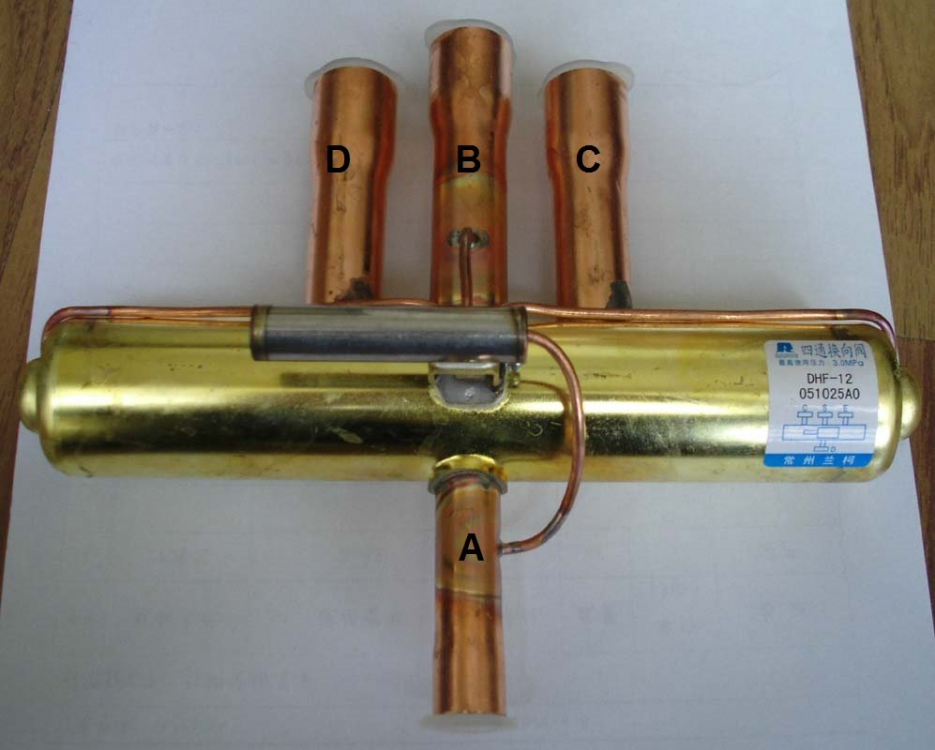
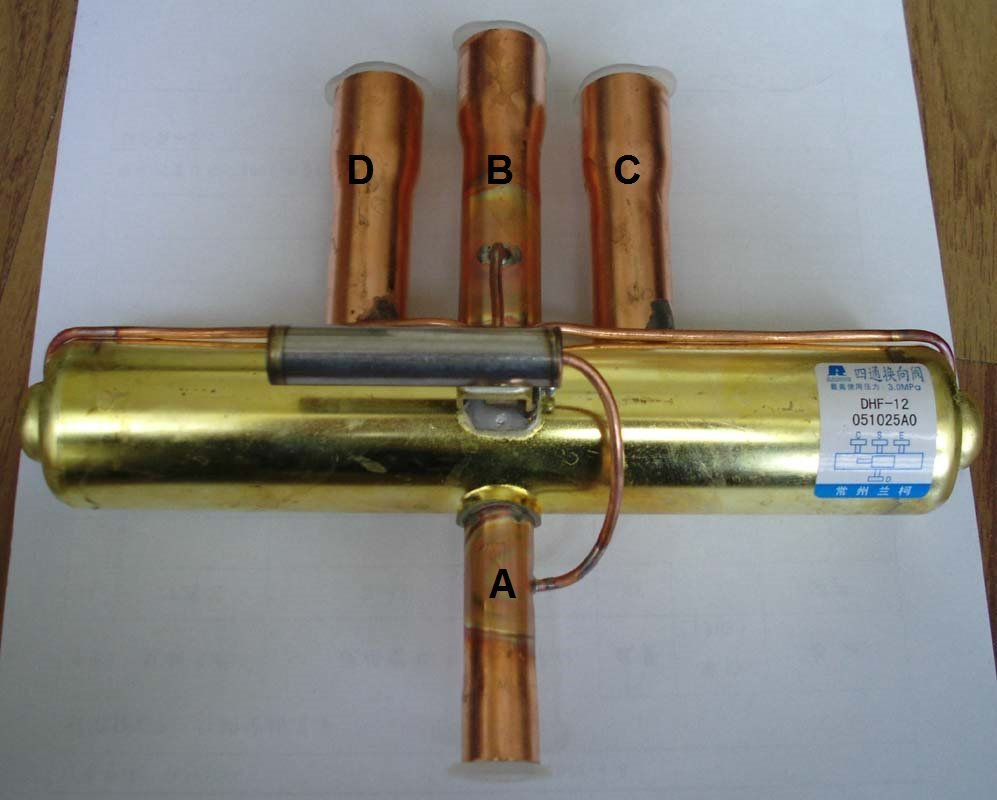
@jack brilliant link. Thank you. What a handsome object: