


SteamyTea
-
Posts
23851 -
Joined
-
Days Won
200
Everything posted by SteamyTea
-
That is why we now have safe zones.
-
The electrician that wired my house, put the light switches a few metres from the external door that is used the most. Makes me wonder what goes on in peoples heads.
-
When you look at some thing that were done 'in the olden days', it makes me wonder what they were thinking. Socket and light switches are one of them. Why would anyone put sockets so low to the ground. An extra couple of feet of cable has never been that expensive.
-
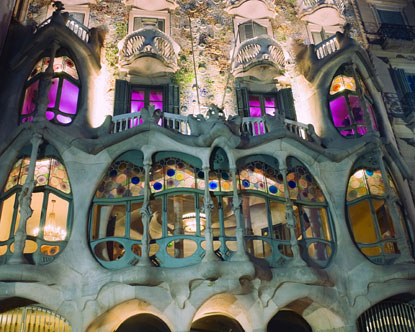
You don't need my help. Gaudi had a cool house that was all wonky. Just remember how he met his end.
-
Going to try and get this thread locked for 24 hours, and then never unlocked. I have found out how to make my tool 12 inches long. Fold it in half.
-
Helps if you have some flooding as well. London seems to get more of it than Cornwall.
-
You are using the wrong tool to check it.

-

Are we finished yet?
SteamyTea commented on canalsiderenovation's blog entry in Canalside Bungalow Renovation
Narrow boats have very small galley kitchens. Most people, in my opinion, go overboard with their kitchens in their homes (no idea what your house kitchen is like). Si my question is, assuming you did not eat 'boy scout' tinned beans and sausages, did the boat food taste worse than the home food? -
UFH runs at a higher temperature than ambient, and you can treat the ground as an infinite heat sink, with a mean heating season temperature of about 8°C. You also have a lot of floor area. Remember that U-Value is W/m2K, so a lot of area at a higher temperature means greater power going though it. So imagine a wall of 10 m2 and an inside air temperature of 20°C and an outside air temperature of 2°C, if the U-Value is 0.15 W/m2K, the losses will be 27W. Now imagine a 10m2 bit of floor, that is at 30°C and the ground is at 8°, with the same U-Value, the losses will be 33W.
-
There is no real advantage site an ASHP in sunlight, they are not solar panels. They use the air, which does not change much in temperature, especially when it is drawn in by the fan.
-
ASHP Unit distance from property?
SteamyTea replied to ashthekid's topic in Air Source Heat Pumps (ASHP)
As long as it is not totally overgrown, and you have a metre and half diameter circle around it, it should not be a problem. Any air that is cooled is soon dispersed, and it only comes out a little bit lower than ambient. I would be more concerned about losses though the pipe runs, as well as electrical losses depending on cable sizing and length. A cubic metre of air has a mass of about 1.25 kg, and a specific heat capacity of around 1 kJ/kg.K, which is 0.0002778 kWh. So if that cubic metre of air is cooled by 5K (or °C), you get 0.00173625 kWh of energy. To get a kWh out of that air, you need to shift 575.95 kg of air, or about 720 cubic metres. Sounds a lot, but is not in reality. About a third of what my car sucks in though the air intake in my car when I am doing 70 MPH. -
ASHP Unit distance from property?
SteamyTea replied to ashthekid's topic in Air Source Heat Pumps (ASHP)
It is usual to have flexible pipes from the monobloc, the manufacturer specifies the length of them. This is to stop vibration from travelling along solid pipework. So it is usual to fit them in a service channel/duct. Yes. -
Can you double that thickness?
-
Good suppliers/installers yes. I would expect them to spend several hours on doing a detailed heat loss analysis, which would include daily weather data from your nearest Met Office station. You can do a lot of the calculations yourself, they are dull and boring to do, but not actually that difficult. The MCS site used to have the methodology, that every installer was meant to apply, on it. It is pretty good. Regarding your UFH, how much insulation, and what type, are you fitting under it?
-
Almost. High humidity can cause frosting up of the units, but they are designed to cope with this. The efficiency drop in cold weather is more to do with the higher water temperatures people want, rather than the lower amount of energy 'in the air'. You get a quirk where the efficiency can seem to go very low if you calculate using the celsius or fahrenheit scale, but that, magically, vanishes when you change to the kelvin scale. WOW, you must have spent hours designing your gas system to be that good. Oh, hang on a second, you made that up.
-
where? Yes, I would like to know where all the reports of these failing ASHPs is.
-
Half finished project up for sale in Hastings
SteamyTea replied to Water's topic in General Self Build & DIY Discussion
Penzance is 300 miles from London as well, Hastings is what, 65miles. -
It is just @Dave Jones trolling again.
-
It is heading your way now, should have pasted me by morning. What a difference from last week.
-
Hi new member need advise on oil fired central heating system.
SteamyTea replied to mike2020's topic in Introduce Yourself
Cast iron has a SHC of 0.46 kJ/kg.°C Water has a SHC of 4.18 kJ/kg.°C So it takes almost 10 times as long for any particular heat input i.e. 10 kW, to heat water. Same for cooling down. -
There are basically two types of ASHPs. Fixed Speed/Fixed Output Variable Speed/Variable Output (inverter driven) A fixed speed is like having a car that only runs at maximum revs, all the time power is needed, then it shuts down. An inverter driven one can work at full speed if needed, but is usually working at a 'lower speed'. If the system is designed correctly, it will very really work at more than about 70% capacity. As the noisy bit is generally the air fan, shifting less air reduces noise. It may seem counter intuitive to oversize a heating system, but with HPs this is the norm, just like it is with cars.
-
Apart from legislation (possible), why bother with a thermal mixer at all? Put your hand under the shower, if it is too hot, turn it down.
-
What make and model was it and what sort of power was it delivering when you viewed it?
-
Glad you read it, saves me bothering.
-
ASHP with low mains water pressure
SteamyTea replied to Ommm's topic in Air Source Heat Pumps (ASHP)
I am sure you can get one made, but you can always use a plate heat exchangers and an extra pump.

