SteamyTea
-
Posts
23851 -
Joined
-
Days Won
200
Everything posted by SteamyTea
-

Mica has led to apparent defects in building blocks
SteamyTea replied to Gus Potter's topic in Brick & Block
Not quite the same, as this is only the cladding stonework. https://www.cornwalllive.com/news/cornwall-news/stone-falls-cornwall-houses-due-4411304 Mate of mine lives on one of the developments, but his place is rendered, neighbours both sides aren't. -
I think with regards to the old RHI, they decided that they were cheap enough not to need subsidising. Fir a lot of places, they would be a viable heating system.
-
No, I just use them upside down.
-
I stuck a Stanley knife in my leg. It was a proper red one, not a Mickey Mouse retractable one. Some of my adjustable spanners have the adjust left handed, and others right handed. Oh, and my sissors, they are right handed, (expletive deleted)ing useless.
-
PV and Battery to power security camera options
SteamyTea replied to pstunt's topic in Photovoltaics (PV)
Do you know what power the router and camera take? Find that out and working out the rest is easy. -
Always a good idea.
-
Don't you mean century. Which in my experience, is what E7 kit easily lasts (I am in a soft water region).
-
To a certain extent we know what they will be because of the strike prices. So wind us around £60, nuclear £100. Also, if you look at historical prices in the developed world, energy prices are about 5% of household income. There is no reason to think that electricity will have a higher increase rate than anything else.
-
Looks to as if you will have to go head first into the column, not much room.
-
How not to layout socket (seen on site today)
SteamyTea replied to Moonshine's topic in Electrics - Other
If it is a council house, it will have damp washing on it tomorrow. -
I pay 12p I pay 24p So E7 23,600 ASHP 25,400 The only maintenance I have had in my 34 year system is a new DHW cylinder, 200 quid. The 'overheating' during the day and the 'no heat when you need it' is just management. Just as we tell people that ASHP systems are not like gas, E7 with storage heaters are also not like gas.
-
Lots of zones means a small minimum volume, so you will need a larger buffer tank. Then get even more insulation in. You could put in a basic loop on spreaders and accept the the carpet will insulate it a bit. But if you build it right, the MVHR will help heat it, and you can always fit a heating coil into the MVHR. I gave up heavy drinking after making a bedroom proposal. Dangerous places.
-
Odd that, I sit in the sun by PZ harbour and sometimes chat to a retired bricky. He talks shit as well.
-
Does he drink lager?
-
You do have a very good warm roof as well.
-
They are greenwashing. Cutting down a mature tree, that sequesters more carbon than saplings, especially if it is just replacement, rather than adding to the total area being wooded, is what is known as ecobollocks. There was a company down here that fitted pellet boilers, their USP was that the timber came from their own land. It now has 135 houses on it, part financed by the original RHI.
-
Say 200mm to builder, then compromise on 175mm. Ideally you want to reduce the power losses through the floor to less than current building regs. And don't let them tell you it is a refurbishment and the standards are lower. The floor is one of single largest heat loss areas there is, not worth skimping on as it is the only place you can add a decent thickness without loosing space. If you are turning it into a house, then you can, if allowed by planning, add extra height for insulation. Go for a warm roof, not really anymore work. Have you thought of just rebuilding it as a house, then you have full control of every element. What you want to achieve is a highly insulated, airtight box. Then add in the ventilation and heating. Don't trust a builder as most just don't understand modern building design.
-
Have you seen how small 3 new trees are. A lot less than you burn in a year.
-
150mm as the very minimum. 175mm would be better. This is because the UFH heats the slab to about 35⁰C, so the temperature gradient to the ground is greater than a normal floor, which may only be at 16 to 18⁰C. I take it that the upstairs is a room/s in roof conversion, as it is currently a bungalow. If insulated well, you may find you need little heating, so maybe just small radiators. You may find that you need cooling though. This brings us onto ventilation. Assuming you are doing a full refurbishment, what have you decided about this aspect of it, you have room for a MVHR unit? You could just heat the slab downstairs and fit either A2AHPs upstairs that heat and cool, or plumb in some plinth heaters to the ASHP. They could also cool in the summer. One way to reduce overheating in a room in roof (if this is what you are doing), is to fit PV, this can take out 20% if the sun's energy and turn it into useful electricity.
-
They have to be designed correctly as well. There is a chance that CO2 can accumulate to fatal levels.
-
How to build a cheap but secure bike shed?
SteamyTea replied to Adsibob's topic in Garages & Workshops
There is a lot of talk about having bikes stolen. What you need is something to keep the rain off the saddle. -
My walking boot's laces outlasted my Vibram soles. I have found StormGrip the best down here on the granite. You live a different life to us farmboys.
-
How to build a cheap but secure bike shed?
SteamyTea replied to Adsibob's topic in Garages & Workshops
Can't help with the design much, I would have thought the door was the bit that needs to be secure and sturdy. The rest could be block. Put some power into it as everyone is now getting electric bikes and scooters. -
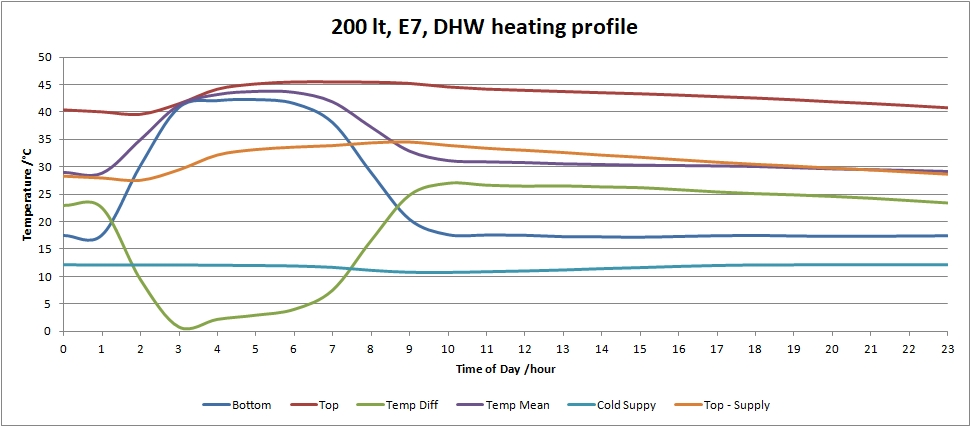
Bottom of my tank usually settles around 10°C higher than the temperature of the incoming water. It is worth, when looking at my chart, that most mornings I have a bath full out of it after the E7 heating window has finished.
-
Cleanliness is next to Godliness.