SteamyTea
-
Posts
23851 -
Joined
-
Days Won
200
Everything posted by SteamyTea
-
The enthalpy H of a thermodynamic system is defined as the sum of its internal energy and the product of its pressure and volume:[1] H = U + pV, where U is the internal energy, p is pressure, and V is the volume of the system. As you are trying to change H, but do not know U, and cannot control p, the only thing you can change is V, by putting more air though the system.
-
I remember that there was a guy on eBuild that that had trouble getting his RH down. He kept opening windows putting the MVHR on and off, heated etc. Don't think there was an outcome. Have you got any lime in your build?
-
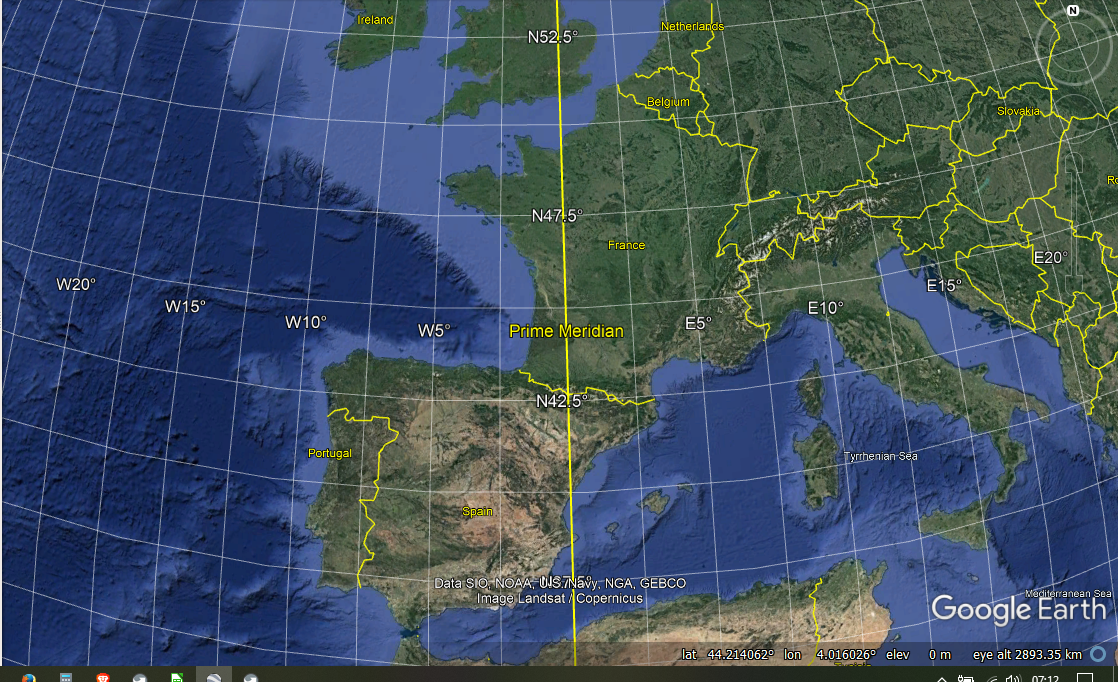
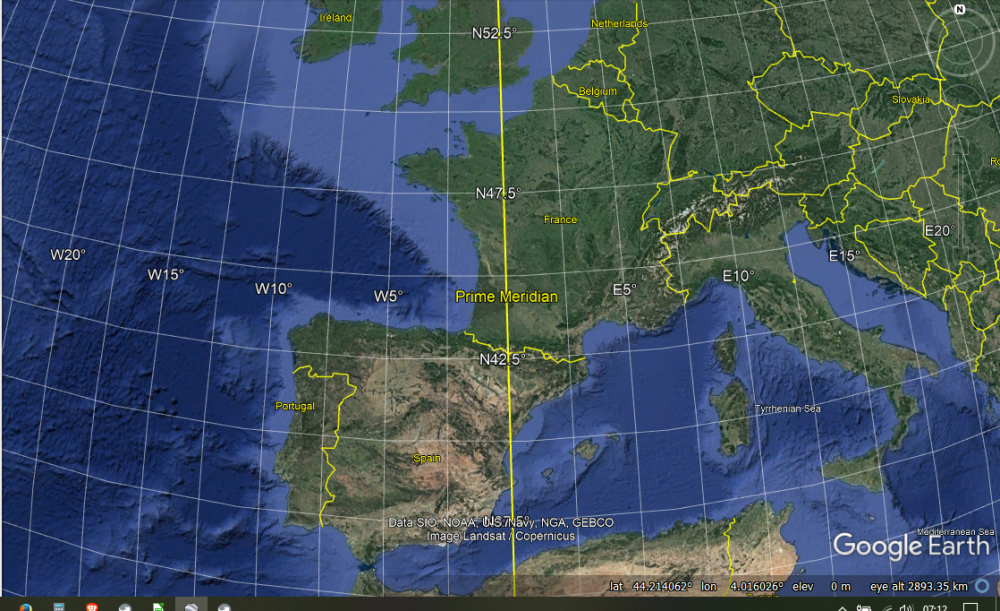
I was always told that if you draw a line from Bristol down to Weymouth, then anything west of that is the South West. I once heard a radio program where they referred to Oxford as in the South West. When I lived in Bournemouth (west of Salisbury), it was always refereed to as Southern England, and was on the South Coast. Much of this is to do with how the UK is orientated on a map. It is easy to assume that where I am, 5°W is above France, but it is actually more than halfway across Spain.
-
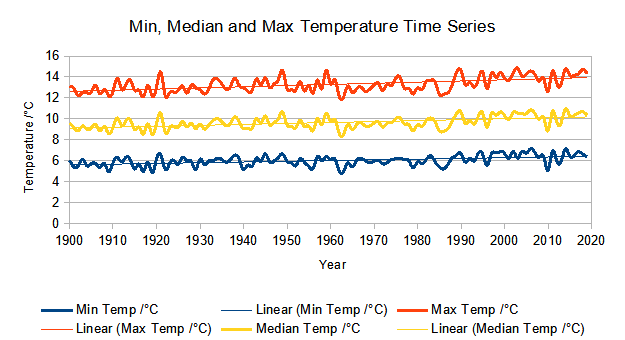
A simple, and relevant chart that shows Central England Temperatures for the last 120 years Easy to see that temperatures vary every year, but the trend line, whether you take the minimum recorded temperatures, the maximum recorded temperatures or the median (the ones in the middle), all show an upward trend over time.
-
It takes lot of energy and time to dry a house out. I don't consider Salisbury the SW
-
WTF do you mean by that? I have never met a Blue Whale, but they exist. I have travelled completely around the globe, not that many people have.
-
Don't go. I have some charts to post up when I get home.
-
Ronan Point disaster was caused by a very small gas leak.
-
https://www.gutenberg.org/files/1142/1142-h/1142-h.htm
-
I seem to remember that popcorn was trialled as a packaging material a couple of decades ago. Then there was a problem as it was considered a food stuff, and needed special import/export licences and the appropriate taxes paid.
-
Because it was a flippant statement to highlight the problems scientists have. All depends. There is a lot if repetition, and revisiting old ideas. One of the main things with science is to have a mechanism as to why one thing leads to another. So to keep in topic (a bit), there are reasons why CO2, amongst other gasses, causes temperatures to rise (it is to do with the non-polar nature of the molecule), the amount emitted each year, the earth's inability to absorb all this excess, and feedback mechanisms i.e. less polar ice, so more radiation absorbed by oceans. So hopefully you can see it is not a simple correlation, but a real, in-depth, look into what us happening. The main thing about climate change isn't the science, that had been known for decades, it is trying to convince people that just want to disbelieve in the causes and effects, for what ever reason, and just saying, without supplying any evidence, except imaginary evidence, that science is wrong. Now if you want get into topics that like that sort if thing, join a sociologist website, they are brilliant about not agreeing on anything. Or just watch the Feynman interview.
-
So tell us all which accedemic papers you have read, then we can send you some you haven't. Failing that, which Climate Scientists do you follow?
-
If you want. Or do the usual strawman method and go looking for evidence to support a wrong hypothesis. One of the usual methods to catch a scientist out is to take their arguement and use it out if context. Another is to ask an irrelevant question and scoff at the answer. One if the first things I used tell my students to do was 'answer the question'. Not answer the question you wish you were asked. I can thank Robert McNamara for that.
-
Usually, but not always. How about mains sewage? Should be all sorts of things here. https://www.n-somerset.gov.uk/my-services/planning-building-control
-
Welcome. The main things to look at first are site access, services and if you can build on it. Just because there is already something there, it means nothing. Your local authority website should have lots of information about its planning and building strategy.
-
I wish.
-
Do rodents like it?
-

Another boiler size question
SteamyTea replied to Barryscotland's topic in Boilers & Hot Water Tanks
Can't you get an 18 kW one that modulates down low and still condenses? -
Just a rewrite of Hanlon's Razor. Also worth remembering Hitchen's Razor.
-
To a certain extent yes. Enquiry starts very young. But no conspiracy, there is enough ignorance to not need to look for anything else.
-
If you have an arguement in science, you have to be able to falsify it. It is not science otherwise. Look up the work if Karl Popper.
-
Not annoyed at all. Just don't think it is appropriate to apply scientific methods to the arts and then claim it as 'fact'.
-
No. I am very suprised you wrote that sentence. Why are you surprised, at undergrad level that is all you need initially. If a 12 year old has not learnt to add, subtract, multiply and divide, then that is a worse scandal than the Post Office locking up people. Shocked at the one above..... Why, has it never occurred to you why I don't have telly. Sometimes people just have to remember facts, like BIDMAS. You cannot pass English Language courses with text speak, even though they impart knowledge and understanding. And stunned at this one. Why, if you teach, as we both have, we should go home distraught that we have failed, not accept it. You do like using that, but is just a distraction and an irrelevance. Go back to my Volta quote.
-
Indeed it does, but But how often does @ToughButterCup go out and buy apopularr science book? seems to me to presume that science isn't messy, full of complexity, and shrouded in various scales of grey, particularly at the forefront of knowledge. That is because the liberal arts who run publishing and media insist 'on a narrative'. It has made the whole presentation messy and complicated. As I said earlier, most science uses pre-GCSE levels. Yup, a vast number of people really don't want to look at an equation as it usually means they also need to know what the components parts are of that equation - pandora's box. That is the fault of our education system that rewards the wrong things. Education has not been dumbed down, just that different things are assessed these days. Also, mathematics is not science. It is just the language used. So claiming that equations puts people off, should be liked to people disliking red wine and cheese 'because it can be French'. Richard Feynman was asked to explain, in 3 minutes, what was involved in him being awarded a Noble Prize. "If I could explain it is 3 minutes, it would not be worth a Noble" was his reply. Worth spending 1/718,812 of your life watching this.
-
Brilliant.