SteamyTea
-
Posts
23387 -
Joined
-
Days Won
190
Everything posted by SteamyTea
-
 I get a lot of salt, and dust from the Sahara. I am a few miles from the South Coast, couple of miles from the North Coast, and 200 meters high.
 -
Do you have filters on the outlets then? More seriously, if they are clean, there may not be enough flow though them. Does the local farmer plough, rake and harvest crops?
-
Till you light the fire.
-
When it is cold outside, I always put the same thin jumper on, the one I wear at work when in is 40°C.
-
Think so. Was only rough mental calculations. Filter is quite small on the Ford.
-
I have tinnitus, a bit of noise is helpful. Probably not as good as the World Service, but a lower pitch does mask it.
-
Would he cope with a ramp? Lack of handrail with this one is a problem. https://www.mobilitysmart.co.uk/folding-wheelchair-ramp.html Got my Father one for his last few months, Works well, and can take it to other places. Got one of these by the back door. https://www.mobilitysmart.co.uk/metal-half-step.html My Mother finds it useful to get out. Again can be taken anywhere i.e. visiting the pub.
-
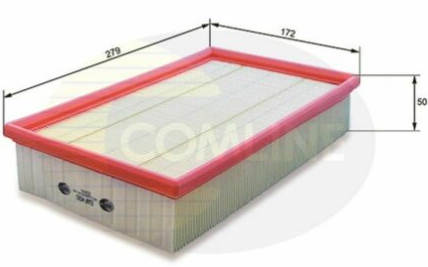
Read this just before I left work, got me thinking. My car gobbles about 100,000 m2 of air every 20,000 miles. That is about 600 hours driving for me. Now I have just bought a new air filter for it and it cost £8 from eBay (my fuel consumption has dropped about 5% recently, so time for a change and it has dons about 30,000 miles). Converting that into litres per second that is ~45 litres.s-1 for 600 hours, about 25 days worth, cost at that flow rate would be £113/year. Anyone got any total flow rates for their MVHR?
-
Reducing Energy Bills - How goes it?
SteamyTea replied to Ferdinand's topic in General Self Build & DIY Discussion
The Brexiteers have blocked it. They say it is interfering with you choice. They recommend roadkill Bamby kept in a PPE powered Lucas fridge. (The old automotive joke about warm beer) -
How to play - The SunAmp Guessing Game
SteamyTea replied to ToughButterCup's topic in Energy Storage
Putting a double check valve may sort that out. Or put in such a small pump that it could never increase pressure above mains pressure. Or just for a proper old school gravity fed system. Odd how many people lament the lack of skills and ingenuity of our old Victorian ancestors, then fit a pressurised water cylinder that does not offer any real benefits, but costs more. -
How to play - The SunAmp Guessing Game
SteamyTea replied to ToughButterCup's topic in Energy Storage
Yes you can. And probably, these days, not unreliable. -
Reducing Energy Bills - How goes it?
SteamyTea replied to Ferdinand's topic in General Self Build & DIY Discussion
So around 1.6 MWh/year. That seems extremely high, pulling nearly 200W, on average. Out old mate @Ed Davies an myself worked out that my cheap (£100 Currys bargain) fridge pulls a mean of 5W, and his was 8W. I would seriously look at them. I have a small router, 3 RPis plugged in, fridge, 4 digital timers/switches, alarm clock and my laptop permanently plugged in, first full week of June, 69% of the time I was not drawing any power (well less than 1Wh). Even at the time of heavy load i.e. when heating up my hot water for the day, 29% of that time I am not drawing power at all from anywhere. Mean Power from Wednesday 01/06/2022 up to Wednesday 08/06/2022 Maximum Power from Wednesday 01/06/2022 up to Wednesday 08/06/2022 Percentage Zero Power from Wednesday 01/06/2022 up to Wednesday 08/06/2022, Mean 69% Mean Room Temperature Wednesday 01/06/2022 up to Wednesday 08/06/2022 Hour Mean Power / 0.1 kW, Percentage E7 / 78 %, Total Energy 22.4 kWh, Day Energy 4.9 kWh, Night Energy 17.5 kWh Max Power / 3.2 kW Mean Percentage Zero Power / 69% Mean Room Temperature / 21.4 °C 0 0.0 2.3 78 21.3 1 0.1 2.3 69 20.8 2 0.2 2.4 63 20.6 3 0.2 2.9 75 20.4 4 1.5 2.9 29 20.2 5 0.3 3.2 70 20.1 6 0.2 2.8 55 20.0 7 0.1 2.2 62 20.6 8 0.0 2.1 64 21.2 9 0.0 0.4 79 21.8 10 0.0 0.1 82 22.0 11 0.0 0.1 78 22.0 12 0.0 2.2 76 21.9 13 0.1 2.2 64 21.9 14 0.1 2.3 68 22.0 15 0.0 2.1 77 22.0 16 0.0 2.2 66 22.0 17 0.0 0.1 79 22.0 18 0.0 0.1 81 21.9 19 0.0 0.1 81 21.8 20 0.0 0.1 84 21.7 21 0.1 2.2 73 21.6 22 0.1 2.5 50 21.6 23 0.0 0.1 61 21.6 Here is my coldest week numbers as daily means. Mean Energy Usage from Tuesday 01/02/2022 up to Tuesday 08/02/2022 Mean Room Temperature from Tuesday 01/02/2022 up to Tuesday 08/02/2022 Mean External Temperature from Tuesday 01/02/2022 up to Tuesday 08/02/2022 Mean Daily Energy Usage 14.6/kWh, Total Weekly Energy 102.5/kWh Mean Room Temperature 17.1°C Mean External Temperature 10.5°C Monday 14.8 17.1 10.5 Tuesday 20.9 19.8 10.5 Wednesday 18.6 19.8 10.6 Thursday 18.2 19.9 10.9 Friday 20.4 19.7 10.5 Saturday 3.5 17.8 10.5 Sunday 6.1 16.6 10.3 -
I am not sold on this idea that we loose body heat though the window panes. Just got to do the numbers, remembering that it is only the surface parts of the body that are exposed to the window area that count, so quite a small area, and most of that area is clothed. We like to think that the body is at 38°C or so, but that is core temperature, not exposed skin temperature. Then there is the window. Most are at least double glazed, and a bit dirty, and often filled with a gas that blocks radiation, not to mention the IR, one way, coatings. And that is before we look out of it and see what it faces. Not many people have windows that look up into the darkness, and vastness, of the universe. At best, it looks up at cloud, a lot warmer than the 4K that the CMB generates. Most windows look onto another building, so pretty close to OAT, some may look out onto woodlands, so slightly higher than OAT, and others out onto an ocean, very often higher than the OAT. So we may loose a little power though windows, but in reality, way to small an amount to bother with.
-
Reducing Energy Bills - How goes it?
SteamyTea replied to Ferdinand's topic in General Self Build & DIY Discussion
That does seem quite high. Do you use an electric oven a lot? -
How to play - The SunAmp Guessing Game
SteamyTea replied to ToughButterCup's topic in Energy Storage
How a billion dogs, including our pets, are laying waste to wildlife There is growing evidence that feral dogs and their domestic cousins have a big ecological impact, from hunting and spooking wildlife to poisoning plants and spreading disease to endangered species ENVIRONMENT 27 April 2022 By Aisling Irwin It looks like harmless fun, but dogs do ecological damage chasing shorebirds Shutterstock/Alexei tm IT WAS shocking,” says biologist Galo Zapata-Ríos, recalling what he saw when he viewed footage from his camera traps. Placed in the Andes, across 2000 square kilometres of forests, grasses and shrublands in Ecuador, these were intended to capture the movements of striped hog-nosed skunks, mountain coatis and other wildlife. Instead, in frame after frame, he saw something he hadn’t anticipated: dogs. “There were so many dogs that I decided to switch my topic,” says Zapata-Ríos, who works for the Wildlife Conservation Society’s Ecuador programme, and now studies the ecological impacts of dogs. It isn’t just the Andes: dogs are everywhere. They live on every continent except Antarctica, and inhabit high mountains, tropical rainforests, islands and nature reserves that would otherwise be considered pristine. One calculation put their numbers at a billion, making them the most common carnivore on Earth. That was in 2013 and there are surely more today. India alone has seen an estimated increase of 20 million – to around 80 million – partly because of legislation passed in 2001 forbidding the relocation or killing of street dogs. Meanwhile, during pandemic lockdowns, dog ownership soared in some countries including the UK where there are now some 13 million pet dogs. At a time when nature is under pressure like never before, there is growing evidence that dogs – both free-roaming and home-based – are killing, eating, terrifying and competing with other animals. They pollute watercourses, over-fertilise soils and endanger plants. Such is their impact that some ecologists call them an invasive alien species. They may be our best friends, but some say we need to take dogs in hand. From chihuahua influencers to savvy street canines, all dogs belong to the same species. They may have been living alongside humans as early as 30,000 years ago and accompanied us around the world, reaching Europe, North America, Asia and the Middle East at least 10,000 years ago, Australia between 3500 and 5000 years ago and Amazonia and some islands within the past few centuries. Today, only around a quarter of dogs are home-living companion animals, although many more are owned or affiliated in some way with a household or village. Few are truly feral, says Abi Vanak at India’s Centre for Biodiversity and Conservation. They are almost always dependent on humans – if only for the occasional night garbage raid. Street mutts in Varanasi, India, are among the billion or so dogs on Earth Bhatia/EyeEm/Getty Images The animals caught by Zapata-Rís’s camera traps were a mix of feral and free-roaming village dogs. What he wanted to know was whether they were pushing out the wild carnivores or muddling along happily with them. The answer was unequivocal: the presence of dogs predicted the absence of pumas, bears, foxes and skunks more powerfully than habitat loss or fragmentation did. “The results suggest that the impact of feral dogs on wildlife in the Ecuadorean highlands are widespread and that free-ranging dogs are a significant threat,” he says. Zapata-Rís went on to discover that, in Ecuador’s Cayambe Coca Ecological Reserve, several mammals have altered their foraging times, apparently to avoid dogs. This will have knock-on effects. Animals usually active in the daytime that are forced to venture out at night experience increased fear and stress. “That is going to decrease fertility rates, and that’s going to affect population levels,” he says. “I really think there is a threat to survival.” Free-roaming dogs, it is emerging, wander through protected reserves in many parts of the world including Iran, Brazil and Italy. They inhabit giant panda reserves in the Qinling mountains of central China, and in India’s tiger reserves they outnumber the tigers, according to Vanak. Many studies show that the presence of dogs correlates with decreases in native fauna and flora – although some, for example in North America, have found no link. Careful research is needed to establish whether dogs are to blame, but the list of possible mechanisms is long. Dogs may kill to eat or to eliminate competition. They destroy eggs. They scavenge, which might seem harmless, but can deprive other animals of a meal. And, as in Cayambe Coca, dogs create fear. The effects of fear are insidious: stress dampens the immune system, constantly fleeing and returning uses up energy and no-go zones reduce the amount of usable habitat. All these pressures can end up slashing populations of wild animals. What’s more, the problem isn’t confined to remote reserves and free-roaming dogs. For a pet dog, there is little as exciting as pounding, unleashed, across a seashore driving hundreds of birds into an airborne cascade. At Holkham National Nature Reserve in Norfolk, UK, where shorebird numbers have dropped by 60 per cent in the past two decades, Jake Fiennes, its director, knows the havoc this can cause. In 2019, the reserve attracted 800,000 visitors – and 300,000 dogs. But in spring 2020, a covid-19 lockdown meant the birds had the beach to themselves. “Seeing 10,000 shorebirds merrily feeding away because there’s no disturbance was very emotional,” says Fiennes. That ended abruptly in June when 35,000 stir-crazy visitors escaped to the beach over a single weekend. It was peak breeding season with a lot of nests on the shore. “The impacts were devastating,” says Fiennes. Birds, it turns out, seem to be particularly sensitised to dogs – even on leads. In woodlands outside Sydney, for example, a study found that people walking leashed dogs caused a “dramatic” reduction in the diversity and abundance of birds – more than double that caused by the same number of people walking without pets. These birds didn’t become habituated to the presence of these dogs – possibly because the occasional off-lead dog regularly resensitises them, the authors speculated. Some birds are more easily disturbed than others. Another study found that the space required by different species before they are disturbed varies from 500 metres to a mere 40 metres. Ecological paw print Even the least scary dog can leave a footprint. This was accidentally but vividly demonstrated in a nature reserve in Kent, UK, where a fence that bisects a pond confines dogs to one half. On the undisturbed side, aquatic plants, including the critically endangered three-lobed crowfoot, flourish. On the other, enthusiastic dogs have churned up the sediment, destroying almost every plant – and thus banishing the aquatic animals that shelter in them. Turbidity isn’t the only thing dogs leave in their wake. Their excreta can be a problem on moorlands and fens, deep inside some woods and even on road verges. That is because the plants in these habitats need soils low in nutrients to survive, says Pieter De Frennes at Ghent University, Belgium. In February, he published calculations of the amount of nitrogen (from faeces and urine) and phosphorus (from faeces) that dogs were depositing into four popular nature reserves around Ghent. Assuming that owners scooped half the faeces, it came to 8 kilograms of nitrogen per hectare per year and more than 1 kilogram of phosphorus. Whether this matters depends on an ecosystem’s critical deposition load – the amount of extra nutrients it can tolerate. In three of the reserves, the critical load for nitrogen is 20 kilograms per hectare, and that is already exceeded by the 22 kilograms per hectare being deposited from the atmosphere. So dog waste has “an important additional impact”, says de Frennes. “The presence of dogs in these reserves will certainly delay restoration goals.” He suspects that the problem may be widespread. The critical loads of nitrogen and phosphorus on moorlands and fens, for example, are much lower, so it doesn’t take many dogs to stress these ecosystems. Wherever dogs make their deposits, there is also the risk of passing infections to wild animals. In 2015, in Ethiopia’s Wollo highlands, rabies killed seven endangered Ethiopian wolves from a small pack of 13. A rabid dog found dead nearby indicated the source of the infection. Conservationists managed to track down and vaccinate two of the surviving wolves – but within two months, one had died from canine distemper virus. Again, a dog was implicated. Dogs have even been linked to waves of lion deaths in India and in Tanzania’s Serengeti national park. In the Alps, both companion dogs and free-roaming shepherd dogs appear to be spreading a cocktail of diseases, including canine distemper, to local wildlife. Even when dogs don’t infect wildlife directly in this way, they can act as reservoirs for pathogenic microbes. The key is the presence of many dogs, says Matthew Gompper at New Mexico State University. They can then transmit pathogens repeatedly across the species barrier. Without this, the diseases would probably fade away. In affluent countries, another worry is the chemicals administered to dogs to combat ticks, fleas and parasites. In the UK, these include a parasiticide that is banned in agriculture, but is nevertheless applied to dogs’ coats. Recent research found widespread contamination in rivers with this and another parasiticide also applied to dog coats, leading to fears that they are killing aquatic wildlife. Just bathing a treated dog at home may release the chemicals into rivers via sewage plants. The evidence seems overwhelming: our hunting, defecating, bird-chasing, pond-paddling, infectious best friends are harming some ecosystems. This may put some people off owning a dog (see “Is it fair to keep a dog?“), but, as Gompper points out, our feelings for them run deep. Even street dogs have advocates who feed and care for them, says Vanak. And dogs come with all sorts of benefits including fun, protection, love, exercise and – paradoxically – exposure to nature. So, what to do? Gompper suggests that before getting too anxious, we should assess where dogs are having a population-level effect on a wild species, and where they are just part of the rough and tumble of red and toothy nature. “There’s a general sense that we need to address issues raised by the presence of dogs everywhere and I’m not sure that’s always necessary,” he says. Dogs are most damaging ecologically where they are recent arrivals, because these ecosystems can be defenceless against them: on islands in places such as Hawaii and New Zealand, and in regions like South America, Australia and southern Africa. There is also little doubt that dogs cause great harm to certain animals, particularly vultures in India, shorebirds everywhere and marine turtles when their nests are raided. Even in these cases, Gompper argues for pragmatism. There is no point intervening where there is little hope of success – for example, if it will be impossible to vaccinate enough dogs to achieve herd immunity against the diseases they can carry – or where cultural norms mean that people will never accept the curbs necessary to make a difference. Where action is urgent, it is likely that it can only succeed if it reconciles the needs of dogs, owners, welfarists and wildlife. This isn’t happening in Indian cities, says Vanak, where “dog wars” pit people focused on animal welfare against conservationists and those concerned about the human toll from attacks and disease. Elsewhere, owners may feel that letting their dog off the leash is a healthy and natural thing to do – and see dog bans, or off-leash bans, as unwarranted interference. “Such is their impact, some ecologists call dogs an invasive alien species” Nevertheless, there are things you can do to limit the ecological footprint of your pet (see “How to be an eco-friendly dog owner“). And there are things that conservationists can do to help you. Working together is key, as Fiennes discovered. The disastrous impact of dogs on breeding birds at Holkham in 2020 inspired him to consult widely about acceptable changes and then implement a zoning system: “no dogs”, “dogs on leads April to August” and “dogs off leads”. Signposting is clear, frequent and educational, and friendly stewards – and their dogs – wander the beach. A year later, nesting and fledging rates of little terns, oystercatchers and ringed plovers have increased. “It’s trying to balance the need to get people more engaged with our natural environment, but also to ensure that they are well informed of the potential impacts that they can have,” he says. Is it fair to keep a dog? We have all read stories about mistreated dogs, overcrowded puppy farms and the maladaptive traits that cause suffering in various breeds. Add to that the carbon footprint of dogs and the ecological damage they can wreak (see main story), and you might be left wondering whether we should keep them as pets. Marc Bekoff at the University of Colorado, Boulder, points out that dogs co-evolved with us over thousands of years, and have developed behavioural, neural, anatomical and physiological adaptations to living with humans. Besides, pet dogs lead safer, more comfortable, hunger-free lives than they would in the wild. Bekoff believes that it is fine to keep pooches, provided you develop an instinct for what they need. “Make the walk for them,” he says. “Give them sniff time.” He also advises giving your dog time to hang out with you, to have rough-and-tumble play with other dogs and the opportunity to resolve its own doggie conflicts. “Let dogs be dogs,” he says. How to be an eco-friendly dog owner The mere presence of dogs – even on leads – can reduce biodiversity Shutterstock/Lopolo Read signs and posters and follow the advice: there may be reasons you haven’t thought of why dogs could damage the surrounding ecology. Always keep your dog to paths on dunes to minimise erosion, bird disturbance and trampling of plants. Keep dogs out of ponds, especially small ones, which are easily disturbed, and those in nature reserves and national parks, which often harbour rare and threatened species. During bird-breeding seasons, ensure your dog doesn’t disturb nests, particularly on dunes, beaches, moorland and heath, where ground-nesting specialists are found. Train your dog to return to a call and not to stray out of sight in ecologically sensitive areas. Always pick up faeces. Much of the countryside could do without the extra fertiliser and it may carry diseases or contain medications that kill insects and arachnids. To further prevent toxic chemicals entering waterways, consider reducing your dog’s prophylactic treatments with flea, tick and worm tablets. Regularly washing bedding and checking for fleas instead can reduce the risk of infection. The mere presence of dogs – even on leads – can reduce biodiversity -
How to play - The SunAmp Guessing Game
SteamyTea replied to ToughButterCup's topic in Energy Storage
Was thinking more of @Gone West saving on his electricity. -
How to play - The SunAmp Guessing Game
SteamyTea replied to ToughButterCup's topic in Energy Storage
A large part of the South West water company's bill is for cleaning up sewage and road drains before the water is discharged to the sea. Then the council comes along and encouraged dogs to shut on the beach, probably 3 million if them a year. My new slogan for Cornwall is. "Penzance, not as much dig shir as St. Ives". -
How to play - The SunAmp Guessing Game
SteamyTea replied to ToughButterCup's topic in Energy Storage
Why they charge us so much for water. -
How to play - The SunAmp Guessing Game
SteamyTea replied to ToughButterCup's topic in Energy Storage
Does Sumerlease Beach still have the free public showers? Another solution is from EJ, which would get me out the shower pretty quick. -
Best ASHP manufacturer/model for new passive house
SteamyTea replied to markharro's topic in Air Source Heat Pumps (ASHP)
Environmental usually. Though CO2 HPs can deliver a higher temperatures. Higher temperature is not more energy. -
Reducing Energy Bills - How goes it?
SteamyTea replied to Ferdinand's topic in General Self Build & DIY Discussion
Should be easy to reduce that. Do you know where it is going? -
Do you need a plasterer
SteamyTea replied to Russell griffiths's topic in General Self Build & DIY Discussion
Take the Pepsi Challenge. -
This may help you. Shows you what to look for. ENA_EREC_G100_Issue_1_Amendment_2_(2018).pdf
-
How to play - The SunAmp Guessing Game
SteamyTea replied to ToughButterCup's topic in Energy Storage
Connected to a suicide shower.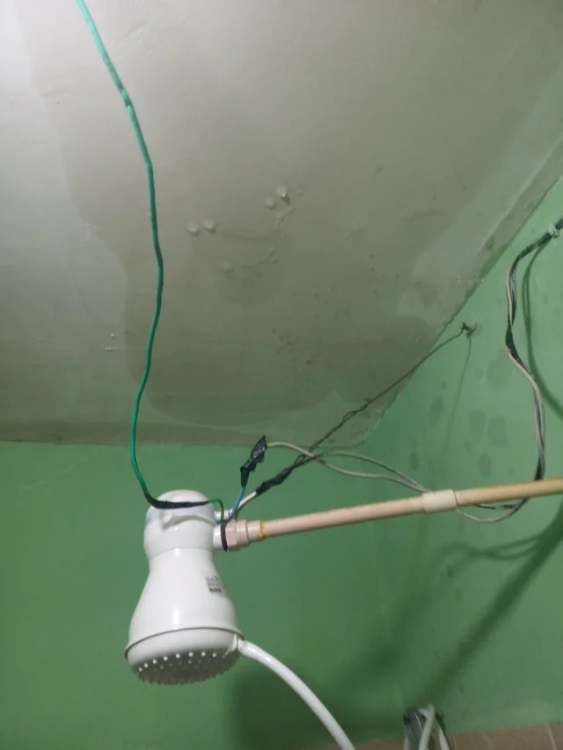
-
Reducing Energy Bills - How goes it?
SteamyTea replied to Ferdinand's topic in General Self Build & DIY Discussion
(expletive deleted)ing hell, I get the university to pay for those kinds of experiments. Was the conclusion to wear a wetsuit when cold (once cycled 4 miles in a 6mm full length wetsuit in January).