SteamyTea
-
Posts
23387 -
Joined
-
Days Won
190
Everything posted by SteamyTea
-
Tis easy, even you can wire it up.
-
I tried it in my kettle and it was fine. My CurrentCosts write up to 10 times a minute, large files are not really an issue these days. There could be a secondary file that counts up from the first file every hour, then shows that. It is those kind of details that others are better at. It would be good if someone replicated my design and tested it, very easy to convince oneself that it is perfect otherwise.
-

Reducing Energy Bills - How goes it?
SteamyTea replied to Ferdinand's topic in General Self Build & DIY Discussion
Thank you, I like to thank myself for a job well done. -
Reducing Energy Bills - How goes it?
SteamyTea replied to Ferdinand's topic in General Self Build & DIY Discussion
Ok that should have fixed it - I can now edit the 'about this blog' but rest of you can add comments, I hope! (This entry created on @SteamyTea's behalf by sys admin.) -
I am not sure how well it works yet, but it works in trivial cases i.e. a 40 W lightbulb and my fridge (once I had stopped stray morning light). I am going to ask my neighbours if I can pop the Photo Diode on their meter as I don't want to stop the one that is already logging mine. What would be good is if others, who have a lot more knowledge and skills than me (I am really just a chancer than fiddles about till it seems to work) could improve and add to it. Things that would be nice are a remote sensor to save having to run a small bit of wire into the meter box. A nicely made sensor cover that holds the magnet in place, and does not let stray light in. A display, and an enclosure for the complete kit (thinking of you @Onoff and your plastic printing skills). Remote, but not cloud based access may be interesting, but as will all new toys, after a few days, does not get used often. Other 'things' could easily be added i.e. temperature, humidity, air pressure, but they are really stand alone items, though inside and outside temperature is useful. So here it is, my feeble attempt. What I have used to make my energy meter. A shop bought energy meter https://www.ebay.co.uk/itm/354118466147 I used this purely to test the power, 1 pulse per Wh, same as my main meter. I will, as I bought 3 of them, use them on my 3 ‘night circuits’ once I have finished playing. Some magnets with holes in the middle https://www.ebay.co.uk/itm/184928442876 These are to hold the light dependant LED onto the meter. A suitably sized metal washer was super glued in place. Some photodiodes to sense the red flashing light on the meter. https://www.ebay.co.uk/itm/232690475106 This is the real magic, just wired in between a GPIO pin, 22 in my case and ground. The important thing is to wire it in the ‘wrong way around’. So the anode, the longer leg on the diode, is wired to ground, and the cathode, the short leg, is wired to pin 22. A Raspberry Pi ZeroW https://thepihut.com/products/raspberry-pi-zero-w Just a bog standard RPi ZeroW A header https://thepihut.com/products/colour-coded-gpio-headers Are useful, and I think you can buy the RPi ZeroW with them already soldered in place. You need it to easily fit the RTC on. A Real Time Clock https://www.ebay.co.uk/itm/234603677979 While not necessary, I always fit an RTC (real time clock) as I cannot guarantee an internet connection all the time. You have to muck about with the /boot/config.txt file to include the line dtoverlay=i2c-rtc,ds3231 and edit the /lib/udev/hwclock-set file to disable the settings with the # symbol # if [ -e /run/system/system ] ; then # exit 0 #fi A USB to TTL Serial adaptor https://www.ebay.co.uk/itm/203604196200 Useful when setting up a ‘headless’ RPi. Just make sure to change the /boot/config.txt to inclide the line enable_uart=1 The Code The code I have used uses Python3 and standard libraries. After much searching and thinking, I found that GPIOZero library was quite useful (https://gpiozero.readthedocs.io/en/stable/api_input.html) as it has some useful code for a ‘button’, or switch to the rest of us. I also, included a block of code to create a daily *.csv file that automatically changes the filename every midnight. All the code does is sense when the light dependant LED senses light, and when that light stops, it timestamps the daily *.csv file, then wait until more light appears again. Simple, 3 lines of main code. #!/usr/bin/python3 from gpiozero import Button import time, datetime button = Button(22) def sort_time(): dt = datetime.datetime.utcnow() runday = dt.day dt.day == runday ts = time.time() UTC = datetime.datetime.utcfromtimestamp(ts) logfile = '/home/pi/monitoring/data/meter-%s-%s-%s.csv' % (dt.day, dt.month, dt.year) tfile = open(logfile, "a") tfile.write("%s"%UTC + '\n') tfile.close while True: button.when_pressed button.when_released = sort_time What could be simpler. The output is presented like this. 2022-07-09 13:05:38.577239 2022-07-09 13:05:40.028295 2022-07-09 13:05:40.374854 2022-07-09 13:05:50.753515 2022-07-09 13:05:52.390287 Each timestamp is equal to 1 Wh. I do all the analysis in a spreadsheet.
-
Reducing Energy Bills - How goes it?
SteamyTea replied to Ferdinand's topic in General Self Build & DIY Discussion
I changed the switch so it should allow comments. -
Hybrid inverter for small in roof 2kw array - help please!
SteamyTea replied to Timmyk's topic in Photovoltaics (PV)
It is how I would understand it as well. It is the use of words like can, must, will etc that makes rules and regs hard to read and understand. -
Reducing Energy Bills - How goes it?
SteamyTea replied to Ferdinand's topic in General Self Build & DIY Discussion
Don't know, never done one before, shall go and look. Try it now. Off to feed the poor and needy, or is it the fat and greedy. -
Hybrid inverter for small in roof 2kw array - help please!
SteamyTea replied to Timmyk's topic in Photovoltaics (PV)
Does that include the MC3, MC4, Helios H4, SolarLok and Radox DC side, or is that part of installing the modules. Maybe the final connection between the module strings and the inverters needs to be done by a qualified person. -
Not having a TV, or licence, is there a torrent download of it yet?
-
Reducing Energy Bills - How goes it?
SteamyTea replied to Ferdinand's topic in General Self Build & DIY Discussion
Now all we have to do it make it pretty. -
Gravity works in all directions, why it is a vector.
-
Reducing Energy Bills - How goes it?
SteamyTea replied to Ferdinand's topic in General Self Build & DIY Discussion
Give me a few hours and I shall post up what I have done. Still out, but in the sub tropical park now.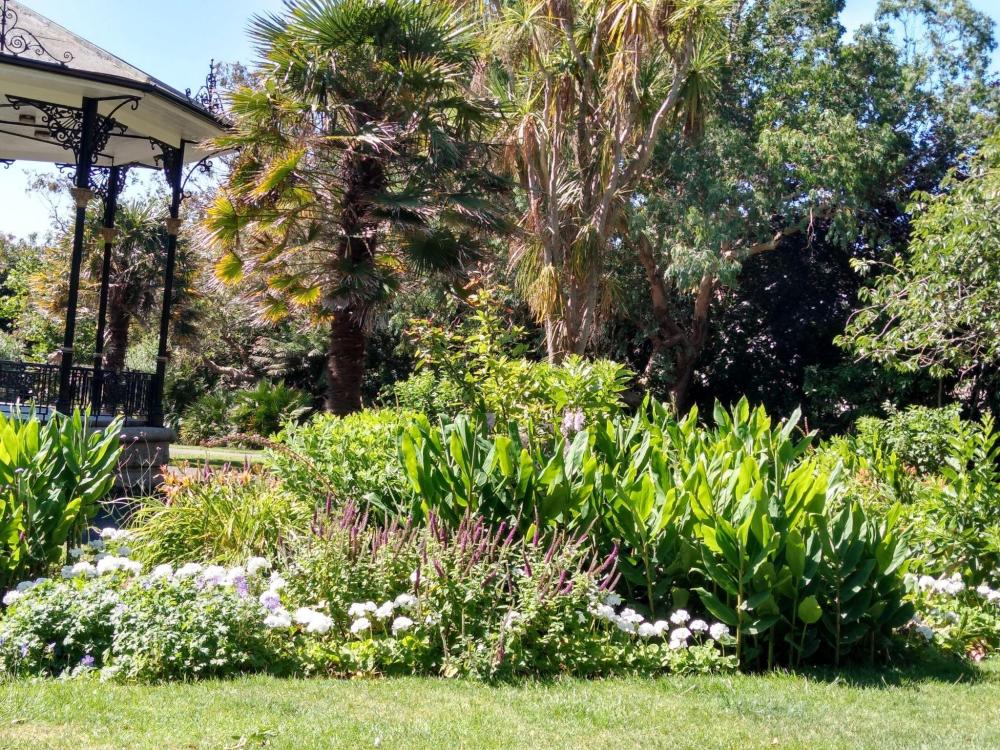
-
Reducing Energy Bills - How goes it?
SteamyTea replied to Ferdinand's topic in General Self Build & DIY Discussion
Depends. If I move my hand up and down, rapidly, infront of Redtube.com, it may pick up some pulses and show how much power I am burning. May have to close curtains to stop stray light ruining the readings. -
Reducing Energy Bills - How goes it?
SteamyTea replied to Ferdinand's topic in General Self Build & DIY Discussion
I think it turns on the LED permanently when exporting. Not an area I have looked at as I don't have PV. While sitting having a coffee, I have had a couple if thoughts about mimicking a meter, should speed the testing process up a lot. I shall start a new topic on all this, there is enough brains, and brawn, on buildhub to make a useful, and very cheap, device that is easily customisable and useful. -
Reducing Energy Bills - How goes it?
SteamyTea replied to Ferdinand's topic in General Self Build & DIY Discussion
Does it require you to glue a spare phone to the DNOs meter? And does it log the data in a simple format? Could have saved me a few hours work while I stuck at home. -
Reducing Energy Bills - How goes it?
SteamyTea replied to Ferdinand's topic in General Self Build & DIY Discussion
What I am testing at the moment. More to come. -
Energie thermodynamic system anyone have experience
SteamyTea replied to Calw's topic in Solar Thermal (ST)
I have just had a quick look at my DHW usage since May 22nd, when I changed over to using just the top element in my 200 lt cylinder. 2.3 kWh/day. Prior to that it was 2.75 kWh/day. I am not sure if, for a saving of ~0.5 kWh/day, which is 10p, only having 'just enough' DHW is worth it. -
Reducing Energy Bills - How goes it?
SteamyTea replied to Ferdinand's topic in General Self Build & DIY Discussion
That may be using quite a bit. Have you checked its usage? I have cobbled together a new energy meter, one the counts the pulses from a meter's LED. Put it on my fridge circuit and it counted 298 pulses of 1 Wh each. That works out at 0.298 kWh, mean power of 12W. I can live with that as the last time I did this test I was away, and it was mid winter, with no heating on in the house. When I have done a few more days testing, I shall write up a bit more about it. -
Reducing Energy Bills - How goes it?
SteamyTea replied to Ferdinand's topic in General Self Build & DIY Discussion
Have you been writing to the papers again. No need to go nuclear to temper global warming (1) Published 6 July 2022 From David Flint, London, UK Graham Reynolds asks us to choose between long-term storage of nuclear waste and “worldwide, incomprehensible damage to the climate” (Letters, 25 June). That would be a good argument for nuclear power if we had only two choices. But we don’t. We can also choose to sharply reduce energy waste and to rely on power from the sun, wind and tides to heat our homes and move our cars, buses and trains. This is the pragmatic solution because it needs only things we have already designed and built, and whose costs fall each year. It frees us from dependence on an industry that just can’t deliver on time and within budget. Why wouldn’t we choose the renewable option? -
Will I be eligible for ASHP Grant?
SteamyTea replied to richo106's topic in Air Source Heat Pumps (ASHP)
Yes, covers upgrading from an open fire, or rubbing Boy Scouts together. Think the latter us now covered by other legislation. -
Yes, my car is more economical at 65 than at 30. Why I jump red lights.
-
Hybrid inverter for small in roof 2kw array - help please!
SteamyTea replied to Timmyk's topic in Photovoltaics (PV)
If it is physically connected i.e. NOT off-grid, then yes. It is a safety thing, the DNO can physically check that all generation is off. It is why you have to tell them where the isolator is physically located. -
Was his name Owen.
-
Will I be eligible for ASHP Grant?
SteamyTea replied to richo106's topic in Air Source Heat Pumps (ASHP)
Yes, it is not bad, not are surefooted at my old 309s. And nowhere near the grip in the wet. It does have an A2AHP in it, just to get the thread back on topic.