SteamyTea
-
Posts
23848 -
Joined
-
Days Won
200
Everything posted by SteamyTea
-
Like a dog cocking it's leg. Easy to kick in the nads.
-
 Close to 10 MPH (8.8) Is there bracing across the back of the modules?
 -
The way extrusion modifies the polymers means it want to bend naturally. As a rule when I worked in the plastics industry, we avoided anything extruded. Except bagging material obviously. So stick it down.
- 1 reply
-
- 1
-

-
- retrofit
- floating floor
- (and 1 more)
-
Working correctly
SteamyTea replied to Pocster's topic in Mechanical Ventilation with Heat Recovery (MVHR)
"That is not my wedding ring, it's my wrist watch" -
I take it you don't get many winds over 4 m.s-1
-
Builders only work to an accuracy of a bricks length anyway.
-
Save more cash. Then save some more. I may be worth looking at houses/bungalows in a location you want to live in, then knock them down and rebuild what you think you want. Knowing where you are in the Country would help, prices vary within a town, country and the country. VAT is reclaimable on materials and the labour to fit/install them. The other half of the building costs are not exempt i.e. professional fees. If a 20% reduction in the purchase price is important, then you do not have enough money.
-
Different finance model and land ownership maybe. I think they have more community ownership of RE in Denmark. Also wind turbines work better when spaced far apart. Yes. Burning anything makes it harder to calculate.
-
PV to hot water and heat storage controls
SteamyTea commented on Marvin's blog entry in ASHP, MVHR, PV and EV combo
I think this is half the battle. I knew I was out all day yesterday, so turned the storage heaters input down. Meant the house was about 17⁰C when I got in, but probably saved me 4 kWh. Just went to bed early. -
merde
-
There is never that much left, unless it is a large one from Phelps.
-
Here is my two penneth. Charity begins at home.
-
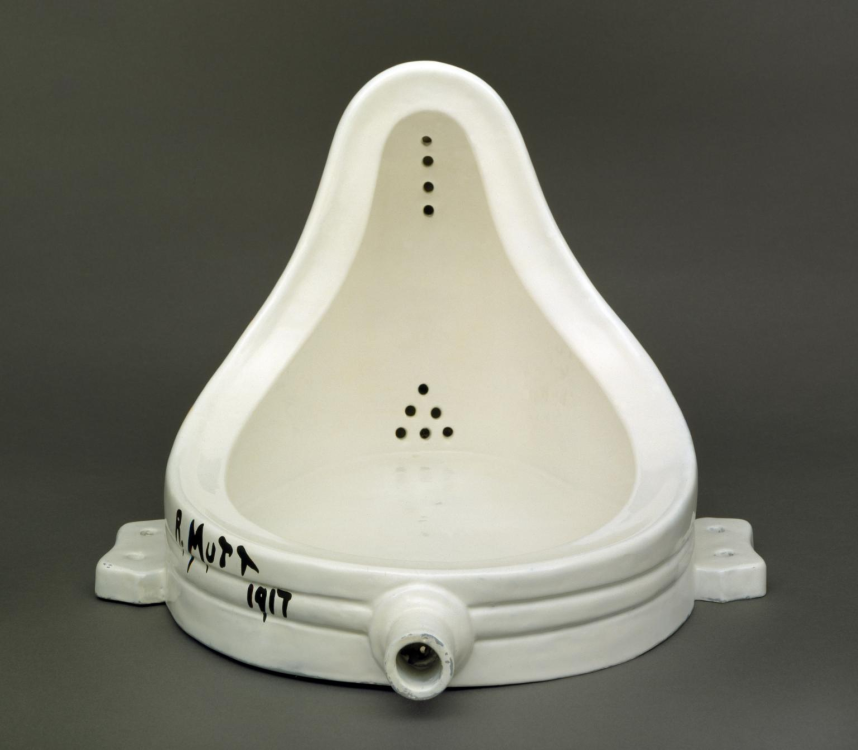
I wonder what Marcel Duchamp would have to say. Probably some philosophical crap, in French.
-
Post up a screen dump and we can all have a look.
-
Why not A2AHP. Get some decent cooling then.
-
We got asked to manufacture a clear staircase for an architectural show. Pointed out that not many women would be happy to walk up it. Took the designer a few seconds to realise why. (expletive deleted)ing twats.
-
Why the terms Primary Energy and Delivered or Consumed Energy are often used. If emissions are being calculated, then Primary energy is usually used. At a household level, then Delivered Energy is usually used. though I think Passivhaus may use Primary Energy. I am surprised, but that may be for two reasons. They tended to be close to the consumer, so only very small transmission losses. Not so much the case now for larger PV and Wind farms. The other thing is that as the fuel source is renewable, efficiency becomes a physics question, not a practical one. Both Wind and silicon PV have about reached there practical efficiencies, though PV may get another few percent, but not really a material difference. People get excited about dual layer PV, but that, in a physical properties context, is really 2 modules, one on the other, and neither has the conversion factor of a single module (yet, may be surprised). If you look at PVGIS, they have whole system efficiency losses, default is 14%. I am not sure if that is based on the raw data i.e. a 1 kWp 20% efficiency loss system will deliver 0.8 kW during standard testing, at the wall socket, or it is from collected system data and averaged out.
-
I think an adhesive is probably easiest. You can get non expanding PU resins. But you may find that PVA works well. I once bonded some polystyrene to timber with a urea-formaldehyde adhesive (Cascamite), then tested it for strength. The insulation gave way first.
-
Padawan. The only way Dave will touch a phone made in the last 5 years is if he finds one.
-
PV to hot water and heat storage controls
SteamyTea commented on Marvin's blog entry in ASHP, MVHR, PV and EV combo
I can probably get 4 short showers out of my 200lt cylinder that is at about 45⁰ C. The last one may be a bit tepid, but would be fine for getting the work fat off. I may try and experiment with timings on my DHW. Day just top heating, followed by day of just night heating. Not sure if it will make much difference as it is really about lowering losses, not using less water, at a colder temperature. But in the summer, when I hear just the top of the cylinder, I save about 1.5 kWh/day. -
PV to hot water and heat storage controls
SteamyTea commented on Marvin's blog entry in ASHP, MVHR, PV and EV combo
And during the other times of the year, charging storage heaters should pay dividends. If I had PV, I would let the DHW take priority. I am happy to let the house float around 19°C at the moment, which is 1°C lower than in the past. Curing the old leaky door where I work has helped a lot. Colder mean temperature, but more comfortable overall, and I use the fan heater less than I did. Not used it this year at all, but it has been mild. So I think that any kWh pumped into a storage heater, is a kWh not brought in. Can't comment on the complication of your system, I can't follow the sketch. -
Interesting, I put my GPS logger on today, drove 600 miles, parked back in my drive and the altitude gap was 2' (600mm). But I think a simple water level is the easy way for house stuff. There was a 'thing' in Google Earth were you could run the cursor over an area and it would work out the heights to quite good accuracy. Can't for the life of me remember how to do it. May have been this: View Path's Elevation Profile https://support.google.com/earth/answer/148134?hl=en I am too tired to try it now. Actually, I tried it. Dead easy, but not sure how accurate it is.

-
If you have the space, then off grid, with the occasional running of a generator is getting close to being feasible. Still a lot of up front cost though, about what some people a nicer kitchen and bathrooms.
-
New York City had district heating, but I think it went out of fashion when they started using natural gas. Did we have someone called SarahSW (on the old site) who lived in a place with a shared heating system (wood pellets I think). Broke down and there were arguments about who would fix it. I wonder what happened to her, I think they abandoned there project as if it is the place I think it is, nothing happened for a couple of years, then there seemed to be a bit of activity, then nothing again.
-
So 52 kWh per night, or about 45 kWh for just heating. While that seems high to me, I am in the warmest place in the land during winter (yesterday I used 8 kWh, 3 of which were DHW and 1 for everything else), I don't think it is excessive, except your place is a bit on the cold side. Fixing drafts would help a lot with that.