


SteamyTea
-
Posts
23848 -
Joined
-
Days Won
200
Everything posted by SteamyTea
-
I don't have a fireplace, or a TV. I did sneak a glance at the Radio Times at the supermarket, had the same cover it did in the 1960's, except in colour. There was an old story by Rob Newman about putting on his headphones, borrowing a magazine from @pocster, and pleasuring himself in his bed room. He opened his eyes and his Mother had placed a cup of tea beside him.
-
Sunbeds
-
A UV radiation source won't.
-
But quiet filth, no one really likes a screamer. I think Art Garfunkel sang a Paul Simon song about it. Duncan
-
Not really. Radiation happens at all frequencies, or wavelengths, if you prefer. Some frequencies are absorbed better by some elements (bond strength, orbital paths/angles/distances). Marketing loves it when people do not understand physics and think that a seemingly simple, and rational explanation, explains it all. The biggest problem with Infrared heating is it cannot run at a high temperature, so needs a lot of area. This causes the ratio between the emitter to the receiver to be large. It makes no difference to the amount of energy needed to heat an object, but the power delivery, the W/m² is low. Just heating the air in the building is probably best. That way, we breath in warm air.
-
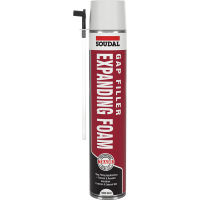
Can you add a secondary seal/jamb on the door frame to get a better/secondary/tertiary seal. It only needs to be as wide as the seal. One way of damping sound/vibration, is to add random masses, in random places, they do not have to be ridiculous heavy. Can you build a fence in the front? A bit of experimenting and you may be able to make one that dampens a fair amount of the noise. If you have a neighbour with a loud car (usually a young male), some of this up the exhaust one night may help. Only £5.99 from Toolstation.
-
I suppose it comes down to interpretations of what they mean my zero energy. All the talk is about Net Zero, which I think is a reasonable aim at the moment. In the future it may not be. Main thing is that people are seriously working on it, rather than just talking about it. I don't think that generation has to be on site to qualify, it just has to be dedicated generation. I would like to see a row of old terraces that are converted to Net Zero, without combustion technology, that would be a real challenge.
-
 Sunshine here
 -
Load it up to Youtube and then put the link onto here.
-
Heatmiser Neostat v2 temperature sensor problem
SteamyTea replied to Ultima357's topic in Underfloor Heating
Were they on GMT, or worse, BST? If we put the world on UT/UT1, all these problems would vanish. -
Do all of them, just check that if you are in an official dispute with one of the parties, that does not exclude you claiming against the other parties. You may need some real legal advice on this.
-
It is the whole, non linearity, that is the unknown. SFC can often improve at fixed output extremes compared to smaller units. Is there such a vehicles that has a mass of 1100 kg, a drag coefficient of 3.2 and a frontal area of 1.95 m2, with the rolling resistance being the same. It is all about taking out the variables and running them in the same conditions to find the SFC.
-
I suspect that you will get so tied up with paperwork, mainly getting reports done at your expense that you may be better off just going though the small claims court. Then, if you win, spend the cash getting it removed.
-
Generally, in physics, the larger a 'machine' is, the more efficient it becomes. This certainly holds true for heat engines/power generation. So while a smaller boiler may deliver the desired power needed at any time, it may not be as efficient as a larger one, this may become doubly true when the complete heat delivery system is taken into account. It is a bit like doing the same journey, in the same type of car, one of 1.8 lt and one of 1.4 lt. Having actually done this 1.8 S Escort and a 1.4 GL Escort, the 1.8 S was more economical. Hard to find the specific fuel consumption numbers for boilers, so all a bit speculative.
-
Self build affordability in a higher interest rate world.
SteamyTea replied to gavztheouch's topic in Costing & Estimating
If you have a shed large enough to use as a workshop, you can make a timber frame house in it. They are only OSB and timber, with some insulation in them. -
I don't think it will make any noticeable difference to aging or reliability. It is usually the electronics that let them down, and that is either poor design or age. What is going to happen in the late spring when your boiler needs to modulate down even further, and then starts to short cycle?
-
Self build affordability in a higher interest rate world.
SteamyTea replied to gavztheouch's topic in Costing & Estimating
Motly Fool has something to say. https://www.fool.co.uk/2022/11/25/house-builder-stocks-are-on-the-rocks-opportunity-knocks/ -
Well not one single method. The main thing is to make sure there is not an airpath that can bypass the insulation. It would be easy to make an airtight house by just covering all internal areas with polythene, then tape all the joints carefully. Probably get an air test done at below 0.2 ACH. But if the external air can bypass the insulation, and get onto the outer face if the inner wall, then the temperature difference will be high, and heat loss is proportional to temperature difference.
-
You have to be careful with this construction as any joist/roof truss ends may be susceptible to condensation, especially if any extra internal insulation moves the dewpoint.
-
Assuming this is a serious question, it is about not replace heated air in the house with cold external air. Basically controlled leakage, not uncontrolled. Trouble with buildings is that the cold external air can also bypass the insulation. This is why it is all about design and detail.
-
Nice buns. Those iced doughnuts, they are like Fanny's
-
Going to be up to you to do it then.
-
THE NATIONAL SELF BUILD AND RENOVATION SHOW
SteamyTea commented on MikeSharp01's event in Community Calendar
Working those 3 days. I ran up the back of a Chinaman in Swindon. Was all a bit peculiar. He demanded that I pay for the damage as he had just bought the car, and his wife was possibly injured. He got very aggressive so I was just calling the police when out of nowhere a copper appears. I said 'That was quick, I had only dialled 99' Copper said 'We saw it all happen, it is right outside the police station' There was only a cracked light on my car, but the Chinaman sent me a bill for £4500 + Labour. Pointed out that a Rover 214 was only worth £500 and he was trying it on. I never tried to claim on my insurance and I heard no more. Looking back, it was probably one of those insurance "crash for cash" scams where someone passes and then slams the brakes on hard, on the roundabout. Never stopped at Swindon since. -
I was at work university with a guy who worked for the Moscow State Circus as a rigger. He was also the GB under 85kg Arm Wrestling Champion at one stage. My partner called him The Neanderthal.
-
THE NATIONAL SELF BUILD AND RENOVATION SHOW
SteamyTea commented on MikeSharp01's event in Community Calendar
Is this part of the government's levelling up agenda, except we have to rebuild the nation ourselves, one nail at a time.

